

DSU scholarship · Tuscany
DSU Toscana Scholarship 2026/27: Amounts, Deadlines and Documents
What the DSU Toscana 2026/27 call gives students from countries like India in Florence, Pisa and Siena, which original family documents it needs, and when the grant is paid.
Applications closed 7 Sep 2026. Provisional rankings due 30 Sep 2026, appeals by 10 Oct 2026. Definitive first-year grant ranking 4 Nov 2026.
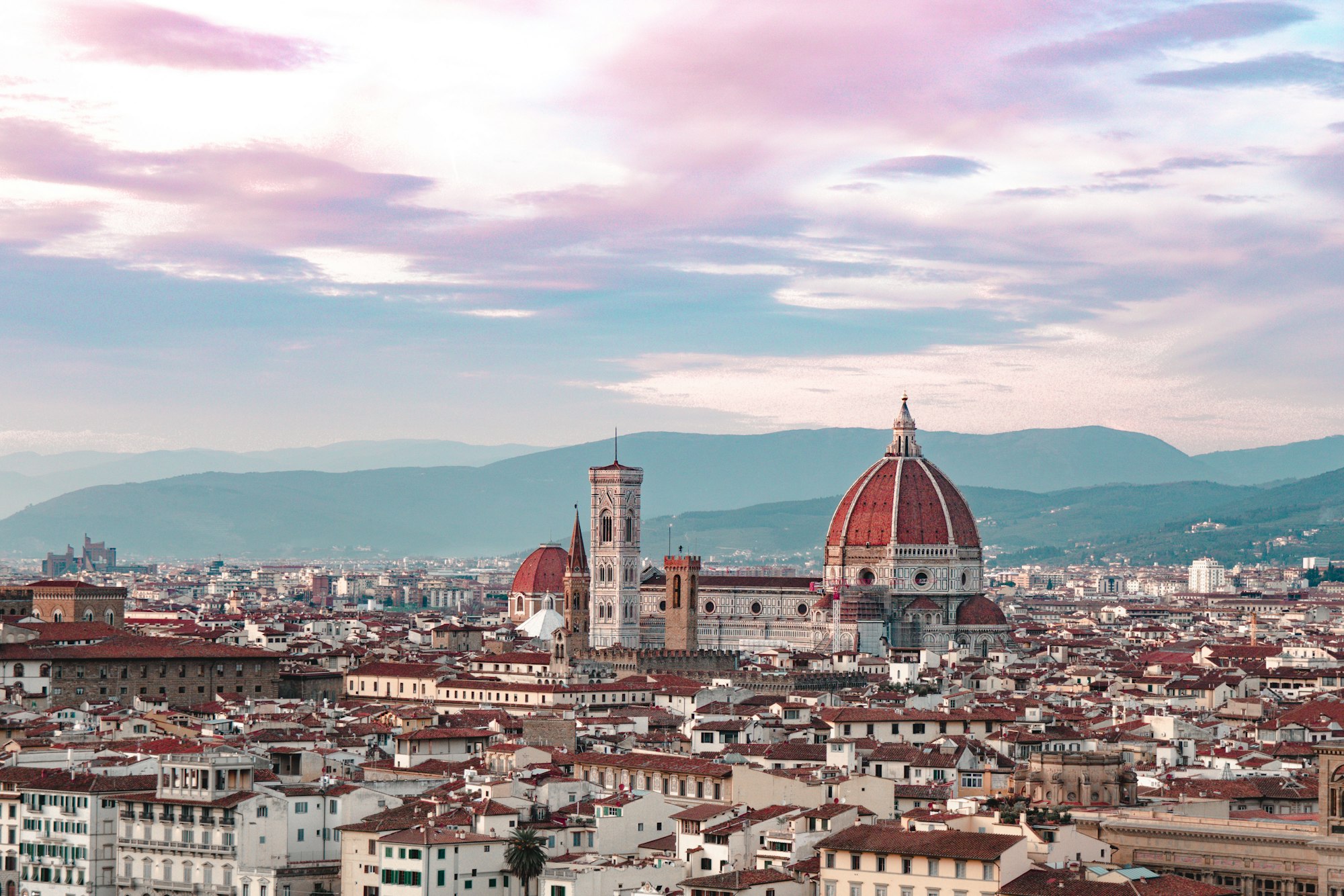
Photo: Nicola Pavan on Unsplash
In short
- DSU Toscana gives eligible students at Florence, Pisa and Siena up to 3,338 EUR a year in cash (about INR 3,67,000) plus housing and two daily meals, if family ISEE is at most 27,000 EUR (art. 7.1.1; Tabella B1).
- ISPE (family assets) limit: 60,000 EUR (art. 7.1.1). The call waives the 140 EUR regional tax but does not cover university tuition (art. 19.2.1).
- Applications closed on 7 September 2026; compare all 16 DSU scholarships.
ApplyAZ, an Italy-based consultancy that works only with public universities, helps eligible students by preparing their ISEE parificato and DSU application.
Free check, about two minutes.
Key facts for 2026/27
| Issuing body | Azienda Regionale per il Diritto allo Studio Universitario della Toscana (DSU Toscana, also ARDSU), Florence |
|---|---|
| Universities covered | University of Florence, University of Pisa, University of Siena, University for Foreigners of Siena (art. 1.3). The call also covers other institutions in the region. |
| ISEE limit | 27,000.00 EUR (about INR 29,70,000) · art. 7.1.1 |
| ISPE limit | 60,000.00 EUR (about INR 65,99,000) · art. 7.1.1 |
| Grant by status and income | Fuori sede: 3,338 EUR cash in the top band (ISEE up to 13,500 EUR); range 1,060 to 3,338 EUR. On top: a residence bed (valued 3,150 EUR) and two meals a day (valued 1,760 EUR), not deducted from the cash · art. 19.1.1, Tabella B1; Tabella B5 Pendolare: 3,880 EUR cash in the top band; range 2,413 to 3,880 EUR, plus one meal a day · Tabella B1 In sede: 2,385 EUR cash in the top band; range 1,690 to 2,385 EUR, plus one meal a day · Tabella B1 Women on STEM courses: fuori sede 3,696 EUR (ISEE up to 18,000 EUR) or 2,060 EUR · art. 19.1.2, Tabella B2 |
| What is included | Cash in two halves (art. 21.1.1); two meals a day for fuori sede students and one for others, 1 Oct 2026 to 30 Sep 2027 (art. 19.3.1); a residence bed at no cost for fuori sede winners who asked for one, or a rent contribution of up to 3,150 EUR a year if no bed is available (art. 19.4.2; art. 20.11); exemption from the 140 EUR regional DSU tax (art. 19.2.1). University tuition is not covered by this call. |
| Family income year | 2025 income; buildings and financial assets at 31 Dec 2025; documents issued in calendar year 2026 (art. 8.3.2.1; Appendice B) |
| Application window | 20 Jul 2026 to 7 Sep 2026, 13:00 Italian time · art. 15.1.1 |
| Foreign documents deadline | 7 Sep 2026, postmark of departure; originals by registered post with return receipt or express courier · art. 15.2.6 B and C |
| ISEE parificato route | Direct to the body: DSU Toscana assesses the family's economic condition itself from the art. 8 documents; no ISEE parificato or CAF route (art. 7.2.1.3; art. 8.4.1) |
| First-year payment dates | Bachelor's and single-cycle winners in the 4 Nov 2026 definitive ranking: 20% by 10 Nov 2026 and 30% within Dec 2026 · art. 21.1.1.1. Master's: 50% within Dec 2026 · art. 21.1.1 a). Balance 50%: by 30 Jun 2027 if credits are reached by 31 May 2027, or by 31 Oct 2027 if by 10 Aug 2027 · art. 21.1.1.3 |
| Credits to keep the grant | Bachelor's and single-cycle: 20 credits by 10 Aug 2027 (18 for Medicine at Florence, Pisa and Siena; 16 for Building Engineering and Architecture at Pisa). Master's: 15 credits. No bonus. The same minimum by 30 Nov 2027 avoids repaying the cash received · art. 5.3.3; art. 5.3.4 |
Source: DSU Toscana Bando 2026/27, articles as shown. Verified on 28 September 2026. INR at the FBIL reference rate of 18 Sep 2026 (1 EUR = 109.99 INR).
Who can apply for DSU Toscana from countries like India?
Students from countries like India can apply under the DSU Toscana bando (official call) if they enrol at the universities of Florence, Pisa or Siena, with a family ISEE (the Italian family income indicator) up to 27,000 EUR and ISPE (the family assets indicator) up to 60,000 EUR (Bando 2026/27, art. 1.3 and 7.1.1).
The University for Foreigners of Siena is covered too, and the call also covers other institutions in the region (art. 1.3). Foreign students count as fuori sede (living away from home) whatever their address in Italy, unless the family lives in Italy or the student meets the call's independence test (art. 2.2.10; art. 8.3.4).
Students who already hold a degree at the same or a higher level, Italian or foreign and declared equivalent, are excluded (art. 3.1; art. 3.7). First-year Bachelor's students are ranked by ascending ISEE, and not every eligible student is funded (art. 16.9; art. 17.1.4.1).
How much is the DSU Toscana grant?
A fuori sede student in the top band, with ISEE up to 13,500 EUR, gets 3,338 EUR a year in cash (about INR 3,67,000). On top come a residence bed, valued at 3,150 EUR, and two meals a day, valued at 1,760 EUR, which are not deducted from the cash (art. 19.1.1, Tabella B1; Tabella B5).
- Fuori sede cash: 3,338 EUR (ISEE up to 13,500 EUR), 2,262 EUR (13,500.01 to 18,000 EUR) or 1,060 EUR (18,000.01 to 27,000 EUR), each with the bed and two meals a day (art. 19.1.1, Tabella B1).
- Pendolare (commuter): 3,880, 3,251 or 2,413 EUR, plus one meal a day (Tabella B1).
- In sede (living at home): 2,385, 1,951 or 1,690 EUR, plus one meal a day (Tabella B1).
- Women on STEM courses: fuori sede 3,696 EUR with ISEE up to 18,000 EUR, or 2,060 EUR above that (art. 19.1.2, Tabella B2).
The call prints no combined total. If no bed is available, a rent contribution of up to 3,150 EUR a year, in proportion to the period without a bed, replaces it against a registered lease of at least six months (art. 20.11). For a region where the bed is paid from the grant, see ER.GO Emilia-Romagna.
Which documents does the family need from abroad for DSU Toscana?
DSU Toscana wants original documents on the family's 2025 income and its assets at 31 December 2025, issued in 2026, legalised or apostilled and translated into Italian. They had to be posted by 7 September 2026. No ISEE parificato (the income statement for families outside Italy) is used; DSU Toscana assesses the documents itself (art. 7.2.1.3; art. 8.3.2; art. 15.2.6).
No self-declaration, self-certification or affidavit of any kind is accepted from non-EU students (art. 8.3.2.6). Buildings abroad are valued at a flat 500 EUR per square metre, and foreign amounts are converted at the 2025 average exchange rate (art. 8.4.1). The full list is in the documents section below.
India is not on the particularly poor countries list, so families from countries like India send the full set (art. 8.3.3; Appendice C).
When are the DSU Toscana deadlines for 2026/27?
The online application ran from 20 July to 13:00 (Italian time) on 7 September 2026, and the foreign family documents had to be posted by 7 September 2026, with the postmark counting (art. 15.1.1; art. 15.2.6). For students who applied, provisional rankings are due by 30 September 2026 and appeals close on 10 October 2026 (art. 18).
- Status revision request (in sede, pendolare or fuori sede): by 10 October 2026 (art. 2.2.5).
- Definitive rankings: 4 November 2026 for first-year Bachelor's and single-cycle grants; 30 November 2026 for the other lists, including first-year Master's (art. 18.1.1).
- Rent contribution request, if no bed is available: from 4 November to 13:00 on 15 December 2026 (art. 20.11.3.1).
- Fixing non-conforming foreign documents: within 30 days of the notice in the student's reserved area; DSU Toscana completes these checks by 31 March 2027 (art. 8.7).
Every region's dates are on our DSU deadlines page. For students we work with, we track each date and follow the results with them, since DSU Toscana publishes them online and sends no personal notice (art. 18.1; art. 18.6.4).
How and when is the DSU Toscana grant paid?
Bachelor's and single-cycle first-years who win in the definitive ranking of 4 November 2026 get 20% of the cash by 10 November 2026 and 30% within December 2026 (art. 21.1.1.1). Master's first-years get 50% within December 2026. The other half follows only once the credits are reached (art. 21.1.1).
- Balance: by 30 June 2027 if the credits are reached by 31 May 2027, or by 31 October 2027 if reached by 10 August 2027 (art. 21.1.1.3).
- Account: an Italian or SEPA-area IBAN, on a current account or prepaid card in the student's own name (art. 21.2).
- Students resident abroad also need a codice fiscale (Italian tax code) from the Agenzia delle Entrate and an Italian address and phone number in their reserved area (art. 21.5).
How many credits do you need to keep the DSU Toscana grant?
First-year Bachelor's and single-cycle students need 20 CFU (university credits) by 10 August 2027, and Master's students need 15. Medicine and Surgery at Florence, Pisa and Siena needs 18, and Building Engineering and Architecture at Pisa needs 16. Bonus credits cannot be used (art. 5.3.3).
DSU Toscana reads the credits registered by the university automatically (art. 21.1.1.2). For a Master's, credits from an Italian Bachelor's recognised in the Master's also count (art. 5.3.5). Our guide to credits to keep your grant sets the Tuscan rule beside other regions.
What happens if you miss the DSU Toscana credits?
Missing the credits on 10 August 2027 means losing the second half of the cash, and meals and bed stop from 1 September 2027 (art. 5.3.3; art. 22.1.4.1). Still short on 30 November 2027, the student repays the cash already received, but not the value of meals and bed (art. 5.3.4; art. 22.2.1).
The bed must then be vacated by 10 September 2027, after which 26 EUR a day is charged (art. 22.1.4.2 and 22.1.4.3). Reaching the minimum by 30 November 2027, even on the 2027/28 course, keeps the 50% already paid (art. 5.3.4). The 140 EUR regional tax exemption is kept either way (art. 19.2.2).
Can you get a DSU Toscana residence bed?
Fuori sede students who asked for housing in the application by 7 September 2026 and are eligible for the grant are declared housing winners whatever the number of places, then called as places become available. For grant winners the bed comes at no cost; a 262.50 EUR deposit is paid on assignment (art. 19.4.1; art. 20.2; art. 20.10.9).
- First-year Bachelor's and single-cycle students get 20% of the beds, and 20% of that share is reserved for students from non-EU countries (art. 20.5.2 and 20.5.3).
- Beds offered at publication: Florence 1,917, Pisa 1,705 and Siena 1,200 (art. 20.4).
- The first call-up is on 1 October 2026; each notice in the reserved area sets the date to show up, and missing it means losing the bed (art. 20.10). Suspended students, for example with documents to fix, are called only after the suspension is lifted (art. 20.9.1.8).
- Winners who refuse or miss an offered bed cannot get the rent contribution for 2027/28 (art. 20.11.1.3).
Documents from abroad for the DSU Toscana 2026/27 call
DSU Toscana asked for original family documents on 2025 income and on assets at 31 December 2025, issued in 2026, legalised or apostilled and translated into Italian. They had to be posted by 7 September 2026 with the printed application receipt; missing documents make the application inadmissible (art. 8.3.2; art. 8.6.1; art. 15.2.6).
- Application receipt and ID: the printed receipt of the online application and a copy of a valid identity document, sent with the documents (art. 15.2.6 B).
- 1. Family certificate (stato di famiglia), plus papers for special cases such as divorce, a deceased parent, a guardian or married adult siblings (Appendice B, point 1).
- 2. 2025 income: gross income of each adult from the tax authority; if unavailable, an employer's certificate, the December 2025 payslip showing the year's total, or all 12 payslips; for adults without income, proof such as an enrolment or unemployment certificate (Appendice B, point 2).
- 3. Buildings owned by each member at 31 December 2025, with floor area in square metres; for the family home, proof of ownership, use at no charge, a lease, or a certificate of non-ownership (Appendice B, point 3).
- 4. Bank balances and other financial assets of each member at 31 December 2025: accounts, deposits, prepaid and credit cards, shares and bonds (Appendice B, point 4).
- Italian income or assets of the household, if any (art. 8.5.1).
- Issue and form: issued in 2026 by the authorities of the country where the 2025 income was earned; originals only, not returned (art. 8.3.2.1; art. 15.2.6 B).
- Legalisation: by the Italian diplomatic authority in the home country, or by apostille for countries in the 1961 Hague Convention (art. 8.3.2.2; art. 8.3.2.4).
- Italian translation, itself legalised (art. 8.3.2.2).
- Where they go: by registered post with return receipt or express courier to ARDSU Toscana, Servizio Benefici e Interventi Monetari, Viale Antonio Gramsci 36, 50132 Firenze, with the student's name and "DB 2026/2027" on the envelope (art. 15.2.6 C).
For eligible students, we work with the family to gather, check, translate and legalise this file. DSU Toscana states that it has not authorised any agency or intermediary to collect or submit applications (note after art. 8.7), so we never file for the student: we prepare and check every document, explain each step, and are there while the student submits the form and sends the envelope.
Check your eligibility first
It takes about two minutes. If you are eligible, you book a one to one consultation with one of our Italy experts, and from there we take care of everything.
Reality check
What DSU Toscana decides: eligibility, the rankings and who is funded. First-year Bachelor's and single-cycle students share 25% of the funds and are ranked by ascending ISEE, so not every eligible student gets the grant; eligible students who are not funded still get meals, a bed if available and the regional tax exemption (art. 16.11; art. 19.5.1). Documents that need fixing mean suspension, with a conventional ISEE of 27,000 EUR until resolved (art. 17.3.8).
What we handle: for eligible students, the university application and enrolment, the family file, preparing the online form with the student, the codice fiscale, the rankings, any appeal or document fix, the bed call-up and a credit plan for the first year. DSU Toscana has authorised no agencies, so the student submits; we are there to make sure the file they submit is complete and checked.
The two mistakes that cost students this grant most often:
- Foreign documents sent wrongly or late. They must be originals issued in 2026, legalised or apostilled, translated into Italian, and posted by 7 September 2026 with the application receipt and ID copy. Missing documents make the application inadmissible, and documents that are all copies or all unlegalised mean exclusion with no chance to fix (art. 8.3.2; art. 8.6.1; art. 8.7.6; art. 15.2.6).
- Missing the first-year credits. Fewer than 20 credits (15 for Master's) by 10 August 2027 costs the second half of the cash plus meals and bed from 1 September 2027; still short on 30 November 2027 means repaying the cash already received (art. 5.3.3; art. 5.3.4; art. 22.1.4.1).
Universities and cities covered
Universities
Cities
Programmes
Your visa: which Italian office handles you
The scholarship is one track. The study visa and the declaration of value (DOV) run alongside it. The visa goes to the Italian office for the state where you live, and the DOV to the office for the state that issued your degree. For eligible students, we prepare and check the whole file.
Check your eligibility first
It takes about two minutes. If you are eligible, you book a one to one consultation with one of our Italy experts, and from there we take care of everything.
Frequently asked questions about DSU Toscana
Does DSU Toscana cover tuition at Florence, Pisa or Siena?
The 2026/27 call exempts winners and eligible students from the 140 EUR regional DSU tax (art. 19.2.1). It does not deal with university tuition fees at all, so fee rules are set separately by each university, and we work them out with the university for each student we support.
Do I need a rental contract to count as fuori sede in Tuscany?
No. Foreign students count as fuori sede whatever their address in Italy, unless the family lives in Italy or the student meets the call's independence test (art. 2.2.10). A registered lease of at least six months matters only for the rent contribution when no residence bed is available (art. 20.11.2).
Can I combine DSU Toscana with another scholarship?
Generally no. The grant cannot be combined with other 2026/27 grants or benefits from public or private bodies, except study-abroad grants, compatible Tuscany Region measures and housing-only aid; the student may choose one (art. 22.1.1.1). Otherwise the cash and the value of the services used must be repaid (art. 22.2.2).
I already have a degree from abroad. Can I get DSU Toscana for a Master's?
It can be possible if the Master's is at a higher level than the degree you hold. Students are excluded if they already hold an Italian degree, or a foreign degree declared equivalent by an Italian university, at the same or a higher level than the new course (art. 3.1; art. 3.7.1 and 3.7.2).
What bank account do I need for the DSU Toscana payment?
An Italian or SEPA-area IBAN, on a current account or prepaid card in the student's own name (art. 21.2). Students resident abroad also need a codice fiscale from the Agenzia delle Entrate and an Italian address and phone number in their reserved area (art. 21.5). Amounts not collected by 31 December 2028 are lost (art. 21.3 and 21.4).
What does 'particularly poor countries' mean for DSU Toscana?
Appendice C of the call lists 46 countries from a ministerial decree. Students from those countries may send a 2026 certificate that the family is not notoriously high income and high status instead of the full file, and count as ISEE and ISPE of 0 EUR (art. 8.3.3). India is not on the list, so families from countries like India send the full documents.
What happens if DSU Toscana finds a problem with my documents?
The student is suspended and ranked with a conventional ISEE of 27,000 EUR, and has 30 days from the notice in the reserved area to send what is missing; DSU Toscana completes these checks by 31 March 2027 (art. 8.7; art. 17.3.8). Meals and the bed start only after the suspension is lifted (art. 17.3.3 and 17.3.4).
Can ApplyAZ prepare my DSU Toscana application?
DSU Toscana states that it has authorised no agencies or intermediaries to collect or submit applications, so the student submits. For eligible students we prepare and check every document, explain each step and are there while the student submits. Check your eligibility first; if eligible, you book a one to one consultation with one of our Italy experts, and from there we take care of everything.
Your next step: check your eligibility first. It takes about two minutes. If you are eligible, you book a one to one consultation with one of our Italy experts, and from there we take care of everything.
Other regions
Sources
- Bando DSU Toscana 2026/27 (call PDF, in Italian)
- Bando DSU Toscana 2026/27, English version
- Official 2026/27 call page
- DSU Toscana website
- Verified on 28 September 2026
- Written by İrem Yılmaz, Student Experience Lead. Reviewed by Reeya Sharma.