Is Pisa a good place to study for international students?
Yes, Pisa is one of Italy's best small cities for students, especially in science, computing and engineering. This compact Tuscan city on the Arno has three public universities: the University of Pisa, founded in 1343 and home to about 45,000 students, and two selective schools, the Scuola Normale Superiore and the Sant'Anna School. Students make up a large share of the population. It suits students who want a walkable city, strong STEM and easy travel.
Which universities are in Pisa, and which are public?
Pisa has three public universities: one large comprehensive university and two special-status Scuole Superiori. The University of Pisa is where most international students take their degree. The Scuola Normale Superiore and the Sant'Anna School of Advanced Studies admit a small number of students by competitive exam and give winners free board and lodging, alongside a degree at the University of Pisa or a partner. All three are public, so none charges fixed private fees.
What can you study in English in Pisa?
In Pisa, English-taught study is mainly at master's level: the University of Pisa offers 17 master's degrees and an MBA taught fully in English, while its bachelor's degrees are in Italian. Fields include Computer Science, Artificial Intelligence and Data Engineering, Embedded Computing Systems, Bionics Engineering, Materials and Nanotechnology, biotechnology and economics. The Scuola Normale also publishes its PhD call in English. Compare options in our English-taught programmes.
How much does it cost to live in Pisa as a student?
Living in Pisa as a student costs about €700 to €1,000 a month, rent included. The average single room was €364 a month in September 2026 (Immobiliare.it Insights), well below Florence at €627, and rooms in shared flats typically cost €300 to €500. DSU Toscana scholarship winners get free canteen meals and, if off-site, can get a residence place. University of Pisa students also get discounted bus passes, from €14 a month or €80 a year in 2025/26.
- Single room in a shared flat: €300 to €500 a month; €364 average (September 2026)
- DSU Toscana residence: free for scholarship winners, €262.50 a month for eligible non-winners (2026/27)
- Bus pass: €14 or €22 a month, or €80 or €110 a year, by ISEE (University of Pisa deal, 2025/26)
- Monthly total: about €700 to €1,000, rent included
How do you find student housing in Pisa?
In Pisa, look for housing as soon as you are admitted, because the city fills up before term starts. DSU Toscana offers 1,705 residence places in Pisa for 2026/27, assigned through its scholarship call, which closed on 7 September 2026. Most other students rent a room in a shared flat in or near the historic centre, within walking or cycling distance of their department. Never pay a deposit for a room you have not seen, in person or by video call, and ask for a registered contract.
Which scholarship covers students in Pisa, and how much is it worth?
The scholarship for students in Pisa is DSU Toscana, run by Tuscany's right-to-study agency, ARDSU. For 2026/27 it is open to students with an ISEE up to €27,000 and an ISPE up to €60,000, and winners get a cash grant, free canteen meals and, if off-site, can get a residence place. The national minimum grant for off-site students is €7,171.11 in 2026/27. Tuition is set by family income (ISEE); lower-income students can pay little beyond the regional tax, and a DSU winner also gets a tuition waiver.
How do you get to Pisa and get around once you are there?
Pisa is one of Italy's easiest cities to reach: Galileo Galilei airport is linked to Pisa Centrale station by the Pisamover in about 5 minutes, and Florence is about an hour away by train. The centre is compact, so most students walk or cycle between departments. In 2025/26, University of Pisa students paid €14 or €22 a month for an urban bus pass, depending on ISEE, or €80 or €110 for a year. The coast at Marina di Pisa is about 10 km away.
What is student life like in Pisa?
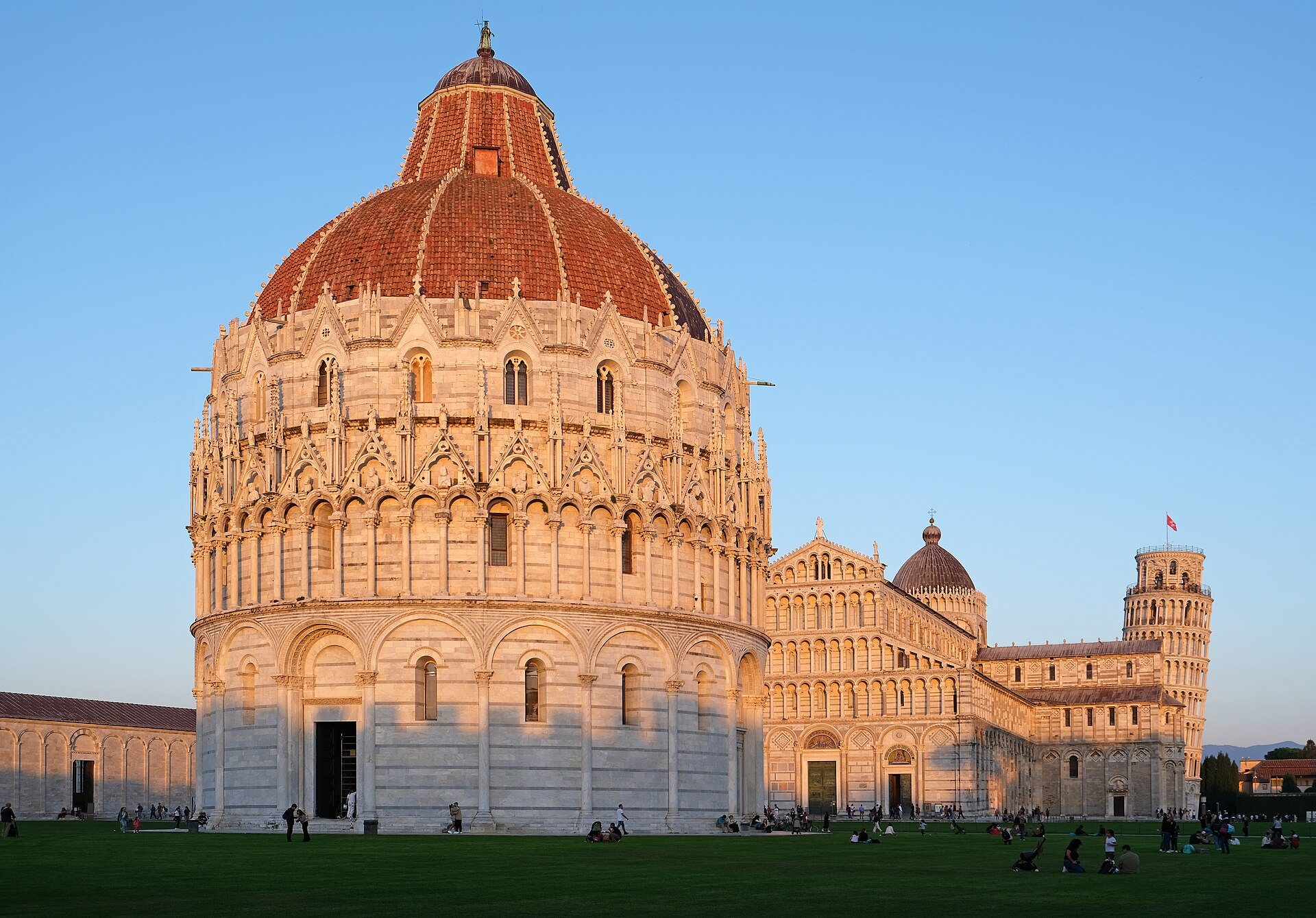
Student life in Pisa happens in the streets of a small historic centre, from Piazza dei Cavalieri, home of the Scuola Normale, to Borgo Stretto and the Lungarni along the Arno. Evenings mean aperitivo, cheap pizza and students everywhere, and the Leaning Tower stands on Piazza dei Miracoli. The sea at Marina di Pisa is a short ride away, and Florence and Lucca make easy trips. The pace is calm, safe and social rather than big-city, and summers are hot.
What should you sort out in your first weeks in Pisa?
In your first weeks in Pisa, sort out your paperwork before anything else, because your residence permit, tax code and health cover unlock rent, banking and scholarship payments. Non-EU students must request a permesso di soggiorno within 8 days of arrival, using the kit from a post office. Confirm your DSU Toscana place early, and buy your discounted bus pass once you are enrolled. Keep copies of every receipt and form you submit.
- Request your permesso di soggiorno within 8 days, using the post office kit (non-EU students).
- Get your codice fiscale (tax code), needed for rent contracts, a SIM card and enrolment.
- Arrange health cover: private insurance or voluntary registration with the SSN.
- Confirm your DSU Toscana scholarship and residence place, or sign a registered rental contract.
- Buy your discounted Autolinee Toscane bus pass through the University of Pisa deal.
Can you work part-time while studying in Pisa?
Yes, you can work part-time while studying in Pisa, within the limits of your permit. Non-EU students on a study permit may work up to 20 hours a week and 1,040 hours a year. Universities offer paid part-time student jobs, the collaborazioni 150 ore, through yearly calls, often in libraries and offices. Pisa's own job market is small and centred on tourism, hospitality and tutoring, and most jobs need Italian. Treat work as extra income, not as the way to pay your rent.
How does Pisa compare with other Italian student cities?
Pisa is cheaper than Milan, Rome, Bologna and nearby Florence. In September 2026 the average single room cost €364 a month, against €585 in Bologna, €615 in Rome, €627 in Florence and €704 in Milan (Immobiliare.it Insights). It is small and walkable, with a strong STEM focus. Students pick Pisa for computing, AI, engineering and physics in English, and choose Florence or Bologna for more subject choice and a bigger city.
How can ApplyAZ help you study in Pisa?
ApplyAZ helps you study in Pisa by building a shortlist of 20 to 30 English-taught programmes at public universities, including University of Pisa master's where they fit your profile. No university pays us. We write your CV and SOPs, submit applications and Universitaly pre-enrolment, file your DSU Toscana scholarship and prepare your visa file, with a named person owning each stage. The Normale and Sant'Anna are merit exams you prepare for directly. Next step: see how ApplyAZ works or check your eligibility.