

DSU scholarship · Emilia-Romagna
ER.GO Emilia-Romagna Scholarship 2026/27: Amounts, Deadlines and Documents
What the ER.GO 2026/27 call pays students from countries like India in Bologna, Ferrara, Modena and Parma, which family documents it wants, and when the money arrives.
Applications closed 24 Aug 2026. Domicile self-certification open until 3 Nov 2026. Provisional scholarship ranking 20 Oct 2026, appeals by 27 Oct 2026.
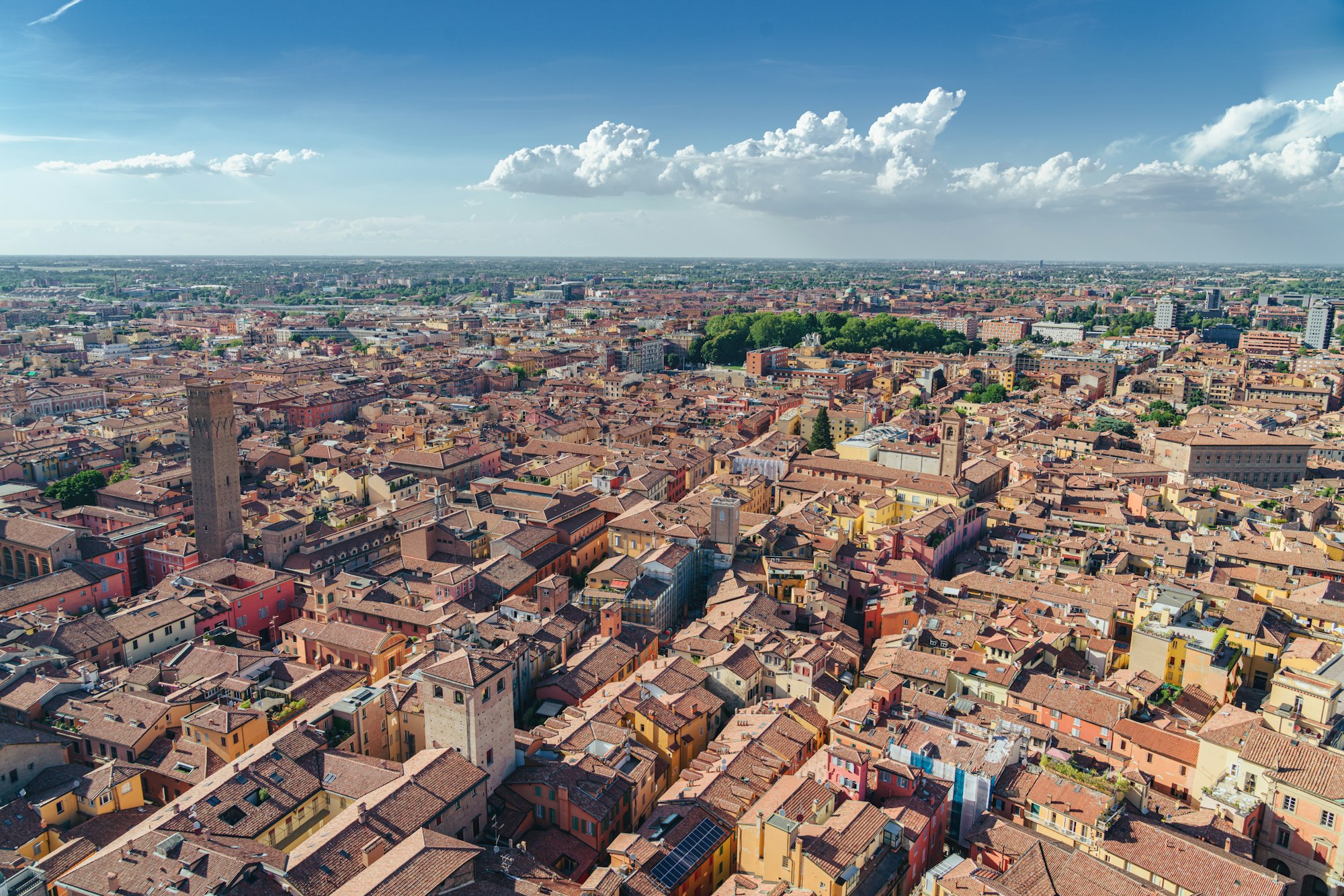
Photo: Daniel Seßler on Unsplash
In short
- ER.GO gives eligible students at Bologna, Ferrara, Modena and Reggio Emilia, and Parma up to 7,171.11 EUR a year (about INR 7,89,000) if living away from home and family ISEE is at most 25,000 EUR (Sez. I art. 7; Sez. II art. 1).
- ISPE (family assets) limit: 50,000 EUR (Sez. I art. 7). Study can be tuition-free for eligible students; beds cost extra.
- Applications closed on 24 August 2026; compare all 16 DSU scholarships.
ApplyAZ, an Italy-based consultancy that works only with public universities, helps eligible students by preparing their ISEE parificato and DSU application.
Free check, about two minutes.

Key facts for 2026/27
| Issuing body | ER.GO, Azienda Regionale per il Diritto agli Studi Superiori, the Emilia-Romagna regional body for university student support |
|---|---|
| Universities covered | University of Bologna, University of Ferrara, University of Modena and Reggio Emilia, University of Parma, all campuses (Sez. I art. 2.1). The call also covers other institutions in the region. |
| ISEE limit | 25,000.00 EUR (about INR 27,50,000) · Sez. I art. 7 |
| ISPE limit | 50,000.00 EUR (about INR 54,99,000) · Sez. I art. 7 |
| Grant by status and income | Fuori sede: 7,171.11 EUR in the top band (ISEE up to 16,666.67 EUR); range 3,585.56 to 7,171.11 EUR. ER.GO residence rent and any meal credit come out of the instalments · Sez. II art. 1, c. 1; art. 3, c. 4 Pendolare: 4,190.71 EUR in the top band; range 2,095.36 to 4,190.71 EUR · Sez. II art. 1, c. 1 In sede: 2,890.16 EUR in the top band; range 1,445.08 to 2,890.16 EUR · Sez. II art. 1, c. 1 Possible increases: +15% with ISEE up to 12,500 EUR (fuori sede 8,246.78 EUR) or +20% for women on STEM courses, paid only with the final instalment and only if funds remain · Sez. II art. 2 |
| What is included | Cash in instalments (Sez. II art. 13 and 14); full exemption from university contributions plus refund of the 140 EUR regional tax, so study can be tuition-free for eligible students, unless the grant is revoked for missing the 30 Nov 2027 credits (Sez. II art. 8); meals: optional conversion of 200, 400, 500 or 600 EUR of the grant into meal credit (Sez. II art. 1, c. 6); bed: not included, ER.GO residence rent is charged and deducted from the instalments (Sez. II art. 3, c. 4; Sez. III art. 13 and 14). |
| Family income year | 2025 income; property, mortgage and financial assets at 31 Dec 2025 (Sez. I art. 2.3 and 2.3.1) |
| Application window | 23 Jun 2026 to 24 Aug 2026, 16:00; late applications never accepted · Sez. I art. 14.3 |
| Foreign documents deadline | 24 Aug 2026, 16:00, uploaded in the Dossier Utente, also when a CAF filed the form · Sez. I art. 2.3 and 14.3 |
| ISEE parificato route | Direct to the body: ER.GO assesses the uploaded, legalised and translated foreign documents itself; the call does not use the term ISEE parificato (Sez. I art. 2.3 and 7) |
| First-year payment dates | Bachelor's and single-cycle: 20% by 10 Nov 2026 (enrolled by 17 Oct 2026), 30% by 31 Dec 2026 (enrolled by 17 Nov 2026), 10% from Mar 2027 (9 CFU by 28 Feb 2027), 40% plus any increments from Jun 2027 (25 CFU by 10 Aug 2027) · Sez. II art. 13. Master's: 50% by 31 Dec 2026, 10% from Mar 2027 (9 CFU by 28 Feb 2027), 40% from Jun 2027 (30 CFU by 10 Aug 2027) · Sez. II art. 14 |
| Credits to keep the grant | Bachelor's and single-cycle: 9 CFU by 28 Feb 2027 and 25 CFU by 10 Aug 2027 (up to 5 bonus). Master's: 9 CFU by 28 Feb 2027 and 30 CFU by 10 Aug 2027. Minimum to avoid repaying: 20 CFU by 30 Nov 2027, no bonus · Sez. I art. 4, 8 and 9; Tables 1 to 3 |
Source: ER.GO Emilia-Romagna Bando 2026/27, articles as shown. Verified on 28 September 2026. INR at the FBIL reference rate of 18 Sep 2026 (1 EUR = 109.99 INR).
Who can apply for ER.GO from countries like India?
The ER.GO bando (official call) is open to students from countries like India enrolling at the universities of Bologna, Ferrara, Modena and Reggio Emilia or Parma, if the family ISEE (the Italian family income indicator) is at most 25,000 EUR and ISPE (the family assets indicator) at most 50,000 EUR (Bando 2026/27, Sez. I art. 2.1 and 7).
Enrolment is not needed to apply, but it must be completed by each university's deadline: Bologna first-years by 19 November 2026, Ferrara by 15 December 2026 (two-year Master's by 15 April 2027), Modena and Reggio Emilia by 1 February 2027, Parma first-years by 31 March 2027 (Sez. I art. 13).
Students whose foreign degree is recognised as equivalent to or higher than the new course are excluded (Sez. I art. 2.2). Non-EU first-years whose family lives abroad have separate rankings, ordered by ascending ISEE (Sez. I art. 2.3.1 and 15.5). The call also covers other institutions in the region.
How much is the ER.GO grant?
A fuori sede (living away from home) student in the top band, with ISEE up to 16,666.67 EUR, gets 7,171.11 EUR a year (about INR 7,89,000). Lower bands get 4,661.22, 3,872.40 or 3,585.56 EUR. ER.GO residence rent and any meal credit come out of the instalments (Sez. II art. 1, c. 1).
- Pendolare (commuter): 4,190.71 EUR in the top band, down to 2,095.36 EUR (Sez. II art. 1, c. 1).
- In sede (living at home): 2,890.16 EUR in the top band, down to 1,445.08 EUR (Sez. II art. 1, c. 1).
- Increases, only if funds remain: +15% with ISEE up to 12,500 EUR (8,246.78 EUR fuori sede, about INR 9,07,000), or +20% for women on STEM courses. Both are paid only with the final instalment, after every eligible student has the base amount (Sez. II art. 2).
For students whose family lives abroad, the fuori sede amount needs an online domicile self-certification by 16:00 on 3 November 2026 and the rent documents, such as a registered lease covering at least 10 months, by 14 January 2027; otherwise ER.GO pays the in sede amount (Sez. II art. 5 and 6). An ER.GO bed held for at least 10 months counts automatically (Sez. II art. 6, c. 1).
Which documents does the family need from abroad for ER.GO?
ER.GO asks for the family's 2025 income and its assets at 31 December 2025, issued by the local authorities, legalised or apostilled, translated into Italian and uploaded by 16:00 on 24 August 2026. The call does not use an ISEE parificato (the income statement for families outside Italy): ER.GO assesses the documents itself (Sez. I art. 2.3 and 7).
Self-certifications are never accepted, and if ER.GO later asks for the paper originals, missing or partial originals mean revocation, whatever the reason (Sez. I art. 2.3). The full list is in the documents section below.
India is not on the particularly poor countries list, so families from countries like India file the full set (Sez. I art. 2.3.1, Tabella A).
When are the ER.GO deadlines for 2026/27?
Applications, the bed request and the upload of the foreign family documents all closed at 16:00 on 24 August 2026, and late applications are never accepted (Sez. I art. 14.3). For students who applied, the next dates are the provisional ranking on 20 October 2026 and online appeals by 27 October 2026 (Sez. I art. 15).
- Domicile self-certification: until 16:00 on 3 November 2026; rent documents by 14 January 2027, with a 5% penalty if later (Sez. II art. 6, c. 1 and 6).
- Post-appeal scholarship ranking: 17 November 2026 (Sez. I art. 15.1).
- Definitive ranking after merit and enrolment checks: by May 2027 (Sez. I art. 15.3).
- Enrolment: by each university's deadline, from 19 November 2026 in Bologna to 31 March 2027 in Parma (Sez. I art. 13).
Every region's dates are on our DSU deadlines page. For students we work with, we track each date and follow the rankings in their Dossier Utente (personal ER.GO area) with them, since all official communications go there (Sez. I art. 19).
How and when is the ER.GO grant paid?
Bachelor's and single-cycle first-years get 20% by 10 November 2026 if enrolled by 17 October, and 30% by 31 December 2026 if enrolled by 17 November. Then 10% from March 2027 with 9 CFU (university credits) by 28 February 2027, and 40% from June 2027 with 25 CFU by 10 August 2027 (Sez. II art. 13).
Master's first-years get 50% by 31 December 2026, 10% from March 2027 with 9 CFU by 28 February 2027, and 40% from June 2027 with 30 CFU by 10 August 2027 (Sez. II art. 14). Any increments come with the last instalment (Sez. II art. 2).
Payment goes only to an account or named prepaid card with an IBAN in the student's name; international IBANs outside the SEPA area are not accepted (Bando 2026/27, Sez. I art. 3). ER.GO also checks every applicant's codice fiscale (Italian tax code) and IBAN, and suspends payment if either is irregular (Sez. I art. 15.5). The grant is exempt from Italian income tax (Sez. II art. 1, c. 5).
How many credits do you need to keep the ER.GO grant?
To keep what has been paid, first-years need 20 CFU recorded by 30 November 2027, with no bonus, for both Bachelor's and Master's (Sez. I art. 4, c. 3; Table 3). The final 40% needs more: 25 CFU for Bachelor's or 30 CFU for Master's by 10 August 2027 (Sez. I art. 8 and 9; Table 2).
Credits must be recorded ("verbalizzati e registrati") by each date, and first-year international students cannot count credits recognised from earlier studies abroad (Sez. I art. 11.6, lett. c1). Bachelor's students may use up to 5 bonus credits for the 25 CFU target (Table 2). Our guide to credits to keep your grant compares the regions.
What happens if you miss the ER.GO credits?
Below 20 CFU on 30 November 2027, ER.GO revokes the grant: the student repays every instalment and the value of the services used, such as residence rent at the eligible-student rate and meal credit, and loses the tuition exemption and the regional tax refund (Sez. I art. 4, c. 3; Sez. II art. 8).
With 20 CFU by 30 November 2027 but short of the 10 August 2027 target, Bachelor's students keep the first two instalments but repay the third, and Master's students keep the first but repay the second (Sez. I art. 4, c. 4). For merit-based revocation, repayment is due without interest within one year of the notice (Sez. I art. 5).
Can you get an ER.GO residence bed?
A bed is possible if it was requested in the same application by 24 August 2026; 6% of places go to non-EU first-years (Sez. III art. 10, c. 2). It is not part of the grant: monthly rent in Bologna city is 193 to 322 EUR, plus a 250 EUR deposit (Sez. III art. 12 to 14; Table 1).
- First-year residence rankings came out on 10 September 2026 (provisional) and 24 September 2026 (after appeals); convocation letters go out through the Dossier Utente from September (Sez. I art. 15.1; Sez. III art. 5, c. 3).
- Rent is paid by the 10th of each month until November 2026, then deducted from the grant instalments; no rent is charged for the Christmas period and August (Sez. II art. 3, c. 4; Sez. III art. 13 and 14).
- At check-in: proof of enrolment, the deposit and first month, and copies of the passport and residence permit or its renewal receipt (Sez. III art. 12, c. 2).
- A no-show without prior renunciation, after a letter sent by 30 September 2026, means the grant is paid at the in sede amount (Sez. II art. 6, c. 9).
ER.GO residences are in Bologna, Ferrara, Modena, Parma and six other cities of the region (Sez. III art. 1). For a region where the bed is part of the grant, see DSU Toscana.
Documents from abroad for the ER.GO Emilia-Romagna 2026/27 call
ER.GO asked for official documents on the family's 2025 income and its assets at 31 December 2025, issued by the competent local authorities, legalised or apostilled, translated into Italian and uploaded through the Dossier Utente by 16:00 on 24 August 2026, also when a CAF (tax assistance centre) filed the form (Sez. I art. 2.3 and 14.3).
- a) Family composition at the application deadline, plus papers for special cases such as divorce, a deceased parent, a guardian or married adult siblings (Sez. I art. 2.3.1, lett. a).
- b) Occupation of each family member in 2025, or proof of unemployment and any benefit received (Sez. I art. 2.3.1, lett. b).
- c) Period worked by each member in 2025, shorter or longer than six months (Sez. I art. 2.3.1, lett. c).
- d) 2025 income: gross income of each adult from the tax authority; if unavailable, an employer's certificate, the December 2025 payslip showing the year's total, or all 12 payslips (Sez. I art. 2.3.1, lett. d).
- e) Buildings owned anywhere in the country at 31 December 2025 by each member, with gross floor area in square metres, or a statement that nobody owns property (Sez. I art. 2.3.1, lett. e).
- f) Mortgage still owed at 31 December 2025 (Sez. I art. 2.3.1, lett. f).
- g) Bank balances and other financial assets of each member at 31 December 2025 (Sez. I art. 2.3.1, lett. g).
- h) Disability of the student, if any (Sez. I art. 2.3.1, lett. h).
- Currency: amounts in local currency; ER.GO converts them (Sez. I art. 2.3.1).
- Legalisation: by the competent Italian diplomatic authority or, where applicable, by apostille (Sez. I art. 2.3).
- Italian translation: by the Italian diplomatic or consular representation, or by an official translator (Sez. I art. 2.3).
- Where they go: uploaded in the Dossier Utente, section Documentazione redditi esteri; paper originals only if ER.GO asks for them (Sez. I art. 2.3).
For eligible students, we collect, check, translate and legalise this file with the family. ER.GO states that no agency or intermediary is needed to collect or send the documents (Sez. I art. 2.3), and the upload is made from the student's own Dossier Utente, so we prepare everything and sit with the student while it is uploaded.
Check your eligibility first
It takes about two minutes. If you are eligible, you book a one to one consultation with one of our Italy experts, and from there we take care of everything.
Reality check
What ER.GO decides: eligibility, the rankings, the in sede, pendolare or fuori sede status and whether funds reach each student. First-years share 25% of the funds and are ranked by ascending ISEE; eligible students who are not funded still get the tuition exemption, the tax refund and a 500 EUR meal contribution (Sez. I art. 15.5; Sez. II art. 8 and 11, c. 2).
What we handle: for eligible students, the university application and enrolment, the legalised and translated family file, the ER.GO form prepared with the student, the domicile self-certification and lease documents, the rankings and a credit plan for the first year. ER.GO makes every decision; our work is a complete file, on time.
The two mistakes that cost students this grant most often:
- Foreign documents missing, incomplete, not legalised or apostilled, not translated, or not uploaded in the Dossier Utente by 16:00 on 24 August 2026, even when a CAF filed the form. Self-certifications are refused, and students who applied with university credentials also had to confirm the application by PEC reply or PIN by the same deadline. The cost: being ranked not eligible (Sez. I art. 2.3; art. 14.1, c. 5; art. 14.3).
- Fewer than 20 CFU recorded by 30 November 2027. The cost: repaying the whole grant and the value of the bed and meal credit, and losing the tuition exemption and tax refund. The final 40% also needs 25 CFU (Bachelor's) or 30 CFU (Master's) by 10 August 2027 (Sez. I art. 4, c. 3; art. 8 and 9).
Universities and cities covered
Universities
Cities
Programmes
Your visa: which Italian office handles you
The scholarship is one track. The study visa and the declaration of value (DOV) run alongside it. The visa goes to the Italian office for the state where you live, and the DOV to the office for the state that issued your degree. For eligible students, we prepare and check the whole file.
Check your eligibility first
It takes about two minutes. If you are eligible, you book a one to one consultation with one of our Italy experts, and from there we take care of everything.
Frequently asked questions about ER.GO Emilia-Romagna
Do I need to be enrolled before applying to ER.GO?
No. Enrolment is not needed to apply, but it must be completed by the university's deadline, for example 19 November 2026 for Bologna first-years or 31 March 2027 for Parma first-years (Sez. I art. 13 and 14.1). The first two instalments also depend on being enrolled by 17 October and 17 November 2026 (Sez. II art. 13).
I already hold a degree from abroad. Can I get ER.GO for a Master's?
It can be possible if the Master's is at a higher level than the degree you hold. Students whose foreign degree is recognised as equivalent to or higher than the course they enrol in are excluded (Sez. I art. 2.2). Master's admission must also be without credit debts, with the full 180 credits of the first degree recognised (Sez. I art. 9, lett. a).
Does the ER.GO scholarship cover tuition fees?
Eligible students, funded or not, get full exemption from university contributions and a refund of the 140 EUR regional DSU tax, so study can be tuition-free for eligible students (Sez. II art. 8). For first-years this holds only if the grant is not revoked for missing the 20 CFU on 30 November 2027.
Can I turn part of the ER.GO grant into meals?
Yes. When applying, a student could convert 200, 400, 500 or 600 EUR of the grant into prepaid credit for ER.GO canteens and partner venues, and the choice is irrevocable except in documented cases (Sez. II art. 1, c. 6; Sez. IV art. 2). Eligible students who get no grant for lack of funds receive a 500 EUR meal contribution (Sez. II art. 8).
Can I combine ER.GO with a MAECI scholarship?
No. The grant cannot be combined with other maintenance scholarships, including Italian Ministry of Foreign Affairs scholarships for international students, unless the other one is renounced. Erasmus-type mobility grants can be combined (Sez. II art. 10). Other scholarships must be reported within 30 days, or a 10% penalty applies (Sez. I art. 16).
What does 'particularly poor countries' mean for ER.GO?
It is the ministerial list in Tabella A of the call. Students from listed countries need only a certificate from the Italian representation stating that the family is not notoriously high income and high status (Sez. I art. 2.3.1). India is not on the list, so families from countries like India file the full set of income and asset documents.
What if I disagree with my ER.GO ranking?
Appeals against the provisional scholarship ranking of 20 October 2026 are filed online by 27 October 2026, and the post-appeal ranking follows on 17 November 2026 (Sez. I art. 15.1 and 15.2). The definitive ranking comes after merit and enrolment checks, by May 2027 (Sez. I art. 15.3). We prepare any appeal with the student.
Can ApplyAZ prepare my ER.GO application?
Yes. For eligible students we prepare the whole file. ER.GO states that no agency is required, and the form is filed from the student's own credentials, so we sit with the student while it is submitted (Sez. I art. 2.3 and 14.1). Check your eligibility first; if eligible, you book a one to one consultation with one of our Italy experts, and from there we take care of everything.
Your next step: check your eligibility first. It takes about two minutes. If you are eligible, you book a one to one consultation with one of our Italy experts, and from there we take care of everything.
Other regions
Sources
- Bando ER.GO Emilia-Romagna 2026/27 (call PDF, in Italian)
- Official 2026/27 call page
- ER.GO website
- Verified on 28 September 2026
- Written by İrem Yılmaz, Student Experience Lead. Reviewed by Reeya Sharma.