

Master in Molecular Biotechnology at University of Turin
Two-year English-taught biotechnology master in Turin with two pathways, Biomedical Imaging and Drug Discovery or Molecular Computational and Translational Biotechnology, plus two internships and a thesis spread over both years.
Master
2 years
Turin
English
University of Turin



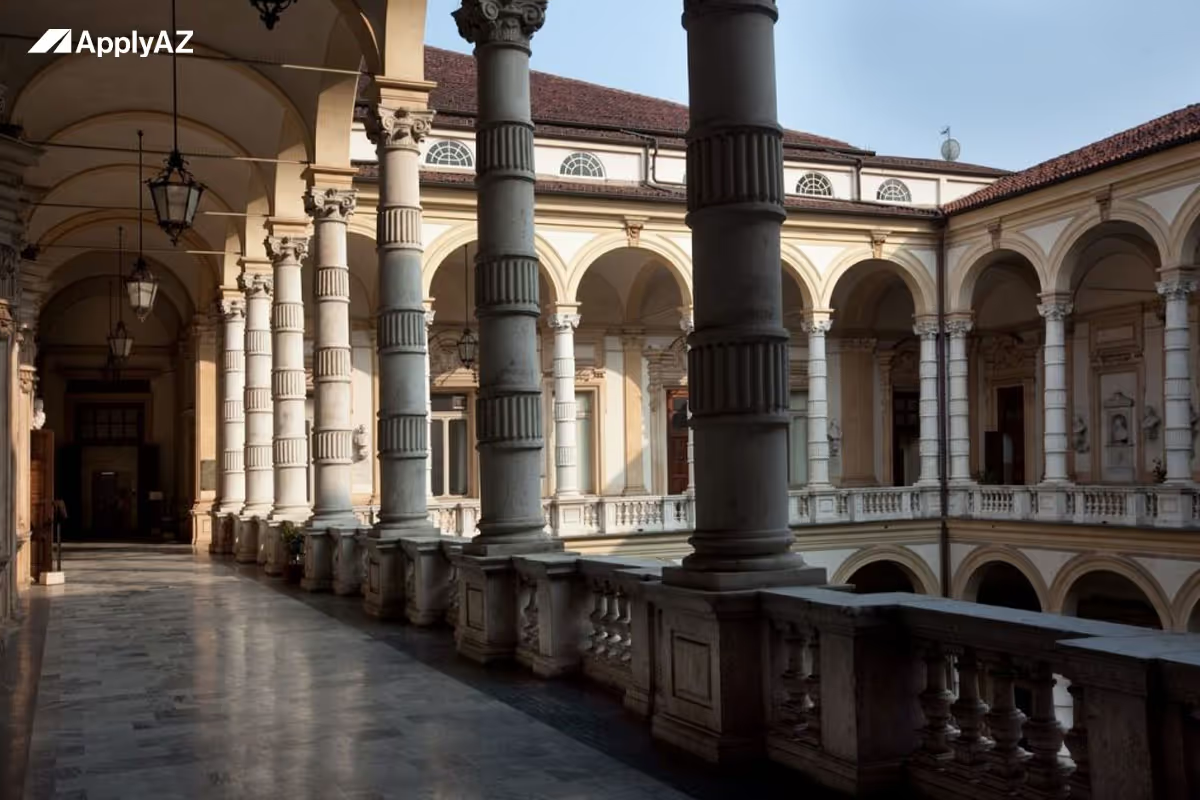
Molecular Biotechnology is a two-year, 120 ECTS master's degree (class LM-9-R) taught in English in Turin by the University of Turin's Department of Molecular Biotechnology and Health Sciences. Students choose between two pathways and complete two internships and a research thesis. Students residing abroad pay €500 to €1,500 a year by country, with zero euro tuition for eligible students.
Entry requirements
- A bachelor's degree or an equivalent foreign qualification, evaluated by the course board.
- At least 50 credits in biology or chemistry subjects, such as biochemistry, molecular biology, genetics, physiology, microbiology or general and organic chemistry.
- At least 10 credits in physics, mathematics, statistics or computer science.
- English at B2 level or higher, declared on entry, since the whole degree is taught in English.
- A check of your preparation by the course board before enrolment, and an Apply@UniTo application (€60) with CV, motivation letter, transcript and degree.
About the programme
Molecular Biotechnology is a two-year master's degree in class LM-9-R, medical, veterinary and pharmaceutical biotechnology. It is worth 120 ECTS, taught in English and in person in Turin by the Department of Molecular Biotechnology and Health Sciences. Access is open, and enrolment follows a check of your curriculum and preparation by the course board.
The degree aims to train graduates with a high level of competence in planning and developing biotechnology for human and animal health, both in science and in production. It suits graduates in biotechnology, biology, chemistry or related life sciences who want to work on diagnostics, drug discovery or genomics.
What you will study
You choose one of two pathways: Biomedical Imaging and Drug Discovery, or Molecular Computational and Translational Biotechnology. Both include biotech company management in the second year and a long list of electives, from CAR-T therapies to the hallmarks of ageing. Units in the 2026/27 study plan include:
- Biomedical Imaging (11 ECTS, imaging and drug discovery pathway)
- Computational Genomics and Gene Networks (10 ECTS, imaging and drug discovery pathway)
- Principles of Drug Discovery and Advanced Drug Discovery (5 ECTS each)
- Genomics and Epigenomics (10 ECTS, computational and translational pathway)
- Functional Genomics (8 ECTS) and Programming Approaches for Bioinformatics (5 ECTS)
- Therapeutic Biotechnology (8 ECTS) and Pharmacology and Drug Therapies (8 ECTS)
- Biotech Company Management (4 ECTS)
- Electives such as Computational Drug Discovery, Genetic Models of Human Pathology and Image Analysis for Biotechnologists
How the programme is taught
Practical training runs through both years. Each year includes a 6 ECTS internship stage, and the thesis is split into two parts: 5 ECTS in the first year and 14 ECTS in the second, so you build your research project over time. International students can take a 2 ECTS Italian course at beginner or pre-intermediate level.
Career paths
The degree prepares specialists in biotechnology applied to human and animal health, able to take part in both its scientific development and its production. The professional profiles listed on the Italian course page are:
- Biotechnologist
- Biochemist
- Biologist specialising in molecular biology
- Microbiologist
- Chemist and pharmaceutical technologist
The Biotech Company Management course adds a business view to the scientific training, and the two internship stages give practical experience before graduation.
Fees and scholarships
No programme-specific contribution applies on UniTo's list. If you reside abroad, the 2026/27 yearly contribution depends on the GDP per capita of your country of residence: €500 to €1,500 within the standard length of the degree, plus €156 for regional tax and stamp duty. Students from the particularly poor countries on the ministry's list pay only the €156. EDISU Piemonte scholarship winners have their fees refunded, so there is zero euro tuition for eligible students.
How to apply from outside the EU
Check your transcript against the credit requirements first: the course board looks for at least 50 credits in biology and chemistry and 10 in quantitative subjects. Non-EU applicants residing abroad apply on Apply@UniTo, with a €60 fee covering up to two programmes. For 2026/27 the master's call ran from 25 November 2025 to 29 January 2026. You need your degree and transcript with proof of authenticity, a CV and a motivation letter.
Once admitted, you complete the Universitaly pre-enrolment (by 15 July 2026 for 2026/27) and apply for a study visa; the consulate decides.
How ApplyAZ helps
If this programme fits your goals, ApplyAZ can include it in a shortlist of 20 to 30 English-taught programmes at Italian public universities. We write your CV and a tailored statement of purpose, submit your applications and Universitaly pre-enrolment, file your DSU scholarship application and prepare your visa file, with a named person on each stage. The university decides admission, the region decides the scholarship and the consulate decides the visa. See how ApplyAZ works or check your eligibility.
Questions and answers
Is the Master in Molecular Biotechnology taught in English?
Yes. The degree is taught in English, in person in Turin, and you must declare English at B2 level or higher on entry. International students can also take a short Italian course.
Which pathways can I choose?
Two: Biomedical Imaging and Drug Discovery, which covers imaging, genomics and drug design, and Molecular Computational and Translational Biotechnology, which covers genomics, epigenomics, bioinformatics and therapeutic biotechnology.
What bachelor's background do I need?
A degree with at least 50 credits in biology or chemistry subjects and at least 10 credits in physics, mathematics, statistics or computer science. The course board evaluates foreign qualifications.
Is there an entrance test?
No test is mentioned on the course pages. Access is open, and the course board checks your requirements and preparation before you can enrol.
How much are the fees?
For 2026/27, students residing abroad pay €500 to €1,500 a year depending on their country's GDP per capita, plus €156 in regional tax and stamp duty. EDISU Piemonte scholarship winners have their fees refunded.
What jobs do graduates do?
The Italian course page lists biotechnologist, biochemist, molecular biology specialist, microbiologist, and chemist and pharmaceutical technologist, all working on biotechnology for human and animal health.
Similar programmes
More programmes in this city

They began right where you are

