

Master in Language Technologies and Digital Humanities at University of Turin
Two-year English-taught master in Turin that joins natural language processing and computational linguistics with digital philology, history and multimodal archives, for graduates in the humanities or computer science. Admission is by CV and interview.
Master
2 years
Turin
English
University of Turin



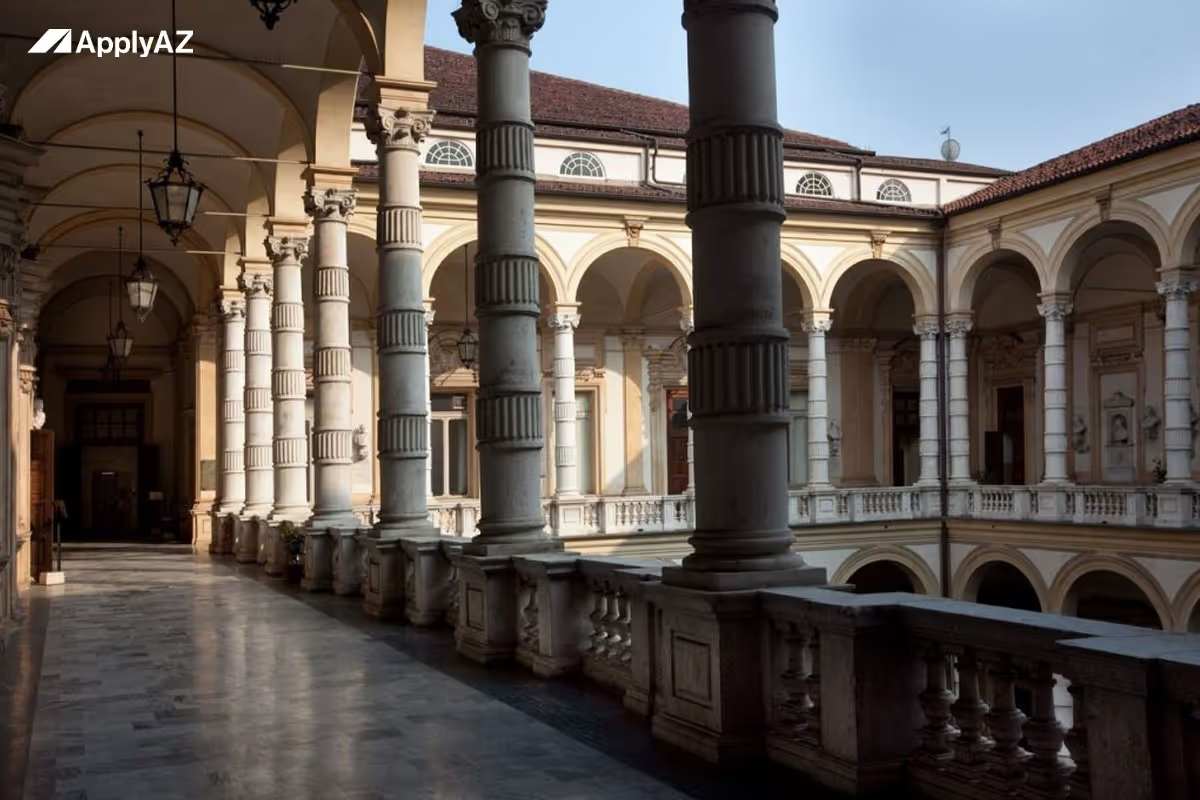
Language Technologies and Digital Humanities is a two-year, 120 ECTS master's degree (class LM-43-R) taught in English by the University of Turin's Department of Humanities. It combines natural language processing with digital philology, history and linguistics. Students residing abroad pay €500 to €1,500 a year by country, with zero euro tuition for eligible students.
Entry requirements
- A bachelor's degree after at least three years of university in the humanities, languages, communication, history, philosophy, computer science or a related field.
- Around 54 credits in subjects such as computer science, linguistics, literature, philology, history, philosophy, law or sociology, including at least 18 in core areas.
- A good final grade: for 2026/27 the admissions page asked for at least 7.7/10 for computer science graduates and 8.2/10 for other graduates, or equivalent.
- English at B2 level or higher, such as IELTS 5.5 with no component below 5.5, TOEFL iBT 69 or PTE Academic 65; without a certificate your English is checked at the interview.
- A dossier with degree, CV and motivation letter, then a compulsory admission interview.
About the programme
Language Technologies and Digital Humanities is a two-year master's degree in class LM-43-R, computing methods for the humanities. It is worth 120 ECTS, taught in English in Turin by the Department of Humanities, and access is open after an interview that checks your preparation. For 2026/27 it offered 50 places to non-EU applicants residing abroad.
The degree gives theoretical and practical expertise in designing technology for languages and texts and applying it. It brings together informatics, linguistics, philology, history, philosophy, law and economics, and aims to place students in an international research and working environment. It suits graduates in the humanities who want to learn computational methods, and computer science graduates who want to work with language and cultural data.
What you will study
Two 12 ECTS courses on natural language processing form the core of the first year, alongside blocks of historical-legal, humanities and related courses you pick from. The second year adds a course on multimodal data and archives, further electives and an 18 ECTS final thesis. Units in the 2026/27 study plan include:
- Linguistic Resources for Natural Language Processing (12 ECTS)
- Languages, Methods and Tools for Developing NLP Applications (12 ECTS)
- Technologies for Multimodal Data Representation and Archives (12 ECTS)
- Computational Linguistics
- Digital Philology and Digital Romance Philology
- Speech Technology and Data-Driven Corpus Analysis
- Digital Methods in Modern and Contemporary History, or Legal Aspects of Digital Technologies
- Mathematical Methods and Tools for Digital Humanities
How the programme is taught
The first year includes 6 ECTS of workshops, and in the second year you can use 6 ECTS for an internship or for alternatives such as a Chinese corpora activity or Italian courses for international students. The degree is registered in mixed teaching mode: most teaching is in person, while a few electives, such as Digital Didactics, Rhetoric, and Quantitative Methods and Tools for Digital Humanities, are offered online.
Career paths
UniTo points graduates towards companies working on language technologies, research, and jobs that need digital communication, computational linguistics, corpus analysis or digital media management. The professional profiles on the Italian course page include:
- Computational linguist in the NLP sector
- Data linguist or language engineer
- Digital publishing specialist
- Digital media project manager
- Cultural ICT consultant and digital cultural asset manager
- Designer of digital cultural environments
- Specialist in digital communication for businesses
Fees and scholarships
This degree has no extra fee on UniTo's additional contributions list. For 2026/27, students residing abroad pay a yearly contribution fixed by the GDP per capita of their country of residence, between €500 and €1,500 within the standard length of the degree, plus €156 in regional tax and stamp duty; students from the particularly poor countries on the ministry's list pay the €156 only. EDISU Piemonte scholarship winners are refunded, which gives zero euro tuition for eligible students.
How to apply from outside the EU
The interview is compulsory for everyone and covers the basics of digital humanities, computational techniques and your English. Non-EU applicants residing abroad apply on Apply@UniTo (€60 covers up to two programmes) with their degree, transcript, CV, motivation letter and English certificate. For 2026/27 the master's call ran from 25 November 2025 to 29 January 2026. Documents need proof of authenticity; a CIMEA statement is optional but useful.
After admission, you complete the Universitaly pre-enrolment (by 15 July 2026 for 2026/27) and apply for a study visa, which the consulate decides.
How ApplyAZ helps
If this programme fits your goals, ApplyAZ can include it in a shortlist of 20 to 30 English-taught programmes at Italian public universities. We write your CV and a tailored statement of purpose, submit your applications and Universitaly pre-enrolment, file your DSU scholarship application and prepare your visa file, with a named person on each stage. The university decides admission, the region decides the scholarship and the consulate decides the visa. See how ApplyAZ works or check your eligibility.
Questions and answers
Is Language Technologies and Digital Humanities taught in English?
Yes. The degree is taught in English and you need at least B2, for example IELTS 5.5 with no component below 5.5, TOEFL iBT 69 or PTE Academic 65. A few electives are offered online.
Do I need a computer science degree?
No. The degree accepts graduates in the humanities, languages, communication, history, philosophy and computer science, provided they have around 54 credits in the listed subjects. The interview checks your basic knowledge of digital humanities and computational methods.
Is there an entrance test?
There is no written test, but the admission interview is compulsory. An admission committee evaluates your curriculum and the interview, which also checks your English if you have no certificate.
What grade do I need?
For 2026/27 the admissions page asked for a final grade of at least 7.7/10 for computer science graduates and 8.2/10 for graduates in other fields, or the equivalent in your grading system.
How much are the fees?
For 2026/27, students residing abroad pay €500 to €1,500 a year depending on their country's GDP per capita, plus €156 in regional tax and stamp duty. EDISU Piemonte scholarship winners have their fees refunded.
What jobs do graduates do?
The university lists roles such as computational linguist, language engineer, digital publishing specialist, digital media project manager and cultural ICT consultant, in language technology companies, research and digital communication.
Similar programmes
More programmes in this city

They began right where you are

