

Master in Computer Engineering at Polytechnic University of Turin
Two-year LM-32 master at Politecnico di Torino with an English-taught edition: compulsory courses in computer architecture, software, databases, networks and security, then one of seven tracks, from AI and data analytics to embedded systems and HCI.
Master
2 years
Turin
Multiple
Polytechnic University of Turin



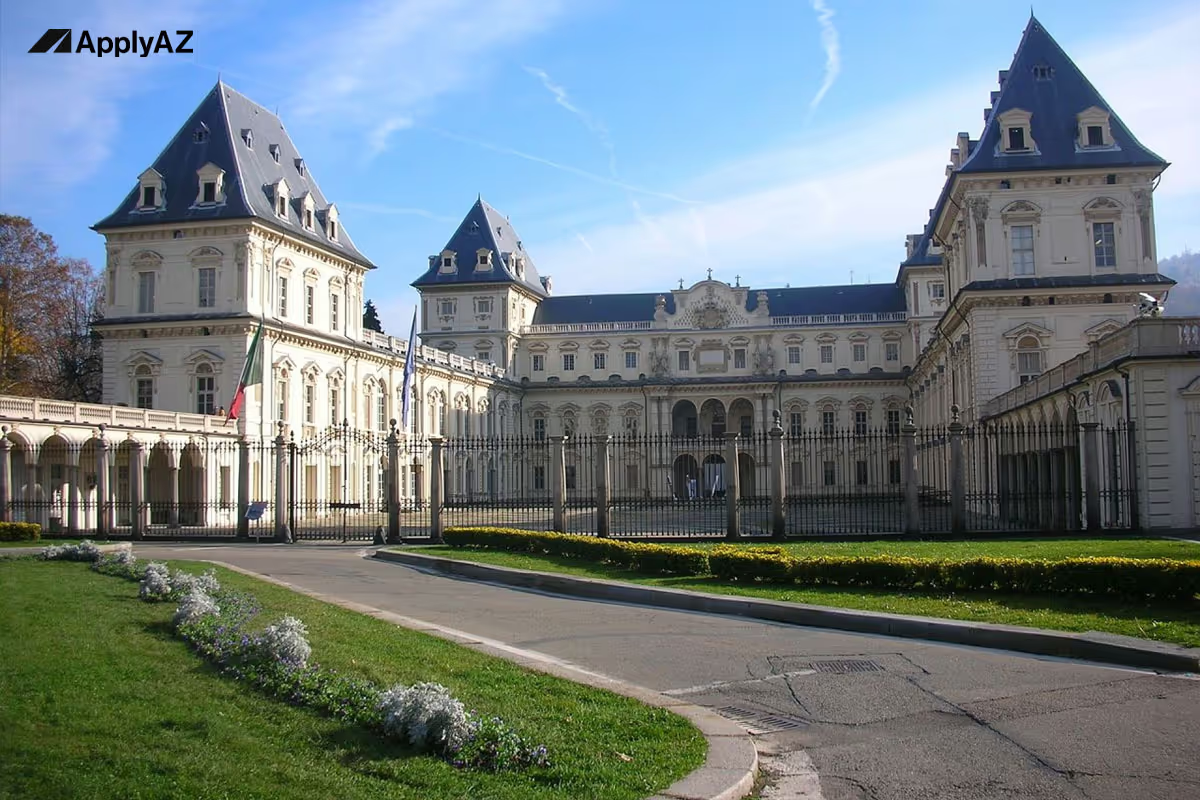
Computer Engineering is a two-year, 120 ECTS master's degree (class LM-32) at Politecnico di Torino in Turin, with an English-taught edition and seven specialist tracks. Entry needs a bachelor's with at least 40 credits in maths, physics and computing and 60 more in computing, electronics or related subjects, your course syllabus and English at B2, with IELTS 5.5 as the minimum. Fees follow family income, so it can be tuition-free for eligible students.
Entry requirements
Detailed entry requirements
Computer Engineering asks for a bachelor's degree or recognised foreign equivalent with at least 40 credits in maths, physics and computing and 60 more in computing, electronics, telecoms, automation, electrical engineering, probability or statistics, a suitable academic record checked by the programme's professors, your course syllabus, and English at B2 with IELTS 5.5 as the listed minimum. Reviewed 8 October 2026. [1]
Degree and credit requirement
You need a bachelor's degree or three-year university diploma, or a foreign academic qualification from an accredited or recognised university, earned after at least 15 years of total education, counting primary school, secondary school and university. [1]
Italian degrees in classes L-8 (Information Engineering) and L-31 (Computer Science) meet the curricular requirements automatically. For every other degree, the programme lead or a delegate checks that you have: [1]
- At least 40 credits in physics (FIS/01, FIS/03), computer science and computer engineering (INF/01, ING-INF/05), and algebra, geometry, mathematical analysis and numerical analysis (MAT/02, MAT/03, MAT/05, MAT/08).
- At least 60 credits in computer science and computer engineering (INF/01, ING-INF/05), electrical engineering (ING-IND/31), electronics (ING-INF/01), telecommunications (ING-INF/03), automatic control (ING-INF/04), probability (MAT/06) and statistics (SECS-S/01).
Credits in sectors shared by both groups count first towards the 40-credit group, and one course can count partly towards each group. The programme lead can recognise credits in other sectors as equivalent, with reasons, and decides on gaps of up to 10 credits; a larger gap needs final approval from the Collegio Coordinator or Vice Coordinator. Missing credits must be made up before enrolment, through single courses for gaps of up to 60 credits, or by enrolling in a bachelor's programme with credit transfer for larger gaps. [1]
PoliTo's 2026/27 course table recommends a background in any field of engineering or in computer science. Students in a five or six-year single-cycle degree who have not graduated need at least 15 years of total education, 3 of them at university, and at least 180 ECTS. Preparatory or foundation years do not count. [1][3]
What this means for your transcript
As a guide, based on the rule above:
- Usually a fit: a B.Tech or B.E. in Computer Science, IT, or Electronics and Communication, or a B.Sc. in Computer Science with solid maths and physics.
- Check carefully: a BCA or B.Sc. IT, which usually covers computing but can be light on the maths and physics in the 40-credit group, and a B.Sc. in Mathematics or Physics or a B.Tech in Electrical Engineering, which can fall short on computing, electronics or automation for the 60-credit group.
- Often short: a B.Com, BBA or BA, or a B.Tech in Civil or Mechanical Engineering, as these rarely reach 60 credits in computing, electronics, telecoms, automation or statistics.
The programme's professors assess how well your previous studies fit the degree, and the syllabus of your courses is a required upload, so a full and clear syllabus matters for this programme. [1][3]
English
Certified English at CEFR level B2 or higher, with IELTS 5.5 as the listed minimum for the English edition. Other certificates are accepted under PoliTo's certificate table, and the English edition needs no Italian for admission. [1][2][3]
- Exemption: a qualification earned after an English-medium path at a school or university in India, Pakistan, Bangladesh, Sri Lanka, Malaysia, Singapore and other listed countries, or a qualification from the US, UK, Ireland, Australia, New Zealand or another country on the university's list, replaces the certificate. You upload an official statement that English was the medium of instruction. [2]
- Sharing scores: TOEFL and TOEIC results are sent with code C285, and Cambridge results are shared online with your Candidate ID. [2]
The Italian edition, Ingegneria Informatica, is taught partly in Italian and partly in English and asks for Italian B2 as well as IELTS 5.5. [3]
Selection
For applicants with a foreign qualification, the regulations set no admission test. The Recruitment and Admissions Unit first checks your requirements and documents, then professors from the programme, appointed by the Collegio Coordinator, assess your academic performance and how well your previous studies fit the degree on Apply@polito. [1][2]
- Syllabus: required for Computer Engineering. [3]
- GRE: optional but highly valued; you can upload the GRE General Test score report as your one optional extra document. [2][3]
The result is eligible, a conditional offer (eligible, but you still need to finish your bachelor's), or not eligible. A not-eligible decision on curricular or academic grounds rules out every PoliTo master's for that year. A positive evaluation is valid only for the academic year you apply for, and deferrals are not possible. [1][2]
2026/27 deadlines
For 2026/27, the first call for foreign qualifications ran from 19 December 2025 to 13 February 2026, with results on 15 April 2026. The second call ran from 18 March to 20 April 2026, with results on 22 June 2026. [2]
Eligible non-EU applicants living abroad were asked to complete Universitaly pre-enrolment by 30 June 2026 (first call) or 15 July 2026 (second call). Online enrolment ran from 31 July to 5 October 2026, and the type D visa had to be uploaded by 30 November 2026. A third call, from 3 to 17 November 2026, is reserved for EU applicants and non-EU applicants living in Italy. The 2027/28 calendar is not yet published. [2]
Documents and non-EU steps
You apply online on Apply@polito with one application per call, choosing up to two master's programmes in order of preference. [2]
- Required uploads: passport, CV, bachelor's degree certificate or an official document with your expected graduation date, an official transcript showing the grading and credit systems, the syllabus of your courses, and your English certificate or exemption statement. [2][3]
- Syllabus source: issued by your university. PoliTo does not accept documents downloaded from the website of an accreditation authority, such as HEC in Pakistan. [2]
- Format: documents on letterhead, stamped and signed, or digitally signed and verifiable online. Documents not in Italian, English, French or Spanish are merged with an official English or Italian translation. [2]
- No changes after submission: incomplete applications are rejected and cannot be resubmitted in the same academic year. [2]
- For enrolment: a declaration of value, CIMEA statement of comparability or Diploma Supplement, plus the type D study visa and an Italian fiscal code. [2]
Non-EU applicants living abroad then complete Universitaly pre-enrolment, which PoliTo validates only once you are eligible and have uploaded your bachelor's degree. [2]
Sources and verification
Checked by the ApplyAZ admissions team against the university's official documents listed below. Entry rules can change with each new call, and we re-check them before every application.
- Politecnico di Torino, Department of Control and Computer Engineering. Academic regulations, Master's degree in Computer Engineering (Ingegneria Informatica, LM-32), academic year 2026/27, issued by Rector's Decree no. 525 of 28 May 2026. Reviewed 8 October 2026.
- Politecnico di Torino, Admissions and Enrolment. Applicants with a non-Italian qualification, Master's degree programmes, academic year 2026/27. Reviewed 8 October 2026.
- Politecnico di Torino. Course-specific requirements for Master's degree programmes, applicants with a non-Italian qualification, academic year 2026/27, updated 19 December 2025. Reviewed 8 October 2026.
- Politecnico di Torino, Computer Engineering programme pages: overview, programme details, specialist tracks, Twin Track and programme curriculum, academic year 2026/27. Reviewed 8 October 2026.
- Politecnico di Torino, Department of Control and Computer Engineering. Academic regulations, Master's degree in Computer Engineering, academic year 2025/26 (English translation). Reviewed 8 October 2026.
About the programme
Computer Engineering is a two-year, 120 ECTS master's degree in class LM-32 (Computer Systems Engineering) at Politecnico di Torino, taught on the main campus in Turin by the Department of Control and Computer Engineering. [4]
It has an English-taught edition, open to applicants with English only, alongside the Italian edition, Ingegneria Informatica, which is taught partly in Italian and asks for Italian B2 as well as IELTS 5.5. The thesis and its defence can be in English. [1][3]
Access is uncapped, subject to an evaluation of your admission requirements. [4]
The degree prepares engineers for the design, engineering, development, operation, maintenance and security of computer applications and systems, information processing systems and complex information systems, with a focus on the technologies expected to emerge over the next decade.
PoliTo recommends a background in any field of engineering or in computer science. [3]
What you will study
The course is built in four layers: compulsory courses, the core courses of a specialist track, two 6-credit electives and free-choice credits. [1]
The compulsory courses cover computer architecture, system programming, software engineering, databases, automation, networks and IT security, and are mostly taken in the first year. The 2026/27 regulations list seven specialist tracks, and you choose one when you enrol: [1][4]
- Artificial Intelligence and Data Analytics
- Automation and Intelligent Cyber-Physical Systems
- Computer Graphics and Multimedia
- Computing and Network Infrastructures
- Embedded and Smart System Design
- Human-Computer Interaction
- Software
In the 2026/27 study plan, every compulsory course has an English version, and the track courses listed for all seven tracks are marked as taught in English. They include Big data processing and analytics, Advanced machine learning, Robot learning, Computer animation, Virtual and augmented reality, Cloud computing technologies, System-on-chip architecture, Human-AI interaction and Software engineering II. [4] We check the track list and teaching language for the year you enrol.
How the programme is taught
Teaching combines lectures, classroom practicals, computer labs, experimental exercises, self-study and group work. [4]
The final examination is worth 30 credits, about one semester of full-time work, and centres on an innovative analysis, project or application. Students who want a curricular internship can ask to split these credits into an 18-credit thesis and a 12-credit internship, and thesis work can take place at a company or organisation in Italy or abroad. [1]
You can also earn a double degree by spending periods of study abroad. Through the Twin Track scheme, Computer Engineering students can obtain a second master's degree, in Cybersecurity Engineering, in just one year. [4]
Under the 2025/26 regulations, students whose native language is not Italian had to prove Italian at A2 level, through a Politecnico exam or an internationally recognised certificate. [5]
Career paths
The 2026/27 regulations describe seven professional profiles, matching the tracks: [1]
- Designer of distributed, networked, data centre and cloud systems, for IT departments, consultancies, cloud companies and telecom operators
- Designer in computer graphics and multimedia, including interactive, virtual and augmented reality applications
- Software application designer, defining the architecture of complex software and managing its development
- Designer of intelligent control and industrial automation systems, in robotics, aerospace, automotive, energy and manufacturing
- Embedded systems designer, for consumer electronics, automotive, biomedical and avionics companies
- Designer of IT systems for artificial intelligence and data analytics, in IT departments, software companies and analytics teams
- Interactive software application designer, shaping the user experience of web, mobile, desktop and AI-based systems, for software and digital services companies, UX consultancies and research centres
Fees and scholarships
How much you pay at Politecnico di Torino depends on your citizenship or residence, and reductions are available on the basis of family income; the yearly fee rules set the figures.
Regional support comes from EDISU Piemonte, which awards scholarships and university housing and accepts applications from international students.
Students with a family abroad send foreign income and asset documents, which EDISU turns into an ISEE parificato to assess eligibility.
How to apply from outside the EU
Computer Engineering asks for the syllabus of your previous courses and says a GRE score is optional but highly valued. [3]
We apply on Apply@PoliTO, choosing the English edition. You can rank up to two master's programmes. [2]
For 2026/27 the first call ran from 19 December 2025 to 13 February 2026 and the second from 18 March to 20 April 2026. The 2027/28 calendar is not yet published. [2]
After admission, and once your bachelor's degree is documented, we submit your Universitaly pre-enrolment, and you apply for a type D study visa. Enrolment requires a declaration of value, a CIMEA statement of comparability or a Diploma Supplement. [2]
How ApplyAZ helps
ApplyAZ is an Italy-based consultancy that works only with public universities. We can include this programme in a shortlist of 20 to 30 English-taught programmes that fit your profile, so your plan never rests on a single application.
For eligible students who start with us, a named person owns each stage, from A to Z:
- We check your transcript against PoliTo's entry rules for this programme.
- We write your CV and a tailored statement of purpose.
- We prepare and submit your Apply@polito application, supporting documents and Universitaly pre-enrolment.
- We help you declare your family income for reduced fees and file your EDISU Piemonte scholarship application at the right time and in the right format.
- We prepare your visa file.
With operations in all 20 Italian regions, we follow each region's scholarship rules and deadlines as they change. The university decides admission, the region decides the scholarship and the consulate decides the visa, so no one can promise an outcome. You pay in milestones, and every service you pay for is either delivered or its fee is refunded (terms apply).
Programmes at Italian public universities can be tuition-free for eligible students. Check if you are eligible and book a one-to-one consultation session with one of our Italy experts, or see how ApplyAZ works.
Questions and answers
What bachelor's degree do I need for Computer Engineering at PoliTo?
A bachelor's or recognised foreign degree earned after at least 15 years of education. Italian L-8 and L-31 degrees qualify directly; other degrees need at least 40 credits in maths, physics and computing and 60 more in computing, electronics, telecoms, automation, electrical engineering, probability or statistics. [1]
Is the Master in Computer Engineering taught in English?
Yes, there is an English edition that needs English only. In the 2026/27 study plan every compulsory course has an English version and the listed track courses are marked as taught in English. The Italian edition, Ingegneria Informatica, is partly in Italian and asks for Italian B2 as well. [3][4]
Is there an entrance test?
No admission test for applicants with a foreign qualification. Professors on the programme assess your academic record and how well your studies fit the degree. You must upload your course syllabus, and a GRE score is optional but highly valued. [1][3]
What English level is required? Do I need IELTS?
English at B2 or higher, with IELTS 5.5 as the listed minimum. A qualification earned through English in India, Pakistan, Bangladesh, Sri Lanka and other listed countries can replace the certificate, with an official medium-of-instruction statement. [1][2][3]
When is the deadline for non-EU students?
For 2026/27, the general calls for foreign qualifications ran from 19 December 2025 to 13 February 2026 and from 18 March to 20 April 2026. The 2027/28 calendar is not yet published. [2]
Can I apply before I graduate?
Yes. You upload an official document with your expected graduation date and can receive a conditional offer. PoliTo validates Universitaly pre-enrolment only once your degree is uploaded, and for 2026/27 enrolment closed on 5 October 2026. [2]
I have a BCA or a B.Sc. in Mathematics. Can I apply?
Possibly. A BCA usually covers computing but can be light on the maths and physics in the 40-credit group, while a maths degree can lack the computing, electronics or automation credits in the 60-credit group. The programme lead decides on gaps of up to 10 credits, and missing credits are made up before enrolment. [1]
Which specialist tracks are there?
The 2026/27 regulations list seven: Artificial Intelligence and Data Analytics, Automation and Intelligent Cyber-Physical Systems, Computer Graphics and Multimedia, Computing and Network Infrastructures, Embedded and Smart System Design, Human-Computer Interaction, and Software. You choose one when you enrol. [1][4]
Can someone handle my whole application to Computer Engineering at PoliTo?
Yes. ApplyAZ, an Italy-based consultancy that works only with public universities, checks your transcript against PoliTo's rules for this programme, handles the application and Universitaly pre-enrolment, helps you file the EDISU Piemonte scholarship application at the right time and in the right format, and prepares your visa file, for eligible students. Start by checking your eligibility.
I'm applying from India. What is the route into Computer Engineering?
A recognised Indian bachelor's, such as a B.Tech or B.E. in Computer Science, IT or Electronics, can meet the rule if it includes at least 40 credits in maths, physics and computing and 60 more in computing, electronics, telecoms, automation, electrical engineering, probability or statistics. You also need English at B2 and your course syllabus, and a GRE score is optional but highly valued. The steps are the Apply@polito application, confirmation of eligibility and Universitaly pre-enrolment. [1][3] Indian students apply for the type D study visa at the Italian embassy or consulate that covers their state, such as New Delhi, Mumbai or Bengaluru.
Is the route different from Pakistan, Bangladesh or Sri Lanka?
No. The academic rules for Computer Engineering are the same whatever your nationality. Applicants from Pakistan, Bangladesh and Sri Lanka follow the same steps as India: Apply@polito application in a general call, confirmation of eligibility and Universitaly pre-enrolment, then a type D study visa from the Italian mission for their country of residence. Read our guide for students in Dhaka.
I live in the UAE, Saudi Arabia, Qatar, Kuwait, Oman or Bahrain. Where do I apply for the visa?
At the Italian embassy or consulate responsible for the country where you legally live, after Universitaly pre-enrolment. The academic rules for Computer Engineering are the same whatever your nationality, and Gulf residents follow the same steps: Apply@polito application in a general call, confirmation of eligibility and Universitaly pre-enrolment. Read our guides for Dubai, Riyadh and Doha.
I studied or live in London, New York, Toronto, Vancouver, Singapore or Kuala Lumpur. What is the route?
The academic rules for Computer Engineering are the same whatever your nationality, and your degree is assessed like any other foreign qualification. Non-EU applicants who live abroad follow the same route: Apply@polito application in a general call, confirmation of eligibility and Universitaly pre-enrolment, then a type D study visa from the Italian mission for where they live. Read our guides for students in London, New York, Toronto, Vancouver, Singapore and Kuala Lumpur.
More English-taught programmes at this university
Other public universities in this city

They began right where you are

