

Master in Biotechnological and Chemical Sciences in Diagnostics at University of Turin
Two-year English-taught master in Turin applying chemistry and biotechnology to biomedical diagnostics: analytical methods, nanomaterials, in vivo imaging, medicinal chemistry and nuclear medicine, with two internships and an experimental thesis.
Master
2 years
Turin
English
University of Turin



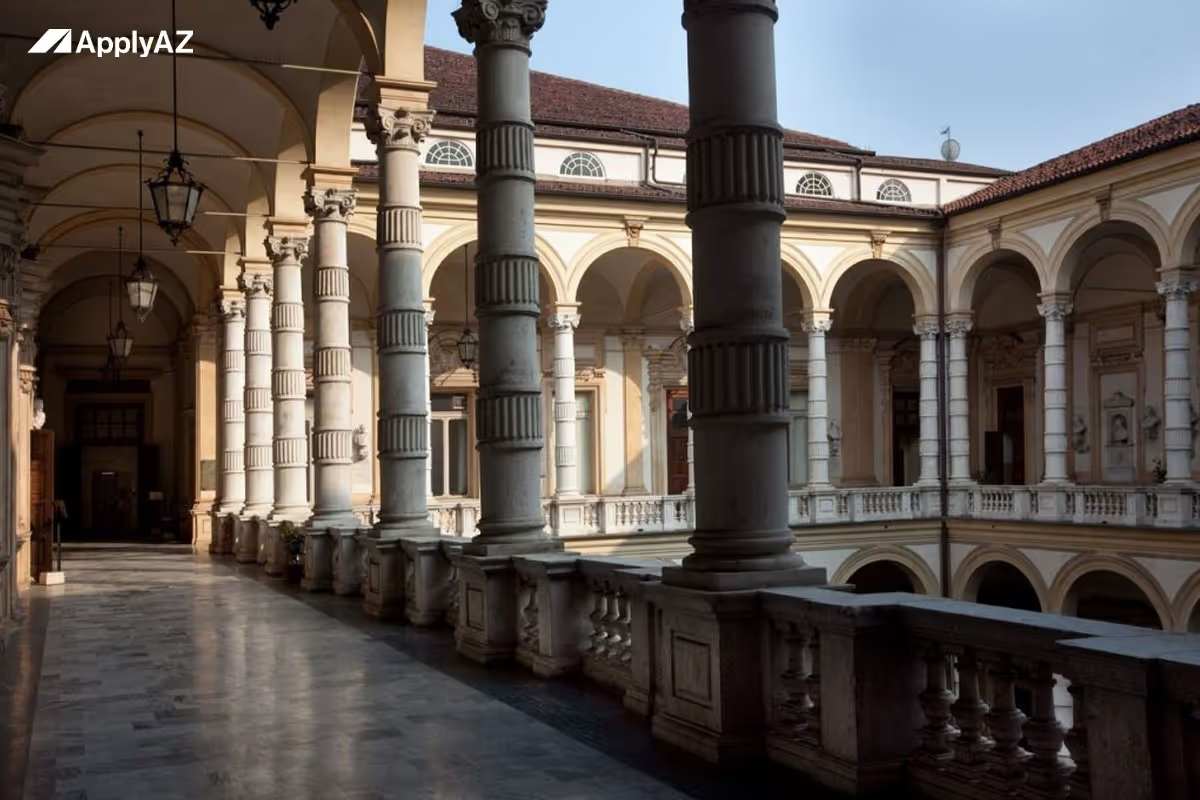
Biotechnological and Chemical Sciences in Diagnostics is a two-year, 120 ECTS master's degree (class LM-8-R) taught in English at the University of Turin. It applies chemistry and biotechnology to biomedical diagnostics, with two internships and an experimental thesis. Students residing abroad pay €500 to €1,500 a year by country, with zero euro tuition for eligible students.
Entry requirements
- A bachelor's degree or equivalent foreign qualification, normally in biotechnology, biological sciences, chemistry or pharmaceutical sciences.
- Graduates of other degrees need at least 10 credits in mathematics, physics or computer science and at least 18 credits in chemistry or biology, with a tolerance of up to 15%.
- English at B2 level, since all teaching is in English.
- An admission test on general, inorganic and organic chemistry, molecular and cellular biology, and mathematics and physics; graduates abroad must pass it, while Italian graduates of the listed classes with 99/110 or more are exempt.
- An Apply@UniTo application (€60) with CV, motivation letter, transcript and degree with proof of authenticity.
About the programme
Biotechnological and Chemical Sciences in Diagnostics is a two-year master's degree in class LM-8-R, industrial biotechnology, worth 120 ECTS and taught entirely in English in Turin. It is run by the Department of Molecular Biotechnology and Health Sciences together with the Department of Chemistry, and access is open, subject to a check of your requirements and preparation.
The aim is to train graduates with a high level of skill in the science and technology of chemistry and biotechnology applied to biomedical diagnostics, from analysing biomolecules to imaging probes and nuclear medicine. It suits graduates in biotechnology, biology, chemistry or pharmaceutical sciences who want to work on how diseases are detected and monitored.
What you will study
Almost the whole study plan is compulsory. The first year covers analytical and structural methods, cell and molecular biology for diagnostics, immunology, nanomaterials and imaging technologies; the second year moves to synthetic strategies, imaging probes, medicinal chemistry and nuclear medicine. Units in the 2026/27 study plan include:
- Analytical and Structural Methods in Diagnostics (11 ECTS)
- Biomolecules Analysis and Nanomaterials (10 ECTS)
- Applied Cell and Molecular Biology in Diagnostics (9 ECTS)
- Advanced Molecular Immunology (6 ECTS)
- In Vivo Diagnostics: Imaging Technologies (6 ECTS) and Imaging Probes (9 ECTS)
- Medicinal Chemistry (9 ECTS)
- Nuclear Medicine in Molecular Imaging (6 ECTS)
- Electives such as CAR-T and Advanced Cellular Therapies, Computational Drug Discovery and Advanced Mass Spectrometry (4 ECTS each)
How the programme is taught
Practical training is built in: there are two compulsory internships of 6 ECTS each, arranged through agreements with research bodies and companies, and the degree ends with a 12 ECTS experimental thesis. The degree is registered in mixed teaching mode, which allows part of the teaching online; in the 2026/27 study plan one first-year unit, Mathematical and Physical Methods and Tools, also has an online edition. A 3 ECTS language unit offers Italian for international students or intercomprehension.
Career paths
The official course page names academic settings, public and private research, and the chemical, pharmaceutical and biotechnology industries as the main outlets. The professional profiles it lists are:
- Biotechnologist
- Biochemist
- Biologist
- Research chemist
- Physicist
- Pharmaceutical scientific representative
The two internships and the experimental thesis add practical experience to the coursework, which helps when applying for research or industry roles in diagnostics.
Fees and scholarships
For 2026/27, UniTo charges students residing abroad a fixed yearly contribution based on the GDP per capita of their country of residence: €500 to €1,500 within the standard length of the degree, plus €156 for regional tax and stamp duty. The €156 is all that students from the particularly poor countries on the ministry's list pay. EDISU Piemonte scholarship winners are refunded and pay no further instalments, so there is zero euro tuition for eligible students.
How to apply from outside the EU
If you graduated abroad, plan for the admission test: it covers chemistry, molecular and cellular biology, and mathematics and physics, and is held periodically in person or remotely. Non-EU applicants residing abroad apply on Apply@UniTo (a €60 fee covers up to two programmes); for 2026/27 the master's call ran from 25 November 2025 to 29 January 2026. You upload your degree with proof of authenticity, a transcript, CV and motivation letter.
After admission, you complete the Universitaly pre-enrolment (by 15 July 2026 for 2026/27) and apply for a study visa, which the consulate decides.
How ApplyAZ helps
If this programme fits your goals, ApplyAZ can include it in a shortlist of 20 to 30 English-taught programmes at Italian public universities. We write your CV and a tailored statement of purpose, submit your applications and Universitaly pre-enrolment, file your DSU scholarship application and prepare your visa file, with a named person on each stage. The university decides admission, the region decides the scholarship and the consulate decides the visa. See how ApplyAZ works or check your eligibility.
Questions and answers
Is Biotechnological and Chemical Sciences in Diagnostics taught in English?
Yes. The degree is delivered entirely in English in Turin and requires English at B2 level. It is registered in mixed teaching mode; in 2026/27 one first-year unit also had an online edition.
What bachelor's background do I need?
Typically a degree in biotechnology, biological sciences, chemistry or pharmaceutical sciences. Other graduates need at least 10 credits in mathematics, physics or computer science and 18 credits in chemistry or biology.
Is there an admission test?
Yes for graduates abroad. The test covers chemistry, molecular and cellular biology, and mathematics and physics. Italian graduates of the listed classes with a final mark of 99/110 or more are admitted directly.
Does the degree include internships?
Yes. There are two compulsory internships of 6 ECTS each, arranged through agreements with research bodies and companies, plus a 12 ECTS experimental thesis in the second year.
How much are the fees?
For 2026/27, students residing abroad pay €500 to €1,500 a year depending on their country's GDP per capita, plus €156 in regional tax and stamp duty. EDISU Piemonte scholarship winners have their fees refunded.
What careers does it lead to?
The course page points to research in universities and public or private laboratories, and to the chemical, pharmaceutical and biotechnology industries, with profiles such as biotechnologist, biochemist, research chemist and pharmaceutical scientific representative.
Similar programmes
More programmes in this city

They began right where you are

