

Master in Artificial Intelligence and High Performance Computing Technologies at University of Turin
Two-year English-taught computer science master in Turin joining machine and deep learning with parallel programming and high performance computing, AI ethics and law, and a 24 ECTS thesis in research groups or with partners.
Master
2 years
Turin
English
University of Turin



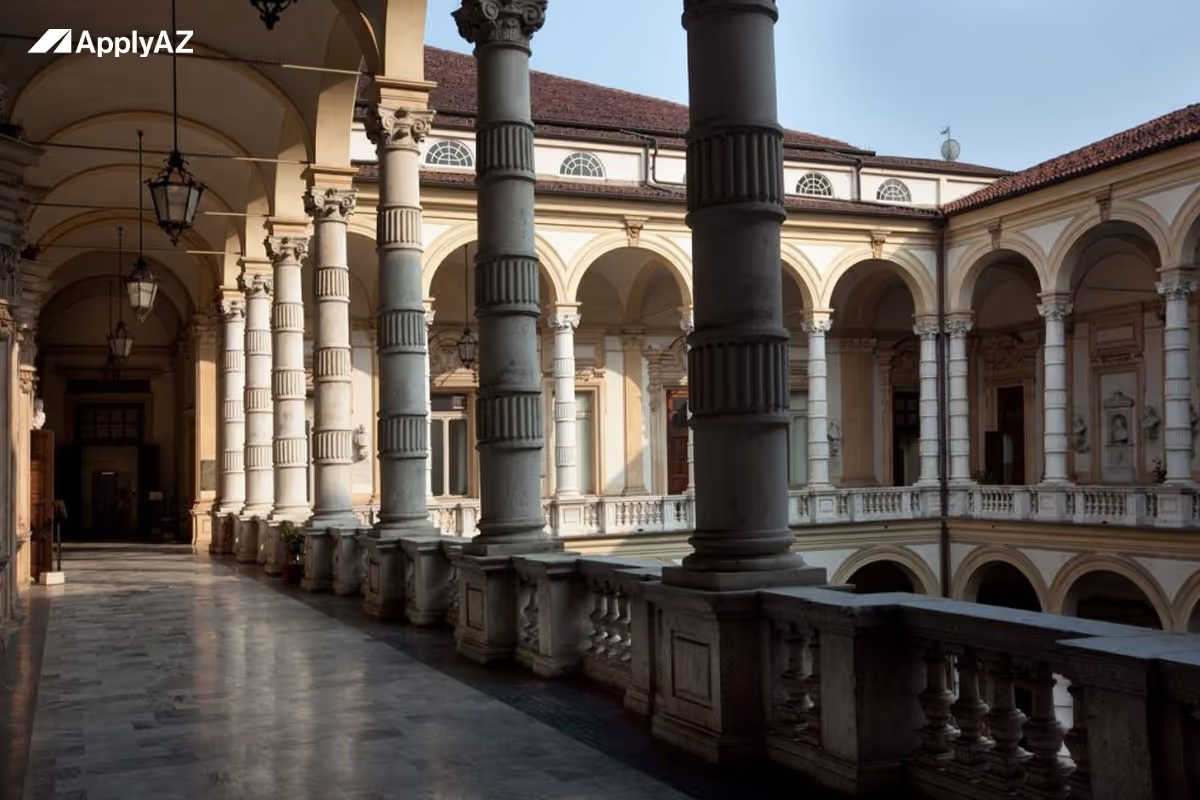
Artificial Intelligence and High Performance Computing Technologies is a two-year, 120 ECTS master's degree (class LM-18) taught in English by the University of Turin's Department of Computer Science. It combines machine and deep learning with parallel and scalable computing. Students residing abroad pay €500 to €1,500 a year by country, with zero euro tuition for eligible students.
Entry requirements
- A bachelor's degree in computer science (class L-31) or another first-cycle degree after at least three years of university, with a final grade of at least 7/10 or equivalent.
- At least 48 ECTS in computer science or computer engineering and at least 18 ECTS in mathematics, covering programming, architectures and operating systems, networks, databases, algorithms and formal languages.
- English at B2 level with an international certificate no more than three years old, such as IELTS 6.0 with no component below 6, PTE Academic 65 or Cambridge FCE 173.
- An oral examination of your preparation, unless your degree grade is at least 95% of the maximum.
- An Apply@UniTo application (€60) with CV, motivation letter, transcript and degree with proof of authenticity.
About the programme
Artificial Intelligence and High Performance Computing Technologies is a two-year master's degree in class LM-18, computer science, worth 120 ECTS. It is taught entirely in English in Turin by the Department of Computer Science, and access is open, subject to a check of your curriculum and preparation. For 2026/27 it offered 50 places to non-EU applicants residing abroad.
The degree trains professionals who can analyse, design, develop and manage complex, distributed, reliable and high-performance systems for artificial intelligence. It brings together mathematics, machine and deep learning, natural language processing, computer vision, parallel computing and AI ethics. It suits computer science and computer engineering graduates who want to work where large-scale AI meets the hardware and software that runs it.
What you will study
The first year is mostly compulsory and builds the two pillars of the degree, learning and computing, plus three electives out of four. The second year centres on the thesis, with a 9 ECTS course in either cloud and distributed systems or trustworthy AI and two shorter electives. Units in the 2026/27 study plan include:
- Mathematics for AI and HPC (12 ECTS)
- Machine and Deep Learning (9 ECTS)
- Parallel Programming and High Performance Computing (9 ECTS)
- Scalable and Accelerated Computing (6 ECTS)
- Ethics, Law and AI (6 ECTS)
- Computer Vision, Information Theory, Language Technologies, or Network Science and Graph Analytics (6 ECTS each)
- Cloud and Distributed Systems, or Trustworthy and Responsible AI (9 ECTS)
- Second-year electives such as Quantum Computing and Applications, Advanced Multimodal Learning and Data Science and Technologies
How the programme is taught
The final project is worth 24 ECTS, a fifth of the degree, and is carried out in the research groups of the Department of Computer Science or with external partners. The course page says students meet real problems brought by researchers and companies. International students can add a 3 ECTS course in Italian at beginner or pre-intermediate level, or in scientific English.
Career paths
According to UniTo, graduates are ready for technical and strategic roles in building advanced, reliable and scalable AI solutions powered by high performance computing, or can go on to a PhD. The roles named on the admissions page include:
- Software and systems analyst or designer in high-performance AI
- AI project or product manager
- AI business or innovation specialist
- High-performance AI consultant
- Data analyst or data scientist
- AI or HPC research and development specialist
- Technical director (CTO) in the AI and HPC sector
The Italian course page adds profiles such as software architect, cybersecurity expert, IT process expert, researcher and statistician.
Fees and scholarships
There is no extra fee for this degree on UniTo's list of additional contributions. If you reside abroad, your yearly contribution for 2026/27 is fixed by your country's GDP per capita: €500 to €1,500 within the standard length of the degree, plus €156 for regional tax and stamp duty. Students from the particularly poor countries on the ministry's list pay the €156 only. EDISU Piemonte scholarship winners are refunded, which gives zero euro tuition for eligible students.
How to apply from outside the EU
Get your English certificate ready first: it must be at least B2 and no more than three years old. Non-EU applicants residing abroad apply on Apply@UniTo, where €60 covers up to two programmes. For 2026/27 the master's call ran from 25 November 2025 to 29 January 2026. You upload a CV, motivation letter, transcript and degree with proof of authenticity; a CIMEA statement is optional but useful. Unless your grade is at least 95% of the maximum, an oral examination follows.
Once admitted, you complete the Universitaly pre-enrolment (by 15 July 2026 for 2026/27) and apply for a study visa at the consulate, which decides.
How ApplyAZ helps
If this programme fits your goals, ApplyAZ can include it in a shortlist of 20 to 30 English-taught programmes at Italian public universities. We write your CV and a tailored statement of purpose, submit your applications and Universitaly pre-enrolment, file your DSU scholarship application and prepare your visa file, with a named person on each stage. The university decides admission, the region decides the scholarship and the consulate decides the visa. See how ApplyAZ works or check your eligibility.
Questions and answers
Is the Master in Artificial Intelligence and High Performance Computing Technologies taught in English?
Yes. All teaching is in English, and you need a B2 English certificate no more than three years old, such as IELTS 6.0 with no component below 6, PTE Academic 65 or Cambridge FCE 173.
What bachelor's background do I need?
A computer science degree or another three-year degree with at least 48 ECTS in computer science or computer engineering and 18 ECTS in mathematics. The admissions page also asks for a final grade of at least 7/10 or equivalent.
Is there an entrance test?
There is no written test. An oral examination checks your preparation, and you are exempt if your degree grade is at least 95% of the maximum possible grade.
When can I apply?
For 2026/27 the call for non-EU applicants residing abroad ran on Apply@UniTo from 25 November 2025 to 29 January 2026, with 50 places. The 2027/28 calendar was not yet published in September 2026.
How much are the fees?
For 2026/27, students residing abroad pay €500 to €1,500 a year depending on their country's GDP per capita, plus €156 in regional tax and stamp duty. EDISU Piemonte scholarship winners have their fees refunded.
What jobs do graduates do?
UniTo names roles such as software and systems analyst in high-performance AI, AI project or product manager, data scientist, high-performance AI consultant, research and development specialist and technical director. Graduates can also continue to a PhD.
Similar programmes
More programmes in this city

They began right where you are

