

Master in Product Service System Design at Polytechnic University of Milan
Two-year English-taught design master at Politecnico di Milano (Milano Bovisa) focused on service and strategic design: research methods, UX, data and service design, studios, system design for sustainability and a final synthesis studio.
Master
2 years
Milan
English
Polytechnic University of Milan


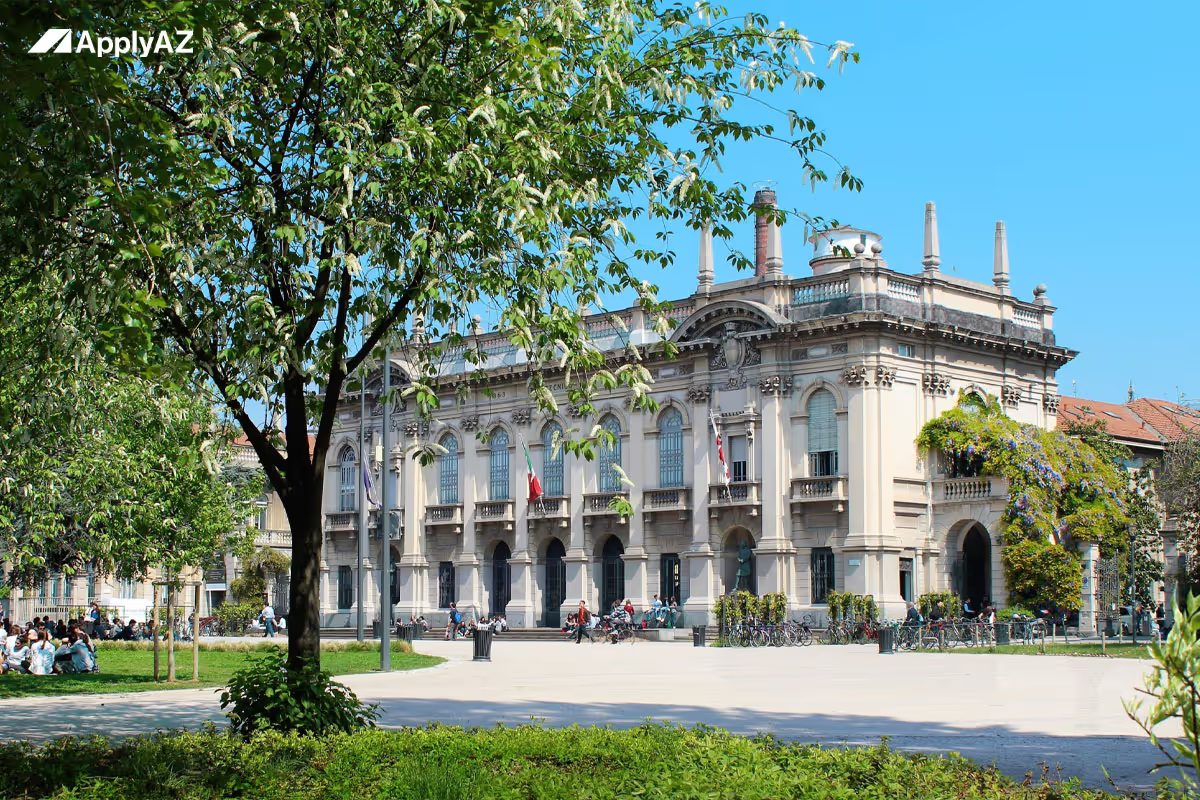
Product Service System Design is a two-year, 120 ECTS master's degree (class LM-12) taught entirely in English at Politecnico di Milano's School of Design, on the Milano Bovisa campus. It trains designers to create integrated systems of products, services and communication. Tuition follows the university's yearly fee rules.
Entry requirements
- A bachelor's degree in design, or relevant post-graduate work experience with a design background, as the programme page describes; foreign degrees must give access to EQF level 7.
- A portfolio of your design work, which the programme page lists as required.
- A grade average that meets the minimum Politecnico di Milano sets for your country.
- An English certificate recognised by the university, or a university statement that your bachelor's was taught entirely in English.
- No written entrance test: the School of Design evaluates your application.
- A Diploma Supplement, declaration of value or CIMEA statement of comparability before enrolment.
About the programme
Product Service System Design (PSSD) is a two-year master's degree (laurea magistrale) in class LM-12, Design, worth 120 ECTS and run by the School of Design at the Milano Bovisa campus. Every unit in the 2026/27 course list is taught in English, and students are split into two parallel sections.
The degree website describes PSSD as the first master's programme to develop competences in service design, born out of the Politecnico's founding research on product service systems for sustainability. Graduates learn to conceive and manage integrated product, service, event and communication strategies, working in teams across disciplines and in international settings. It suits design graduates who want to move from single objects to services and systems.
What you will study
The first year builds research, service and experience design skills around two studios; the second year closes with a final synthesis studio and a free choice of electives. Units in the 2026/27 course list include:
- Design and Research Methods
- Innovation Studio
- UX Design
- Service Design and Innovation (Public and Social Change; Smart Service)
- Data and Service Design
- Product Service System Design Studio
- System Design for Sustainability
- Final Synthesis Design Studio
How the programme is taught
Teaching is studio-based and team-based: the first semester includes a teambuilding activity, and the first-year list also includes units on leadership and innovation strategy, branding, semiotics and prototyping. In the second year you choose electives from an English list that includes AI-Powered Design, Venture Design, Social Entrepreneurship, Policy Design and Evaluation, Design Futures and Smart Cities and Urban Innovation, then complete an internship and the final examination.
The university's programme page, written for 2024/25, also mentions double degree options with Tongji University in Shanghai or with Management Engineering at Politecnico di Milano. The degree website reports about 80 places a year against more than 800 applications, so selection is competitive.
Career paths
The programme page lists career opportunities that reach well beyond classic product design:
- Traditional design industry
- Service design
- Retail design and brand design
- Art direction
- Trend analysis
- UX design and research
Fees and scholarships
Tuition for PSSD follows Politecnico di Milano's yearly rules, and the 2026/27 figures are on the tuition fees page. The Politecnico runs the DSU right-to-study scholarship itself. Students who meet its merit and financial-need conditions can apply, and the university decides the awards.
How to apply from outside the EU
Prepare a portfolio first: the programme page lists it as required, next to a design bachelor's or relevant design work experience. The School of Design evaluates every foreign-qualification application before admission, and entry is only possible in the first semester.
You apply through the international admissions route. The foreign-qualification requirements ask for a degree giving access to EQF level 7, the grade minimum for your country and English proof. After admission you complete the Universitaly pre-enrolment, apply for a type D visa and provide a Diploma Supplement, declaration of value or CIMEA statement before enrolment.
How ApplyAZ helps
If this programme fits your goals, ApplyAZ can include it in a shortlist of 20 to 30 English-taught programmes at Italian public universities. We write your CV and a tailored statement of purpose, submit your applications and Universitaly pre-enrolment, file your DSU scholarship application and prepare your visa file, with a named person on each stage. The university decides admission, the region decides the scholarship and the consulate decides the visa. See how ApplyAZ works or check your eligibility.
Questions and answers
Is the Master in Product Service System Design taught in English?
Yes. Every unit in the 2026/27 course list is taught in English, and students are divided into two parallel sections.
Do I need a design bachelor's?
The programme page asks for a bachelor's degree in design or relevant post-graduate work experience with a design background, plus a portfolio. Your grade average must also meet the Politecnico's minimum for your country.
Is there an entrance test?
There is no written test. The School of Design evaluates your application, including your academic record, portfolio and English certificate. Admission is only possible for the first semester.
What will I study?
Design and research methods, UX design, service design and innovation, data and service design, two design studios, system design for sustainability and a final synthesis studio, plus English electives.
How much does it cost?
Tuition follows Politecnico di Milano's yearly fee rules, published on its tuition fees page. Students who meet the merit and financial-need conditions can apply for the DSU scholarship that the university runs.
What careers does it lead to?
The programme page lists the design industry, service design, retail and brand design, art direction, trend analysis, and UX design and research.
Similar programmes
More programmes in this city

They began right where you are

