

Master in Molecular Biotechnology and Bioinformatics at University of Milan
Two-year English-taught master at the University of Milan in industrial biotechnology and bioinformatics, from protein engineering and microbiology to genomics data analysis, ending with a 37 ECTS lab project.
Master
2 years
Milan
English
University of Milan


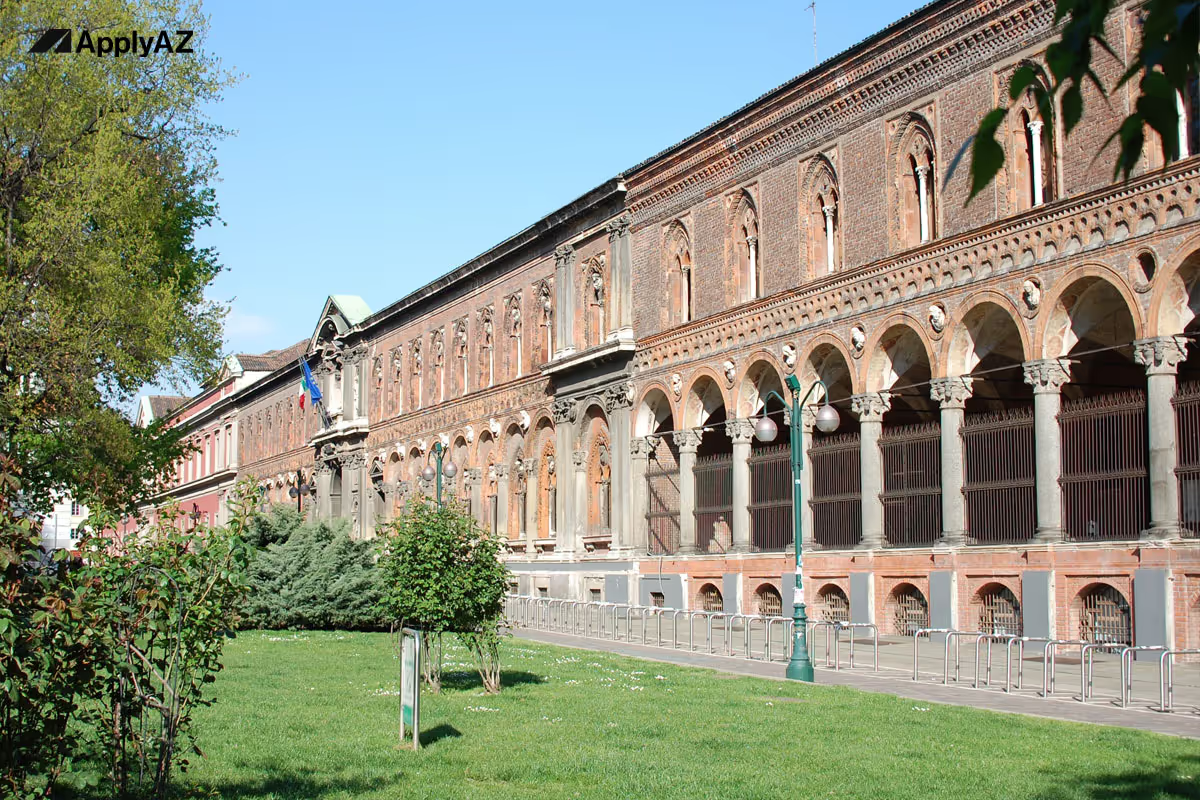
Molecular Biotechnology and Bioinformatics is a two-year, 120 ECTS master (class LM-8-R) taught in English by the University of Milan at Città Studi, Milan. It combines industrial biotechnology with genomics and bioinformatics and ends with a lab thesis. Non-EU students with family income abroad pay a fixed fee by country group.
Entry requirements
- A bachelor's degree in biotechnology (class L-2) or equivalent, with at least 60 ECTS in biology (including 36 ECTS in biochemistry, molecular biology, genetics and microbiology), 10 ECTS in mathematics, physics, computer science or statistics and 10 ECTS in chemistry.
- Graduates of foreign universities need a bachelor's degree with a strong base in biochemistry, molecular biology, genetics and microbiology, plus mathematics, physics, chemistry, computer science and statistics.
- English at B2 or higher: a certificate issued in the last three years, a University of Milan SLAM certificate from the last four years, or the SLAM entry test.
- Your preparation is considered adequate with a bachelor's grade above 88/110 or an exam average above 23/30; otherwise the committee may ask for more information or an interview.
- An application on apply.unimi.it with a €30 fee; up to 25 places are reserved for non-EU students living abroad.
About the programme
Molecular Biotechnology and Bioinformatics is a two-year master's degree in class LM-8-R (industrial biotechnology), taught in English by the University of Milan's Department of Biosciences, with the Department of Chemistry as a partner department. Lectures and labs are on the Città Studi campus in Milan, mostly at Via Celoria 26, Via Celoria 20 and Via Golgi 19.
The programme gives a broad base in the key disciplines of industrial biotechnology and teaches you to analyse genomic, proteomic and metabolomic data and to design biotechnological processes. It aims to prepare graduates who can work independently and lead projects in research, development, innovation and quality control. It suits biotechnology and life science graduates who want to combine wet-lab and computational skills.
What you will study
The first year is fully compulsory. In the second year you pick at least two of the optional units, such as Advanced Bioinformatics for Biotechnology, Macromolecular Structural Biology, Molecular Breeding and Plant Genetics or Patenting and Technology Transfer, plus 12 free-choice ECTS. First-year units include:
- Functional Genomics and Bioinformatics (10 ECTS)
- Advanced Molecular and Cellular Biotechnology (10 ECTS)
- Methods in Bioinformatics
- Biotechnological Products and Processes
- Molecular and Cellular Microbiology
- Rational Design and Structural Characterization of Bioactive Molecules
- Protein Engineering and Molecular Enzymology
- Plant Biotechnology
How the programme is taught
Teaching combines lectures, practical classes and lab work, and attendance at lectures is strongly recommended. A large part of the second year goes to an experimental project in a research laboratory, at the university or at another public or private facility in Italy or abroad with the coordinator's approval. It is worth 37 ECTS in total: 7 ECTS of laboratory training and a 30 ECTS thesis. You also earn 3 ECTS in soft skills, which can include Italian for foreigners. Erasmus+ lets you take exams or do thesis work at partner universities that teach in English.
Career paths
Graduates work as biologists, biochemists, biophysicists and biotechnologists in research laboratories, production plants and quality control labs. Sectors named by the university include:
- Pharmaceutical and chemical industries
- Food production and agri-food
- Environmental biotechnology
- Diagnostics and biotechnology services
- Genomics and proteomics research labs
Fees and scholarships
For 2026/27 the degree falls in fee Area B. If your family's income and assets are outside Italy, you pay a fixed second instalment according to your country group: €256 for Group A, which covers countries like India, Pakistan and Iran, €1,164 for Group B and €4,101.12 for Group C, plus a first instalment from €146. The university administers the Lombardy regional DSU scholarship, whose full winners pay no second instalment, so there is zero euro tuition for eligible students.
How to apply from outside the EU
This is an open-access master with up to 25 places reserved for non-EU students living abroad. The committee checks your record, and a bachelor's grade above 88/110 or an average above 23/30 counts as adequate preparation; otherwise it may ask for an interview. For 2026/27, visa applicants applied on apply.unimi.it from 22 January to 30 April 2026 with a €30 fee. The 2027/28 notice was not yet out in September 2026.
Admitted students then submit Universitaly pre-enrolment (by 31 July for 2026/27), apply for a type D study visa with B2 English, and provide a CIMEA statement or declaration of value.
How ApplyAZ helps
If this programme fits your goals, ApplyAZ can include it in a shortlist of 20 to 30 English-taught programmes at Italian public universities. We write your CV and a tailored statement of purpose, submit your applications and Universitaly pre-enrolment, file your DSU scholarship application and prepare your visa file, with a named person on each stage. The university decides admission, the region decides the scholarship and the consulate decides the visa. See how ApplyAZ works or check your eligibility.
Questions and answers
Is this master taught in English?
Yes, the whole degree is taught in English. You need English at B2 level or higher, shown by a recent certificate, a University of Milan SLAM certificate or the SLAM entry test.
What bachelor's background do I need?
A degree in biotechnology or a related field with a strong base in biochemistry, molecular biology, genetics and microbiology, plus credits in chemistry, mathematics, physics, computer science or statistics.
Is there an entrance test?
No written test. A bachelor's grade above 88/110 or an exam average above 23/30 counts as adequate preparation. Below that, the committee may ask for more information or an interview.
How many non-EU students are admitted?
Up to 25 places are reserved for non-EU students living outside Italy. For 2026/27, visa applicants applied by 30 April 2026 on apply.unimi.it, paying a €30 fee.
How much are the fees?
For 2026/27, students with family income abroad pay a fixed second instalment by country group, from €256 a year in Group A, plus a first instalment from €146. Full DSU scholarship winners pay no second instalment.
What jobs do graduates do?
Graduates work as biologists, biochemists, biophysicists and biotechnologists in research labs, production plants and quality control, in pharmaceuticals, chemicals, food, environmental biotechnology and diagnostics.
Similar programmes
More programmes in this city

They began right where you are

