

Master in Molecular Biology of the Cell at University of Milan
Two-year English-taught biology master at the University of Milan covering molecular genetics, protein biochemistry, structural and cell biology and bioinformatics, with about ten months of lab research for the thesis.
Master
2 years
Milan
English
University of Milan


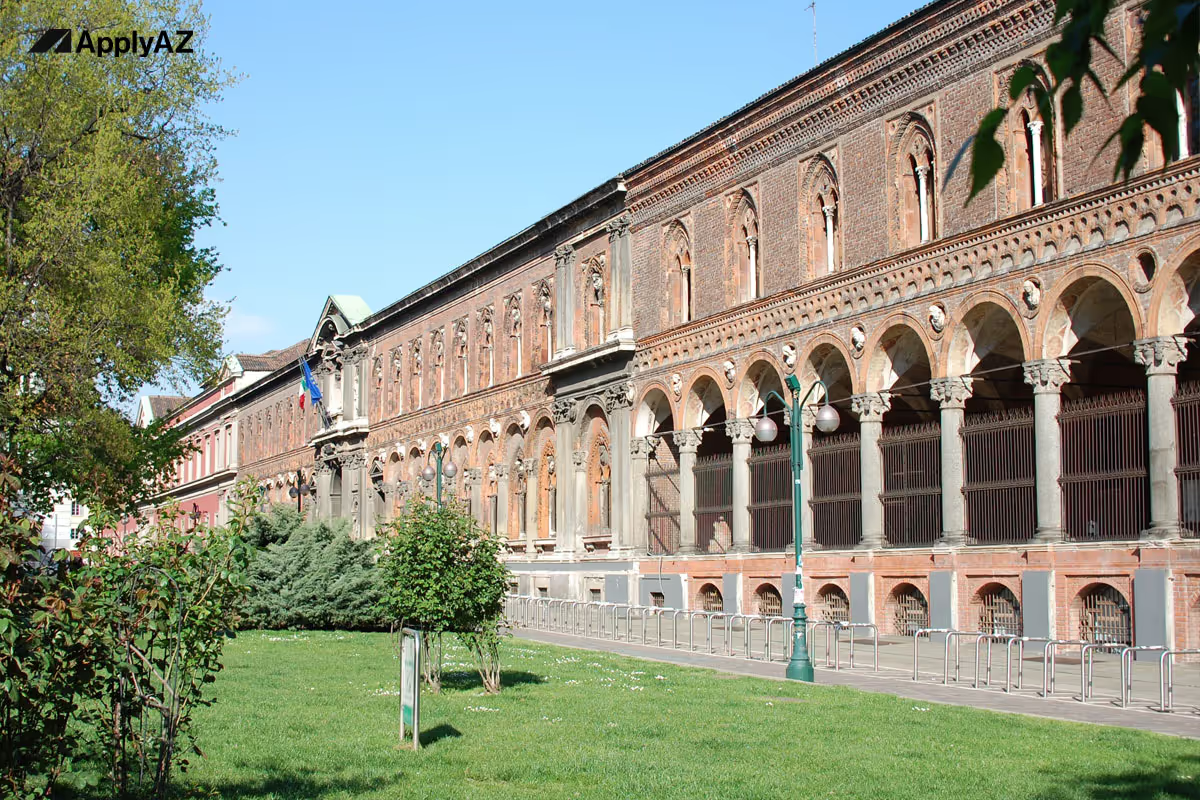
Molecular Biology of the Cell is a two-year, 120 ECTS master (class LM-6-R) taught in English by the University of Milan's Department of Biosciences at Città Studi, Milan. It trains biologists for advanced biomolecular research, with a year-long lab thesis. Non-EU students with family income abroad pay a fixed fee by country group.
Entry requirements
- A bachelor's degree in biological sciences (class L-13) or biotechnology (L-2), or another degree with enough credits in biology, chemistry and mathematics, physics or computer science.
- English at B2 level (CEFR); your scientific English is assessed at the interview.
- An interview on molecular biology, genetics, microbiology, biochemistry and physiology, scored with your graduation grade (25 points) and CV (10 points) against 65 points for the interview; you need 60 out of 100.
- For 2026/27, 25 places were reserved for non-EU students living abroad.
- An application on apply.unimi.it with a €30 fee; at enrolment, a legalised degree with a CIMEA statement of comparability or a declaration of value.
About the programme
Molecular Biology of the Cell is a two-year master's degree in class LM-6-R (biology), taught entirely in English by the Department of Biosciences of the University of Milan. Classes are held in person on the Città Studi campus, in the biology buildings at Via Celoria 26, the teaching centre at Via Celoria 20 and Via Golgi 19.
The degree trains biologists for advanced biomolecular research. It covers genome analysis, gene regulation, macromolecular structures, cell signalling, metabolic regulation, biomolecular engineering, bioinformatics and biostatistics, with applications in the pharmaceutical and agri-food sectors. It suits graduates in biology or biotechnology who plan a research career in a lab.
What you will study
The first year pairs six compulsory units with two electives, chosen from options such as Synthetic Biology, Functional Genomics, Epigenetics and Epigenomics, Signal Transduction or Stem Cells and Genetic Diseases, plus 6 ECTS of soft skills or Italian. Compulsory units include:
- Advanced Molecular Biology
- Molecular Bioinformatics
- Organic Chemistry Applied to Biology
- Molecular Genetics
- Protein Biochemistry
- Structural Biology of the Cell
- Biomolecular Methods Laboratory (9 ECTS, second year)
How the programme is taught
Attendance is strongly recommended. The second year is mostly research: after a 9 ECTS laboratory training period you carry out an original project in a lab for about nine to ten months, which leads to a 30 ECTS dissertation. The thesis and its oral presentation are both in English. You also choose 12 ECTS of electives from across the university. Erasmus+ exchanges are possible, and through the 4EU+ alliance you can earn up to 12 ECTS by following courses online at partner universities such as Charles University Prague, Sorbonne Université and Heidelberg University.
Career paths
The university describes three profiles: biologist, molecular biologist, and researcher or technician in the biological sciences. Graduates can sit the Italian state exam to practise as a biologist, or continue to a PhD or a specialisation school. Employers include:
- Universities and public or private research institutes
- Pharmaceutical, biotechnology and agri-food industries
- Quality control laboratories
- Environmental protection bodies
- Scientific publishing
Fees and scholarships
The degree is in fee Area B. Under the 2026/27 regulation, students who cannot obtain an ISEE because their family lives abroad pay a fixed second instalment by country group: €256 a year for Group A, which includes countries like India, Bangladesh and Ghana, €1,164 for Group B and €4,101.12 for Group C. The first instalment is €146 or more. Full winners of the Lombardy DSU scholarship, managed by the university, pay no second instalment: zero euro tuition for eligible students.
How to apply from outside the EU
Your graduation grade, CV and an interview decide admission, and you need at least 60 points out of 100. For 2026/27, non-EU visa applicants applied on apply.unimi.it from 22 January to 30 April 2026 with a €30 fee and were interviewed online on set dates between February and May. The 2027/28 notice was not yet published in September 2026.
After admission, you file the Universitaly pre-enrolment (by 31 July for 2026/27) and apply for a type D study visa with proof of B2 English, and bring a CIMEA statement or a declaration of value for your degree.
How ApplyAZ helps
If this programme fits your goals, ApplyAZ can include it in a shortlist of 20 to 30 English-taught programmes at Italian public universities. We write your CV and a tailored statement of purpose, submit your applications and Universitaly pre-enrolment, file your DSU scholarship application and prepare your visa file, with a named person on each stage. The university decides admission, the region decides the scholarship and the consulate decides the visa. See how ApplyAZ works or check your eligibility.
Questions and answers
Is Molecular Biology of the Cell taught in English?
Yes. All teaching is in English, and the thesis and its oral presentation are also in English. You need English at B2 level, which the committee checks during the interview.
What bachelor's background do I need?
A degree in biological sciences or biotechnology, or another degree with enough credits in biology, chemistry and mathematics, physics or computer science, as listed on the degree page.
How are candidates selected?
Through an interview on molecular biology, genetics, microbiology, biochemistry and physiology. The graduation grade counts for 25 points, the CV for 10 and the interview for 65, and you need 60 out of 100.
How many places are there for non-EU students?
For 2026/27, 25 places were reserved for non-EU students living abroad. Visa applicants applied by 30 April 2026 and were interviewed online between February and May.
How much are the fees?
For 2026/27, students with family income abroad pay a fixed second instalment by country group, from €256 a year in Group A, plus a first instalment from €146. Full DSU scholarship winners pay no second instalment.
What can I do after graduating?
Graduates work as biologists, molecular biologists or research technicians in universities, research institutes, pharmaceutical, biotech and agri-food companies and quality control labs, or continue to a PhD.
Similar programmes
More programmes in this city

They began right where you are

