

Master in Marine Biology and Aquaculture at University of Naples Federico II
Two-year English-taught LM-6 master's at Federico II in Naples with curricula in marine biology or aquaculture and marine resource management, covering marine ecology, fisheries, fish pathology, oceanography and scientific diving.
Master
2 years
Naples
English
University of Naples Federico II



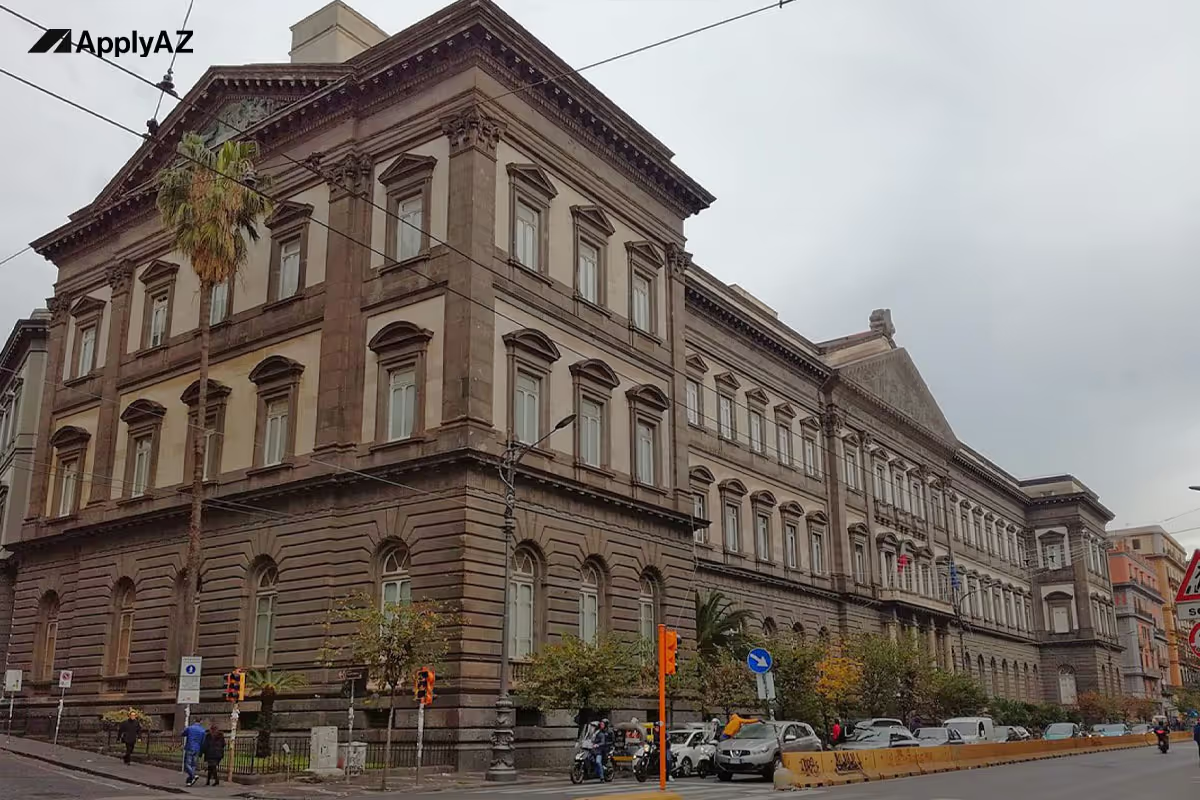
Marine Biology and Aquaculture is a two-year, 120 ECTS master's degree (class LM-6) taught in English by the Department of Biology of the University of Naples Federico II. You choose a Marine Biology or an Aquaculture and Management of Marine Resources curriculum. Fees follow family income, so it can be tuition-free for eligible students.
Entry requirements
- A three-year degree in biology (Italian class L-13) or an equivalent foreign qualification.
- Graduates from other fields need at least 18 credits in botany, zoology, anatomy and ecology, 6 in physiology, biochemistry, genetics or microbiology, 6 in chemistry and 12 in maths or physics.
- English at B2 level: send a certificate, or you will be checked by interview or test.
- No entrance test: a bachelor's grade of 90/110 or more exempts you from the preparation check; otherwise a commission reviews your record and may interview you.
- For the pre-acceptance letter: bachelor's diploma, transcript of records, passport copy, an updated CV and your English certificate.
About the programme
Marine Biology and Aquaculture is a two-year master's degree (laurea magistrale, class LM-6, biology) worth 120 ECTS and taught in English. It is based in the Department of Biology of the University of Naples Federico II, within the Polytechnic and Basic Sciences School, with the coordinator's office at the Monte Sant'Angelo complex on via Cinthia in Naples.
The course trains marine biologists who can plan and run the management of marine ecosystems, including marine protected areas, and the conservation of living resources used by fishing and aquaculture. It suits biology graduates, and science graduates with enough biology, who want to work on the sea, its biodiversity and its food production.
What you will study
You pick one of two curricula when you enrol: Marine Biology, or Aquaculture and Management of Marine Resources. Teaching covers biodiversity from microbes to animals, the physics and chemistry of the sea, and the health, feeding and rearing of farmed species. Course units taught in 2025/26 include:
- Marine Ecology and Fishery Ecology
- Physical and Chemical Oceanography and Marine Geology
- Marine Plant, Animal and Microbial Biodiversity, and Algal Biology
- Marine Genomics and Biochemical Adaptation to the Marine Environment
- Pathology of Teleosts, and Disease and Diagnostics of Molluscs and Crustaceans
- Rearing Techniques of Aquatic Species, and Nutrition Physiology and Animal Welfare in Aquaculture
- Management of Marine Resources and Hygiene of Aquatic Productions
- Scientific Diving
How the programme is taught
The department highlights links with international networks such as the European Marine Biological Resource Centre, the European Marine Biological Laboratories, the Whitney Laboratory for Marine Bioscience in Florida and the Marine Biological Laboratory in the USA. International students can earn up to 3 credits through an internship and a further 3 credits by learning Italian. Internship credits can also be earned abroad through Erasmus+, and the degree ends with a final exam presented before a committee.
Career paths
Graduates can sit the Italian State Exam to register as professional biologists. Depending on the curriculum, the university points to research and innovation roles in public and private companies, environmental agencies and marine protected areas, or to running aquaculture sites and reducing their environmental impact.
- research on the protection and management of marine resources
- coastal area and marine protected area management, and recovery of polluted sites
- environmental consultancy and ecosystem services
- aquaculture production, animal welfare and impact assessment
- science communication and teaching
Fees and scholarships
Federico II sets each student's contribution from the ISEE for university study, and the 2026/27 fee simulator adds a regional tax of €130, €151 or €173 depending on ISEE, paid in three instalments from November. Families abroad present an ISEE universitario parificato. ADISURC, the Campania DSU body, awarded 2026/27 grants below an ISEE of €25,500, so this degree can be tuition-free for eligible students.
How to apply from outside the EU
Start with the course's own admission step: email your bachelor's diploma, transcript, passport, CV and English certificate to the coordinator. If your background fits, you receive a pre-acceptance letter to use for enrolment and your visa.
You then pre-enrol on Universitaly, choosing Federico II, this degree and your consulate. For 2026/27 the Universitaly deadline was 15 June 2026, and the university asked for translated, legalised qualifications with a Diploma Supplement, CIMEA certificate or declaration of value. The 2027/28 dates are not out yet.
How ApplyAZ helps
If this programme fits your goals, ApplyAZ can include it in a shortlist of 20 to 30 English-taught programmes at Italian public universities. We write your CV and a tailored statement of purpose, submit your applications and Universitaly pre-enrolment, file your DSU scholarship application and prepare your visa file, with a named person on each stage. The university decides admission, the region decides the scholarship and the consulate decides the visa. See how ApplyAZ works or check your eligibility.
Questions and answers
Is Marine Biology and Aquaculture taught in English?
Yes. The whole master's is taught in English and you need B2 level. If you have no B2 certificate, the course checks your English by interview or test.
Which bachelor's degrees are accepted?
A biology degree (Italian class L-13) or an equivalent. Other graduates need at least 18 credits in botany, zoology, anatomy and ecology, 6 in physiology, biochemistry, genetics or microbiology, 6 in chemistry and 12 in maths or physics.
Is there an entrance test?
No. Access is open. Graduates with 90/110 or more skip the preparation check; others have their record reviewed by a commission, which may hold an oral interview.
Which curricula can I choose?
Two: Marine Biology, or Aquaculture and Management of Marine Resources. You choose one when you enrol.
When can I apply for 2027/28?
The 2027/28 dates are not published yet. For 2026/27 non-EU applicants first obtained a pre-acceptance letter from the coordinator, and the Universitaly pre-enrolment deadline was 15 June 2026.
How much does it cost?
Fees at Federico II follow ISEE, plus a regional tax of €130 to €173 in 2026/27. Eligible students can also apply for the ADISURC regional scholarship, and the region decides awards.
Similar programmes
More programmes in this city

They began right where you are

