

Single-cycle Master in Medicine and Surgery at University of Naples Federico II
Six-year English-taught LM-41 medical degree at the University of Naples Federico II, run by the Department of Translational Medical Sciences over 12 semesters and 34 integrated courses, with 60 credits of clinical training. Entry is through the IMAT, with 45 of 70 places for non-EU applicants living abroad.
Master
6 years
Naples
English
University of Naples Federico II


Medicine and Surgery (ENG) is a six-year, 360 ECTS single-cycle degree (class LM-41) taught in English at the University of Naples Federico II, whose final exam also qualifies graduates to practise in Italy. Entry needs a high school diploma or recognised equivalent and a place in the IMAT ranking; the 2025/26 regulations set no minimum English score. Fees follow family income, so it can be tuition-free for eligible students.
Entry requirements
Detailed entry requirements
Federico II's English-taught Medicine and Surgery degree asks for a high school diploma or a recognised foreign equivalent and a place in the ranking of the national admission test for English-taught medicine (IMAT). These rules come from the 2025/26 course regulations, and the next call sets the new dates. Reviewed 8 October 2026. [1]
School-leaving requirement
You need a high school diploma or a qualification obtained abroad that is recognised as suitable under Italian rules. The course is open to EU citizens, non-EU citizens living in Italy and non-EU citizens living abroad. [1]
The 2025/26 course regulations also expect logical skills and the scientific knowledge of biology, chemistry, physics and mathematics taught in upper secondary school. They describe at least an intermediate level of English, teamwork, problem solving and critical thinking as desirable. [1]
What this means for your school results
Your school marks do not rank you: places follow your score in the national test, and your qualification only has to meet the rule above. As a guide, based on that rule:
- Usually a fit: a completed Class 12 or Higher Secondary certificate from India (CBSE, ISC or a state board), an HSSC or FSc from Pakistan, an HSC from Bangladesh, GCE A levels from Sri Lanka, or British A levels, which are full school-leaving qualifications.
- Check carefully: a qualification you are still completing, or a school stream with little biology, chemistry or physics, since the test and the first-year catch-up rules focus on those subjects.
- Often short: a Class 10 or secondary school certificate, or any diploma that does not complete upper secondary school.
English
The 2025/26 course regulations do not set a minimum English level or name an English test for admission. They describe at least an intermediate level of English as desirable, and all teaching is in English. [1]
EU and non-EU foreign students also earn 3 credits in Italian at B2 level. That level is required before the clinical clerkships that start in year four. [1]
The admission test and ranking
Admission follows the ranking of the entrance exam, the IMAT, which is defined by national law under the control of the Ministry of University and Research. It takes place on the same day at every Italian state university, on a different day from the test for Italian-taught medicine. The Ministry sets the test topics each year by decree. [1]
Students admitted with a score below a set minimum receive additional learning obligations (OFA) in biology, chemistry and physics. They clear them in the first year through compulsory catch-up courses and a final multiple-choice test. [1]
Places
Places are set each year through national planning and split into two quotas: EU citizens and non-EU citizens living in Italy, and non-EU citizens living abroad. [1]
- Total from 2025/26: 70 places a year.
- Non-EU applicants living abroad: 45 places.
- EU citizens and non-EU citizens living in Italy: 25 places.
These figures come from the programme page. [2]
Dates and enrolment
The course regulations do not fix dates. The number of places, the test date and how the test runs are set each year by Ministry decree and published in the admission call. The 2027/28 call is not yet published. [1]
Admitted students normally enrol between 1 September and 31 October, following Federico II's enrolment and fees guide. [2]
Sources and verification
Checked by the ApplyAZ admissions team against the university's official documents listed below. Entry rules can change with each new call, and we re-check them before every application.
- University of Naples Federico II, School of Medicine and Surgery, Department of Translational Medical Sciences. Course regulations for the Single-cycle Master's degree in Medicine and Surgery taught in English (LM-41), in force from academic year 2025/26. Reviewed 8 October 2026.
- University of Naples Federico II, Medicine and Surgery (ENG) programme page on the university's orientation website (places, admission and enrolment period). Reviewed 8 October 2026.
About the programme
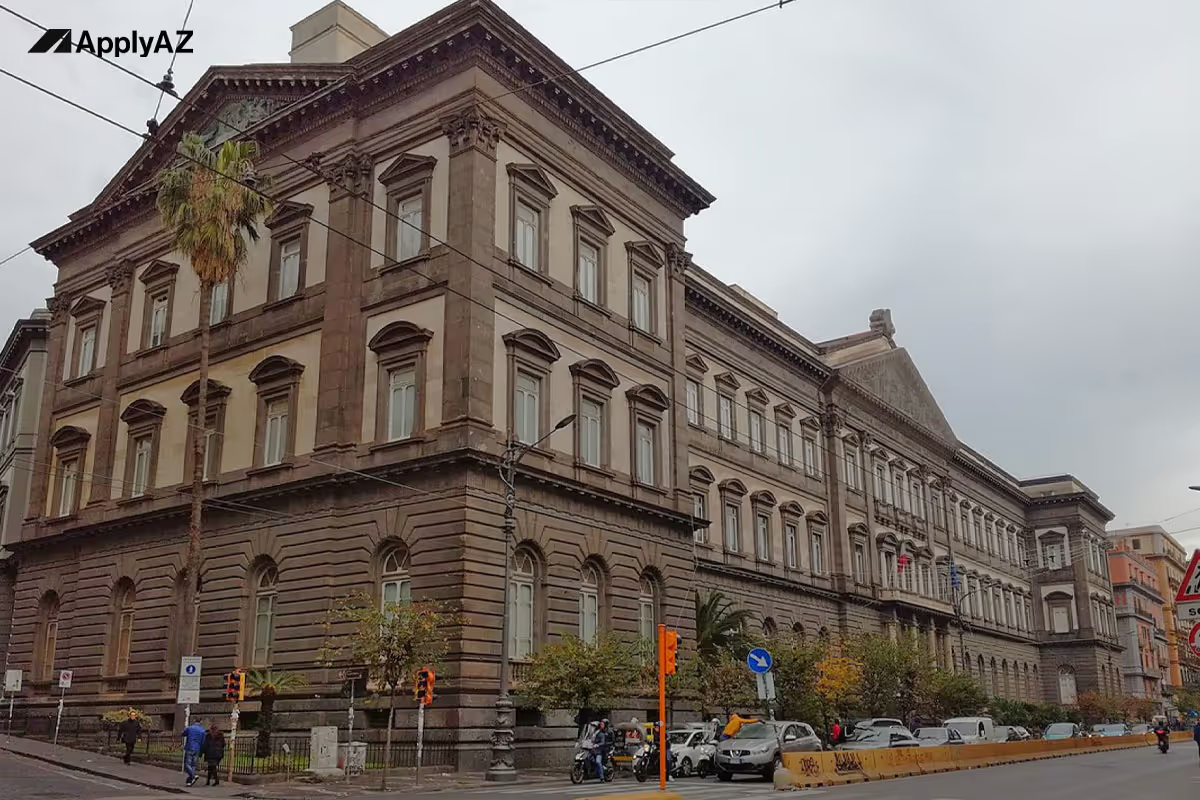
Medicine and Surgery (ENG) is a six-year single-cycle master's degree (laurea magistrale a ciclo unico, class LM-41) worth 360 ECTS and taught in English. It is coordinated by the Federico II Medical School and the Department of Translational Medical Sciences, with teaching at the School of Medicine and Federico II University Hospital on Via Sergio Pansini in Naples.
The course aims to train scientifically literate doctors who practise patient-centred medicine, grounded in the basic medical and social sciences. It is open to EU and non-EU school leavers, whether or not they live in Italy, who want to qualify as doctors through an English-taught route.
What you will study
The degree runs over 12 semesters and 34 integrated courses. Basic and clinical subjects are integrated across the curriculum, both vertically and horizontally, following a translational model that links laboratory science to clinical reasoning. The official structure includes:
- integrated courses combining basic sciences with their clinical applications
- communication skills and a patient-centred, holistic approach
- evidence-based medicine and independent clinical problem solving
- interdisciplinary and inter-professional work
- research methods and the use of information technologies in medicine
- professionalising training activities and electives
- a thesis internship of at least 18 months under a tutor, leading to an experimental or compilation thesis
How the programme is taught
Attendance is compulsory. The thesis internship takes place within the School of Medicine's own structures, where you learn to design a research project with scientific methods. The degree exam is graded out of 110 by a committee set by the Department of Translational Medical Sciences. Foreign students also earn 3 credits in Italian at B2 level, which they need before clinical clerkships start in year four. [1] Erasmus agreements for study mobility include the University of Santiago de Compostela, Saarland University and Heidelberg University.
Career paths
The final exam also qualifies you to practise in Italy: a member of the Medical Council sits on the graduation committee, so new graduates obtain the licence at the same session, provided their practical evaluation internships were assessed positively under Ministerial Decree 58 of 2018. [1] The degree is also the entry requirement for Italian medical specialisation schools, second-level masters and PhDs, and gives access to residency programmes abroad.
- public health system
- universities and research centres
- freelance practice
- public and private institutions
- national and international health and humanitarian organisations
Fees and scholarships
Federico II bases each student's yearly contribution on the ISEE for university study and credits earned. Families abroad present an ISEE universitario parificato. ADISURC, the Campania DSU body, offers income-based grants that eligible students can apply for, so this degree can be tuition-free for eligible students.
How to apply from outside the EU
Admission is by ranking in the national test for English-taught medicine (IMAT), held on the same day at every Italian state university and set under Ministry of University rules. Since 2025/26 the course has had 70 places a year: 45 for non-EU applicants living abroad and 25 for EU citizens and non-EU citizens living in Italy. [1][2]
The Ministry sets the test topics, the date and the number of places each year, and the admission call publishes them. Non-EU applicants living abroad also complete Universitaly pre-enrolment for Federico II and apply for a type D study visa once admitted. Enrolment normally runs from 1 September to 31 October. The 2027/28 test date and call are not published yet. [1][2]
How ApplyAZ helps
ApplyAZ is an Italy-based consultancy that works only with public universities. We can include this programme in a shortlist of 20 to 30 English-taught programmes that fit your profile, so your plan never rests on a single application.
For eligible students who start with us, a named person owns each stage, from A to Z:
- We check your school results against Federico II's entry rules for this programme.
- We write your CV and a tailored statement of purpose.
- We prepare and submit your IMAT registration, Universitaly pre-enrolment and enrolment application.
- We help you declare your family income for reduced fees and file your ADISURC Campania scholarship application at the right time and in the right format.
- We prepare your visa file.
With operations in all 20 Italian regions, we follow each region's scholarship rules and deadlines as they change. The university decides admission, the region decides the scholarship and the consulate decides the visa, so no one can promise an outcome. You pay in milestones, and every service you pay for is either delivered or its fee is refunded (terms apply).
Programmes at Italian public universities can be tuition-free for eligible students. Check if you are eligible and book a one-to-one consultation session with one of our Italy experts, or see how ApplyAZ works.
Questions and answers
What school qualification do I need for Medicine in English at Federico II?
A high school diploma or a foreign qualification recognised as suitable under Italian rules, plus school-level knowledge of biology, chemistry, physics and maths. Your marks do not rank you: places follow your score in the national admission test. These rules come from the 2025/26 course regulations. [1]
Is there an entrance exam?
Yes, the IMAT. Places follow its ranking, and the test is held on the same day at every Italian state university under Ministry of University rules. The Ministry sets the topics each year. Students admitted below a set minimum score must clear catch-up obligations in biology, chemistry and physics in their first year. [1]
What English level is required? Do I need IELTS?
The 2025/26 course regulations do not set a minimum English level or ask for IELTS. They describe at least an intermediate level of English as desirable, and teaching is fully in English. Foreign students also earn 3 credits in Italian at B2 level before clinical clerkships from year four. [1]
When is the deadline for non-EU students?
The course regulations leave the dates to the yearly Ministry decree and admission call, and the 2027/28 call is not yet published. Admitted students normally enrol between 1 September and 31 October. [1][2]
How many places are there for non-EU students?
From 2025/26 the course has 70 places a year: 45 for non-EU applicants living abroad and 25 for EU citizens and non-EU citizens living in Italy. The quotas are set through national planning each year. [1][2]
I studied commerce or arts in Class 12. Can I apply?
The diploma rule names no school stream, but the regulations expect school-level knowledge of biology, chemistry, physics and maths, and the IMAT tests those subjects. A low score also brings first-year catch-up obligations, so a science background gives you the closest preparation. [1]
Can I practise as a doctor after graduating?
Yes, in Italy. A member of the Medical Council sits on the graduation committee, so new graduates obtain the licence to practise at the same session, provided their practical evaluation internships were assessed positively under Ministerial Decree 58 of 2018. [1]
How long is the degree?
Six years and 360 ECTS over 12 semesters and 34 integrated courses. At least 60 credits are professional clinical training, and the thesis is prepared during an internship of at least 18 months. [1][2]
Can someone handle my whole application to Medicine and Surgery at Federico II?
Yes. ApplyAZ, an Italy-based consultancy that works only with public universities, checks your school results against Federico II's rules for this programme, handles the application and Universitaly pre-enrolment, helps you file the ADISURC Campania scholarship application at the right time and in the right format, and prepares your visa file, for eligible students. Start by checking your eligibility.
I'm applying from India. What is the route into Medicine and Surgery?
Your Class 12 or Higher Secondary certificate is the school-leaving qualification we assess against Federico II's rule of a high school diploma or recognised foreign equivalent. Your marks do not rank you: places follow your IMAT score, and the test draws on school biology, chemistry, physics and maths. The steps are IMAT registration, the test, then Universitaly pre-enrolment and enrolment if you win a place. [1] Indian students apply for the type D study visa at the Italian embassy or consulate that covers their state, such as New Delhi, Mumbai or Bengaluru.
Is the route different from Pakistan, Bangladesh or Sri Lanka?
No. The academic rules for Medicine and Surgery are the same whatever your nationality. Applicants from Pakistan, Bangladesh and Sri Lanka follow the same steps as India: IMAT registration, the IMAT itself and Universitaly pre-enrolment, then a type D study visa from the Italian mission for their country of residence. Read our guide for students in Dhaka.
I live in the UAE, Saudi Arabia, Qatar, Kuwait, Oman or Bahrain. Where do I apply for the visa?
At the Italian embassy or consulate responsible for the country where you legally live, after Universitaly pre-enrolment. The academic rules for Medicine and Surgery are the same whatever your nationality, and Gulf residents follow the same steps: IMAT registration, the IMAT itself and Universitaly pre-enrolment. Read our guides for Dubai, Riyadh and Doha.
I studied or live in London, New York, Toronto, Vancouver, Singapore or Kuala Lumpur. What is the route?
The academic rules for Medicine and Surgery are the same whatever your nationality, and your school results are assessed like any other foreign qualification. Non-EU applicants who live abroad follow the same route: IMAT registration, the IMAT itself and Universitaly pre-enrolment, then a type D study visa from the Italian mission for where they live. Read our guides for students in London, New York, Toronto, Vancouver, Singapore and Kuala Lumpur.
More English-taught programmes at this university
Other public universities in this city

They began right where you are

