

Master in Interior and Spatial Design at Polytechnic University of Milan
Two-year interior design master at Politecnico di Milano (Milano Bovisa) with English-taught sections 2, 3 and 4: studios on ephemeral spaces, landscape and interior, flexible dwelling, plus lighting, museology and spatial design labs.
Master
2 years
Milan
Multiple
Polytechnic University of Milan



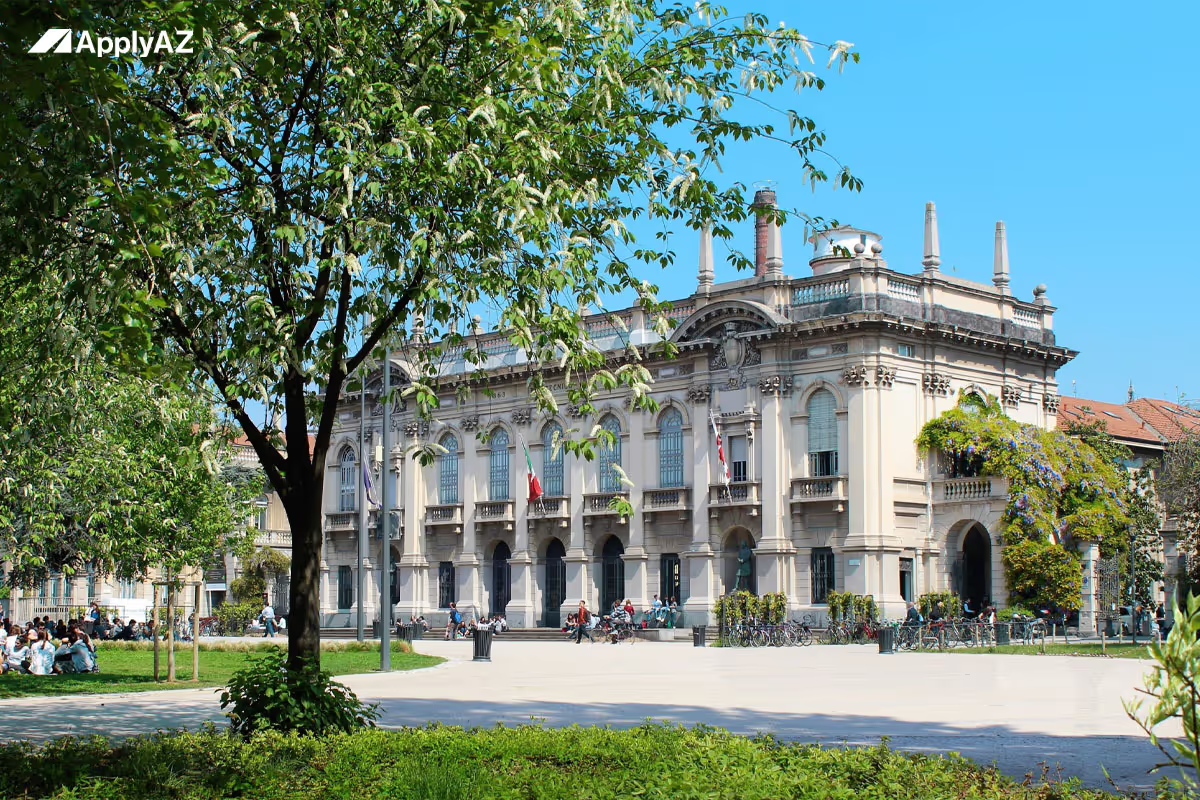
Interior and Spatial Design is a two-year, 120 ECTS master's degree (class LM-12) at Politecnico di Milano's School of Design, Milano Bovisa campus. It runs in four sections: sections 2, 3 and 4 have English studios on temporary spaces, landscape and interiors, and flexible dwelling. Tuition follows the university's yearly fee rules.
Entry requirements
- A bachelor's degree, or an equivalent foreign qualification giving access to EQF level 7, with subjects closely related to interior and spatial design.
- A grade average that meets the minimum Politecnico di Milano sets for your country.
- An English certificate recognised by the university, or a university statement that your bachelor's was taught entirely in English.
- No written entrance test: you submit an application for evaluation to the School of Design; check the call for any portfolio request.
- A Diploma Supplement, declaration of value or CIMEA statement of comparability before enrolment.
About the programme
Interior and Spatial Design is a two-year master's degree (laurea magistrale) in class LM-12, Design, worth 120 ECTS and run by the School of Design at the Milano Bovisa campus. The degree is organised in four sections. Section 1 has an Italian-taught studio, New Interiors, while sections 2, 3 and 4 are taught in English, each around its own first-year studio.
The degree works on the design of interior and spatial experiences, from homes and temporary installations to landscapes, museums and public places. It suits graduates who want to specialise in how people live in and use space.
What you will study
Each English section starts with its own studio: Ephemeral/Temporary Spaces (section 2), Landscape and Interior, Spatial Design (section 3) or Flexible Dwelling (section 4). All sections share the other first-year units. Units taught in English in the 2026/27 course list include:
- Section studio: Ephemeral/Temporary Spaces, Landscape and Interior, or Flexible Dwelling
- Atelier for Technologies
- Lighting
- Museology in Contemporary Age
- Spatial Experience Design and Design for Placemaking (laboratories)
- Anticipatory Spatial Scenarios and Sailing Yacht Design (laboratories)
- Contemporary Interiors
- Final Synthesis Design Studio, sections 2 to 4
How the programme is taught
The degree is studio-led: each year combines design laboratories with theory and technology courses, and the second year ends with the final synthesis design studio, taught in English for sections 2 to 4. A workshop, an internship and the thesis complete the plan. The common list also offers English electives such as Temporary Exhibition Design, Contract Design, Design for Inclusion and Creativity for Sustainable Design. Some options, including Cultura Italiana and a few electives, are taught in Italian.
Career paths
The studios and courses point to work across interior and spatial design:
- Interior design for homes and flexible living
- Exhibition, event and temporary space design
- Lighting design
- Museum and cultural space design
- Public space and placemaking projects
- Yacht interiors
Fees and scholarships
Politecnico di Milano sets tuition through yearly rules, and its tuition fees page gives the 2026/27 details. The DSU right-to-study scholarship is administered by the university itself: students who meet the merit and financial-need conditions can apply, and the Politecnico decides the awards.
How to apply from outside the EU
Choose one of the English-taught sections (2, 3 or 4) when you apply. Holders of a foreign qualification first submit an application for evaluation to the School of Design, and admission is only possible in the first semester.
Use the international admissions route. The foreign-qualification requirements cover access to EQF level 7, related subjects, a minimum grade average for your country and an English certificate or an English-taught bachelor's. After admission come the Universitaly pre-enrolment and a type D visa, and before enrolment a Diploma Supplement, declaration of value or CIMEA statement.
How ApplyAZ helps
If this programme fits your goals, ApplyAZ can include it in a shortlist of 20 to 30 English-taught programmes at Italian public universities. We write your CV and a tailored statement of purpose, submit your applications and Universitaly pre-enrolment, file your DSU scholarship application and prepare your visa file, with a named person on each stage. The university decides admission, the region decides the scholarship and the consulate decides the visa. See how ApplyAZ works or check your eligibility.
Questions and answers
Is the Master in Interior and Spatial Design taught in English?
Partly. The degree has four sections: section 1 has an Italian-taught studio, while sections 2, 3 and 4 are taught in English. International students who need English choose one of those three sections.
What do the English sections focus on?
Section 2 works on ephemeral and temporary spaces, section 3 on landscape and interior spatial design, and section 4 on flexible dwelling. All share Atelier for Technologies, Lighting and Museology in Contemporary Age.
Where is the programme taught?
At Politecnico di Milano's Milano Bovisa campus, home of the School of Design.
Is there an entrance test?
There is no written test. Applicants with a foreign qualification submit an application for evaluation to the School of Design, and admission is only possible for the first semester.
How much does it cost?
Tuition follows Politecnico di Milano's yearly fee rules, published on its tuition fees page. Eligible students can apply for the DSU scholarship that the university runs itself.
What careers does it lead to?
The studios point to interior design for homes, exhibition and temporary space design, lighting, museum and cultural spaces, placemaking and yacht interiors.
Similar programmes
More programmes in this city

They began right where you are

