

Master in Architecture and Heritage at University of Naples Federico II
Two-year English-taught LM-4 master's at Federico II in central Naples, built around four design studios on architectural, archaeological, urban and landscape heritage, with a compulsory internship.
Master
2 years
Naples
English
University of Naples Federico II



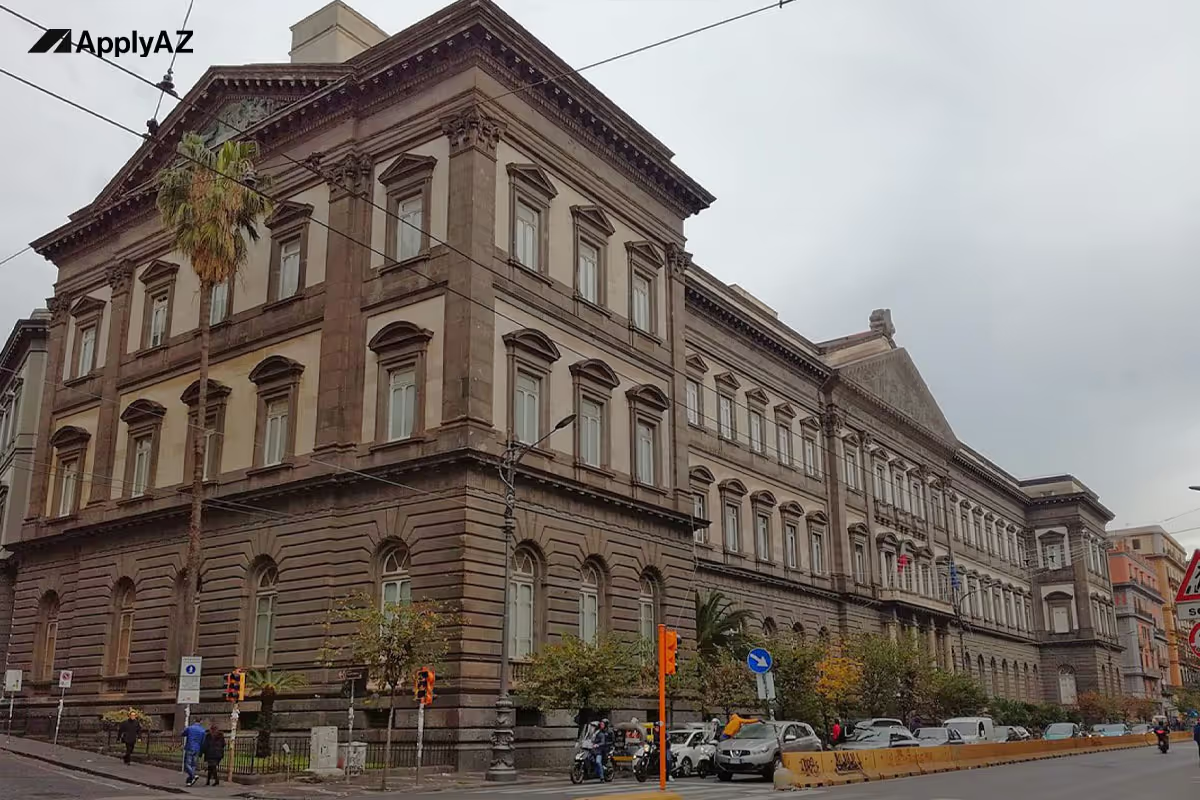
Architecture and Heritage (ARCHER) is a two-year, 120 ECTS master's degree (class LM-4) taught in English by the Department of Architecture of the University of Naples Federico II, training architects in the design, conservation and management of built heritage. Applicants need an architecture bachelor's and a portfolio, and it can be tuition-free for eligible students.
Entry requirements
- A bachelor's degree in architectural sciences (Italian class L-17) or an equivalent degree in architecture.
- English at B2 level (CEFR) or higher, with a certificate, plus a minimum level of Italian.
- A portfolio of no more than 20 pages showing design work on built heritage and landscape.
- CV, transcripts, a motivation letter and a recommendation letter from a teacher addressed to the ARCHER course.
- A probable interview before the pre-admission letter is issued.
About the programme
Architecture and Heritage, known as ARCHER, is a two-year master's degree (laurea magistrale, class LM-4) worth 120 ECTS and taught in English by the Department of Architecture (DiARC) of the University of Naples Federico II. It trains architects with specific skills in the design, conservation, maintenance, enhancement and management of architectural, urban and landscape heritage.
Teaching takes place in the Spirito Santo complex on Via Toledo, in the historic centre of Naples, close to metro lines 1 and 2. The course suits architecture graduates who want to work with historic buildings, archaeological sites and cultural landscapes.
What you will study
Each of the four semesters is built around an interdisciplinary design studio on a real cultural site in the region, run with the institutions that protect and manage Italian heritage. The 2026/27 plan includes:
- Design Studio for Architectural Heritage (24 ECTS): architectural design theory, statics and stability of historical buildings, technological design, conservation, and 3D digital survey for heritage
- Critical Knowledge of Architectural Heritage (8 ECTS): art history, architectural history and research methodology
- Design Studio for Archaeological Heritage (22 ECTS): design for archaeology, archaeological conservation, structural rehabilitation, energy and environmental sustainability, exhibition design and museography
- Design Studio for Urban Heritage (18 ECTS): urban design, urban conservation, urban history and planning for the historic city
- Heritage Management (8 ECTS): multidimensional evaluation of cultural heritage and administrative law for planning and heritage
- Design Studio for Landscape (20 ECTS): landscape design, landscape protection, territorial planning, environmental design and landscape architecture
- Elective activities (8 ECTS), further training activities and a thesis (8 ECTS)
How the programme is taught
Knowledge of the site and on-site analysis sit at the heart of the course, and students work through the design process at several scales. A compulsory curricular internship in year two (75 hours, 3 ECTS, over at least three months) can take place inside the university, at municipalities, heritage superintendencies or architecture firms affiliated with Federico II, or abroad as an Erasmus+ traineeship.
Career paths
Graduates are qualified to work in all fields of design, from interiors to buildings, cities and territories, with particular strength in cultural heritage. According to the department, the degree gives access to work as an architect across EU countries, where heritage is a major field of employment. It also leads to further study at Federico II, including the School of Specialisation in Architectural Heritage and Landscape, five university master's courses and a PhD programme.
Fees and scholarships
At Federico II, university contributions depend on family income. The 2026/27 fee simulator names foreign students from non-EU countries among those fully exempt from contributions, while a regional tax of €130, €151 or €173 (by ISEE band) and €16 stamp duty still apply. ADISURC, the Campania regional body, awards income-based scholarships to enrolled students. The course can be tuition-free for eligible students.
How to apply from outside the EU
Non-EU applicants upload their CV, passport, architecture degree, transcripts, B2 English certificate, recommendation letter, motivation letter and a portfolio of up to 20 pages to the course's application page as early as possible. You will probably be interviewed before receiving a pre-admission letter. For 2026/27, the Universitaly application with that letter had to be submitted by 31 May 2026. First enrolment then ran to 31 December 2026, with a late option to 31 March 2027 under a contract enrolment rule.
How ApplyAZ helps
If this programme fits your goals, ApplyAZ can include it in a shortlist of 20 to 30 English-taught programmes at Italian public universities. We write your CV and a tailored statement of purpose, submit your applications and Universitaly pre-enrolment, file your DSU scholarship application and prepare your visa file, with a named person on each stage. The university decides admission, the region decides the scholarship and the consulate decides the visa. See how ApplyAZ works or check your eligibility.
Questions and answers
Is ARCHER taught in English?
Yes. Architecture and Heritage is taught in English and needs a B2 level (CEFR). The application rules also ask for a minimum level of Italian.
Which bachelor's degree do I need?
A bachelor's in architectural sciences (Italian class L-17) or an equivalent architecture degree. Non-EU applicants also send a portfolio of up to 20 pages focused on built heritage and landscape design.
Is there an entrance test?
No written test. The course reviews your CV, transcripts, letters and portfolio, and you will probably be interviewed before a pre-admission letter is issued.
When can I apply for 2027/28?
The 2027/28 dates are not published yet. For 2026/27, non-EU applicants had to submit their Universitaly application with the pre-admission letter by 31 May 2026.
How much does it cost?
Federico II's 2026/27 fee simulator lists non-EU foreign students among those exempt from university contributions, leaving a regional tax of €130 to €173 and €16 stamp duty. ADISURC scholarships are open to eligible students.
What careers does it lead to?
Graduates work as architects in design, conservation, maintenance and management of architectural, urban and landscape heritage, or continue to specialisation schools, university master's courses and a PhD at Federico II.
Similar programmes
More programmes in this city

They began right where you are

