

Master in Medical-Pharmaceutical Biotechnology at University of Genoa
Two-year English-taught LM-9 master's at the University of Genoa in medical and pharmaceutical biotechnology: molecular oncology, immunology, neuroscience, gene therapy and drug development, with a lab-based thesis internship.
Master
2 years
Genoa
English
University of Genoa



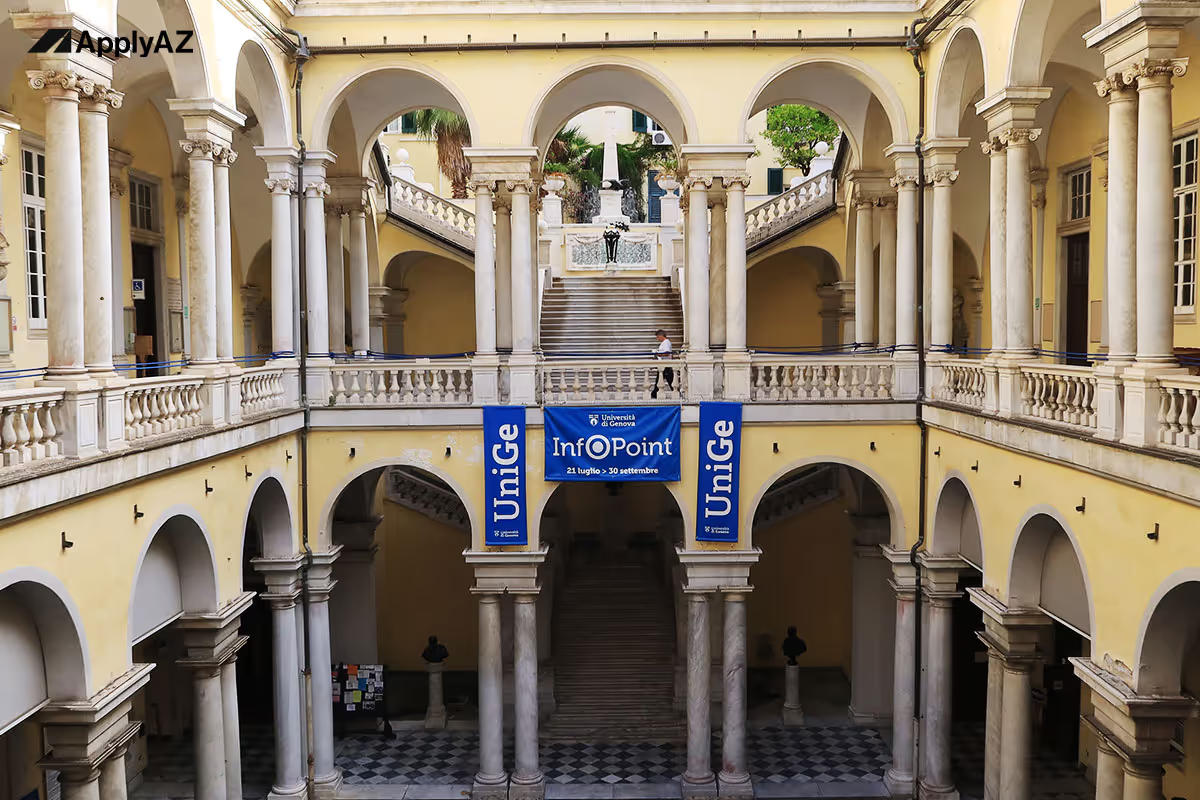
Medical-Pharmaceutical Biotechnology is a two-year, 120 ECTS master's degree (LM-9) taught in English by the Department of Experimental Medicine at the University of Genoa. It focuses on molecular oncology, immunology and neuroscience with heavy lab work. Fees follow family income, so it can be tuition-free for eligible students.
Entry requirements
- A bachelor's degree of at least 180 ECTS in biotechnology (Italian class L-2) or in biology, microbiology or biological sciences, or an equivalent foreign degree.
- Minimum credits in set subjects, including 6 in maths and statistics, 5 in physics, 12 in inorganic and organic chemistry, 18 in general biology and genetics, and 18 in biochemistry and molecular biology.
- English at B2 level or a medium-of-instruction (MOI) certificate.
- For the 2026/27 non-EU pre-selection: a minimum CGPA of 75% and a remote interview.
- CV, degree certificate and transcript uploaded to UniGeApply.
About the programme
Medical-Pharmaceutical Biotechnology is a two-year master's degree (laurea magistrale, class LM-9, pharmaceutical, veterinary and medical biotechnologies) worth 120 ECTS and taught in English at the University of Genoa. It is run by the Department of Experimental Medicine, with its offices at the Center of Advanced Biotechnology in the Ospedale Policlinico San Martino area and classes at nearby teaching centres in Genoa.
The course gives an advanced preparation in biotechnology for medicine and pharmacology, joining biochemical, molecular and cellular skills, and adds skills for creating and managing a business. Its focus is on molecular oncology, immunology and neuroscience. It suits biotechnology and biology graduates aiming at biomedical research, the pharmaceutical industry or a PhD.
What you will study
Topics named by the course include next generation sequencing, proteomics, genomics, nanotechnology, cancer immunology, stem cells for tissue repair, molecular pathology, developmental neurobiology and diagnostic technologies. Units in the 2026/27 list include:
- Advanced Molecular Biology, Human Biochemistry, and Developmental Neurobiology, each with laboratory
- Human Genetics and Molecular Pathology, with laboratory
- Molecular Oncology and Immunology
- Gene Therapy and Molecular Bases of Therapy Design
- Computational Techniques of Drug Development and Drug Synthesis, and Drug Metabolism
- Cell Biology Applied to Biomedicine, Endocrinology and Clinical Embryology
- Introduction to AI in Life Sciences and Instrumentation for Proteomics
- Creation, Organization and Management of Company, plus internships
How the programme is taught
Practical lab work runs through both years, and students carry out their thesis internship in a laboratory. Internships can take place in university research labs, biotechnology companies and centres such as Ospedale Policlinico San Martino IRCCS, the Istituto Italiano di Tecnologia (IIT) and Istituto Giannina Gaslini.
Career paths
Graduates take on responsible roles in diagnostics, bioengineering, health and pharmacology. The university points to:
- The health service
- Public and private companies in biotechnology research and production
- Developing and testing new pharmacological products
- Patent work in the health field
- PhD programmes
Fees and scholarships
This degree falls in UniGe's medical, health and scientific fee class. For 2026/27 the university contribution is set by ISEE-U, or ISEE-U parificato for families abroad: first-year students at €13,000 or less pay only stamp duty and regional tax, and the maximum is €3,300. ALiSEO Liguria scholarship applicants pay only the €16 stamp duty as their first instalment, and the programme can be tuition-free for eligible students.
How to apply from outside the EU
This course fills fast: in 2026/27 its UniGeApply session for visa applicants closed early, on 13 February 2026, instead of 20 March, because the target number of admitted students was nearly reached. Non-EU applicants needed a bachelor's in biology, microbiology, biological sciences or biotechnology, a CGPA of at least 75% and a remote interview.
The UniGeApply fee was €30 for up to two courses. After acceptance you pre-enrol on Universitaly, complete UniGe pre-enrolment and apply for a type D study visa. The 2027/28 dates are pending, so plan to apply early.
How ApplyAZ helps
If this programme fits your goals, ApplyAZ can include it in a shortlist of 20 to 30 English-taught programmes at Italian public universities. We write your CV and a tailored statement of purpose, submit your applications and Universitaly pre-enrolment, file your DSU scholarship application and prepare your visa file, with a named person on each stage. The university decides admission, the region decides the scholarship and the consulate decides the visa. See how ApplyAZ works or check your eligibility.
Questions and answers
Is Medical-Pharmaceutical Biotechnology taught in English?
Yes. The whole course is taught in English, and applicants need English at B2 level or a certificate that their bachelor's was taught in English.
Which bachelor's degrees are accepted?
Biotechnology (Italian class L-2) or degrees in biology, microbiology or biological sciences, with minimum credits in maths, physics, chemistry, biology, biochemistry, anatomy and physiology, and pathology and microbiology.
Is there an interview?
Yes. The 2026/27 non-EU pre-selection included a remote interview and a minimum CGPA of 75%. There is no written entrance test.
When should I apply?
Early. For 2026/27 the UniGeApply session for visa applicants closed on 13 February 2026, ahead of the general 20 March date, because places filled. The 2027/28 dates are not out yet.
Where are the thesis internships?
In university research labs, biotechnology companies and centres such as Ospedale Policlinico San Martino IRCCS, the Istituto Italiano di Tecnologia and Istituto Giannina Gaslini.
How much does it cost?
Fees depend on ISEE-U or ISEE-U parificato. For 2026/27, first-year students up to €13,000 pay no university contribution and the maximum is €3,300. ALiSEO Liguria scholarships are open to eligible students.
Similar programmes
More programmes in this city

They began right where you are

