

Master in Economics & Data Science at University of Genoa
Two-year English-taught LM-56 master's in Genoa that joins economic analysis with statistical learning, big data techniques, Python and financial risk management, for careers in finance, health, energy and policy.
Master
2 years
Genoa
English
University of Genoa



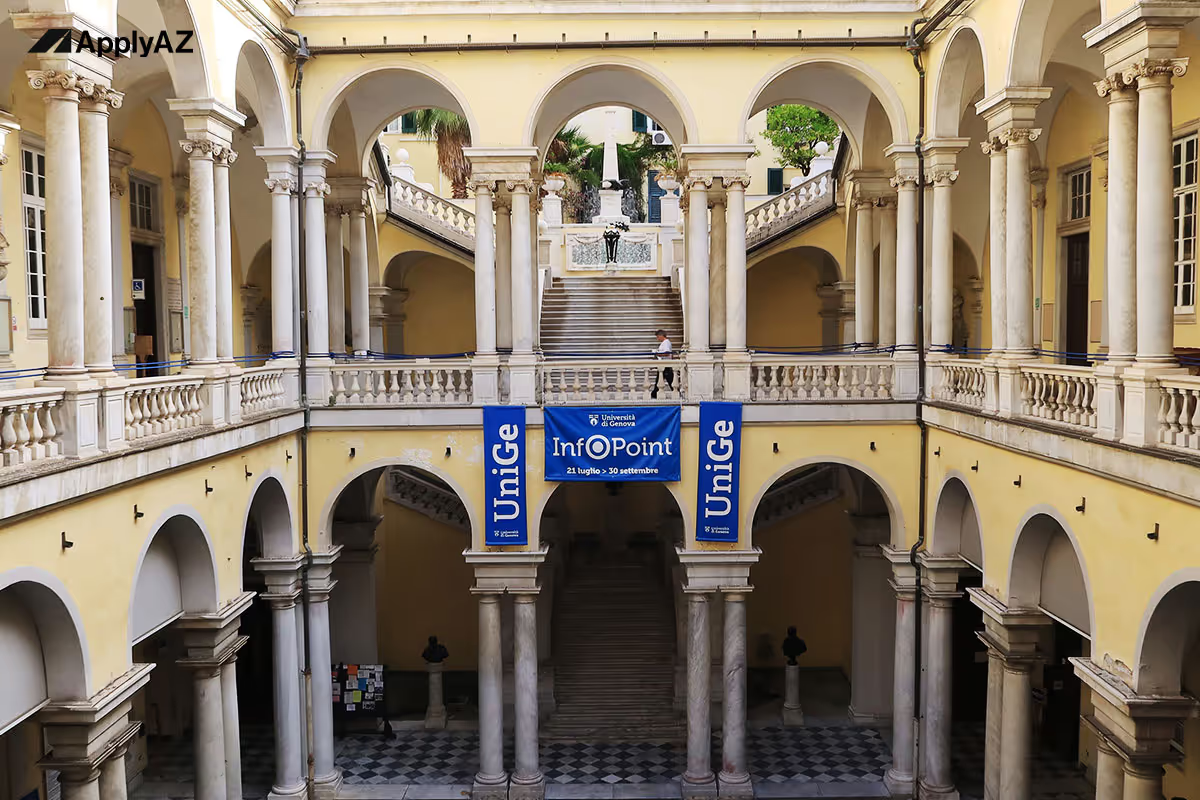
Economics & Data Science is a two-year, 120 ECTS master's degree (class LM-56) taught in English and in person at the University of Genoa. It combines economics with statistics, mathematics, Python programming and machine learning. Fees follow family income, so it can be tuition-free for eligible students.
Entry requirements
- A bachelor's degree (three-year university degree, four-year college degree or another recognised foreign degree).
- A final grade of at least 75% of the maximum, which is mandatory for applicants with a foreign degree.
- English at B2 level with a certificate; without one, an English interview is required.
- An interview to check that your preparation fits the programme.
- Applicants with a foreign degree must apply through UniGeApply; no other channel is accepted.
About the programme
Economics & Data Science is a two-year master's degree (laurea magistrale, class LM-56) worth 120 ECTS, run by the Department of Economics at its Darsena site on Via Vivaldi in Genoa. It is taught in English and in person under course code 11937, which follows the earlier code 11267.
The programme trains professionals who tackle economic problems by pairing economic reasoning with quantitative methods and data analytics. It draws on economics, statistics, mathematics, programming, machine learning and law. It suits graduates in economics, business, statistics, mathematics or computer science who want to use data for policy evaluation, risk management and business decisions.
What you will study
The course moves from advanced micro and macroeconomic models to econometrics for forecasting and policy evaluation, then to the data science tools that support them. Applied units cover health, environment, energy and finance. Units in the 2026/27 list include:
- Microeconomics, Macroeconomics and Economic Analysis
- Mathematics for Economics and Data Science (static and dynamic optimisation)
- Statistical Learning and Big Data Techniques
- Python Algorithms and Optimisation, and Software R
- Economic Policy Evaluation
- Health Economics, and Resources, Environment and Energy Economics
- Financial Economics, Financial Risk Management Techniques, and Global Finance and Geopolitics
- Fintech and Digital Economics Regulation
How the programme is taught
Face-to-face lectures are combined with training on the software used by analysts and managers, seminars with practitioners, team work, laboratory sessions and business case analysis. The study plan includes an internship and a final exam. Through Erasmus+ you can spend a study period abroad, and the course council works with a consultative board of faculty and representatives of companies and institutions.
Career paths
Graduates are prepared for roles in finance, fintech, healthcare, energy and environmental sustainability, and for further research. The course page lists profiles such as:
- Specialist in economic analysis and management
- Risk analyst and risk manager
- Social and economic analyst
- Economic analyst in health, energy or the environment
- Economist and researcher
- Expert in evaluating and planning public or private initiatives
Fees and scholarships
UniGe fees combine a €16 stamp duty, a regional tax starting at €120 and a university contribution set by ISEE-U; if your family income is abroad you use the ISEE-U parificato. For 2026/27 a full-time first-year student paid no contribution up to an ISEE-U of €13,000, and the ceiling was €3,025 or €3,300 a year depending on the subject area. ALiSEO grant winners pay only the stamp duty, so this programme can be tuition-free for eligible students.
How to apply from outside the EU
This course takes applicants with a foreign degree only through UniGeApply. You declare your degree grade, which must be at least 75% of the maximum, and your English B2 certificate, then attend an interview on your preparation.
UniGeApply charges €30 for up to two applications. For 2026/27, the session for visa applicants ran from 26 November 2025 to 20 March 2026; UniGe expects the 2027/28 session to open in November 2026. After acceptance you apply on Universitaly, pre-enrol on UniGe online services and request a type D study visa. Final documents after arrival include a legalised degree or CIMEA verification, and a declaration of value, CIMEA statement or Diploma Supplement.
How ApplyAZ helps
If this programme fits your goals, ApplyAZ can include it in a shortlist of 20 to 30 English-taught programmes at Italian public universities. We write your CV and a tailored statement of purpose, submit your applications and Universitaly pre-enrolment, file your DSU scholarship application and prepare your visa file, with a named person on each stage. The university decides admission, the region decides the scholarship and the consulate decides the visa. See how ApplyAZ works or check your eligibility.
Questions and answers
Is the Economics & Data Science master taught in English?
Yes. The course is taught in English and in person at the Department of Economics in Genoa. You need English at B2 level, shown by a certificate such as IELTS or TOEFL, or by an interview if you have no certificate.
Do I need an economics bachelor's degree?
For foreign degrees, the course asks for a recognised bachelor's with a grade of at least 75% of the maximum and checks your preparation at interview. For Italian degrees it expects economics or business, or at least 40 ECTS in economics, statistics, mathematics or informatics.
Is there an entrance test?
Applicants with a foreign degree attend an interview to check their preparation, plus an English interview if they have no B2 certificate. In the 2026/27 UniGeApply selection this course held interviews for visa applicants.
Which programming tools will I learn?
The 2026/27 units include Python Algorithms and Optimisation and Software R, alongside Statistical Learning and Big Data Techniques.
When can I apply for 2027/28?
UniGe expects the 2027/28 UniGeApply session to open in November 2026. For 2026/27, visa applicants applied from 26 November 2025 to 20 March 2026, with a €30 fee for up to two courses.
How much does it cost?
Fees follow family income (ISEE-U, or ISEE-U parificato for income abroad). In 2026/27 the university contribution was €0 up to €13,000 and at most €3,025 to €3,300 a year depending on subject area. ALiSEO grant holders pay only €16.
Similar programmes
More programmes in this city

They began right where you are

