

Master in Environmental Engineering at University of Genoa
Two-year English-taught LM-35 master's in Genoa covering environmental fluid mechanics, coastal and watershed management, pollution processes and clean energy, with Blue and Green curricula and a final traineeship.
Master
2 years
Genoa
English
University of Genoa



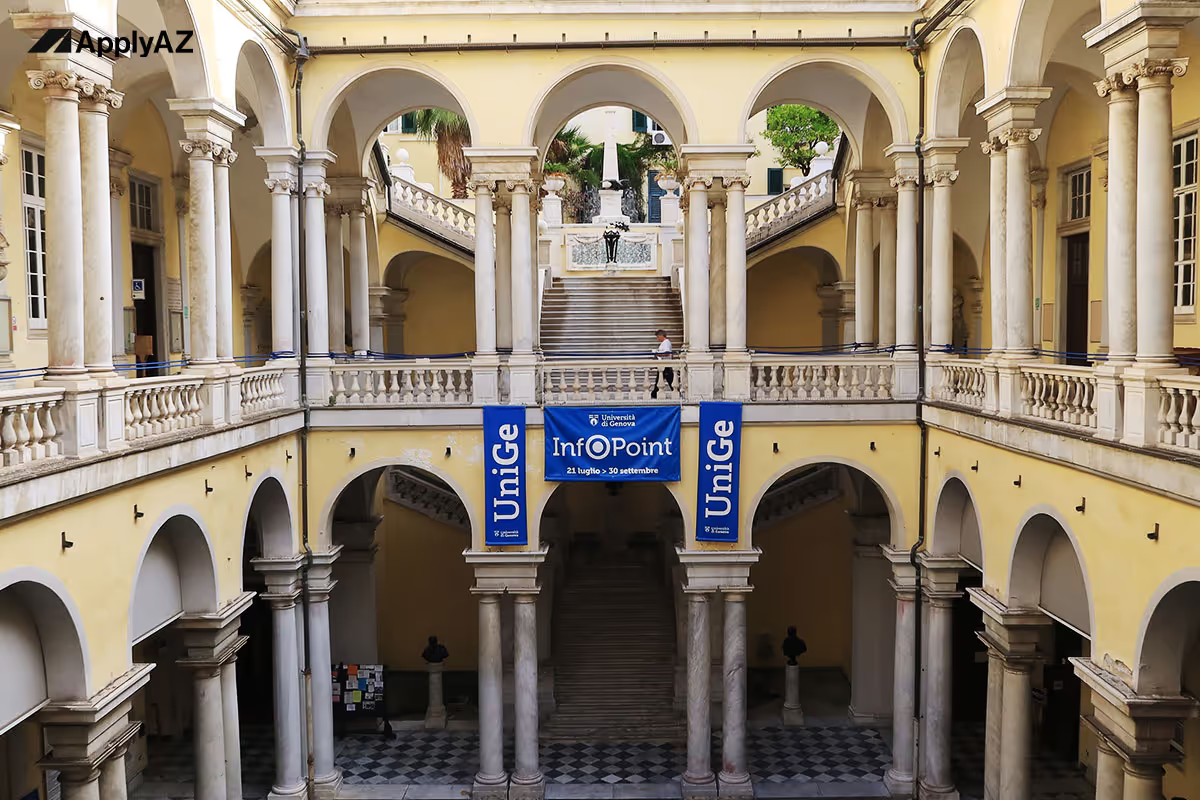
Environmental Engineering is a two-year, 120 ECTS master's degree (class LM-35) taught in English and in person at the University of Genoa, with a Blue curriculum on marine and coastal environments and a Green curriculum on land and watersheds. Fees follow family income, so it can be tuition-free for eligible students.
Entry requirements
- A bachelor's degree of at least 180 ECTS in civil and environmental engineering (class L-7) or industrial engineering (class L-9), or an equivalent foreign degree.
- Other degrees qualify with at least 36 ECTS in mathematics, physics and chemistry and at least 12 ECTS in hydraulics, hydrology, geotechnics, sanitary or chemical engineering subjects.
- English at B2 level, shown by a certificate on UniGe's accepted list or by the university's online test.
- In the 2026/27 UniGeApply selection for visa applicants: a minimum CGPA of 80%.
- A check of your preparation: for foreign degrees, a review of your record and university, with a possible interview or test; waived if your grade is at least 9/10 of the maximum or ECTS grade A or B.
About the programme
Environmental Engineering is a two-year master's degree (laurea magistrale, class LM-35) worth 120 ECTS. It is taught in English and in person in Genoa by the Department of Civil, Chemical and Environmental Engineering (DICCA), with lectures at Villa Cambiaso and the Opera Pia campus. The course code is 11925, following the earlier code 10720.
The degree is built for engineers with a broad technical base who want to work on environmental problems as a whole. It combines natural processes, chemical and environmental processes, and the impact and management of productive activities, all framed within ecosystem-based management (EBM). It suits graduates in civil, environmental, chemical or industrial engineering.
What you will study
You choose between two curricula. Blue Engineering focuses on the ocean and coastal environment and its management, while Green Engineering focuses on land and watershed management. Both cover how pollutants disperse in air, water and porous media, the risks of extreme natural events and numerical modelling of environmental processes. Units in the 2026/27 list include:
- Advanced Fluid Mechanics and Environmental Fluid Mechanics
- Coastal Processes and Engineering, and Coastal Structures and Shore Protection
- Watershed Management, and Fluvial Hydraulics and Morphodynamics
- Climate Changes: Processes and Modelling
- Chemistry of Environmental Processes and Environmental Impact of Industrial Processes and Products
- Applied Ecology and Marine Biodiversity Management
- GIS and Earth Observation
- Water and Wind for Clean Energy, and EU and Transnational Environmental Law
How the programme is taught
Teaching pairs the study of basic processes with experimental laboratories and field applications, and several units include practical tests to reinforce what you learn. The course ends with a traineeship and a final thesis. The head of programme highlights internships and study abroad as options in both curricula, and international students can take an Italian language unit.
Career paths
The course page points to jobs across the blue and green economy. Graduates can work as:
- Technical officers in public administrations for environment, land management and civil protection
- Consultants on impact assessment, environmental monitoring and modelling
- Environmental impact and risk managers in industry
- Freelance engineers in the civil, environmental, marine and oil and gas sectors
Fees and scholarships
At UniGe you pay €16 stamp duty, a regional tax from €120 and a university contribution based on ISEE-U; students with family income abroad submit an ISEE-U parificato. In 2026/27 the contribution was €0 for a first-year, full-time student with ISEE-U up to €13,000, and the maximum was €3,300 a year for scientific and technical courses. Students who win an ALiSEO grant pay only the €16 stamp duty, so this programme can be tuition-free for eligible students.
How to apply from outside the EU
For 2026/27, visa applicants to Environmental Engineering needed a CGPA of at least 80% in the UniGeApply pre-selection. The course assesses foreign degrees on your academic record and the university that awarded it, and may add an interview or test.
Applications start on UniGeApply, with a €30 fee covering up to two courses. The 2026/27 session for visa applicants ran from 26 November 2025 to 20 March 2026, and UniGe expects the 2027/28 session to open in November 2026. Once accepted, you apply on Universitaly for a type D study visa and pre-enrol on UniGe online services. After arrival you upload a legalised degree (or CIMEA verification) and a declaration of value, CIMEA statement or Diploma Supplement.
How ApplyAZ helps
If this programme fits your goals, ApplyAZ can include it in a shortlist of 20 to 30 English-taught programmes at Italian public universities. We write your CV and a tailored statement of purpose, submit your applications and Universitaly pre-enrolment, file your DSU scholarship application and prepare your visa file, with a named person on each stage. The university decides admission, the region decides the scholarship and the consulate decides the visa. See how ApplyAZ works or check your eligibility.
Questions and answers
Is the Environmental Engineering master taught in English?
Yes. The whole course is taught in English and in person in Genoa. You need English at B2 level, shown by a certificate accepted by UniGe or by passing the university's online English test.
What is the difference between the Blue and Green curricula?
Blue Engineering is oriented to the marine and coastal environment and its management. Green Engineering focuses on land and watershed management. Both share the core in fluid mechanics, environmental chemistry and ecosystem-based management.
Which bachelor's degrees are accepted?
Civil and environmental engineering (L-7) or industrial engineering (L-9), or an equivalent foreign degree. Other degrees qualify with enough credits in mathematics, physics and chemistry plus at least 12 ECTS in hydraulic, geotechnical or chemical engineering subjects.
Is there an entrance test?
There is a check of your preparation. For foreign degrees it is based on your documents, with a possible interview or test. It is waived if your bachelor's grade is at least 9/10 of the maximum or ECTS grade A or B.
When can I apply for 2027/28?
UniGe expects the 2027/28 UniGeApply session to open in November 2026. For 2026/27, visa applicants applied from 26 November 2025 to 20 March 2026 and needed a CGPA of at least 80%.
How much does it cost?
Fees depend on family income (ISEE-U, or ISEE-U parificato for income abroad). In 2026/27 the university contribution was €0 up to €13,000 and at most €3,300 a year. ALiSEO grant holders pay only €16.
Similar programmes
More programmes in this city

They began right where you are

