

Master in Electronic Engineering at University of Genoa
Two-year English-taught LM-29 master's at the University of Genoa in analogue and digital circuits, microelectronics, embedded systems, RF engineering and edge AI, with an internship and thesis in the final semester.
Master
2 years
Genoa
English
University of Genoa



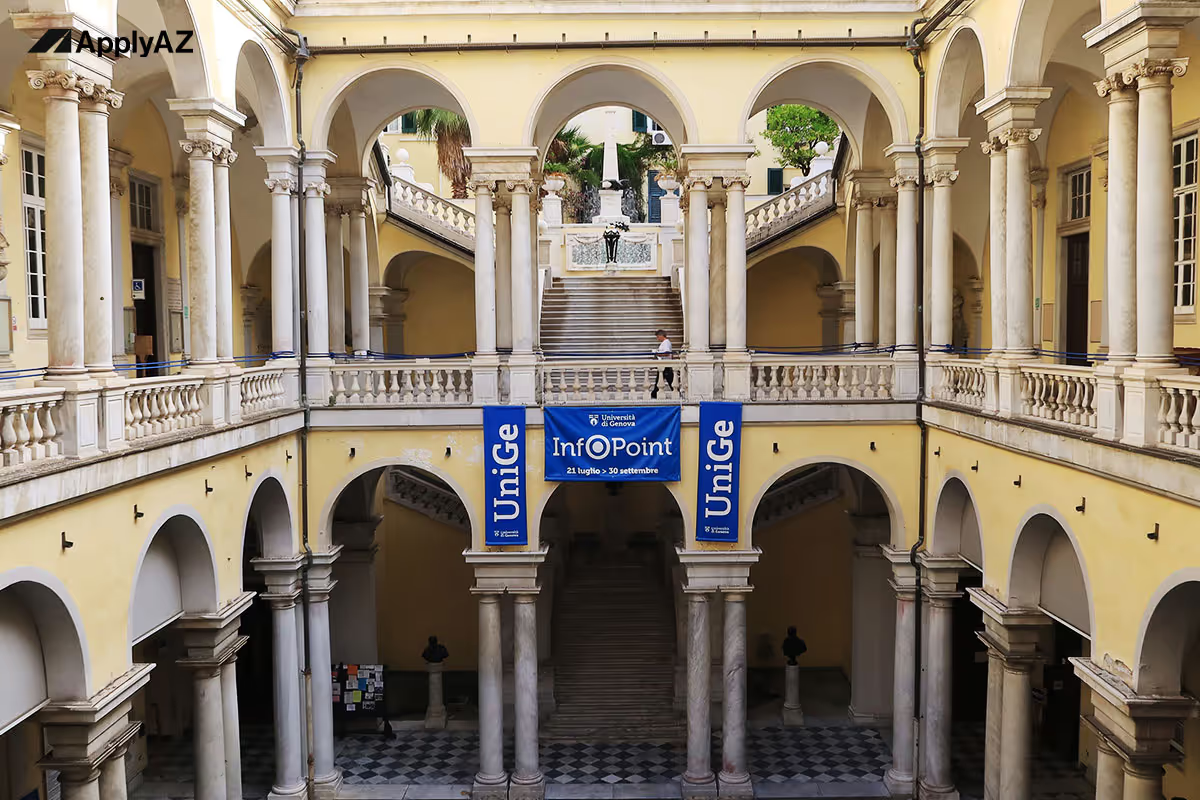
Electronic Engineering is a two-year, 120 ECTS master's degree (class LM-29) taught in English and in person at the University of Genoa. It covers circuit design, embedded and cyber-physical systems, RF electronics and machine learning. Fees follow family income (ISEE-U), so it can be tuition-free for eligible students.
Entry requirements
- A bachelor's degree of at least 180 ECTS with knowledge equivalent to an Italian information engineering degree (class L-8).
- At least 36 ECTS in the basic subjects of information engineering and at least 45 ECTS in automation, biomedical, electronic, computer or telecommunications engineering subjects.
- English at B2 level, shown by a certificate, a letter confirming your degree was taught in English, or the university's B2 test.
- In the 2026/27 UniGeApply selection for visa applicants: a minimum CGPA of 80% and a remote interview.
- A personal readiness check by a committee, waived if your bachelor's grade is at least 9/10 of the maximum or an ECTS grade A.
About the programme
Electronic Engineering is a two-year master's degree (laurea magistrale, class LM-29) worth 120 ECTS. It is taught in English and in person in Genoa by the Department of Naval, Electrical, Electronic and Telecommunications Engineering (DITEN), under course code 11970, which follows the earlier code 11780.
The course trains electronic engineers who can design and manage new solutions across many application areas, building on solid fundamentals while stressing versatility and a multidisciplinary outlook. It suits graduates in electronic, computer, biomedical or telecommunications engineering who want to design the hardware and software behind intelligent devices.
What you will study
The programme prepares you to analyse, design and manage digital and analogue circuits, integrated systems for sensors and data acquisition, intelligent systems based on machine learning, radio frequency and microwave devices, and efficient software for devices. Units in the 2026/27 list include:
- Analog Electronics, Digital Systems and Integrated Digital Systems
- Analog-Mixed Signal IC Design and VLSI Circuit Design
- Digital Integrated Circuits Design and Verification
- Cyber Physical Systems and Sensors
- Radio Frequency Electronics and Radio Frequency and Microwave Circuits
- Electromagnetic Technologies, and Electromagnetic Sensing and Imaging
- Tiny Machine Learning, Applied Reinforcement Learning and Machine Learning for Automated Driving
- An internship (stage) and a master thesis
How the programme is taught
Every course balances theory and practice, with a significant share of teaching hours spent on practical and laboratory work so that you test what you learn in the field. The second semester of the second year is set aside for the internship and thesis, which you can carry out with companies in Liguria or abroad. International students can also take an Italian language unit.
Career paths
According to the course page, graduates work in companies and public or private organisations active in industrial electronics, automation and robotics; microelectronics and semiconductors; artificial intelligence and data analysis; biomedical technologies; transport and smart mobility; energy; software systems; defence, space and security; naval and offshore systems; and research and technology transfer. Typical roles include developing and integrating electronic systems, embedded hardware and software design, testing and validating complex equipment, and engineering support for safety-critical systems.
Fees and scholarships
UniGe charges €16 stamp duty, a regional tax from €120 and a university contribution set by ISEE-U; students with a foreign family income use the ISEE-U parificato. For 2026/27 the contribution was €0 up to an ISEE-U of €13,000, rising to at most €3,300 a year. ALiSEO scholarship holders pay only the €16 stamp duty, so this programme can be tuition-free for eligible students.
How to apply from outside the EU
For 2026/27 this course asked visa applicants for a CGPA of at least 80% and a remote interview during pre-selection. Once enrolled, a committee checks your preparation unless your bachelor's grade is high enough.
You apply first on UniGeApply, paying €30 for up to two courses. The 2026/27 session for visa applicants ran from 26 November 2025 to 20 March 2026, and UniGe expects the 2027/28 session to open in November 2026. After acceptance you apply on Universitaly, pre-enrol on UniGe online services and request a type D study visa. On arrival you upload a legalised degree (or CIMEA verification) and a declaration of value, CIMEA statement or Diploma Supplement.
How ApplyAZ helps
If this programme fits your goals, ApplyAZ can include it in a shortlist of 20 to 30 English-taught programmes at Italian public universities. We write your CV and a tailored statement of purpose, submit your applications and Universitaly pre-enrolment, file your DSU scholarship application and prepare your visa file, with a named person on each stage. The university decides admission, the region decides the scholarship and the consulate decides the visa. See how ApplyAZ works or check your eligibility.
Questions and answers
Is the Electronic Engineering master taught in English?
Yes. The course is taught in English and in person in Genoa. You need English at B2 level, shown by a certificate, a letter confirming your bachelor's was taught in English, or the university's B2 test.
Which bachelor's degrees are accepted?
Degrees equivalent to Italian information engineering (class L-8), with at least 36 ECTS in its basic subjects and 45 ECTS in automation, biomedical, electronic, computer or telecommunications engineering.
Is there an entrance test?
A committee checks your preparation by interview, written test or remote interview, covering electronics, electromagnetic fields, computer architectures, signal processing, networks and algorithms. It is waived if your bachelor's grade is at least 9/10 of the maximum or ECTS grade A.
What CGPA do I need to apply from abroad?
In the 2026/27 UniGeApply selection for visa applicants, Electronic Engineering required a minimum CGPA of 80% and included a remote interview.
When can I apply for 2027/28?
UniGe expects the 2027/28 UniGeApply session to open in November 2026. For 2026/27, visa applicants applied from 26 November 2025 to 20 March 2026, with a €30 fee for up to two courses.
How much does it cost?
Fees depend on family income (ISEE-U, or ISEE-U parificato for foreign incomes). In 2026/27 the university contribution was €0 up to €13,000 and at most €3,300 a year. ALiSEO scholarship holders pay only €16.
Similar programmes
More programmes in this city

They began right where you are

