

Master in Digital and Public Humanities at Ca’ Foscari University of Venice
Two-year English-taught master at Ca' Foscari in Venice that joins the humanities and computer science, covering programming, digital and public history, archaeology and art, and web and user experience design, with a 150-hour internship.
Master
2 years
Venice
English
Ca’ Foscari University of Venice


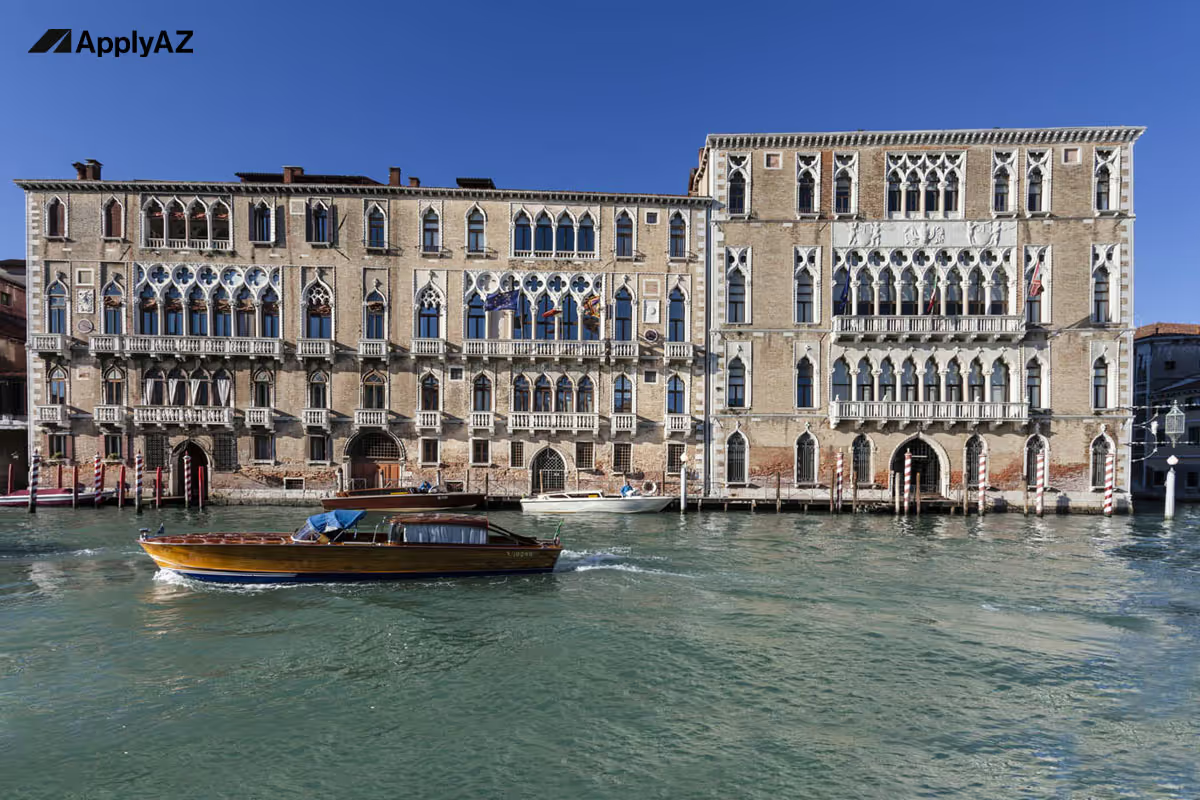
Digital and Public Humanities is a two-year, 120 ECTS master's degree (class LM-43-R) taught entirely in English at Ca' Foscari University of Venice. It combines the humanities with computer science to promote and share cultural content. Non-EU students pay a flat fee by citizenship; eligible regional scholarship applicants are exempt.
Entry requirements
- A bachelor's degree of at least three years with a minimum CGPA of 73%.
- At least 42 ECTS in subjects relevant to the programme, such as literature, languages, philology, linguistics, philosophy, history, geography, art history, archaeology, library and archival studies, computer science, logic or statistics, or law.
- English at B2 level, shown with a recognised certificate.
- A motivation letter written for this programme, assessed by the Teaching Committee with your CV and transcript.
- At enrolment, your degree certificate and transcript with an official translation, plus a CIMEA Statement of Comparability, a declaration of value, an ARDI statement with CIMEA verification, or a Diploma Supplement.
About the programme
Digital and Public Humanities is a two-year master's degree in class LM-43-R (Information technology methods for the humanities), taught entirely in English by Ca' Foscari's Department of Humanities in Venice. It carries 120 ECTS, has open admission subject to an assessment of each applicant, and attendance is not compulsory.
The degree combines the humanities and computer science to promote, enhance and share cultural content, teaching students to read the world and its cultural heritage through technology and innovation. It suits graduates in literature, history, art history, archaeology, languages or philosophy who want digital skills, and graduates in computing who want to work with culture.
What you will study
There is a single study plan, drawing on computer science, linguistics and literature, history, law, art and archival studies. First-year units in the 2026/27 timetable include:
- Introduction to Digital and Public Humanities
- Introduction to Computer Science and Programming
- Web and User Experience Design
- Digital and Public History
- Digital and Public Archaeology
- Digital and Public Art
- Computational Philology: Data Structures and Algorithms
- Data Management and Legal Issues
How the programme is taught
Workshops and laboratory activities run through the Venice Centre for Digital and Public Humanities. Every student completes a 150-hour internship with a company, institution or organisation in Italy or abroad, and the degree ends with a final thesis. Erasmus+ and Overseas exchanges give options to study or intern abroad. Non-Italian students earn 3 ECTS in Italian before graduating unless they already have B1.
Career paths
Graduates work where culture meets digital media. The university names roles such as web project manager, user experience designer, web content specialist and social media expert, in settings including:
- Cultural industries and institutions
- Digital publishing
- Management and promotion of cultural heritage
- User engagement
- Intercultural activities
- Specialised centres
Fees and scholarships
Fees for non-EU students follow a flat yearly rate by citizenship. For a master's degree in 2026/27 that is €1,300 for most countries, including countries like India, €700 for countries on the ministry's low human development list and €2,300 for OECD countries, with the €192 regional tax and €16 stamp duty included. If you meet the Veneto regional scholarship limits with an ISEE parificato, you are exempt from fees: zero euro tuition for eligible students.
How to apply from outside the EU
On apply.unive.it you upload your transcript, CV and a motivation letter written for this programme. The Teaching Committee checks that you have 42 ECTS in relevant subjects and a CGPA of at least 73%; there is no entrance test. The €30 application fee covers up to two ranked programmes. For 2026/27 the portal opened on 17 December 2025 with rounds by citizenship, and the 2027/28 rounds will be confirmed in the autumn.
An eligibility letter lets you complete Universitaly pre-enrolment and apply for a type D study visa. At enrolment you need a CIMEA Statement of Comparability, a declaration of value, an ARDI statement with CIMEA verification, or a Diploma Supplement.
How ApplyAZ helps
If this programme fits your goals, ApplyAZ can include it in a shortlist of 20 to 30 English-taught programmes at Italian public universities. We write your CV and a tailored statement of purpose, submit your applications and Universitaly pre-enrolment, file your DSU scholarship application and prepare your visa file, with a named person on each stage. The university decides admission, the region decides the scholarship and the consulate decides the visa. See how ApplyAZ works or check your eligibility.
Questions and answers
Is the Master in Digital and Public Humanities taught in English?
Yes. The whole degree is taught in English in Venice. You need certified English at B2 level to enrol, and non-Italian students earn 3 ECTS in Italian before graduating unless they already have B1.
What will I study?
Programming, web and user experience design, computational philology, data management and law, and digital and public history, archaeology and art, with workshops at the Venice Centre for Digital and Public Humanities.
What bachelor's background do I need?
A bachelor's degree with a CGPA of at least 73% and at least 42 ECTS in relevant subjects, such as literature, languages, history, art history, archaeology, philosophy, archival studies, computer science, statistics or law.
Is there an entrance test?
No. Admission is open, and the Teaching Committee assesses your transcript, CV and motivation letter written for this programme.
How much are the fees?
For 2026/27 non-EU master's students pay a flat €1,300 a year for most countries, €700 for low human development countries or €2,300 for OECD countries. Students eligible for the Veneto regional scholarship are exempt from fees.
What jobs can graduates do?
The university names web project manager, user experience designer, web content specialist and social media expert, in cultural institutions, digital publishing and the management and promotion of cultural heritage.
Similar programmes
More programmes in this city

They began right where you are

