

Master in Sustainable Transportation and Smart Maritime Mobility at Iuav University of Venice
Two-year English-taught LM-23 master's at Iuav University of Venice on transport systems, smart maritime logistics, traffic engineering and coastal infrastructure, with design studios and a compulsory internship.
Master
2 years
Venice
English
Iuav University of Venice


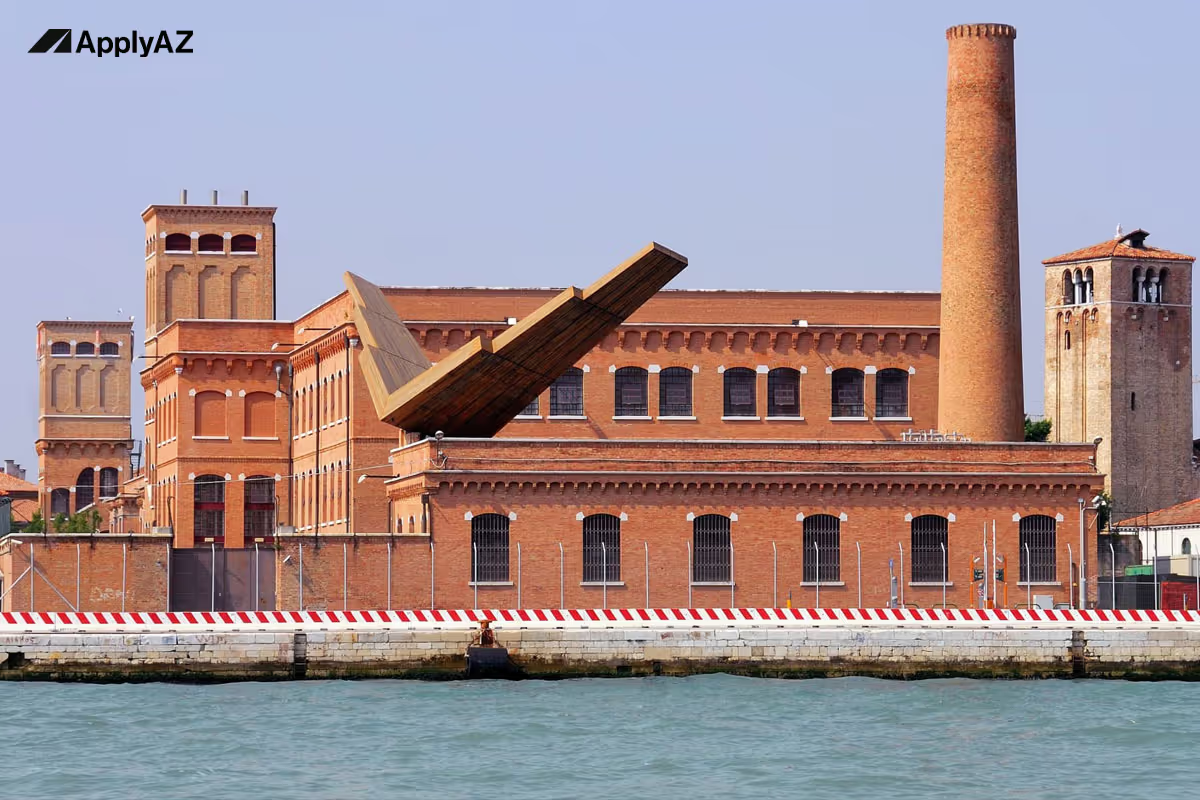
Sustainable Transportation and Smart Maritime Mobility is a two-year, 120 ECTS civil engineering master's (LM-23) taught in English at Iuav University of Venice. It covers transport systems, maritime logistics and coastal infrastructure. Fees depend on family income, so it can be tuition-free for eligible students.
Entry requirements
- A bachelor's degree in civil and environmental engineering (Italian class L-7), or another degree, including a foreign one, with at least 30 ECTS in the maths, science and engineering fields listed by Iuav.
- A committee checks that your background fits the course after applications close.
- English at B2 (CEFR), shown with a certificate.
- Selection on 100 points: degree (up to 30), graduation grade (up to 20) and a video (up to 50), with at least 60 to qualify.
- Diploma or enrolment certificate, transcript or diploma supplement, with Italian or English translations, and a €30 application fee.
About the programme
Sustainable Transportation and Smart Maritime Mobility is a two-year laurea magistrale in civil engineering (class LM-23) run by the Department of Design Cultures at Iuav University of Venice. It is taught in English, carries 120 ECTS and is coordinated by Silvio Nocera.
The course treats mobility as one system rather than separate sectors, linking safety, logistics, infrastructure, planning, operations and technology. It aims to train infrastructure and mobility managers who can design, run and maintain transport systems and large infrastructure over their whole life cycle, with a strong focus on digitalisation, automation and data-driven decisions. Venice, where water, land and air transport meet, serves as a living laboratory. It suits graduates in civil, environmental or transport engineering who want to work on ports, logistics and sustainable mobility.
What you will study
The 2026/27 study plan combines lecture courses with design studios. Some first-year courses are chosen from pairs of alternatives. Units include:
- Artificial intelligence and data science for transportation
- Smart maritime logistics and freight movement
- Traffic engineering and control, and systems analysis in transportation coastal areas
- Marine fluid dynamics and coastal engineering, and Introduction to the marine environment: ocean and climate
- Structural design and principles of risk assessment of infrastructures in coastal areas
- Studios on large infrastructures and the coastal landscape, and on maritime transportation and land use planning
- Second-year studios on advances in passenger mobility and on the design and operation of freight maritime transport
- Transport planning and management, and interdisciplinary energy analysis and environmental economics
How the programme is taught
Studio work is central, and attendance of at least 70% is required for the studios. The second year includes a 9 ECTS internship, which can be done with a company or organisation, in-house at Iuav or abroad, and a 9 ECTS final examination. The course is linked to Iuav's Venice Sea Lab, and students can use the university's international exchange network.
Career paths
The teaching regulation lists these main outlets for graduates:
- Engineering and design firms and consultancies
- Public bodies at every level, including port system authorities
- Operators and concessionaires of infrastructure and terminals, such as intermodal centres
- Freight and passenger transport operators
- National and international organisations in transport and land governance
- Research and teaching at universities and public or private research bodies
Graduates can also go on to second-level university masters or a PhD.
Fees and scholarships
Iuav has five Study@Iuav fee waivers for this master in 2026/27. Otherwise the usual 2026/27 rules apply: up to €2,806.18 a year in university contribution, plus €192 regional tax and €16 stamp duty, reduced by ISEE, with full exemption up to an ISEE of €26,000 when merit rules are met. Students with income abroad use the ISEE parificato or ask for a €500 or €1,000 flat rate. With the Veneto regional DSU scholarship, the degree can be tuition-free for eligible students.
How to apply from outside the EU
Iuav reserved 40 places for non-EU applicants living abroad in 2026/27, while EU applicants and residents in Italy had open access. You apply on the Iuav Online Desk with your documents and a video, then pay a €30 fee through PagoPA. For 2026/27 there were two rounds for non-EU applicants, closing on 23 February and 6 July 2026.
Admitted applicants pay a pre-enrolment fee, complete Universitaly pre-enrolment (by 30 April 2026 for the first round) and then apply for a type D study visa. The 2027/28 call is not published yet.
How ApplyAZ helps
If this programme fits your goals, ApplyAZ can include it in a shortlist of 20 to 30 English-taught programmes at Italian public universities. We write your CV and a tailored statement of purpose, submit your applications and Universitaly pre-enrolment, file your DSU scholarship application and prepare your visa file, with a named person on each stage. The university decides admission, the region decides the scholarship and the consulate decides the visa. See how ApplyAZ works or check your eligibility.
Questions and answers
Is this master taught in English?
Yes. Iuav teaches Sustainable Transportation and Smart Maritime Mobility entirely in English in Venice, and applicants need English at B2 level with a certificate.
Which bachelor's degrees are accepted?
A bachelor's in civil and environmental engineering (Italian class L-7) gives direct access. Other degrees, including foreign ones, need at least 30 ECTS in the maths, science and engineering fields Iuav lists, checked by a committee.
Is there an entrance test?
No written test. A committee scores your degree (up to 30 points), graduation grade (up to 20) and a video (up to 50). You need at least 60 points to be ranked.
How many places are there for non-EU students?
For 2026/27 Iuav set 40 places for non-EU applicants living abroad. EU citizens and non-EU residents in Italy had open access with no cap.
When can I apply for 2027/28?
The 2027/28 call is not out yet. For 2026/27 non-EU applicants had two rounds, closing on 23 February and 6 July 2026, with a €30 application fee.
What jobs does it lead to?
Iuav points graduates to engineering firms and consultancies, port system authorities and other public bodies, infrastructure and terminal operators, freight and passenger transport companies, and research.
Similar programmes
More programmes in this city

They began right where you are

