

Master in Curating Arts and Heritage in Intercultural Perspectives at Iuav University of Venice
Two-year English-taught LM-89 master's at Iuav University of Venice that trains curators of art and cultural heritage from an intercultural and postcolonial perspective. Entry needs a related degree or 24 ECTS in its fields and English at B2, with places ranked on degree, grade and a video.
Master
2 years
Venice
English
Iuav University of Venice


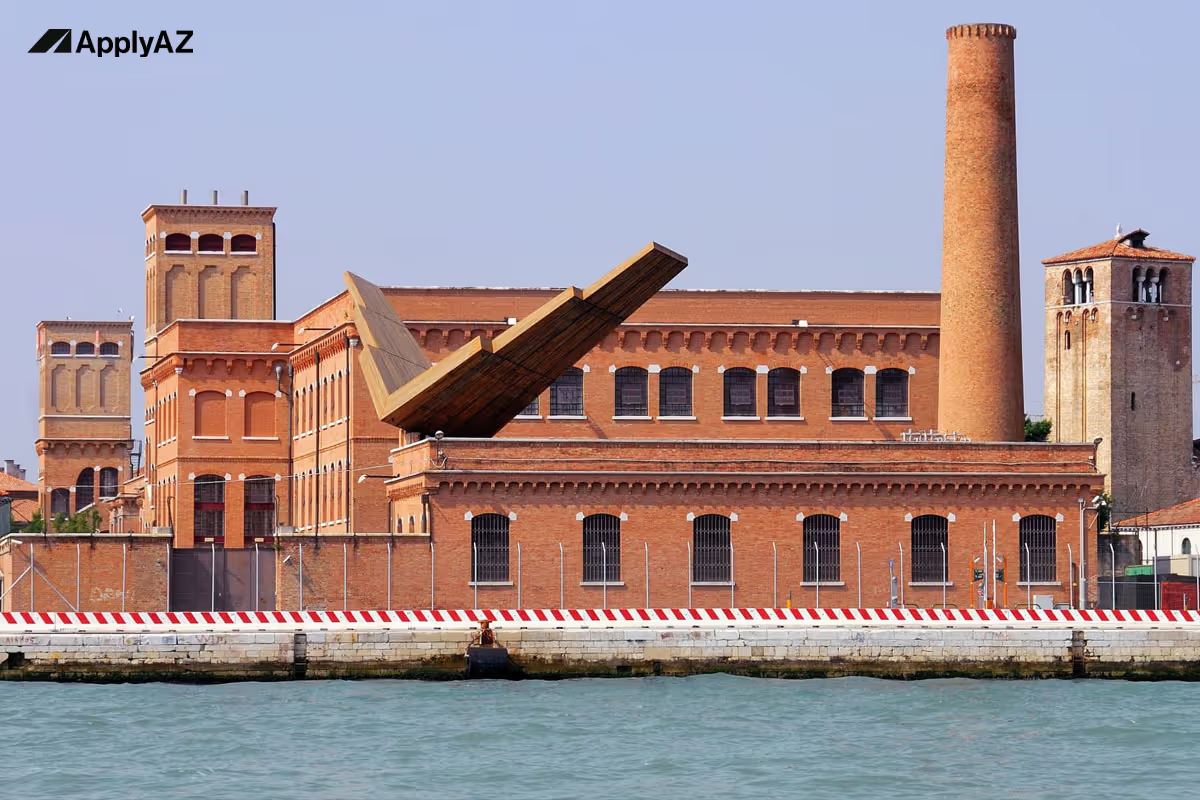
Curating Arts and Heritage in Intercultural Perspectives is a two-year, 120 ECTS master's degree (class LM-89) taught in English at Iuav University of Venice. Entry needs a bachelor's in arts, heritage, humanities, design, architecture or a related field, or 24 ECTS in its fields, plus English at B2. Places are ranked on degree, grade and a video. Fees follow family income, so it can be tuition-free for eligible students.
Entry requirements
Detailed entry requirements
Iuav's Curating Arts and Heritage master asks for a bachelor's degree in a listed class such as cultural heritage, arts, design, humanities, architecture or history, or any degree with at least 24 ECTS in the programme's fields, plus English at B2. Places are limited and ranked on degree class, graduation grade and a video. Reviewed 8 October 2026. [1]
Degree requirement
You need a bachelor's degree, or must obtain it by 31 July 2026 if it is a foreign degree, in one of these Italian classes or an equivalent: L-1 Cultural heritage, L-3 Visual arts, music, performing arts and fashion, L-4 Industrial design, L-5 Philosophy, L-10 Humanities, L-11 Modern languages, L-17 Architecture, L-20 Communication, L-40 Sociology or L-42 History. A bachelor's from an Italian AFAM arts institution also qualifies. [1][3]
Any other degree or university diploma, including a foreign one, qualifies if it shows at least 24 ECTS in one or more of the programme's characterising fields or related fields. A committee checks this after applications close. [1] The characterising fields include contemporary art history, museology and art criticism, philosophy of language, Greek language and literature, classical archaeology, interior architecture and exhibit design, and history of architecture. [3]
What this means for your transcript
As a guide, based on the rule above:
- Usually a fit: a BA in History, Fine Arts, Visual Arts, English or another literature, Philosophy, Sociology or Mass Communication, or a B.Arch or B.Des, which sit close to the listed classes.
- Check carefully: a BA in Psychology, Geography or Economics, or a liberal arts degree, which needs at least 24 ECTS in the programme's fields such as art history, museology or architecture history.
- Often short: a B.Tech, B.Sc., BCA, B.Com or BBA with no art history, archaeology, architecture or philosophy units.
Your degree class also sets up to 30 of your 100 selection points, so a closer subject fit helps your ranking as well as your eligibility. [1]
English
English at CEFR level B2, with proof uploaded when you apply. [1][3] Accepted proof includes certificates from bodies on the Italian ministry's accredited list, university language centre certificates, university exams that state the CEFR level, or a university degree taught entirely in a foreign language. Self-declarations are checked, and certificates are valid for five years. [1] Iuav also states that a bachelor's taught entirely in English counts for access to master's degrees that ask for B2. [4]
Iuav's list of recognised certificates places B2 at IELTS 5.6 to 7.0, TOEFL 72 to 94 and PTE Academic from GSE 50, and also lists Cambridge First (FCE), Trinity ISE II, LanguageCert and the Oxford Test of English at B2. [4]
Selection
Places are limited, and there is no written test. A committee scores applicants out of 100: [1][3]
- Degree class, up to 30 points: 30 for classes such as cultural heritage, arts, design, philosophy, humanities, modern languages, architecture, communication, history, conservation or an AFAM diploma; 23 for geography, linguistic mediation, psychology, social sciences for cooperation or sociology; 15 for other degrees.
- Graduation grade, up to 20 points: from 1 to 4 points for 66 to 80 out of 110, rising to 20 for 110 with honours. Applicants not graduated by 23 March 2026 get no grade points.
- Video in English, up to 50 points: up to three minutes, answering three set questions on your choice of Italy, Venice and the programme, a curatorial practice or field that inspired you, and why intercultural approaches matter in curating. It is scored on communication (up to 15), argument and competence (up to 15) and motivation (up to 20).
You need at least 60 points to be ranked. Ties go to the younger applicant, then to the higher video score. The call gives grade bands on the Italian 110 scale and does not explain how foreign grades are converted, so we check this for your file. [1]
2026/27 places and deadlines
For 2026/27 there were 60 places: 20 for non-EU applicants living abroad and 40 for EU applicants and non-EU applicants legally residing in Italy. There was a single round. [1]
- Application: until 1 pm on 23 March 2026, on the Iuav Online Desk.
- Ranking list: 13 April 2026.
- Pre-enrolment: 13 to 20 April 2026, with the first instalment paid by 20 April. Places left over were offered from 22 to 27 April 2026.
- Universitaly pre-enrolment (non-EU applicants living abroad): by 29 May 2026.
- Proof that your visa application has started: by 31 July 2026, or the place passes to the next applicant.
- Foreign degree completed: by 31 July 2026, with enrolment from 1 August to 15 October 2026.
The 2027/28 call is not yet published, and the next call sets the new dates. [1][2]
Documents and non-EU steps
With the application you upload a valid ID document, your B2 English certificate and your video. With a foreign degree, you also upload your diploma, or an enrolment certificate with your expected graduation date, and your transcript or Diploma Supplement, with English or Italian translations if needed. [1]
Admitted non-EU applicants living abroad pre-enrol, then complete Universitaly pre-enrolment for the type D study visa. To enrol, you need your diploma and transcript with translations, an Italian tax code, your study visa and a residence permit or its application receipt. Iuav may also ask for a declaration of value, a CIMEA Statement of Comparability and Verification, or legalisation or an apostille. [1]
The first instalment is refunded to non-EU applicants living abroad only if their visa is refused. [1]
Sources and verification
Checked by the ApplyAZ admissions team against the university's official documents listed below. Entry rules can change with each new call, and we re-check them before every application.
- Università Iuav di Venezia. Selective procedures for admission to the master's degree programme in Curating Arts and Heritage in Intercultural Perspectives, rectoral decree, academic year 2026/27. Reviewed 8 October 2026.
- Università Iuav di Venezia. Curating Arts and Heritage in Intercultural Perspectives programme page and admission procedures summary of deadlines, academic year 2026/27. Reviewed 8 October 2026.
- Università Iuav di Venezia, Department of Design Cultures. Teaching regulations of the Master's degree in Curating Arts and Heritage in Intercultural Perspectives (class LM-89 R), academic year 2026/27. Reviewed 8 October 2026.
- Università Iuav di Venezia. Study guide (Manifesto degli studi) for the Master's degree in Curating Arts and Heritage in Intercultural Perspectives, 2026 cohort, academic year 2026/27. Reviewed 8 October 2026.
- Università Iuav di Venezia. Tuition fees, fee reductions and exemptions, academic year 2026/27. Reviewed 8 October 2026.
- Università Iuav di Venezia. Study@Iuav tuition fee waivers, academic year 2026/27. Reviewed 8 October 2026.
About the programme
Curating Arts and Heritage in Intercultural Perspectives is a two-year laurea magistrale in art history (class LM-89) at Iuav University of Venice, run by the Department of Design Cultures and coordinated by Monica Centanni. It is taught in English, carries 120 ECTS and has 60 places. [1][2][3]
The course trains curators who can plan the curation of cultural heritage in a broad sense, from visual arts and architecture to archaeology, visual cultures and ethnographic collections. It works from an intercultural perspective: the critique of Eurocentrism, colonial histories and memories, cultural appropriation, restitution and the circulation of culture worldwide. It combines curating, interculturality and design, and suits graduates in the humanities, arts, architecture or design. [3]
What you will study
The 2026/27 study plan is built around three curating studios, supported by courses in theory, history and display. Units include: [4]
- Studio 1 and Studio 2: Curating in intercultural perspectives
- Studio 3: Provenance and registrar (10 ECTS)
- Postcolonial and decolonial studies, and Archaeology and colonialism
- Visual anthropology and media theory, and Visual culture
- Architecture and exhibit design, and Staging exhibit design
- Digital storytelling, Digital humanities and display, and Methodologies of display and classical tradition
- East-west relationships, Intercultural heritage geography, Aesthetics, and Semiotics and image theory
How the programme is taught
Theory is paired with hands-on workshops led by professionals who work in intercultural settings. Attendance of at least 70% of course hours is required. The plan includes a 6 ECTS internship with an outside organisation, in-house at Iuav or abroad, 4 ECTS of additional language knowledge and a 14 ECTS final examination. [3][4]
Career paths
Iuav prepares graduates to work as curators in public and private cultural institutions, able to present in exhibitions the cross-cultural dynamics of different historical periods, including ideas of exoticism, orientalism, colonialism and otherness. The course aims to give both the theoretical grounding and the operational skills that curatorial work in this field requires. [3]
Fees and scholarships
Iuav set aside ten Study@Iuav tuition waivers for international students on this master in 2026/27, given after enrolment and visa. [6] Fees follow family income (ISEE), with full exemption up to an ISEE of €26,000 when merit rules are met. [2][5]
International students can request the ISEE parificato or use Iuav's flat rate, set by the World Bank income band of their country, with the lowest rate for countries such as India and Pakistan. The flat rate cannot be combined with the regional scholarship or ISEE-based waivers. Students eligible for the 2026/27 regional scholarship are exempt from tuition fees, so this master can be tuition-free for eligible students. [5]
How to apply from outside the EU
For 2026/27 this master had 60 places: 20 for non-EU applicants living abroad and 40 for EU applicants and non-EU applicants legally residing in Italy. There was one application round on the Iuav Online Desk, closing on 23 March 2026, with a video. [1]
Rankings came out on 13 April 2026, followed by pre-enrolment and the first instalment by 20 April, Universitaly pre-enrolment by 29 May 2026 and proof by 31 July 2026 that the visa application had started. The 2027/28 call is not yet published. [1][2]
How ApplyAZ helps
ApplyAZ is an Italy-based consultancy that works only with public universities. We can include this programme in a shortlist of 20 to 30 English-taught programmes that fit your profile, so your plan never rests on a single application.
For eligible students who start with us, a named person owns each stage, from A to Z:
- We check your transcript against Iuav's entry rules for this programme.
- We write your CV and a tailored statement of purpose.
- We prepare and submit your online application with your video, pre-enrolment and Universitaly pre-enrolment.
- We help you declare your family income for reduced fees and file your regional DSU scholarship application at the right time and in the right format.
- We prepare your visa file.
With operations in all 20 Italian regions, we follow each region's scholarship rules and deadlines as they change. The university decides admission, the region decides the scholarship and the consulate decides the visa, so no one can promise an outcome. You pay in milestones, and every service you pay for is either delivered or its fee is refunded (terms apply).
Programmes at Italian public universities can be tuition-free for eligible students. Check if you are eligible and book a one-to-one consultation session with one of our Italy experts, or see how ApplyAZ works.
Questions and answers
What bachelor's degree do I need for Curating Arts and Heritage at Iuav?
A bachelor's in a field such as cultural heritage, arts, design, philosophy, humanities, modern languages, architecture, communication, sociology or history, or an Italian AFAM arts diploma. Any other degree, including a foreign one, qualifies with at least 24 ECTS in the programme's fields, checked by a committee. [1][3]
Is there an entrance test?
No written test. A committee scores you out of 100: your degree class (up to 30), your graduation grade (up to 20) and a three-minute video in English answering three set questions (up to 50). You need at least 60 points to be ranked. [1]
What English level is required? Do I need IELTS?
English at B2, with proof uploaded when you apply. Iuav also accepts a bachelor's taught entirely in English. On Iuav's list, IELTS scores from 5.6 to 7.0 and TOEFL scores from 72 to 94 count as B2, and certificates are valid for five years. [1][4]
When is the deadline for non-EU students?
For 2026/27 there was one round: applications closed at 1 pm on 23 March 2026, rankings came out on 13 April and Universitaly pre-enrolment closed on 29 May 2026. The 2027/28 call is not yet published. [1]
Can I apply before I graduate?
Yes. Under the 2026/27 call, a foreign degree had to be completed by 31 July 2026, and you applied with an enrolment certificate showing your expected graduation date. If you had not graduated by 23 March, you got no points for your grade. [1]
I have a B.Com or a B.Tech. Can I still apply?
Only if your transcript shows at least 24 ECTS in the programme's fields, such as art history, museology, philosophy of language, archaeology, exhibit design or architecture history. Commerce and engineering degrees often lack these, and other degree classes score only 15 of the 30 degree points. [1][3]
How many places are there for non-EU students?
For 2026/27 there were 60 places in total: 20 for non-EU applicants living abroad and 40 for EU applicants and non-EU applicants legally residing in Italy. [1]
What careers does it lead to?
Iuav prepares graduates to work as curators and museum conservators in public and private cultural institutions: designing exhibitions and festivals, cataloguing and archiving heritage collections, and writing specialist and popular texts, with an intercultural and postcolonial perspective. [3]
Can someone handle my whole application to Curating Arts and Heritage at Iuav?
Yes. ApplyAZ, an Italy-based consultancy that works only with public universities, checks your transcript against Iuav's rules for this programme, handles the application and Universitaly pre-enrolment, helps you file the regional DSU scholarship application at the right time and in the right format, and prepares your visa file, for eligible students. Start by checking your eligibility.
I'm applying from India. What is the route into Curating Arts and Heritage?
A recognised Indian bachelor's in history, fine arts, English, philosophy, sociology, architecture or design is close to the listed degree classes, and any other degree needs at least 24 ECTS in the programme's fields. You also need English at B2 and a strong video, scored out of 50. The steps are the online application, the ranking, pre-enrolment and Universitaly pre-enrolment. [1][3] Indian students apply for the type D study visa at the Italian embassy or consulate that covers their state, such as New Delhi, Mumbai or Bengaluru.
Is the route different from Pakistan, Bangladesh or Sri Lanka?
No. The academic rules for Curating Arts and Heritage are the same whatever your nationality. Applicants from Pakistan, Bangladesh and Sri Lanka follow the same steps as India: online application with a video, the ranking, pre-enrolment with the first instalment and Universitaly pre-enrolment, then a type D study visa from the Italian mission for their country of residence. Read our guide for students in Dhaka.
I live in the UAE, Saudi Arabia, Qatar, Kuwait, Oman or Bahrain. Where do I apply for the visa?
At the Italian embassy or consulate responsible for the country where you legally live, after Universitaly pre-enrolment. The academic rules for Curating Arts and Heritage are the same whatever your nationality, and Gulf residents follow the same steps: online application with a video, the ranking, pre-enrolment with the first instalment and Universitaly pre-enrolment. Read our guides for Dubai, Riyadh and Doha.
I studied or live in London, New York, Toronto, Vancouver, Singapore or Kuala Lumpur. What is the route?
The academic rules for Curating Arts and Heritage are the same whatever your nationality, and your degree is assessed like any other foreign qualification. Non-EU applicants who live abroad follow the same route: online application with a video, the ranking, pre-enrolment with the first instalment and Universitaly pre-enrolment, then a type D study visa from the Italian mission for where they live. Read our guides for students in London, New York, Toronto, Vancouver, Singapore and Kuala Lumpur.
More English-taught programmes at this university
Other public universities in this city

They began right where you are

