

Master in Computer Engineering at University of Genoa
Two-year English-taught LM-32 master's at the University of Genoa with three curricula: AI and human-centred computing, software platforms and cybersecurity, and sustainable systems engineering, plus double degree options.
Master
2 years
Genoa
English
University of Genoa



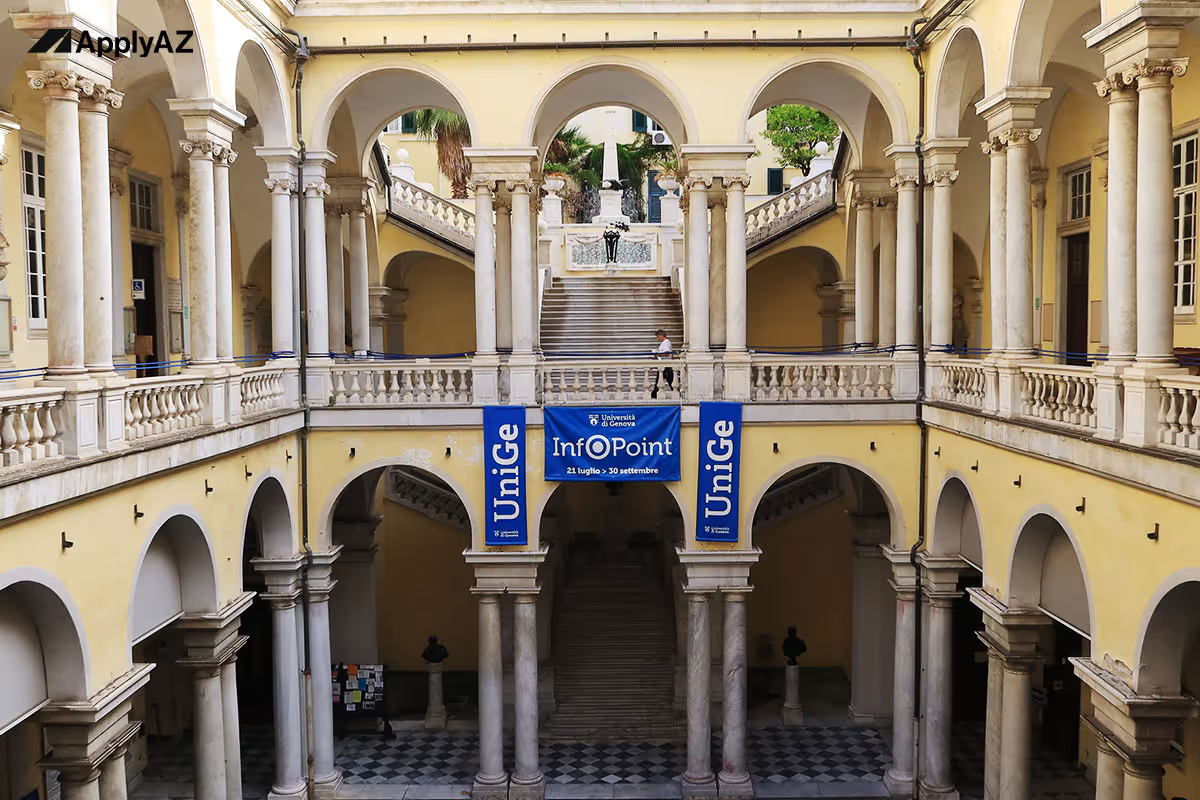
Computer Engineering is a two-year, 120 ECTS master's degree (LM-32) taught in English by DIBRIS at the University of Genoa, with curricula in AI and human-centred computing, software platforms and cybersecurity, and sustainable systems. Fees follow family income (ISEE-U), so it can be tuition-free for eligible students.
Entry requirements
- A bachelor's degree of at least 180 ECTS (three years) in information engineering or computer science (Italian classes L-8 or L-31), or an equivalent foreign degree.
- At least 36 credits in the basic subjects and 42 credits in the core subjects of those classes.
- English at B2 level, or a certificate that your bachelor's was taught in English (MOI).
- For the 2026/27 non-EU pre-selection: a minimum CGPA of 75%, with no remote interview.
- An admission test, waived if your bachelor's grade is at least 9/10 of the maximum or an ECTS grade A or B.
- CV, degree certificate and transcript uploaded to UniGeApply.
About the programme
Computer Engineering is a two-year master's degree (laurea magistrale, class LM-32, computer systems engineering) worth 120 ECTS and taught in English at the University of Genoa. It is run by DIBRIS, the Department of Informatics, Bioengineering, Robotics and Systems Engineering, and teaching takes place in person in Genoa, with lecture rooms and labs in Via all'Opera Pia.
The course trains engineers with solid methods and a high professional level who can build IT solutions across industry, services and the public sector. It suits graduates in computer engineering, information engineering or computer science who want to move into AI, security or large software systems.
What you will study
You choose one of three curricula: Artificial Intelligence and Human Centered Computing; Software Platforms and Cybersecurity; or Sustainable Systems Engineering. Units in the 2026/27 list include:
- Machine Learning and Deep Learning, Artificial Intelligence and Trustworthy Artificial Intelligence
- Cybersecurity, Data Protection and Privacy, Digital Forensics and Mobile Security
- Software Engineering and Software Engineering Lab
- Software Platforms, Distributed Systems, and Virtualization and Cloud Computing
- Human Computer Interaction, Designing Interactive Systems, and Augmented and Virtual Reality
- Embedded Systems, Real-Time Operating Systems and Industrial Automation
- Operations Research, Optimal Control and Sustainable Logistic Systems Planning
- A project work and the master's thesis
How the programme is taught
Teaching combines lectures with laboratory activities. The university also offers the chance of a double degree with the University of Compiègne and the University of Catalonia, and course-specific units in English and in Italian as a foreign language are part of the list.
Career paths
The university describes roles as designer, manager, consultant or entrepreneur in public and private companies. Typical sectors are:
- Hardware and software production
- Information systems and computer networks
- Multimedia services and e-commerce
- IT services for public administration, health and leisure
Fees and scholarships
Computer Engineering sits in UniGe's scientific-technical fee class. For 2026/27, the university contribution depends on your ISEE-U; students whose families live abroad obtain an ISEE-U parificato from a UniGe-affiliated CAF, by 31 October to avoid a penalty. First-year students with an ISEE-U up to €13,000 pay no contribution beyond stamp duty and regional tax, while the top rate is €3,300. With an ALiSEO Liguria scholarship on top, the degree can be tuition-free for eligible students.
How to apply from outside the EU
For 2026/27, non-EU applicants living abroad needed a CGPA of at least 75% and faced no remote interview. You apply first on UniGeApply, the university's pre-evaluation portal: the visa applicants' session ran from 26 November 2025 to 20 March 2026, and €30 covered up to two applications.
Once accepted, you pre-enrol on Universitaly (4 May to 19 June 2026 last cycle), then pre-enrol on UniGe online services and apply for a type D study visa. The 2027/28 dates are not published yet.
How ApplyAZ helps
If this programme fits your goals, ApplyAZ can include it in a shortlist of 20 to 30 English-taught programmes at Italian public universities. We write your CV and a tailored statement of purpose, submit your applications and Universitaly pre-enrolment, file your DSU scholarship application and prepare your visa file, with a named person on each stage. The university decides admission, the region decides the scholarship and the consulate decides the visa. See how ApplyAZ works or check your eligibility.
Questions and answers
Is Computer Engineering at Genoa taught in English?
Yes. All units are taught in English, and you need English at B2 level or a certificate that your bachelor's was taught in English. Italian is not required for admission.
Which bachelor's degrees are accepted?
Degrees in information engineering or computer science (Italian classes L-8 or L-31) or equivalent foreign degrees, with at least 36 credits in basic and 42 credits in core subjects of those classes.
Is there an entrance test?
There is an admission test, but it is waived if your bachelor's grade is at least 9/10 of the maximum or an ECTS grade A or B. The 2026/27 non-EU pre-selection had no remote interview.
Which specialisations can I choose?
Three curricula: Artificial Intelligence and Human Centered Computing, Software Platforms and Cybersecurity, and Sustainable Systems Engineering. A double degree with Compiègne or Catalonia is also possible.
When can I apply for 2027/28?
The 2027/28 dates are not out yet. For 2026/27, the UniGeApply session for visa applicants ran from 26 November 2025 to 20 March 2026, with a €30 fee for up to two applications.
How much does it cost?
Fees depend on ISEE-U or ISEE-U parificato. For 2026/27, first-year students up to €13,000 pay no university contribution, and the maximum is €3,300 a year. ALiSEO Liguria scholarships are open to eligible students.
Similar programmes
More programmes in this city

They began right where you are

