

Master in Biodiversity, Conservation and Environmental Quality at University of Siena
Two-year English-taught LM-6 biology master's at the University of Siena that trains environmental biologists in biodiversity analysis, conservation, habitat monitoring and environmental quality, with an internship and a 27 ECTS thesis.
Master
2 years
Siena
English
University of Siena


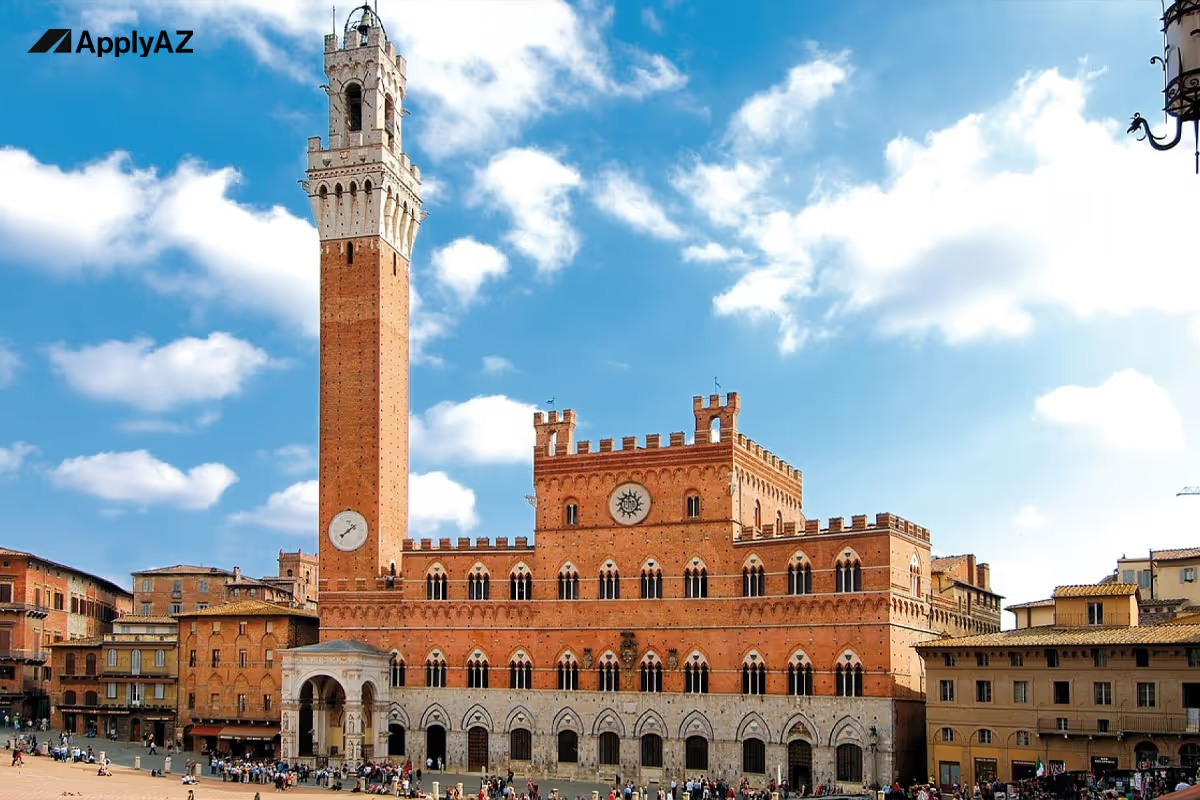
Biodiversity, Conservation and Environmental Quality is a two-year, 120 ECTS master's degree (class LM-6, biology) taught entirely in English by the University of Siena's Department of Life Sciences. It trains environmental biologists in biodiversity, nature conservation and environmental quality assessment. The programme can be tuition-free for eligible students.
Entry requirements
- A bachelor's degree in biology, botany, zoology, biotechnology or environmental and natural sciences, or an equivalent foreign degree.
- Curricular requirements and personal preparation checked by the Teaching Committee.
- English at B2 level (CEFR).
- Direct admission if requirements are met; otherwise admission depends on passing an entrance exam.
- Non-EU applicants apply on apply.unisi.it with a €49.90 fee per programme (2026/27).
About the programme
Biodiversity, Conservation and Environmental Quality (BCEQ) is a two-year laurea magistrale in class LM-6 (biology), worth 120 ECTS and taught entirely in English. It is run by the Department of Life Sciences, with teaching at the San Miniato science campus on via Aldo Moro and at via Pier Andrea Mattioli in Siena.
The programme trains environmental biologists with expertise in biodiversity, nature conservation and the assessment of environmental quality. It suits graduates in biology, natural sciences or biotechnology who want to work in field research, monitoring or protected-area management.
What you will study
The first year is mostly compulsory and combines ecology, taxonomy and data skills. Course units in the 2026/27 study plan include:
- Conservation Biology
- Plant Diversity
- Biodiversity and Conservation of Fungi
- Molecular Applied Zoology
- Habitat Conservation and Monitoring
- Environmental Quality and Management, and Applied Ecology and Environmental Management
- Introduction to Biological Data Analysis and Bioinformatics
- Biodiversity and Pharmaceuticals
Students add 12 ECTS of electives in the first year and choose further related and free-choice units in the second.
How the programme is taught
The second year is built around practical and research work: a 6 ECTS internship, 3 ECTS of work-related skills and a final thesis worth 27 ECTS, alongside 24 ECTS of elective courses.
Career paths
The department lists these professional roles for graduates:
- freelance biologist
- researcher or manager in universities and public or private research institutes
- specialist in international, national and regional environmental and biodiversity conservation bodies
- roles in museums, parks, protected areas and nature reserves
- work in biological, environmental and quality-control laboratories
- teaching in schools, after the required courses or competitive exams
Fees and scholarships
The University of Siena uses the Italian ISEE to set fees and does not accept an ISEE parificato. For 2026/27, students with no valid ISEE pay the top band multiplied by a coefficient linked to their country, with a €500 minimum, which means €500 plus regional tax and stamp duty for students from countries like India. DSU Toscana winners and eligible students are fully exempt, so this programme can be tuition-free for eligible students.
How to apply from outside the EU
Non-EU applicants use the apply.unisi.it portal, upload their degree, transcripts and English certificate, and pay €49.90 per programme (2026/27). The Teaching Committee decides whether you are admitted directly or must pass an entrance exam.
In 2026/27, applicants who needed a visa had to apply by early May 2026. Admitted students then complete Universitaly pre-enrolment for the visa. The 2027/28 calendar is not published yet.
How ApplyAZ helps
If this programme fits your goals, ApplyAZ can include it in a shortlist of 20 to 30 English-taught programmes at Italian public universities. We write your CV and a tailored statement of purpose, submit your applications and Universitaly pre-enrolment, file your DSU scholarship application and prepare your visa file, with a named person on each stage. The university decides admission, the region decides the scholarship and the consulate decides the visa. See how ApplyAZ works or check your eligibility.
Questions and answers
Is BCEQ taught in English?
Yes. The two-year LM-6 master's is taught entirely in English by the Department of Life Sciences in Siena.
Which bachelor's degrees are accepted?
Degrees in biology, botany, zoology, biotechnology or environmental and natural sciences, or an equivalent foreign degree assessed by the Teaching Committee.
Is there an entrance test?
Applicants who meet the curricular requirements can be admitted directly; otherwise admission depends on passing an entrance exam set by the Teaching Committee.
Does the programme include practical work?
Yes. The second year includes a 6 ECTS internship and a final thesis worth 27 ECTS.
How much does it cost?
Without a valid Italian ISEE, the 2026/27 contribution depends on your country of citizenship and is at least €500 a year, plus regional tax and stamp duty. DSU Toscana winners and eligible students are exempt.
What careers does it lead to?
Conservation and environmental bodies, parks and reserves, museums, research institutes, environmental laboratories, freelance biology and school teaching.
Similar programmes
More programmes in this city

They began right where you are

