

Master in Sustainable Industrial Engineering at University of Modena and Reggio Emilia
English-taught LM-33 master's at Unimore's Tecnopolo di Carpi, combining mechanical engineering with industrial IoT, automation, energy management and sustainable manufacturing, with company projects and internships.
Master
2 years
Modena
English
University of Modena and Reggio Emilia



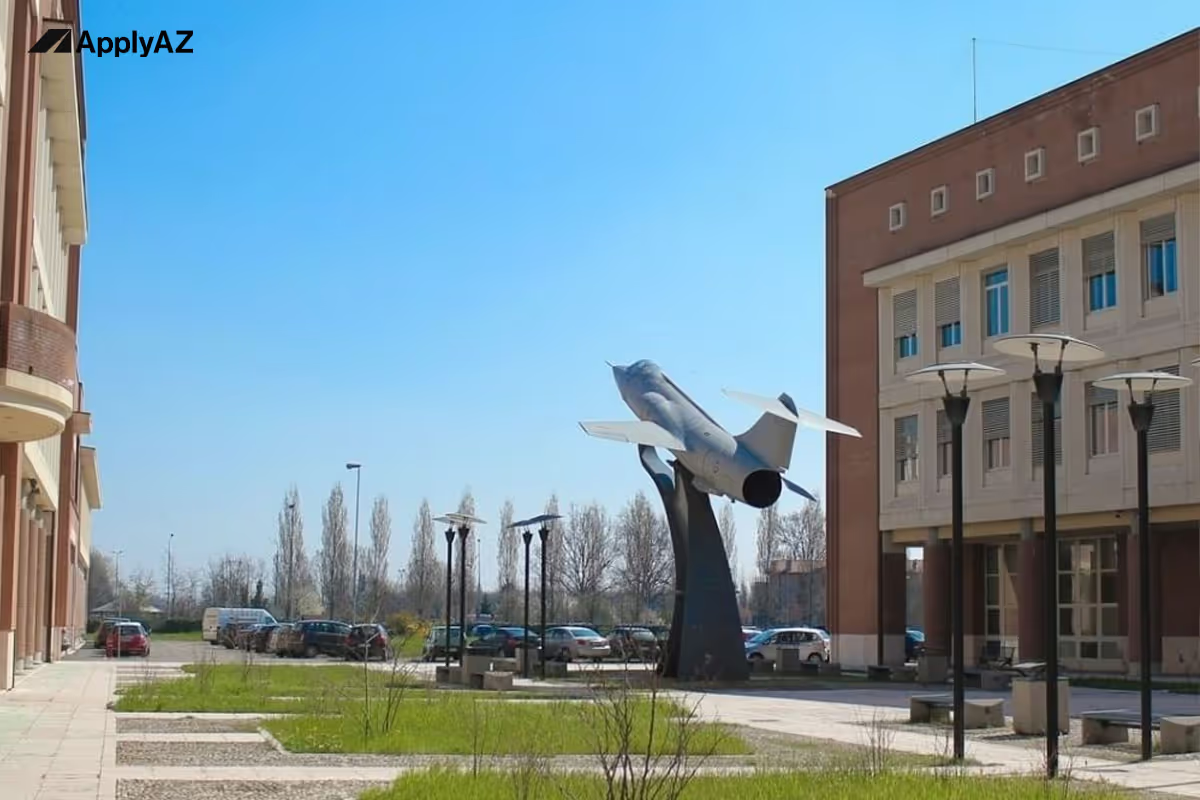
Sustainable Industrial Engineering is a two-year, 120 ECTS master's degree (LM-33) taught in English by the University of Modena and Reggio Emilia at its Tecnopolo campus in Carpi. It blends mechanical engineering with automation, IoT and sustainable production. Fees depend on income, and it can be tuition-free for eligible students.
Entry requirements
- A three-year bachelor's degree, or a foreign qualification recognised as equivalent.
- At least 85 credits in listed subjects: at least 32 in maths, physics, chemistry, statistics or computing, and at least 48 in industrial engineering subjects such as mechanical, energy, materials or automatic control.
- A minimum bachelor's grade, as set in the course regulations.
- English at B2 level of the Common European Framework.
- For foreign degrees, a committee appointed by the course council assesses your study record; there is no entrance test.
About the programme
Sustainable Industrial Engineering is a two-year master's degree (laurea magistrale, class LM-33, mechanical engineering) worth 120 ECTS, run by the Enzo Ferrari Department of Engineering of the University of Modena and Reggio Emilia (Unimore). It is a new degree taught entirely in English, and every lesson takes place at the Tecnopolo di Carpi, a campus in Carpi in the province of Modena. Access is free, so there is no general cap on places.
The department designed the course after surveying manufacturers in the local and regional industrial district. It suits graduates of industrial engineering bachelor's degrees who want a solid mechanical base combined with industrial automation, robotics, the Internet of Things, process management and new materials, all seen through the lens of energy and environmental sustainability.
What you will study
The study plan pairs mechanical engineering subjects with sustainable production and information technology for factories. Course units offered in 2026/27 include:
- Energy Management in Industry (12 ECTS)
- Industrial Communications and Control (12 ECTS)
- Industrial IoT and Artificial Intelligence (9 ECTS)
- Sustainable Manufacturing Systems (9 ECTS)
- Sustainable Product Design and Sustainability Assessment of Industrial Processes
- Theory and Simulation of Industrial Fluid Machines, and Dynamics of Machines
- Electives such as Advanced Lightweight Mechanical Design, Composite Materials and Fibres Engineering, Design of Energy-Efficient Industrial Robotics Cells, and Safety and Ergonomics of Industrial Systems
How the programme is taught
Companies are involved throughout the course: they bring real problems to analyse in class, co-teach lessons, run seminars on topics of industrial interest and offer internships. Practical work, group projects and laboratory sessions are a standard part of the units. The Tecnopolo building has four classrooms, laboratories and workshops, and spaces for group study. The department also stresses soft skills such as communication, teamwork and organisation.
Career paths
According to the university, graduates work as industrial engineers in manufacturing, energy production, transport and services, in specialist technical or coordination roles across mechanical, energy and industrial engineering. Typical tasks include:
- Designing more sustainable products, including reuse and recycling at end of life
- Planning a more rational use of energy in manufacturing, assembly and logistics
- Choosing raw and innovative materials for lower environmental impact
- Designing and managing production processes in design, R&D and production departments
Graduates can sit the Italian state exam to register as senior industrial engineers, or continue to a PhD or a second-level university master.
Fees and scholarships
Tuition at Unimore depends on family income. For 2026/27, non-EU students whose income and assets are all abroad receive a notional Country ISEE based on per-capita income at purchasing power parity, and the €0 to €30,000 band paid €380 plus fixed items in year one. Students who meet the ER.GO requirements are fully exempt from the all-inclusive fee, so the degree can be tuition-free for eligible students.
How to apply from outside the EU
Unimore publishes a separate call for international students who need a visa. For 2026/27 it appeared in December 2025, and the deadline to submit the evaluation request through the Esse3 portal was 31 March 2026. A committee reviews your transcript and credits against the 85-credit requirement and checks your English.
If you are admitted, you pre-enrol on Universitaly and apply for a type D study visa before enrolling. The 2027/28 call is not out yet.
How ApplyAZ helps
If this programme fits your goals, ApplyAZ can include it in a shortlist of 20 to 30 English-taught programmes at Italian public universities. We write your CV and a tailored statement of purpose, submit your applications and Universitaly pre-enrolment, file your DSU scholarship application and prepare your visa file, with a named person on each stage. The university decides admission, the region decides the scholarship and the consulate decides the visa. See how ApplyAZ works or check your eligibility.
Questions and answers
Is Sustainable Industrial Engineering taught in English?
Yes. The department states that the degree is delivered entirely in English, and applicants must show English at B2 level of the Common European Framework.
Where are classes held?
All lessons take place at the Tecnopolo di Carpi, a purpose-built, nearly zero-energy building close to the historic centre and the railway station of Carpi, in the province of Modena.
Which bachelor's degrees are accepted?
Any three-year bachelor's degree or recognised foreign equivalent, provided you hold at least 85 credits in the listed subjects: at least 32 in maths, physics, chemistry, statistics or computing and at least 48 in industrial engineering subjects.
Is there an entrance test?
No written test. A committee checks your academic record and credits against the requirements, and the course regulations set a minimum grade. English at B2 is also verified.
When is the deadline for non-EU applicants?
For 2026/27 the call reserved to international students needing a visa closed on 31 March 2026 for evaluation requests. The 2027/28 call has not been published yet.
How much are the fees?
Unimore sets fees by family income. For 2026/27, non-EU students with income only abroad received a notional Country ISEE, and the lowest band paid 380 euros plus fixed items in year one. ER.GO-eligible students are exempt from the all-inclusive fee.
Similar programmes
More programmes in this city

They began right where you are

