

Master in Sustainable Architecture and Landscape Design at Polytechnic University of Milan
Two-year English-taught LM-4 master's at Politecnico di Milano's Piacenza campus on sustainable architectural, urban and landscape design, built around design studios, with an internship and a thesis. Entry needs an architecture bachelor's, a portfolio and English proof.
Master
2 years
Piacenza
English
Polytechnic University of Milan



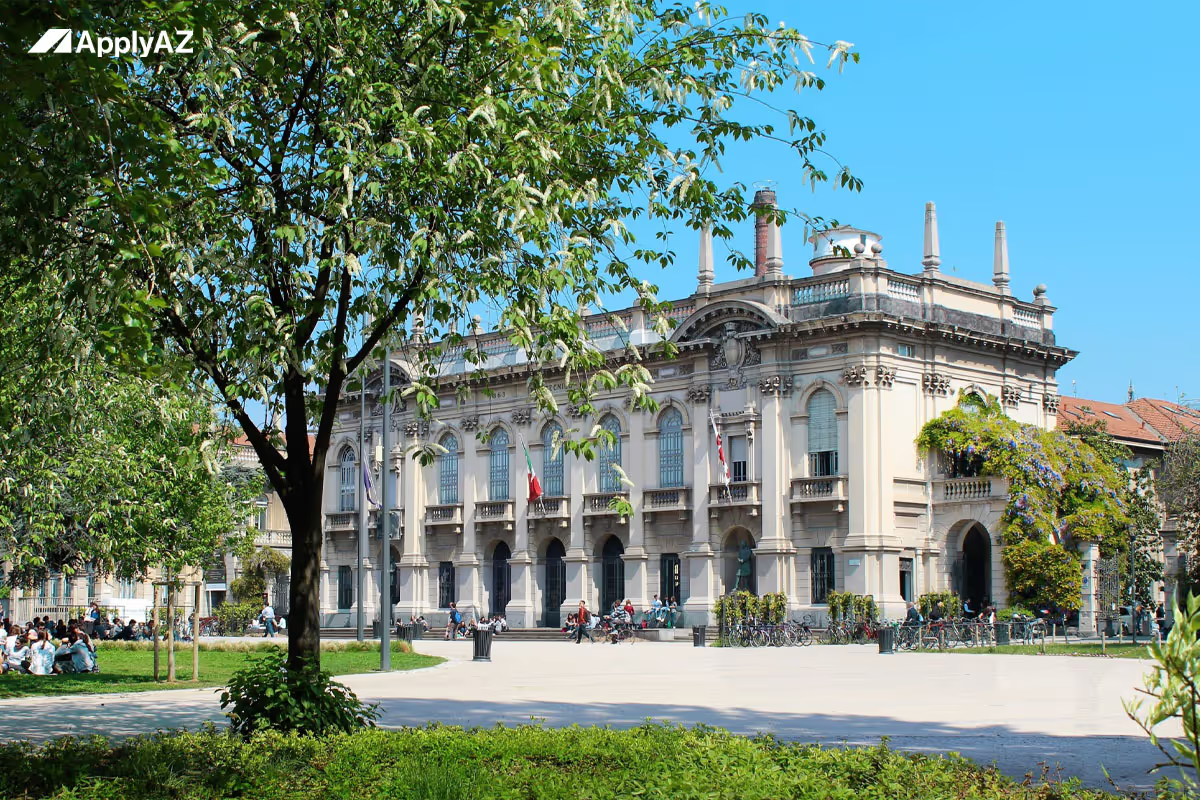
Sustainable Architecture and Landscape Design is a two-year, 120 ECTS master's degree (class LM-4) taught in English by Politecnico di Milano at its Piacenza campus. Entry needs a bachelor's in architecture, or a suitable foreign degree with the core architecture training, plus a portfolio and an English certificate such as IELTS 6. Students with a foreign degree start in September only.
Entry requirements
Detailed entry requirements
PoliMi's Sustainable Architecture and Landscape Design master asks for a bachelor's in architecture (Italian class L-17) or a foreign degree recognised as suitable, with the core architecture training set by EU rules, a mandatory portfolio, a positive assessment of your academic career and an English certificate such as IELTS 6. There is no entrance test. Reviewed 8 October 2026. [1]
Degree and background
You need a first-cycle degree at EQF level 6, or a foreign qualification recognised as suitable. The 2026/27 regulations set three conditions: [1]
- Architecture degree: an Italian degree in class L-17 (architecture) or the former class 4, or a foreign qualification recognised as suitable.
- Core architecture training: the core educational activities of class L-17, as listed in the curricular-requirements table published with each year's admission procedures, in line with EU Directive 2005/36/EC on the education of architects.
- Architecture admission test: during your earlier studies, you must have passed the admission test for a degree directly intended to train architects, as set by national rules.
You are expected to know architectural and urban design, history of architecture, representation and surveying, structures and building technology, urban and territorial planning, environmental design and conservation, plus the basics of environmental systems and landscape interpretation. [1] PoliMi's programme page sums this up as a bachelor's degree in architecture and a portfolio. [7]
PoliMi also requires a degree issued by a university in the official system of its country, giving access to EQF level 7, with subjects closely related to the programme. Franchised degrees are not accepted, and if you hold both a bachelor's and a master's, only the bachelor's is evaluated. [2]
Country rules and minimum grades
PoliMi sets strict country rules for some degrees, with no exceptions: [2]
- India: a bachelor's of at least four years, such as a B.Arch, B.Tech, B.E. or B.Des. A three-year B.Sc. may be considered only if it is an Honours programme. Minimum average 70 out of 100.
- Pakistan: a four-year continuous bachelor's, as 2+2 degrees are not accepted. Minimum GPA 3.3 out of 4.
- Bangladesh: minimum GPA 3.3 out of 4.
- Sri Lanka: an Honours degree at SLQF level 6 from a recognised institution. Level 5 qualifications are not evaluated.
- UK and Canada: an Honours degree or equivalent, with a university letter if the certificate does not say so.
If your average is below the minimum for your country, PoliMi does not evaluate the application. [3]
What this means for your transcript
Your first degree has to be in architecture, and the assessment looks at your subjects, not just the title of your degree. As a guide, based on the rules above:
- Usually a fit: a B.Arch from India, Pakistan, Bangladesh or Sri Lanka with design studios, history of architecture, structures, planning and representation, and an average that meets your country's minimum.
- Check carefully: a bachelor's in architectural studies, architectural technology or interior architecture, where the core architecture subjects and an architecture admission test need to be shown.
- Often short: a B.Tech in Civil Engineering, a B.Planning, a B.Des, a degree in landscape, environmental or agricultural science, or a three-year B.Sc. without Honours. The regulations also exclude Italian planning (L-21) and building (L-23) graduates from this degree class. [1]
Portfolio
A portfolio is mandatory for architecture programmes. You upload it with the application as a PDF of up to 20 MB, written in English or Italian. [3]
The AUIC School's July 2026 guidelines, which name this degree, ask for an A3 landscape portfolio of 25 to 30 pages, with a cover (personal data, degree, programme and intake), a full index and three parts: [6]
- Educational path: your most significant studio and course projects, organised around a chosen theme, with the year, course, teachers and group members for each.
- Professional experiences: certified extracurricular internships or work coherent with your studies, each with a short report.
- Educational experiences: certified conferences, seminars, workshops or courses taken during your university studies.
English
English proficiency is an admission requirement, and the 2026/27 regulations ask for the certificate by the admission application deadline. [1] Accepted results for 2027/28 include IELTS Academic or General Training 6, TOEFL iBT 78 (or 4.5 for tests taken from 21 January 2026), Cambridge B2 First at grade B or C1 Advanced at grade C, PTE Academic 59, Trinity ISE II and LanguageCert B2 Communicator. [3]
If English was the medium of instruction for your bachelor's for at least three years, a university document confirming that at least 75% of your courses were taught in English replaces the certificate. [3]
PoliMi's admissions office lets foreign-qualification applicants upload the certificate after the application deadline, but it is needed for the admission letter, merit scholarships, the visa and enrolment, and the programme regulations tie it to the application, so we make sure it is in your file when you apply. [1][3]
International students without an accepted Italian certificate at B1 or above must also meet PoliMi's Italian requirement, through a 40-hour course with at least 75% attendance and a final assessment, before registering for the final examination. [1]
Selection and places
There is no entrance test. Admission depends on a positive comparative assessment of your previous academic career and personal preparation, based on your documents and any other relevant, documented educational or professional experience. [1]
For applicants with Italian degrees, the technical annex sets a 150-point assessment: up to 110 points for the grade average, 20 for the portfolio, 10 for internships or work and 10 for other training, with a minimum of 100 to enter the ranking. Applicants with foreign degrees are assessed through PoliMi's international admissions process. [1] Optional documents can make that application more competitive: a GRE General Test, a letter of recommendation, a motivation letter and detailed course descriptions. [3]
For 2026/27, the programme had 120 places at the Piacenza campus, 80 of them for non-EU students. [1][5]
Intake and deadlines for September 2027
The AUIC School admits students with a foreign qualification in the first semester (September) only. Requests to defer to the second semester can be made from June to August and depend on places being available. [1]
For the September 2027 intake, the architecture and design general call runs from 1 October 2026 to 28 January 2027. Applications paid by 1 December 2026 use the €50 early bird fee, and later ones the €150 standard fee. Outcomes are due by the end of May 2027. [4]
An additional call from 1 to 18 March 2027 is only for EEA students and non-EEA students resident in Italy with certain permits. You can apply once per semester and to at most two programmes. [4]
Documents and non-EU steps
The online application needs your degree certificate or, if you have not graduated yet, an enrolment document confirming you are in your final year, plus your transcript, a cumulative GPA statement with the grading scale, a CV of up to two pages and your portfolio. Indian graduates upload scans of original transcripts or consolidated grade sheets certified by their institution, and screenshots are not accepted. Documents cannot be changed after the fee is paid. [2][3]
Your degree must be obtained before enrolment. To enrol, you need a Diploma Supplement, a declaration of value or a CIMEA statement of comparability, and PoliMi can ask for the declaration of value or CIMEA statement at any stage. [2][3]
Non-EU applicants living abroad then complete Universitaly pre-enrolment and apply for a type D study visa.
Sources and verification
Checked by the ApplyAZ admissions team against the university's official documents listed below. Entry rules can change with each new call, and we re-check them before every application.
- Politecnico di Milano, School of Architecture Urban Planning Construction Engineering. Academic regulations and technical annex, Master's degree in Sustainable Architecture and Landscape Design (class LM-4), academic year 2026/27. Reviewed 8 October 2026.
- Politecnico di Milano. Admission to Master of Science programmes with a foreign qualification: requirements and country-specific rules, undated. Reviewed 8 October 2026.
- Politecnico di Milano. List of documents required by the Admissions Office for Master of Science applicants with a foreign qualification, accepted certificates updated for 2027/28. Reviewed 8 October 2026.
- Politecnico di Milano. Application deadlines for Master of Science programmes with a foreign qualification, September 2027 intake. Reviewed 8 October 2026.
- Politecnico di Milano. Places available for Master of Science programmes with a foreign qualification, academic year 2026/27. Reviewed 8 October 2026.
- Politecnico di Milano, School of Architecture Urban Planning Construction Engineering. Guidelines for the preparation of the portfolio, July 2026. Reviewed 8 October 2026.
- Politecnico di Milano. Sustainable Architecture and Landscape Design programme page, information for academic year 2025/26. Reviewed 8 October 2026.
- Politecnico di Milano. Tuition fees for Laurea, Laurea Magistrale and single-cycle programmes, academic year 2026/27. Reviewed 8 October 2026.
About the programme
Sustainable Architecture and Landscape Design is a two-year master's degree (laurea magistrale) in class LM-4, Architecture and architectural engineering, worth 120 ECTS and run by the School of Architecture, Urban Planning and Construction Engineering (AUIC). It is taught in English at Politecnico di Milano's Piacenza campus, through a single study plan that follows the European requirements for the education of architects. [1]
The degree links building design with the landscape and the city, treating sustainability as a design question at every scale: energy, structures, open space and urban regeneration. It suits architecture graduates who want to design buildings and places with a lower environmental impact. [1][7]
What you will study
The course list combines several design studios with technical and theory courses. Units taught in English in the 2026/27 list include: [1]
- Architectural Design Studio 1 and 2
- Landscape Design Studio
- Urban and Environmental Design Studio, and Urban and Landscape Regeneration Studio
- Life-Cycle Driven Structures: From Concept to Construction
- Sustainable Energy Systems and Processes
- The Debate on Sustainability: History, Theories and Contemporary Approaches
- BIM Applications and Landscape Representation and Modelling
- Architecture for Smart City
How the programme is taught
Design studios (laboratori) run through the degree, supported by courses on structures, energy, representation and the history and theory of landscape architecture. Other units include Sociology of the Environment, Urban Ethnography, Resilient Strategies in Risk Situations and special topics in environmental, landscape and urban design. Workshops, an 8 ECTS internship and a 10 ECTS final examination complete the plan. Attendance of at least 70% is compulsory in the design studios, and the thesis can be written in English. A few optional units, such as Laboratorio dell'Arte del Costruire, are taught in Italian. [1]
Career paths
The studios and technical courses point to work in architecture and environmental design, such as:
- Sustainable architectural design in practices and firms
- Landscape and open space design
- Urban and landscape regeneration projects
- Energy-aware and life-cycle based building design
- BIM-based design and representation
The degree gives access to the Italian State Examination for architects. After passing it, graduates can register in Section A of the Italian Register of Architects, Planners, Landscape Architects and Conservation Specialists. [1]
Fees and scholarships
PoliMi sets fees by family income (ISEE), but for 2026/27, international students in the reserved non-EU category admitted with a bachelor's from abroad pay the maximum fee unless they hold a PoliMi, DSU or other scholarship. For a standard study plan of 46 to 74 ECTS, that maximum is €3,943.04 a year under Politecnico di Milano's fee rules. [8] Applicants with a foreign degree who follow the PolInternational route can also apply for PoliMi's merit scholarships. [1] The DSU right-to-study scholarship is run by the Politecnico: students who meet the merit and financial-need conditions can apply, and the university decides the awards.
How to apply from outside the EU
Applicants with a foreign qualification apply through PoliMi's international admissions process, and the AUIC School admits them in the first semester (September) only. [1] For the September 2027 intake, the architecture and design call runs from 1 October 2026 to 28 January 2027, with the early bird deadline on 1 December 2026 and outcomes by the end of May 2027. [4]
A portfolio is mandatory for architecture programmes, and the AUIC School's July 2026 portfolio guidelines name this degree. [3][6] The foreign-qualification requirements ask for a degree giving access to EQF level 7, the minimum grade average set for some countries, including India, Pakistan and Bangladesh, and English proof. [2] After admission come the Universitaly pre-enrolment and a type D visa; a Diploma Supplement, declaration of value or CIMEA statement is needed before enrolment. [2]
How ApplyAZ helps
ApplyAZ is an Italy-based consultancy that works only with public universities. We can include this programme in a shortlist of 20 to 30 English-taught programmes that fit your profile, so your plan never rests on a single application.
For eligible students who start with us, a named person owns each stage, from A to Z:
- We check your transcript against PoliMi's entry rules for this programme.
- We write your CV and a tailored statement of purpose.
- We prepare and submit your online application with your transcripts, portfolio and English certificate, and Universitaly pre-enrolment.
- We help you declare your family income for reduced fees and file your Politecnico di Milano DSU scholarship application at the right time and in the right format.
- We prepare your visa file.
With operations in all 20 Italian regions, we follow each region's scholarship rules and deadlines as they change. The university decides admission, the region decides the scholarship and the consulate decides the visa, so no one can promise an outcome. You pay in milestones, and every service you pay for is either delivered or its fee is refunded (terms apply).
Programmes at Italian public universities can be tuition-free for eligible students. Check if you are eligible and book a one-to-one consultation session with one of our Italy experts, or see how ApplyAZ works.
Questions and answers
What bachelor's degree do I need for Sustainable Architecture and Landscape Design at PoliMi?
A bachelor's in architecture: the Italian class L-17 or a foreign degree recognised as suitable, with the core architecture training set by EU rules and a passed architecture admission test. From India, the degree must last at least four years, such as a B.Arch, with an average of at least 70 out of 100. [1][2]
Is there an entrance exam?
No written test. PoliMi assesses your previous academic career and preparation from your documents, including the mandatory portfolio and any documented internships or training. Applicants with foreign degrees go through PoliMi's international admissions process. [1][3]
Do I need a portfolio?
Yes. A portfolio is mandatory for architecture programmes, uploaded as a PDF of up to 20 MB in English or Italian. The AUIC School's July 2026 guidelines ask for 25 to 30 A3 landscape pages covering your projects, work experience and training. [3][6]
What English level is required? Do I need IELTS?
You need a PoliMi-recognised English certificate, such as IELTS 6, TOEFL iBT 78, Cambridge B2 First at grade B or PTE Academic 59. A bachelor's taught in English for at least three years can replace it. The programme regulations ask for it by the application deadline. [1][3]
When is the deadline for non-EU students?
For the September 2027 intake, the architecture call runs from 1 October 2026 to 28 January 2027, with the €50 early bird fee until 1 December 2026 and €150 after. Outcomes are due by the end of May 2027. Students with a foreign degree start in September only. [1][4]
Can I apply before I graduate?
Yes. You can apply in your final year with an enrolment document from your university confirming that you are in your last year, as long as you obtain the degree before enrolment. [2][3]
I have a B.Tech in Civil Engineering or a B.Planning. Can I apply?
Often not for this degree. It asks for an architecture bachelor's with the core architecture training, and the regulations exclude Italian planning and building graduates from this degree class. A B.Arch is the usual fit, and we check how your subjects match before you apply. [1]
How many places are there for non-EU students?
For 2026/27, the programme had 120 places at the Piacenza campus, 80 of them reserved for non-EU students. Places are allocated through a merit ranking until all of them are filled. [1][5]
Can someone handle my whole application to Sustainable Architecture and Landscape Design at PoliMi?
Yes. ApplyAZ, an Italy-based consultancy that works only with public universities, checks your transcript against PoliMi's rules for this programme, handles the application and Universitaly pre-enrolment, helps you file the Politecnico di Milano DSU scholarship application at the right time and in the right format, and prepares your visa file, for eligible students. Start by checking your eligibility.
I'm applying from India. What is the route into Sustainable Architecture and Landscape Design?
PoliMi accepts Indian bachelor's degrees of at least four years, such as a B.Arch, with an average of at least 70 out of 100. For this degree your bachelor's should be in architecture and cover the core architecture subjects, and you need a portfolio and English proof such as IELTS 6. The steps are the online application, PoliMi's assessment and Universitaly pre-enrolment. [1][2][3] Indian students apply for the type D study visa at the Italian embassy or consulate that covers their state, such as New Delhi, Mumbai or Bengaluru.
Is the route different from Pakistan, Bangladesh or Sri Lanka?
No. The academic rules for Sustainable Architecture and Landscape Design are the same whatever your nationality. Applicants from Pakistan, Bangladesh and Sri Lanka follow the same steps as India: online application in the architecture call, PoliMi's assessment of your record and portfolio, and Universitaly pre-enrolment, then a type D study visa from the Italian mission for their country of residence. Read our guide for students in Dhaka.
I live in the UAE, Saudi Arabia, Qatar, Kuwait, Oman or Bahrain. Where do I apply for the visa?
At the Italian embassy or consulate responsible for the country where you legally live, after Universitaly pre-enrolment. The academic rules for Sustainable Architecture and Landscape Design are the same whatever your nationality, and Gulf residents follow the same steps: online application in the architecture call, PoliMi's assessment of your record and portfolio, and Universitaly pre-enrolment. Read our guides for Dubai, Riyadh and Doha.
I'm applying from the UK, US, Canada, Singapore or Malaysia. Is anything different?
The academic rules are identical. Non-EU applicants who live abroad, including citizens of these countries, follow the same route: online application in the architecture call, PoliMi's assessment of your record and portfolio, and Universitaly pre-enrolment, then a type D study visa. Read our guides for London, New York, Singapore and Kuala Lumpur.
More English-taught programmes at this university
Other public universities in this city

They began right where you are

