

Master in Software: Science and Technology at University of Florence
Two-year English-taught LM-18 master's at the University of Florence, run with IMT School Lucca, training software systems designers in cyber-physical systems, security, testing and dependable software through lab projects and bootcamps.
Master
2 years
Florence
English
University of Florence



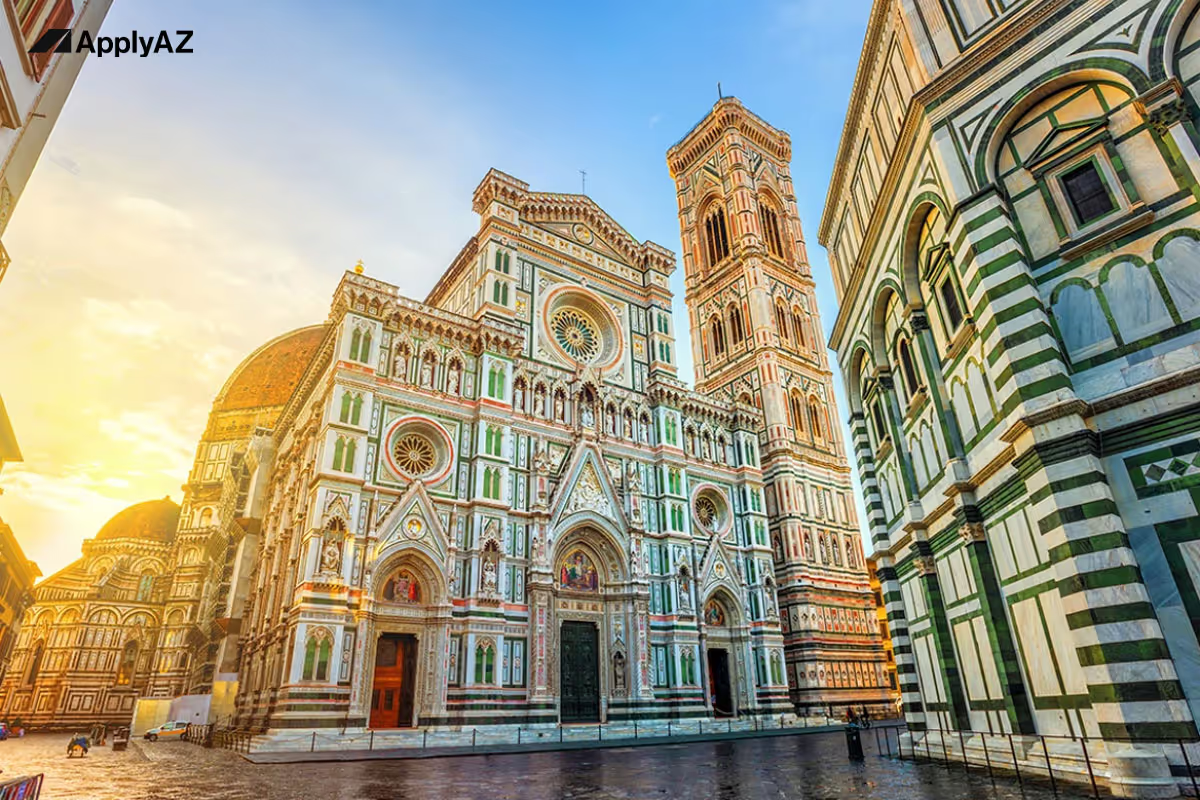
Software: Science and Technology is a two-year, 120 ECTS computer science master's (class LM-18) taught in English at the University of Florence, organised jointly with the IMT School for Advanced Studies Lucca. Fees follow ISEE, so it can be tuition-free for eligible students.
Entry requirements
Detailed entry requirements
Software: Science and Technology is Florence’s open-access English-taught LM-18 master. The course has posted updated enrolment guidance explicitly labelled 2027/28, updated 1 October 2026. Its degree-credit and country-grade rules are explained below, with the older 2026/27 application listing identified separately where its language exemptions differ. Reviewed 6 October 2026. [1][2][3][4]
Qualification and curricular framework
A bachelor’s degree or suitable recognised foreign qualification is required. The course expects preparation comparable to Italian L-31 Computing or L-8 Computer Engineering and assesses the applicant’s examinations and background before issuing nulla osta. The updated guidance identifies at least 24 CFU/ECTS in INF/01 computing or ING-INF/05 computer engineering, plus 24 in MAT/01-09 mathematics, FIS/01-08 physics or the listed statistics sectors. [1][2]
The Didactic Committee can interview an applicant to establish essential knowledge, including knowledge gained in courses classified under other subject areas or documented professional experience. It can also assess English at interview. If preparation is inadequate, the committee can prescribe knowledge to acquire before enrolment. This is individual assessment, not a fixed universal coding test. [1][2]
Strict country-specific grade thresholds
The current linked grade document says the requirements are strict, with no exceptions. If the transcript lacks a GPA or weighted average, an institution-issued, stamped document reporting it, with its official translation, is required. For countries without a named threshold, at least 75% of the maximum applies. Italy has a specific 83/110 threshold. [3]
The table sets 3/4 or equivalent for Afghanistan, Egypt, Ethiopia, Jordan, Indonesia, Malaysia and Turkey; 3.3/4 for Bangladesh and Pakistan; 3.75/5 for Colombia and Nigeria; 15/20 for Algeria, Morocco, Peru and Tunisia; and 15.5/20 for Iran. [3]
It sets 8/10 for Argentina and Israel; 7.6/10 for Brazil; 80/100 for China and Taiwan; 75/100 for Bolivia, Ghana, India, Japan, Lebanon and Syria; 4/5 for Kazakhstan; 3.4/4.5 for Korea; 7/9 for Mexico; 7.5/10 for Serbia and Vietnam; and 10/12 for Uruguay. We use the exact qualification scale, rather than treating every published mark as an equivalent percentage. [3]
India requires at least a four-year bachelor’s degree; a three-year BSc may be considered only if it is an Honours programme. Pakistan accepts only a continuous four-year bachelor’s degree and rejects a 2+2 route. Australia and Canada require a recognised institution and Honours or equivalent qualification. New Zealand requires Honours or equivalent, with an institutional letter if the award omits that status. South Africa requires Level 8/Honours evidence, and Sri Lanka requires a recognised institution and Honours at SLQF Level 6. [3]
Updated English certificate requirements
The 2027/28-labelled page requires B2 or higher through a European university Language Centre certificate, IELTS overall at least 5.5, Cambridge First at the specified B/C-or-higher range, or TOEFL iBT at least 72. We check the exact accepted certificate and official score format for the intended intake. [1]
The updated page defines its native-English-speaker certificate exemption by citizenship of Antigua and Barbuda, Australia, Bahamas, Barbados, Belize, Canada, Dominica, Grenada, Guyana, Ireland, Jamaica, Malta, New Zealand, St Kitts and Nevis, St Lucia, St Vincent and the Grenadines, Trinidad and Tobago, the United Kingdom or the United States. [1]
The 2026/27 Apply Unifi listing still describes residence in an English-official-language country or a wholly English-taught previous degree as alternatives. Those broader exemptions are not repeated on the newly updated 2027/28 course page. For the later intake, the updated page does not list an MOI letter alone as a replacement for its revised certificate/citizenship rules. [1][4]
References, fee and pending Italian degrees
The 2026/27 official application listing requests at least two references and a non-refundable €20 application fee. This is a programme-specific requirement in addition to the general document checklist; we verify that the later intake retains the same reference requirement when its application listing opens. [4]
The updated Italian course page permits an admission-clearance application before an Italian bachelor’s degree is awarded if all study-plan credits except the final assessment are completed, within the matriculation deadlines. That provision does not extend automatically to pending foreign degrees. [2]
Application documents and qualification verification
The central portal requests PDF copies of identification, the bachelor’s award or accepted official provisional award certificate, academic transcript, syllabus if available, and language evidence where applicable. EU applicants use an ID card or passport; non-EU applicants abroad use a passport; applicable non-EU applicants in Italy also provide their residence permit. Documents in English, French, Spanish or Italian need no further Italian translation; other languages require official Italian translation. [5]
Foreign first-degree holders apply through Apply Unifi for the Admission Document. Possible outcomes are admission, prescribed first-cycle single courses to make up deficiencies, or rejection. Final enrolment also requires the university’s validity/authenticity review through the Declaration of Value or CIMEA comparability and verification services. An academic clearance is not itself completion of final enrolment. [7]
2026/27 intake status and later-intake dates
The 2026/27 rounds for all applicant categories ran from 10 December 2025 to 6 February 2026 and from 16 February to 17 April 2026. The third ran from 15 June to 31 August 2026 and was restricted to EU/equated applicants and eligible non-EU residents in Italy, including only the specified study-permit route. All three windows have passed at this review; they are not 2027/28 dates. [6]
The central Admission Document guidance gives 31 July for the Universitaly step after direct admission and 31 December for admission to single courses. These are distinct outcomes and procedures. We follow the applicable annual instructions, and any assigned academic conditions must be completed before matriculation. [7]
Source version and application checklist
The newest course page is labelled 2027/28 and was updated on 1 October 2026. The linked country-grade PDF is internally undated and is cited as currently linked, not given an invented publication year. The portal still displays the closed 2026/27 intake. We prepare the country-grade and qualification-format evidence, two credit-group mappings, accepted language documentation and the applicable reference/document file with you. [1][3][4]
Sources and verification
- University of Florence, Software: Science and Technology: Enrollment, labelled 2027/28, updated 1 October 2026; reviewed 6 October 2026.
- University of Florence, Software: Science and Technology: Per iscriversi, updated 1 October 2026; reviewed 6 October 2026.
- University of Florence, Minimum grade requirements to access Software: Science and Technology, internally undated PDF currently linked by the updated enrolment page; reviewed 6 October 2026.
- University of Florence, Apply Unifi programme listing: Software: Science and Technology, 2026/27 intake; reviewed 6 October 2026.
- University of Florence, Apply Unifi: List of Required Documents for Application, published 3 December 2025; reviewed 6 October 2026.
- University of Florence, Apply Unifi: 2026/27 Academic Year Intake Rounds, published 4 December 2025; reviewed 6 October 2026.
- University of Florence, Admission Document for holders of foreign first-cycle qualifications, standing guidance; reviewed 6 October 2026.
About the programme
Software: Science and Technology is a two-year master's degree in class LM-18 (computer science) at the University of Florence, worth 120 ECTS and delivered entirely in English. It is based at the Department of Statistics, Computer Science, Applications 'G. Parenti' (DiSIA) in the School of Mathematical, Physical and Natural Sciences, with the Departments of Mathematics and Computer Science and of Information Engineering. The degree is organised jointly with the IMT School for Advanced Studies Lucca, which provides laboratory facilities and specialist teachers. Access is open.
It trains experts to design, build, validate and maintain complex software systems with high standards of performance, security and reliability. It suits graduates in computer science, computer engineering or a related field with a good base in maths.
What you will study
There is a single curriculum. Mandatory units cover cyber-physical systems, project management, security and embedded systems, and you complete the plan with computer science and related electives plus 12 free-choice ECTS. Units in the 2026/27 plan include:
- Architecture, Model and Analysis of Cyber Physical Systems (12 ECTS)
- Computer and Network Security (12 ECTS)
- Software Project Management and Embedded Systems (6 ECTS each)
- Electives such as Trustworthy Autonomous Systems, Software Dependability, Automated Software Testing and Penetration Testing
- Machine Learning for Software Analysis, Software Performance Engineering and Game Development
- Related units in numerical calculus, operations research and statistical methods for computer science
- A 3 ECTS bootcamp and a 27 ECTS thesis and final exam
How the programme is taught
Most courses include laboratory work and require you to build projects that apply theory to real case studies. Intensive bootcamp courses are organised with companies of different sizes, and several units are taught by IMT Lucca faculty. The thesis takes about six months under a supervisor from the degree committee, and the programme has links with technology companies, startups and research centres through internships, seminars and networking events.
Career paths
The programme trains the Software Systems Designer, a professional who can:
- design, implement, integrate, test and maintain software components and systems
- define quality policies for performance, correctness, reliability and resilience, and verify compliance
- analyse, verify, validate and certify critical software-intensive systems
- manage software projects from conception to delivery
- apply secure-by-design methods and configure modern computer networks
Graduates suit public and private IT companies and organisations that develop complex software. The degree also leads to second-level masters and PhD programmes.
Fees and scholarships
Tuition at UniFi depends on ISEE. For 2026/27, applicants resident abroad receive a figurative ISEE linked to the World Bank income group of their country, from €25,500 to €75,500. Students from developing countries pay only the €140 regional tax and €16 stamp duty, and DSU Toscana scholarship winners and eligible students pay stamp duty only, so this programme can be tuition-free for eligible students.
How to apply from outside the EU
The teaching committee assesses your grade and credits from your bachelor's exams and may call you for an interview, which can also check your English. We apply through Apply Unifi (DreamApply) with a €20 non-refundable fee and two references; a declaration of value or CIMEA statement is needed for final enrolment.
For 2026/27, non-EU applicants living abroad could apply from 10 December 2025 to 6 February 2026 or from 16 February to 17 April 2026. After admission we pre-enrol you on Universitaly by 31 July, and you apply for a type D study visa.
How ApplyAZ helps
ApplyAZ is an Italy-based consultancy that works only with public universities. We can include this programme in a shortlist of 20 to 30 English-taught programmes that fit your profile, so your plan never rests on a single application.
For eligible students who start with us, a named person owns each stage, from A to Z:
- We check your transcript against Florence's entry rules for this programme.
- We write your CV and a tailored statement of purpose.
- We prepare and submit your Apply Unifi (DreamApply) application and Universitaly pre-enrolment.
- We help you declare your family income for reduced fees and file your DSU Toscana scholarship application at the right time and in the right format.
- We prepare your visa file.
With operations in all 20 Italian regions, we follow each region's scholarship rules and deadlines as they change. The university decides admission, the region decides the scholarship and the consulate decides the visa, so no one can promise an outcome. You pay in milestones, and every service you pay for is either delivered or its fee is refunded (terms apply).
Programmes at Italian public universities can be tuition-free for eligible students. Check if you are eligible and book a one-to-one consultation session with one of our Italy experts, or see how ApplyAZ works.
Questions and answers
What computing and quantitative credits are identified?
At least 24 CFU/ECTS in computing/computer engineering and another 24 in the listed mathematics, physics or statistics sectors, subject to committee review. [1][2]
Does a universal 75% grade apply to every country?
No. Named countries have their own thresholds. The 75% fallback applies only where the linked document gives no country-specific minimum. The document says these requirements are strict. [3]
What does the linked table require for India and Pakistan?
India: 75/100 and at least a four-year bachelor’s degree; a three-year BSc may be considered only with Honours. Pakistan: 3.3/4 and a continuous four-year bachelor’s degree; 2+2 degrees are not accepted. [3]
What IELTS or TOEFL scores does the updated page specify?
The 2027/28-labelled guidance specifies IELTS overall at least 5.5 or TOEFL iBT at least 72, alongside the other accepted B2 evidence routes. [1]
Does the old English-medium degree exemption still apply?
It appears on the 2026/27 portal listing, while the updated 2027/28 course page lists only certificate and specified citizenship routes. We confirm the evidence for the intended intake. [1][4]
How many references does the portal request?
The 2026/27 programme listing requests at least two. We check the later-intake application listing when it becomes available. [4]
Can someone handle my whole application to Software: Science and Technology at Florence?
Yes. ApplyAZ, an Italy-based consultancy that works only with public universities, checks your transcript against Florence's rules for this programme, handles the application and Universitaly pre-enrolment, helps you file the DSU Toscana scholarship application at the right time and in the right format, and prepares your visa file, for eligible students. Start by checking your eligibility.
I'm applying from India. What is the route into Software: Science and Technology?
You need a bachelor's of at least four years (a three-year BSc may be considered only with Honours) and at least 75/100 [3]. You also need at least 24 ECTS in computing or computer engineering and 24 in maths, physics or statistics [1][2], plus B2 English, such as IELTS 5.5 or TOEFL iBT 72 [1]. The steps are the Apply Unifi application, the Admission Document and Universitaly pre-enrolment [7]. Indian students apply for the type D study visa at the Italian embassy or consulate that covers their state, such as New Delhi, Mumbai or Bengaluru.
Is the route different from Pakistan, Bangladesh or Sri Lanka?
No. The academic rules for Software: Science and Technology are the same whatever your nationality. Applicants from Pakistan, Bangladesh and Sri Lanka follow the same steps as India: Apply Unifi application, the Admission Document and Universitaly pre-enrolment, then a type D study visa from the Italian mission for their country of residence. Read our guide for students in Dhaka.
I live in the UAE, Saudi Arabia, Qatar, Kuwait, Oman or Bahrain. Where do I apply for the visa?
At the Italian embassy or consulate responsible for the country where you legally live, after Universitaly pre-enrolment. The academic rules for Software: Science and Technology are the same whatever your nationality, and Gulf residents follow the same steps: Apply Unifi application, the Admission Document and Universitaly pre-enrolment. Read our guides for Dubai, Riyadh and Doha.
I'm applying from the UK, US, Canada, Singapore or Malaysia. Is anything different?
The academic rules are identical. Non-EU applicants who live abroad, including citizens of these countries, follow the same route: Apply Unifi application, the Admission Document and Universitaly pre-enrolment, then a type D study visa. Read our guides for London, New York, Singapore and Kuala Lumpur.
More English-taught programmes at this university
Other public universities in this city

They began right where you are

