

Master in Neuroscience at University of Pisa
Two-year English-taught LM-6 master's in Pisa covering the nervous system from molecules and cells to circuits and cognition, with a large research thesis and a lab work placement.
Master
2 years
Pisa
English
University of Pisa



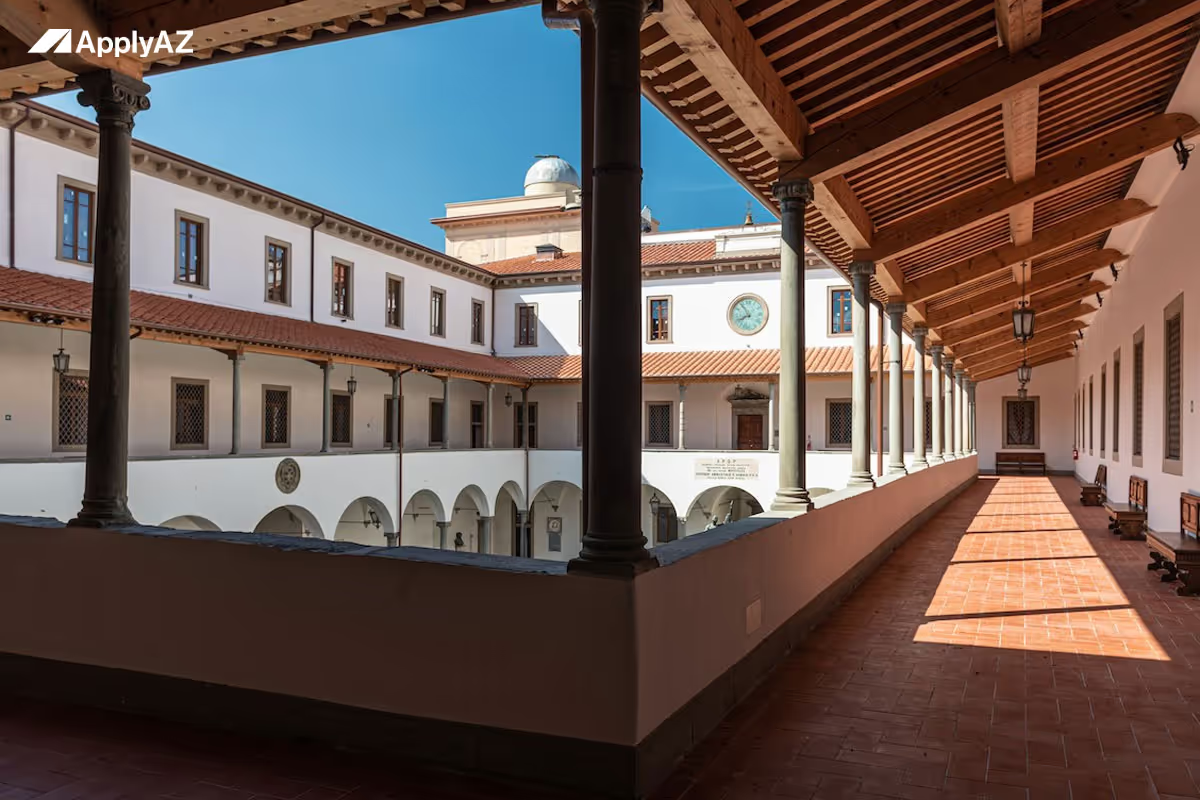
Neuroscience is a two-year, 120 ECTS master's degree (class LM-6, Biology) taught entirely in English by the University of Pisa's Department of Biology. Applicants with foreign degrees sit an online pre-selection test and an interview. Non-EU fees follow a country-based or income-based scale, so it can be tuition-free for eligible students.
Entry requirements
- A bachelor's degree with at least 60 ECTS in fundamental disciplines such as physics, mathematics, chemistry, physiology, cell biology, biochemistry, genetics, molecular or developmental biology.
- Within those credits, at least 18 ECTS in physics, mathematics or chemistry and at least 24 ECTS in the biological subjects listed.
- You must already hold your bachelor's degree when you apply; transcripts from non-ECTS systems must show the workload of each course.
- English at B2 level, checked by the admission committee during the interview.
- An online written pre-selection test, then an interview in English on Microsoft Teams covering the fundamentals in the admission syllabus.
About the programme
Neuroscience is a two-year master's degree (laurea magistrale, class LM-6, Biology) worth 120 ECTS, run by the Department of Biology of the University of Pisa and taught entirely in English. It was launched in 2016/17 with the contribution of the Neuroscience Institute of Italy's National Research Council (CNR), and builds on a long tradition of brain research in Pisa.
The course trains graduates to understand and investigate the nervous system experimentally, from molecules and cells to integrated circuits, in healthy conditions and in genetic or disease states. It is open to students from different backgrounds, not only biology, provided they can show solid preparation in the natural sciences.
What you will study
The first year builds a multidisciplinary base in neurobiology, quantitative reasoning and experimental methods, with three short electives. The second year is dominated by research. Units in the 2026/27 study plan include:
- Neurobiology I, II and III
- Development and differentiation of the nervous system, and Neurogenomics
- Neuropharmacology and biochemistry of signalling
- Mathematics for neurosciences
- Transgenic models and molecular methods for neurosciences, and Biotechnology for neurosciences
- Sensory and cognitive neuroscience
- Electives such as Human functional imaging, Neural stem cells, Environmental experience and brain plasticity, and Analysis of temporal series
How the programme is taught
Teaching combines lectures, tutorials and laboratory work, and a health and safety in the laboratory module is part of the plan. In the second year you complete a work placement and an experimental thesis, carried out in university laboratories, at the Scuola Normale Superiore or in partner research centres. The thesis is an original piece of work based on your own lab research.
Career paths
The department points graduates towards academic and industrial research, especially in the pharmaceutical and biotechnology sectors, and towards national and international PhD programmes in the neurosciences. Other routes include:
- Medical device companies working on diagnostics, rehabilitation and neuroprosthetics
- Clinical and research laboratories studying nervous system function
- Science communication and institutional communication
- The regulated profession of biologist in Italy, after passing the state exam
Fees and scholarships
For 2026/27 international students admitted to Neuroscience could not receive a merit-based fee exemption, but every admitted student can compete for a DSU Toscana scholarship, whose winners are exempt from tuition. The University of Pisa caps annual fees at €2,900 and sets a lower flat rate by your country's World Bank income group (€290, €580 or €1,160), or an individual amount based on ISEEU parificato. With a DSU award, the degree can be tuition-free for eligible students.
How to apply from outside the EU
Holders of foreign degrees apply on the university's applymscenglish portal and must already have their bachelor's degree. For 2026/27 the call ran from 28 November 2025 to 5 February 2026, followed by an online written pre-selection test on 6 February and a remote interview on Microsoft Teams. The committee admits you, rejects you or admits you with extra credits to complete.
Once admitted, non-EU students pre-enrol on Universitaly and then apply for a type D study visa. The 2027/28 call has not been published yet.
How ApplyAZ helps
If this programme fits your goals, ApplyAZ can include it in a shortlist of 20 to 30 English-taught programmes at Italian public universities. We write your CV and a tailored statement of purpose, submit your applications and Universitaly pre-enrolment, file your DSU scholarship application and prepare your visa file, with a named person on each stage. The university decides admission, the region decides the scholarship and the consulate decides the visa. See how ApplyAZ works or check your eligibility.
Questions and answers
Is the Neuroscience master taught in English?
Yes. English is the official language for all teaching and exams, and the admission interview is held in English. The committee checks that you have at least B2 level during the interview.
Do I need a biology bachelor's degree?
Not necessarily. You need at least 60 ECTS in fundamental sciences, including 18 ECTS in physics, mathematics or chemistry and 24 ECTS in subjects such as cell biology, biochemistry, genetics or physiology.
Is there an entrance test?
Yes. Applicants with foreign qualifications take a short online written pre-selection test, and those who pass are interviewed remotely on Microsoft Teams about the fundamentals listed in the admission syllabus.
When can I apply for 2027/28?
The 2027/28 call is not out yet. For 2026/27 the call for foreign qualifications ran from 28 November 2025 to 5 February 2026 on the applymscenglish portal, with the pre-selection test on 6 February 2026.
How much are the fees?
For 2026/27 the maximum was €2,900 a year. Non-EU students pay a flat rate set by their country's income group or an ISEEU parificato amount, and DSU Toscana scholarship winners are exempt from tuition.
What careers does it lead to?
Graduates work in academic and industrial research, especially pharmaceuticals and biotechnology, in medical devices and neuroprosthetics, in science communication, or continue to a PhD in the neurosciences.
Similar programmes
More programmes in this city

They began right where you are

