

Master in Mechanical Engineering for Sustainability at University of Florence
Two-year English-taught LM-33 master's at the University of Florence that adds sustainability, circular economy and life cycle methods to mechanical engineering, with Design, Energy Technologies and Mobility curricula and team projects with industry.
Master
2 years
Florence
English
University of Florence



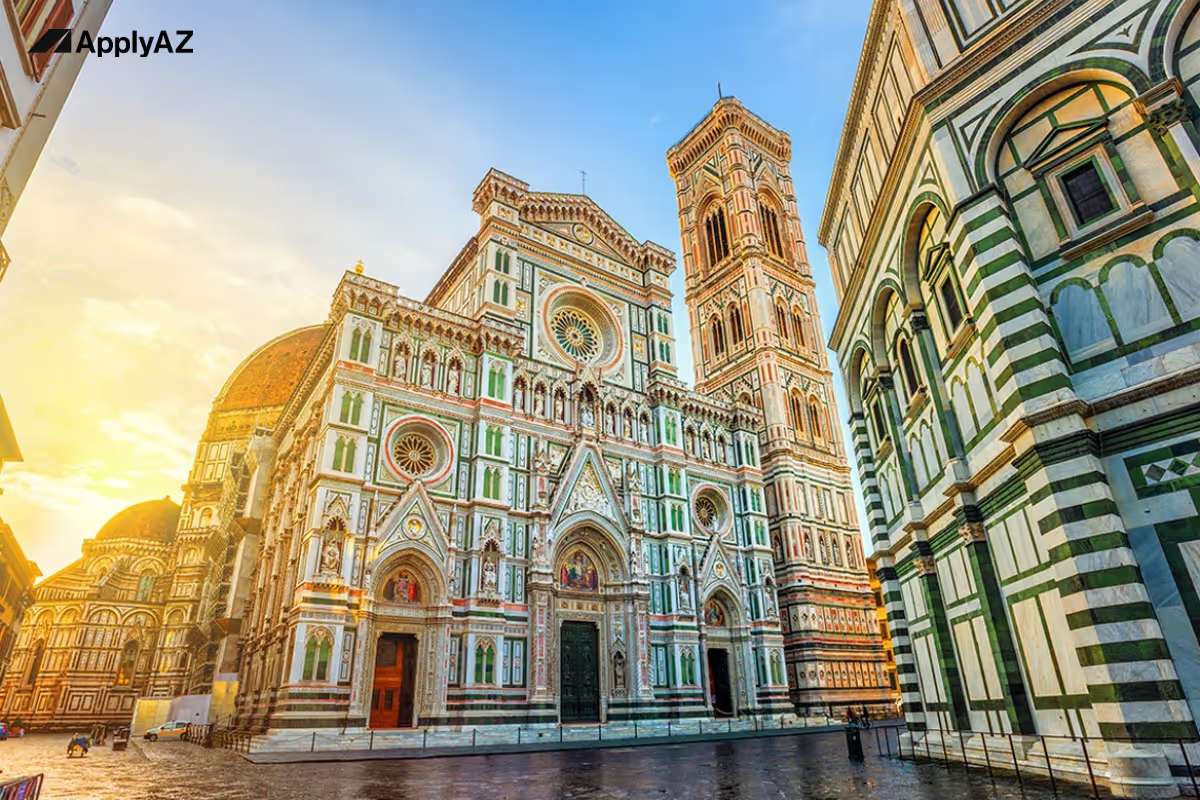
Mechanical Engineering for Sustainability is a two-year, 120 ECTS master's (class LM-33) taught in English at the University of Florence, with Design, Energy Technologies and Mobility curricula. Fees follow ISEE, so it can be tuition-free for eligible students.
Entry requirements
- A bachelor's degree in industrial engineering (for example mechanical, energy or management engineering), civil and environmental engineering or information engineering, or an equivalent degree.
- For degrees from outside the EU: a final grade, or weighted exam average, above the threshold set by the programme.
- Enough exams in mechanical design, applied mechanics, industrial design, machinery and energy systems.
- English at B2 in reading and listening, certified within five years of enrolment, unless your previous degree was taught in English or you are a native speaker.
- At least one reference, plus a declaration of value or CIMEA statement for your degree.
About the programme
Mechanical Engineering for Sustainability (MES) is a two-year master's degree in class LM-33 (mechanical engineering) at the University of Florence, worth 120 ECTS and taught in English. It belongs to the School of Engineering and the Department of Industrial Engineering, and access is open.
The programme prepares engineers to support industry's move towards a greener way of producing. It adds legislation and methods for sustainability and the circular economy to a traditional mechanical engineering background. It suits graduates in mechanical, energy, industrial, civil or information engineering.
What you will study
The three curricula share most of the first year, then differ through specific units and project work in the second. Each is tied to a United Nations Sustainable Development Goal: Design (SDG 9), Energy Technologies (SDG 7) and Mobility (SDG 11). Units in the 2026/27 plan include:
- Life Cycle Sustainability Assessment (12 ECTS)
- Systems and Solutions for Energy Transition (9 ECTS)
- Circular Design Policies, Regulations and Practices (6 ECTS)
- Statistical Methods for Engineering and Project Work on Transversal Skills and Teamwork
- Digital Twins of Mechatronic Systems, Design for Additive Manufacturing and Innovation and Development of Sustainable Products
- Mobility units such as Project Work on Electric Vehicles, Smart Grid Integration and Sustainable Mobility, and Urban Rail Transport
- A 12 ECTS traineeship
How the programme is taught
Teaching includes lectures, laboratory and experimental work, technical visits and internships with companies and research centres in Italy or abroad. Team project work is set with industrial partners. The programme is blended: distance learning can cover up to two thirds of project work activities and at most one third of other courses, which also lets international guest professors take part.
Career paths
Graduates are prepared for mechanical engineering careers in the growing sustainability market, where EU investment in the energy transition is raising demand for qualified engineers. The programme trains four roles:
- Mechanical systems designer for sustainability
- Designer of energy systems for sustainability
- System designer for sustainable mobility
- Coordinator of industrial innovation and ecological transition processes
It also opens the way to a PhD and research.
Fees and scholarships
UniFi fees are income-based through ISEE. In 2026/27, students resident abroad are assigned a figurative ISEE from their country's World Bank group, ranging from €25,500 to €75,500. Anyone from a developing country pays only €140 regional tax and €16 stamp duty. DSU Toscana scholarship winners and eligible students pay stamp duty alone, so this programme can be tuition-free for eligible students.
How to apply from outside the EU
For graduates from outside the EU, the commission looks at your final grade or weighted average, which must exceed a set threshold, and at your exams in mechanical design, applied mechanics, industrial design, machinery and energy systems. You apply through Apply Unifi (DreamApply) with a €20 non-refundable fee, one reference and a declaration of value or CIMEA statement.
For 2026/27 the non-EU rounds ran from 10 December 2025 to 6 February 2026 and from 16 February to 17 April 2026. Admitted students pre-enrol on Universitaly by 31 July and apply for a type D study visa.
How ApplyAZ helps
If this programme fits your goals, ApplyAZ can include it in a shortlist of 20 to 30 English-taught programmes at Italian public universities. We write your CV and a tailored statement of purpose, submit your applications and Universitaly pre-enrolment, file your DSU scholarship application and prepare your visa file, with a named person on each stage. The university decides admission, the region decides the scholarship and the consulate decides the visa. See how ApplyAZ works or check your eligibility.
Questions and answers
Is Mechanical Engineering for Sustainability taught in English?
Yes. Applicants need English at B2 in reading and listening, certified within five years of enrolment, unless their previous degree was taught in English or they are native speakers.
Which bachelor's degrees are accepted?
Industrial engineering (such as mechanical, energy or management), civil and environmental engineering, or information engineering, with enough exams in mechanical design, applied mechanics, industrial design, machinery and energy systems.
Is there an entrance test?
No test for graduates from outside the EU. The commission assesses your final grade or weighted average against a threshold and checks your exams in the core subjects.
Is any of the teaching online?
Partly. The programme is blended: distance learning can cover up to two thirds of project work and at most one third of other courses.
When can I apply for 2027/28?
The 2027/28 rounds are not published yet. For 2026/27, non-EU applicants living abroad could apply on Apply Unifi until 6 February or 17 April 2026, with a €20 fee.
How much are the fees?
Fees depend on ISEE. Students resident abroad get a figurative ISEE by their country's income group, and DSU Toscana scholarship winners and eligible students pay only the €16 stamp duty.
Similar programmes
More programmes in this city

They began right where you are

