

Master in Landscape Architecture. Land Landscape Heritage at Polytechnic University of Milan
Two-year English-taught master in landscape architecture at Politecnico di Milano's Piacenza campus, built on land, landscape and heritage, with four design studios plus ecology, geomorphology, historic gardens and urban forestry.
Master
2 years
Milan
English
Polytechnic University of Milan



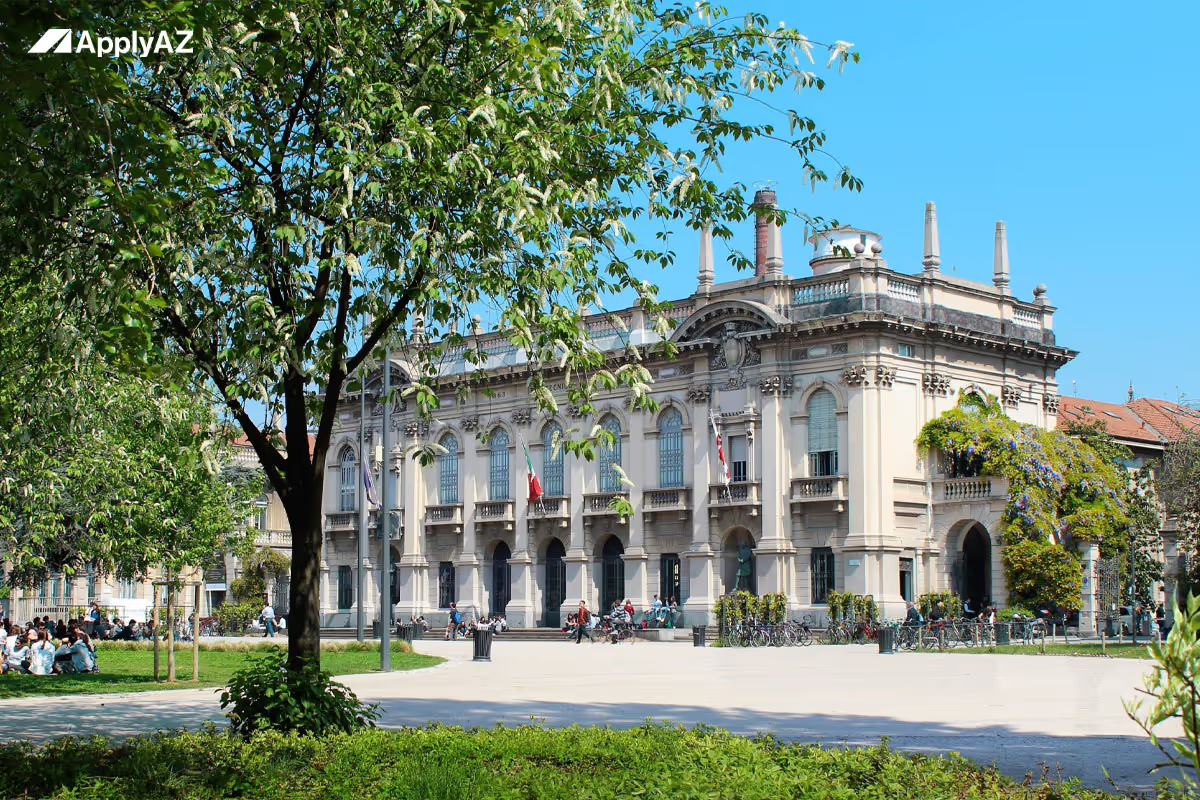
Landscape Architecture. Land Landscape Heritage is a two-year, 120 ECTS master's degree (class LM-3) taught in English by Politecnico di Milano at its Piacenza campus. It trains landscape architects to work on urban, rural and natural landscapes, soil and heritage through design studios. Tuition follows the university's yearly fee rules.
Entry requirements
- A bachelor's degree, or an equivalent foreign qualification giving access to EQF level 7, with subjects closely related to landscape architecture.
- A portfolio prepared to the AUIC School's guidelines; applicants from different backgrounds can include non-design work such as landscape and environmental management.
- A grade average that meets the minimum Politecnico di Milano sets for your country.
- An English certificate recognised by the university, or a university statement that your bachelor's was taught entirely in English.
- No written entrance test, and a Diploma Supplement, declaration of value or CIMEA statement before enrolment.
About the programme
Landscape Architecture. Land Landscape Heritage is a two-year master's degree (laurea magistrale) in class LM-3, Landscape architecture, worth 120 ECTS and run by the School of Architecture, Urban Planning and Construction Engineering (AUIC). It is taught in English at the Piacenza campus: for students starting from September 2025, the programme is taught only in Piacenza.
The degree website describes a multidisciplinary education that trains landscape architects to design in urban, rural and natural contexts at different scales, drawing on architecture, urban planning, agronomy and forestry, hydraulic and infrastructure engineering, ecology, social sciences, history, archaeology, law, economics and land management. The School's portfolio guidelines note that applicants come from different backgrounds.
What you will study
The programme is organised around three themes: the care and conservation of soil (Land), the interpretation and design of new and evolving landscapes (Landscape), and the knowledge of material and immaterial heritage (Heritage). Units in the 2026/27 course list, all taught in English, include:
- Landscape and Infrastructure Design Studio
- Open Space System and Parks Design Studio
- Built Environment and Landscape Design Studio
- Frontiers of Landscape Design Studio
- Ecology and Agroecology, and Geomorphology and Landscape
- Conservation and Management of Historic Gardens and Landscape
- Urban Forestry and Landscape Planning
- Environmental Analysis and Landscape Mapping
How the programme is taught
Each semester is built around a design studio, supported by integrated courses on landscape culture and history, representation and design techniques. Second-year courses include Contemporary Landscape Theory and Practice, Ethics of Climate Change and European Environmental and Landscape Politics and Projects. The plan also includes a traineeship (tirocinio) and the final examination. A few optional units, such as Temi di Pianificazione Urbanistica, are taught in Italian.
Career paths
The degree website says graduates will be able to face the challenges of contemporary cities and territories with critical thinking, specific cultural tools, knowledge and technical skills. The studios and courses point to work such as:
- Landscape design for parks, open spaces and infrastructure
- Landscape planning and urban forestry
- Conservation and management of historic gardens and heritage landscapes
- Environmental analysis and landscape mapping
- Climate adaptation and landscape regeneration projects
Fees and scholarships
Tuition follows Politecnico di Milano's yearly fee regulation, with 2026/27 details on the tuition fees page. Applying through the PolInternational route also gives access to the university's merit scholarships. The Politecnico manages the DSU scholarship itself; students who meet its merit and financial-need conditions can apply, and the university decides.
How to apply from outside the EU
A portfolio is part of the application: the AUIC School's July 2026 guidelines cover this degree and accept both design projects and other activities, such as care, landscape and environmental management, from applicants with different backgrounds. AUIC published the 2026/27 rankings for the first semester by programme.
With a foreign qualification you follow the PolInternational pre-enrolment path by its deadlines, through the international admissions page. The foreign-qualification requirements add EQF level 7 access, a grade minimum by country and English proof. Then come Universitaly pre-enrolment, a type D visa and a Diploma Supplement, declaration of value or CIMEA statement.
How ApplyAZ helps
If this programme fits your goals, ApplyAZ can include it in a shortlist of 20 to 30 English-taught programmes at Italian public universities. We write your CV and a tailored statement of purpose, submit your applications and Universitaly pre-enrolment, file your DSU scholarship application and prepare your visa file, with a named person on each stage. The university decides admission, the region decides the scholarship and the consulate decides the visa. See how ApplyAZ works or check your eligibility.
Questions and answers
Is the Master in Landscape Architecture. Land Landscape Heritage taught in English?
Yes. The School page lists the degree as taught in English, and all its studios and core courses in the 2026/27 list are in English. A few optional units are in Italian.
Where is the programme taught?
At Politecnico di Milano's Piacenza campus. For students starting from September 2025, the programme is taught only in Piacenza, not in Milan.
Do I need a portfolio?
Yes. The AUIC School's portfolio guidelines cover this degree. Applicants from different backgrounds can include design projects and other work, such as landscape and environmental management.
What will I study?
Four landscape design studios plus ecology and agroecology, geomorphology, historic gardens, urban forestry, landscape mapping, landscape history and theory, and climate ethics, followed by a traineeship and the final examination.
How much does it cost?
Tuition follows Politecnico di Milano's yearly fee rules, published on its tuition fees page. Applicants through PolInternational can apply for merit scholarships, and eligible students can apply for the university's DSU scholarship.
When can I start?
The programme starts in autumn. The 2027/28 application calendar for international applicants was not yet published in September 2026.
Similar programmes
More programmes in this city

They began right where you are

