

Master in Global Security Studies at University of Messina
Two-year English-taught master (LM-52) at the University of Messina on managing international crises: international security, geopolitics, the Middle East and North Africa, public international law and global governance, with an 8 ECTS internship.
Master
2 years
Messina
English
University of Messina


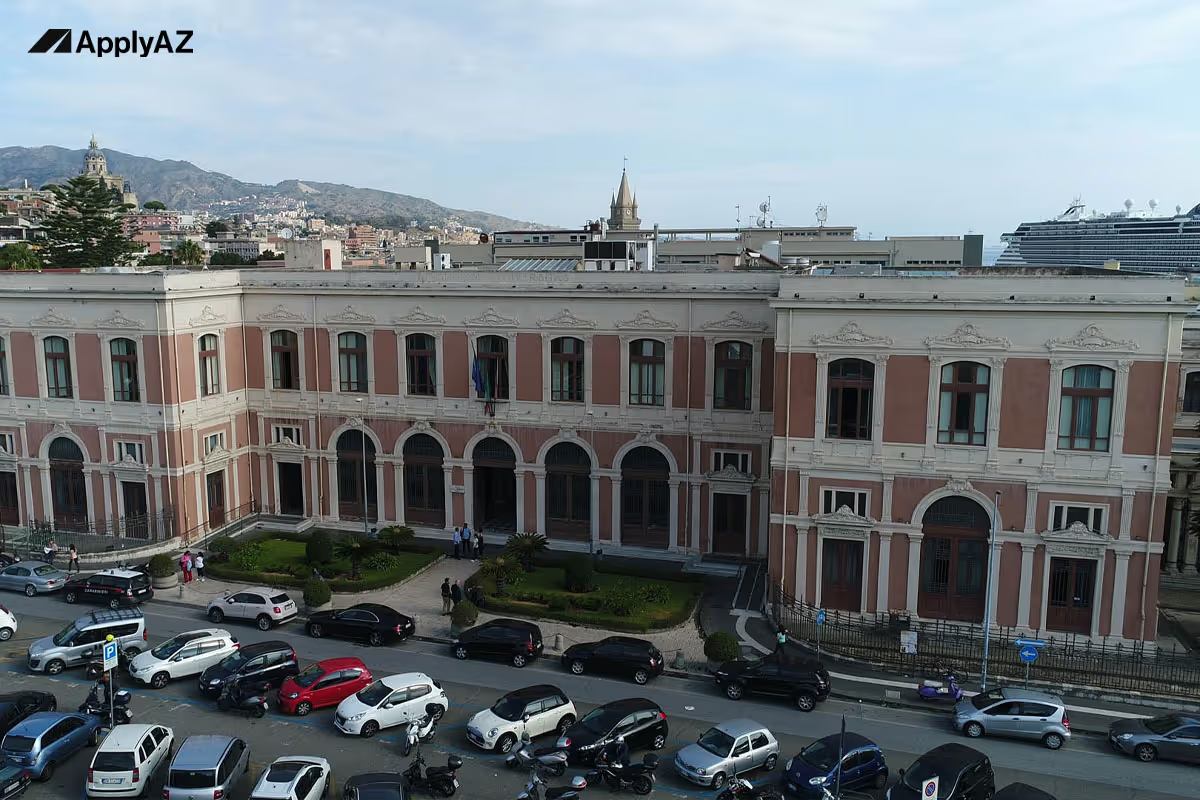
Global Security Studies is a two-year, 120 ECTS master's degree (class LM-52, international relations) taught in English by the Department of Political and Legal Studies at the University of Messina. It covers international security, geopolitics and international law. Fees follow country groups, and it can be tuition-free for eligible students.
Entry requirements
- A bachelor's degree in the humanities or social sciences, such as international relations, history, philosophy, economics, law, political science, sociology or foreign languages.
- English at CEFR level B2, shown by a certificate from a recognised institution.
- No entrance exam: the university checks your degree and background when it evaluates your application.
- A transcript of records and a valid passport, uploaded to the UniME application portal.
- For the Early Bird call, final academic documents and a declaration of value or CIMEA statement of comparability.
About the programme
Global Security Studies is a two-year master's degree (laurea magistrale, class LM-52, international relations) worth 120 ECTS. It is taught in English by the Department of Political and Legal Studies of the University of Messina, on its Messina campus.
The degree trains professionals to manage complex international crises and new global challenges. Its study areas range from military and law enforcement questions to human rights, environmental disasters, cybersecurity, scarce resources and migration. It suits graduates in international relations, political science, law, history, economics, sociology or languages who want to work on security and global governance.
What you will study
The course mixes history, political science, law, area studies, sociology and geopolitics. The first year sets the core in security and political thought, and the second year moves to international institutions, law and the Mediterranean region. Language study in Arabic, French or Spanish runs through both years, and the degree ends with a 16 ECTS dissertation.
- International security and Globalisation and (in)security: a historical overview (8 ECTS each)
- Geopolitics of global crises (6 ECTS) and History of political thought (8 ECTS)
- The modern Middle East and North Africa: politics and crisis (8 ECTS)
- Theory and practice of public international law and The EU internal market law and its global dimension (8 ECTS each)
- History of international organisations and global governance (8 ECTS)
- Law electives such as Public security law or Security, human rights and criminal justice
- Arabic, French or Spanish: a language course in year one and a language laboratory in year two
How the programme is taught
Alongside lectures, the programme uses practical workshops, crisis simulations and language classes. An 8 ECTS internship can be done in Italy or abroad, and students can apply for Erasmus+ study or traineeship mobility and for the university's Students Around the World scholarship for exchanges outside Europe.
Career paths
The university prepares graduates for analysis and advisory roles in national, European and international agencies, research centres, think tanks and consultancies. Typical positions include:
- risk analyst
- political or strategic adviser
- researcher on security and international affairs
- official in national, European or international institutions
Fees and scholarships
International students at UniME pay a yearly amount set by the group their country belongs to, a rule in place since 2025/26: €156, €256, €356 or €506, each including the €156 regional tax. The €256 group covers countries like India. Eligible students can also apply to ERSU Messina, whose income-based scholarship adds a tuition fee waiver to a cash award, housing and meals, so this programme can be tuition-free for eligible students.
How to apply from outside the EU
Make sure your bachelor's is in one of the accepted humanities or social science fields and that you hold a B2 English certificate. You then apply on the UniME application portal, paying €40 for up to two applications. The 2027/28 calls for visa applicants run from 1 to 20 December 2026 (Early Bird, with final documents and a declaration of value or CIMEA statement), 2 February to 19 March 2027 and 8 April to 8 May 2027.
Admitted students get a letter explaining Universitaly registration and the type D study visa. Details are on the application and admission page.
How ApplyAZ helps
If this programme fits your goals, ApplyAZ can include it in a shortlist of 20 to 30 English-taught programmes at Italian public universities. We write your CV and a tailored statement of purpose, submit your applications and Universitaly pre-enrolment, file your DSU scholarship application and prepare your visa file, with a named person on each stage. The university decides admission, the region decides the scholarship and the consulate decides the visa. See how ApplyAZ works or check your eligibility.
Questions and answers
Is Global Security Studies taught in English?
Yes. UniME lists it among its English-taught master's degrees and the info sheet gives English as the language of instruction. You need an English certificate at CEFR level B2.
Which bachelor's degrees are accepted?
A bachelor's in the humanities or social sciences, including international relations, history and philosophy, economics, law, political science, sociology or foreign languages.
Is there an entrance exam?
No. There is no entrance test: the university evaluates your degree, transcript and English certificate when you apply through the UniME portal.
When can I apply for 2027/28?
Visa applicants can apply from 1 to 20 December 2026 (Early Bird), 2 February to 19 March 2027 or 8 April to 8 May 2027. The €40 portal fee covers up to two applications.
How much does it cost?
Yearly fees depend on your country group: €156, €256, €356 or €506, including the €156 regional tax. ERSU Messina scholarships include a tuition fee waiver for winners, and ERSU decides who receives one.
What careers does it lead to?
Graduates work as risk analysts, political and strategic advisers, researchers and officials in national, European and international agencies, research centres, think tanks and consultancies.
Similar programmes
More programmes in this city

They began right where you are

