

Bachelor in Marine Biology and Blue Biotechnologies at University of Messina
Three-year English-taught biology bachelor (L-13) at the University of Messina focused on the sea: marine botany, zoology and ecology, microbiology and marine biotechnologies, then a physical and natural science or a marine resources curriculum.
Bachelor
3 years
Messina
English
University of Messina


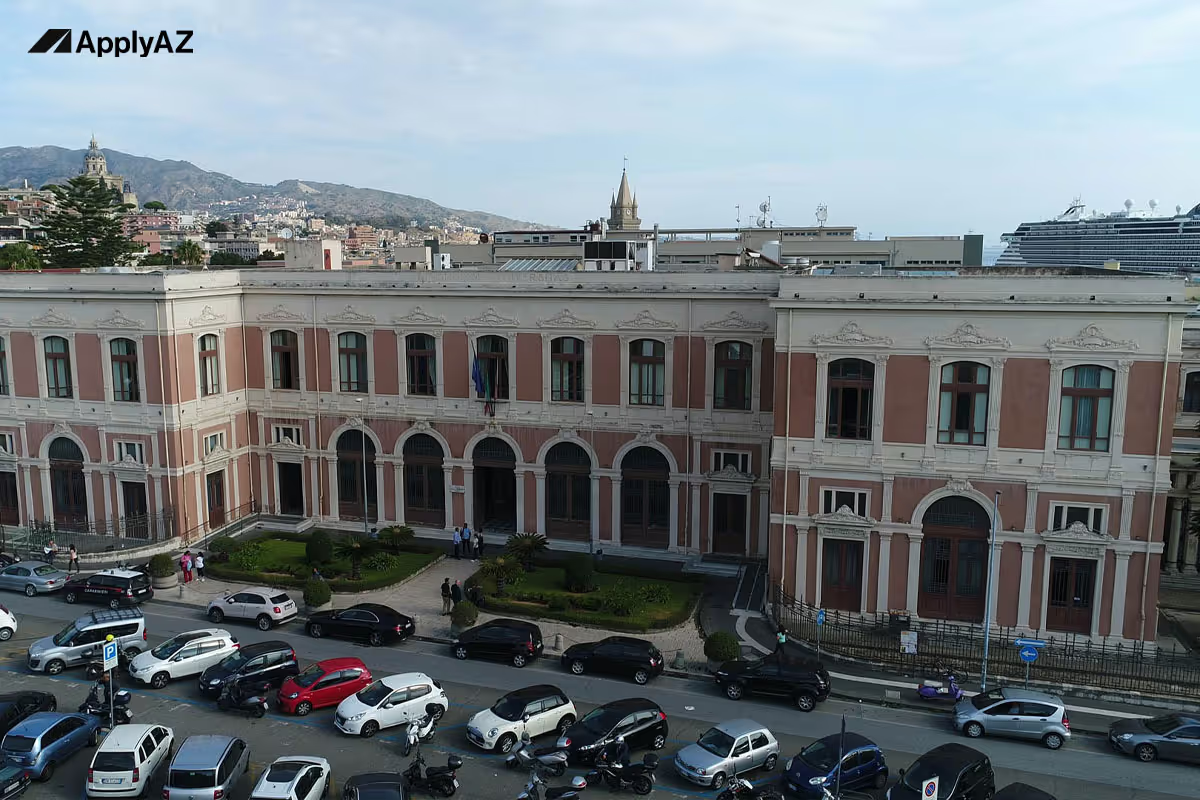
Marine Biology and Blue Biotechnologies is a three-year, 180 ECTS bachelor's degree (class L-13, biological sciences) taught entirely in English at the University of Messina, with two third-year curricula. International fees follow country groups, and the programme can be tuition-free for eligible students.
Entry requirements
- A secondary school qualification from 12 years of schooling, recognised as equivalent to the Italian diploma.
- English at CEFR level B2 or higher, shown by an international certificate.
- Basic knowledge of biology, mathematics, chemistry and physics.
- Open access with a CISIA TOLC knowledge check; students below the thresholds get additional learning requirements (OFA), supported by remedial courses, to clear by the end of year one.
- For the Early Bird call, final school documents and a declaration of value or CIMEA statement of comparability.
About the programme
Marine Biology and Blue Biotechnologies is a three-year bachelor's degree (laurea, class L-13, biological sciences) worth 180 ECTS. It is run by the Department of Chemical, Biological, Pharmaceutical and Environmental Sciences of the University of Messina and taught entirely in English, with open access. The course website now presents it as Marine Sciences and Blue Biotechnologies.
The degree gives a solid base in general biology with scientific and practical training across marine biology: research methods, marine ecology, experimental techniques, ecosystem conservation, biotechnology and the sustainable use of marine resources. Messina, on the Strait between Sicily and mainland Italy, makes the sea the natural setting for this course. It suits school leavers with an interest in biology, chemistry and the marine environment.
What you will study
The first two years are common to all students and cover the sciences and the main groups of marine life. In the third year you follow one of two curricula, Physical and Natural Science or Marine Resources and Sustainability, and finish with a 6 ECTS final exam.
- Marine botany, Marine zoology and Marine ecology
- Math with elements of statistics and principles of physics (12 ECTS), with general, inorganic and organic chemistry
- Analytical methodologies for sea water analysis (6 ECTS)
- Microbiology and marine biotechnologies and Physiology and marine pharmacology (12 ECTS each)
- Genetics of marine organisms, Molecular biology and Ichthyology and conservation
- Physical and Natural Science curriculum: Biochemistry and marine toxicology, Environmental chemistry, Cartography and coastal dynamics, with physical oceanography or geochemistry as an option
- Marine Resources and Sustainability curriculum: Marine-based nutraceuticals, Fishery, International law on marine environmental protection, Pathology of farmed organisms
How the programme is taught
An experimental internship at a partner public or private institution or research laboratory is part of the degree. Students can also apply for Erasmus+ mobility and for the university's Students Around the World scholarship for exchanges outside Europe.
Career paths
Graduates can work as junior biologists, carrying out technical and operational tasks and giving professional support in environmental, industrial, pharmaceutical, scientific information and research settings. The university lists these sectors:
- laboratory production and biotechnology
- marine ecology and resource management
- aquaculture facilities
- marine protected areas
- public administration and research institutions
- environmental impact assessment and monitoring
Fees and scholarships
Fees for international students at UniME depend on a country grouping in force since 2025/26: €156, €256, €356 or €506 a year, with the €156 regional tax already included. The €256 band covers countries like India. ERSU Messina runs the regional scholarship, mainly based on family income, which includes a tuition fee waiver plus money, housing and meals, so this programme can be tuition-free for eligible students.
How to apply from outside the EU
Prepare your school certificates and a B2 English certificate, then apply on the UniME application portal; the €40 fee covers up to two applications. For 2027/28 the visa-applicant calls are 1 to 20 December 2026 (Early Bird, requiring final documents and a declaration of value or CIMEA statement), 2 February to 19 March 2027 and 8 April to 8 May 2027.
If you are admitted, the letter explains how to register on Universitaly and apply for a type D study visa. See the application and admission page.
How ApplyAZ helps
If this programme fits your goals, ApplyAZ can include it in a shortlist of 20 to 30 English-taught programmes at Italian public universities. We write your CV and a tailored statement of purpose, submit your applications and Universitaly pre-enrolment, file your DSU scholarship application and prepare your visa file, with a named person on each stage. The university decides admission, the region decides the scholarship and the consulate decides the visa. See how ApplyAZ works or check your eligibility.
Questions and answers
Is the degree taught in English?
Yes. The university's info sheet says the course is entirely carried out in English, and applicants need an English certificate at CEFR level B2 or higher.
Is there an entrance test?
Access is open, with no cap on places. You take a CISIA TOLC knowledge check; if you fall below the thresholds, you receive additional learning requirements (OFA) and remedial courses to complete in the first year.
What are the two curricula?
In the third year you choose Physical and Natural Science, with marine toxicology, environmental chemistry and coastal dynamics, or Marine Resources and Sustainability, with nutraceuticals, fishery, marine environmental law and pathology of farmed organisms.
When can I apply for 2027/28?
Visa applicants use the UniME portal in one of three calls: 1 to 20 December 2026, 2 February to 19 March 2027 or 8 April to 8 May 2027. The €40 fee covers up to two applications.
What are the fees?
Yearly fees depend on your country group: €156, €256, €356 or €506, including the €156 regional tax. An ERSU Messina scholarship includes a tuition fee waiver for winners, and ERSU decides awards.
What can graduates do?
Graduates work as junior biologists in laboratory production, biotechnology, aquaculture, marine protected areas, environmental monitoring, public administration and research institutions.
Similar programmes
More programmes in this city

They began right where you are

