

Master in Communications Engineering at University of Pisa
Two-year English-taught LM-27 master's at the University of Pisa in digital communications, signal processing and antennas, with curricula in internet and wireless communications or radar, remote sensing and RF.
Master
2 years
Pisa
English
University of Pisa



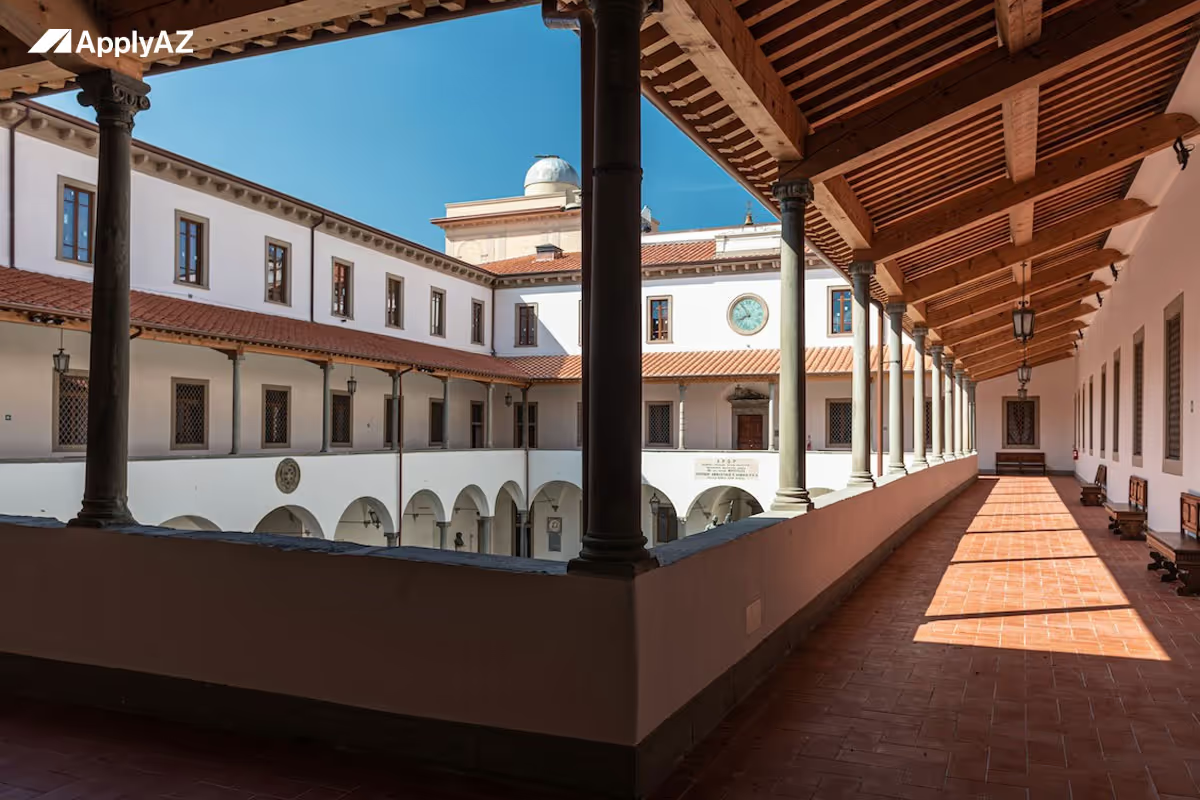
Communications Engineering is a two-year, 120 ECTS master's degree (class LM-27) taught in English at the University of Pisa, with curricula in internet and wireless communications and in radar, remote sensing and RF. Tuition is capped at €2,900 a year for 2026/27 and can be tuition-free for eligible students through DSU Toscana.
Entry requirements
- A bachelor's degree or equivalent foreign qualification in telecommunications, electronic or information engineering or a related field.
- At least 34 credits in maths and physics and 60 credits in telecommunications or information engineering subjects (the course's curricular requirements).
- English at B2 level or higher; a certificate can replace the language check.
- No written test: an evaluation panel reviews your file and may call you to an admission interview.
- A declaration of value or CIMEA statement of comparability at enrolment.
About the programme
Communications Engineering is a two-year master's degree (laurea magistrale, class LM-27, telecommunications engineering) worth 120 ECTS, taught in English by the Department of Information Engineering of the University of Pisa. Admission is open and teaching is in Pisa.
The course trains specialists who design and manage innovative communication systems: people who can architect telecommunications systems and run networks, services and remote sensing applications. It suits graduates in telecommunications, electronic or information engineering with a solid grounding in maths and signals.
What you will study
The degree has two curricula, Internet and Wireless Communications, and Radar, Remote Sensing and RF Technologies. They share four compulsory units worth 42 credits and add three curriculum units in the first year. In the second year you pick four exams from your curriculum, plus 12 credits of free choice. Units in the 2026/27 plan include:
- Digital Communications (12 ECTS)
- Radar and Statistical Signal Processing (12 ECTS)
- Communication Systems and Cybersecurity (12 ECTS)
- Antenna Engineering (6 ECTS)
- Network Metrology, Advanced Programming and a Photonics Laboratory (Internet and Wireless track)
- Microwave and mm-wave Devices, Microelectronics for Telecommunications, and Image Analysis and Computer Vision (Radar track)
- Electives such as 5G and Beyond Communications, Satellite Communications, Industrial Internet of Things, Radar Systems and Environmental Remote Sensing
- A final thesis worth 24 ECTS
How the programme is taught
Exams taken from the other curriculum's group count automatically as free-choice credits, so you can combine wireless and radar topics. Laboratory units cover photonics, network programming and radiofrequency and microwave work. The course website posts thesis and graduate opportunities with companies, including recent calls from Nokia and Telespazio.
Career paths
The university lists roles as designers of telecommunications systems and equipment, engineering project managers, research and development specialists, and developers of communications and remote sensing solutions in public and private organisations.
Fees and scholarships
For 2026/27 the University of Pisa sets a maximum all-inclusive fee of €2,900 a year for students within the standard length of the degree, with the €140 regional tax included; fee reductions can be requested. The regional body DSU Toscana awards scholarships that include exemption from tuition fees, so this master's can be tuition-free for eligible students. See the fees page.
How to apply from outside the EU
Applicants with a foreign degree use the English-taught master's portal. For 2026/27, Communications Engineering accepted applications from 1 December 2025 to 5 February 2026, and the portal allows no more than two applications per person. The evaluation panel checks your transcript and may invite you to an interview.
Admitted students then pre-enrol on Universitaly, apply for a type D study visa and, to enrol, provide a declaration of value or a CIMEA statement of comparability.
How ApplyAZ helps
If this programme fits your goals, ApplyAZ can include it in a shortlist of 20 to 30 English-taught programmes at Italian public universities. We write your CV and a tailored statement of purpose, submit your applications and Universitaly pre-enrolment, file your DSU scholarship application and prepare your visa file, with a named person on each stage. The university decides admission, the region decides the scholarship and the consulate decides the visa. See how ApplyAZ works or check your eligibility.
Questions and answers
Is Communications Engineering at Pisa taught in English?
Yes. The course page lists English as the teaching language, and applicants need English at B2 level or higher; a certificate can replace the language check.
What background do I need?
A bachelor's with at least 34 credits in maths and physics and 60 credits in telecommunications or information engineering subjects, or an equivalent foreign degree checked by the evaluation panel.
Is there an entrance test?
There is no written test. An evaluation panel reviews your documents and can accept or reject the application, or call you to an admission interview on basic maths and engineering topics.
Which curricula are offered?
Two: Internet and Wireless Communications, and Radar, Remote Sensing and RF Technologies. Both share digital communications, radar and statistical signal processing, communication systems and cybersecurity, and antenna engineering.
When is the application window?
The 2027/28 dates are not published yet. For 2026/27 the English master's portal took applications from 1 December 2025 to 5 February 2026, for both non-EU and EU applicants.
How much are the fees?
The University of Pisa caps tuition at €2,900 a year for 2026/27, including regional tax, with reductions on request. DSU Toscana scholarship winners are exempt from tuition fees; the region decides awards.
Similar programmes
More programmes in this city

They began right where you are

