

Master in Psychology, Neuroscience and Human Sciences at University of Pavia
Two-year English-taught LM-51-R psychology master at the University of Pavia with IUSS Pavia, with Cognitive or Clinical Psychology and Neuroscience curricula and 20 ECTS of practical training. Entry needs a psychology bachelor's, English at B2 and a merit score of 50 out of 100.
Master
2 years
Pavia
English
University of Pavia



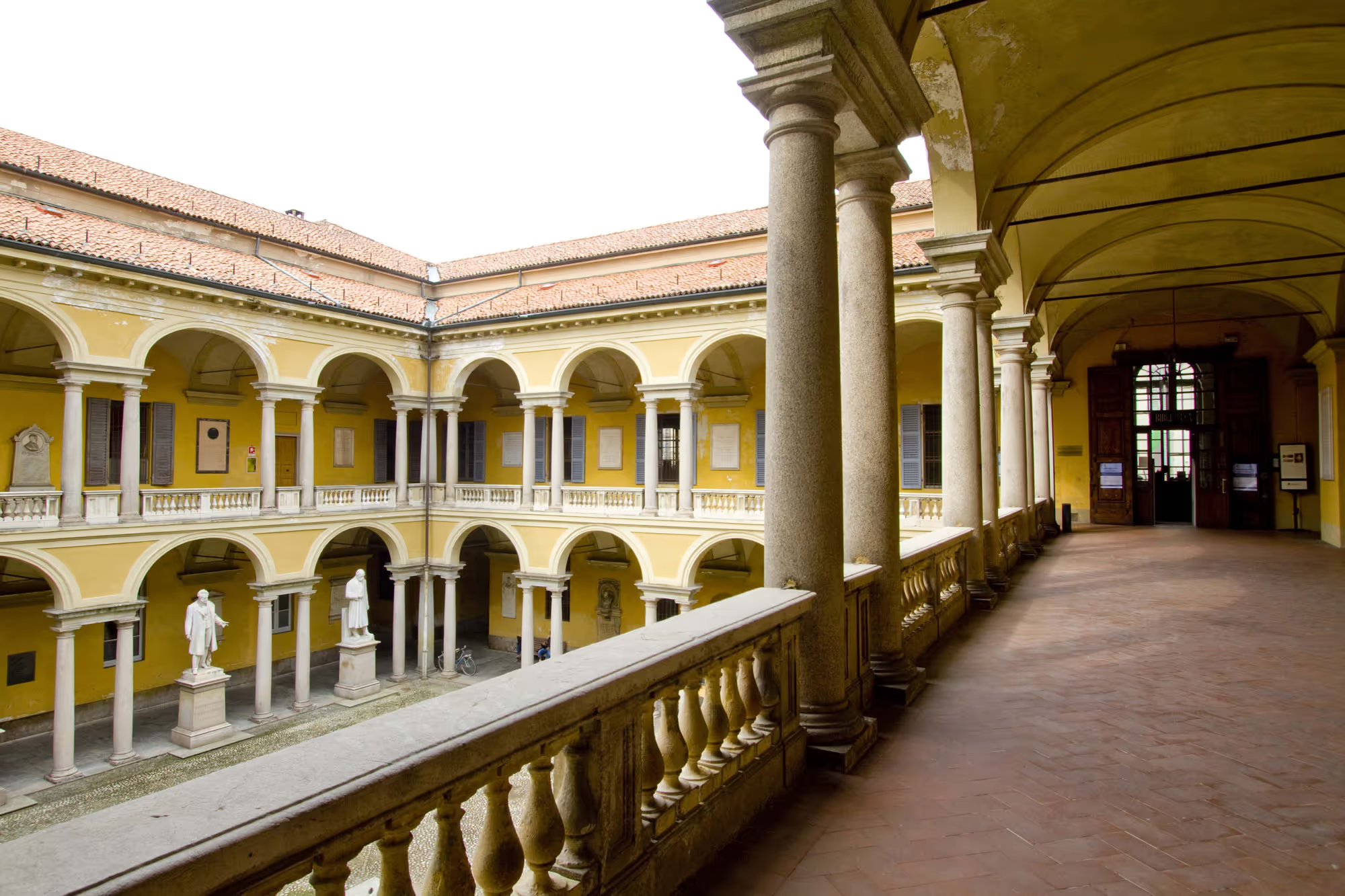
Psychology, Neuroscience and Human Sciences is a two-year, 120 ECTS master's degree (class LM-51-R) taught in English at the University of Pavia with IUSS Pavia. Entry needs a three-year bachelor's comparable to an Italian psychology degree, English at B2 and a merit score of at least 50 out of 100. Non-EU students can choose fees based on family income, so it can be tuition-free for eligible students.
Entry requirements
Detailed entry requirements
Pavia's Psychology, Neuroscience and Human Sciences master asks for a three-year bachelor's that the committee compares with an Italian psychology degree (L-24) or the EuroPsy certificate, English at B2, and a merit score of at least 50 out of 100, with limited places in each curriculum. Reviewed 8 October 2026. [1]
Degree and the psychology requirement
You need a three-year bachelor's degree, a university diploma or another qualification obtained abroad and judged acceptable. [1]
- Foreign degrees: the committee evaluates your bachelor's by comparing it with the Italian bachelor's in Psychological Sciences and Techniques (class L-24) and/or the EuroPsy certificate.
- Italian degrees: at least 88 CFU in at least seven psychology sectors, M-PSI/01 to M-PSI/08.
- Practical training: the committee checks whether your earlier activities match 10 ECTS of the practical evaluative traineeship (TPV). If they do not, you add the missing training as extra credits in your study plan.
The committee also checks adequate personal preparation from your documents, academic record and, if it asks, an interview, which can be held online. [1]
What this means for your transcript
Italian CFU and the credits on a foreign transcript are not always the same unit, and the committee compares the content of your degree with an Italian psychology bachelor's. As a guide, based on the rule above:
- Usually a fit: a three-year BA or B.Sc. in Psychology with courses across the main areas of psychology, such as general, developmental, social, clinical and physiological psychology, and research methods.
- Check carefully: a BA in which psychology is one of three main subjects, or a degree in applied psychology or counselling with few research methods courses.
- Often short: degrees in other fields, such as a B.Sc. in Biology or Nursing, a B.Tech or a BA in Sociology, which usually lack the psychology content of an L-24 degree.
English
English at CEFR B2, in both speaking and writing. [1]
A recognised certificate is not mandatory but is recommended, and is best submitted with your application. The call refers to the university's list of accepted certificates and does not itself set test scores. Other certificates are judged case by case, and if you have no certificate, the committee can check your English. [1]
Selection and ranking
There is no written test. The committee scores each application out of 100: [1]
- Academic record, up to 50 points: how suitable your degree is, your individual exams and your average mark.
- Other titles, up to 50 points: CV, reference letters, motivation letters and a possible interview.
You need at least 50 points to be eligible. Eligible applicants are ranked by total score, with ties going to the youngest. You choose up to two curricula in order of priority and compete only for those, and each admitted applicant is assigned a curriculum by ranking position and available places. [1]
For 2026/27 there were 70 places for non-EU applicants living abroad, 35 in Cognitive Psychology and Neuroscience and 35 in Clinical Psychology and Neuroscience, plus 70 for EU applicants and non-EU residents in Italy. Unused non-EU places move to the other quota. [1] After the reassignments, the university reported that all places in both quotas had been assigned. [4]
2026/27 deadlines
For 2026/27, the evaluation request window ran from 23 February to 23 March 2026 at 23:59 Italian time. Rankings were published on 27 April 2026, and admitted applicants enrolled from 27 April to 5 May 2026. Reassignment requests ran over the same dates, with results on 11 May 2026, and reassignments for non-EU applicants living abroad ended on 30 June 2026. [1]
Non-EU students living abroad had to submit their Universitaly pre-enrolment for the study visa by 31 August 2026, and applicants still finishing their bachelor's had to graduate by 15 December 2026. [1] The 2027/28 call is not yet published and will set the new dates.
Documents and non-EU steps
You apply on the university's application portal and upload: [1]
- a certificate from your university listing all exams with dates, credits and marks, any graduation mark and your years of enrolment;
- any other titles useful for evaluating your record;
- an internationally recognised English certificate at B2, recommended but not mandatory;
- a valid ID.
You can apply before graduating if your non-EU degree already shows at least 65% of the credits needed to graduate. If you have not graduated by the enrolment deadline, you are enrolled under condition, and the place lapses if you do not graduate by 15 December 2026. [1]
After admission, non-EU students living abroad complete Universitaly pre-enrolment, which the university validates, and then apply for a study visa. [1]
Sources and verification
Checked by the ApplyAZ admissions team against the university's official documents listed below. Entry rules can change with each new call, and we re-check them before every application.
- University of Pavia, Admission Office. Call for applicants for the first year of the inter-university master's degree in Psychology, Neuroscience and Human Sciences (LM-51), academic year 2026/2027. Reviewed 8 October 2026.
- University of Pavia, Psychology, Neuroscience and Human Sciences programme page (degree class, language, curricula, practical training and professional register), academic year 2026/2027. Reviewed 8 October 2026.
- University of Pavia. Fees regulation, academic year 2026/2027. Reviewed 8 October 2026.
- University of Pavia, Psychology, Neuroscience and Human Sciences course and admission page, academic year 2026/2027 (rankings and reassignment updates). Reviewed 8 October 2026.
About the programme
Psychology, Neuroscience and Human Sciences is a two-year master's degree in class LM-51-R, psychology, taught in English in Pavia and worth 120 ECTS. It is organised by the University of Pavia's Department of Brain and Behavioural Sciences together with the Department of Humanities and Life Sciences of IUSS Pavia, and the University of Pavia runs admission and enrolment. Access is restricted, with its own annual call and separate places for non-EU applicants living abroad. [1][2]
The degree links psychology with neuroscience and with the humanities and social sciences to study the human brain and behaviour. Its final exam has the value of the Italian state exam for the psychologist profession, so it suits psychology graduates who want to practise, specialise or move into research.
What you will study
Applicants rank two curricula in order of preference: Cognitive Psychology and Neuroscience, or Clinical Psychology and Neuroscience. Each has an 18 ECTS core course and three 6 ECTS units in the first year, plus electives in both years. Units in the study plan include:
- Cognitive Neuroscience (Cognitive curriculum)
- Social Cognition (Cognitive curriculum)
- Social Cognitive Development (Cognitive curriculum)
- Health Psychology (Cognitive curriculum)
- Clinical Neuroscience (Clinical curriculum)
- Applied Clinical Neuroscience (Clinical curriculum)
- Applied Social Cognition (Clinical curriculum)
- Applied Language Abilities (both curricula)
How the programme is taught
The second year centres on 20 ECTS of practical evaluative training (tirocinio pratico valutativo): at least 14 ECTS at accredited external organisations and up to 6 at the university, each credit worth at least 20 hours, supervised by a registered psychologist as tutor. The final exam combines a practical evaluation test on this training, before a panel that includes members of the professional order of psychologists, with the public defence of an original thesis. Students can also study abroad through Erasmus+; there is no double degree.
Career paths
Through the procedures set by Italian law, graduates can join the Italian Register of Psychologists (Albo degli Psicologi) and practise as psychologists. The degree also leads to:
- Postgraduate specialisation, including psychotherapy training
- PhD programmes
- Psychological assessment, intervention, rehabilitation and prevention in clinical, developmental, social and forensic settings, as described in the degree regulations
- Research and teaching in psychology and neuroscience
Fees and scholarships
For fee purposes this degree is in the science area. Non-EU students can choose a flat rate set by citizenship, with countries like India, Pakistan and Nigeria in the lowest bracket, or an income-based fee from an equivalent ISEE. With an ISEE of €32,000 or less, students are exempt from the all-inclusive fee, so this programme can be tuition-free for eligible students. [3] The EDiSU Pavia scholarship needs the income-based route.
How to apply from outside the EU
This degree has its own call, separate from the general calendar. For 2026/27, applications on apply.unipv.eu ran from 23 February to 23 March 2026; rankings came out on 27 April 2026 and enrolment closed on 5 May 2026. You state up to two curriculum preferences, and 70 places (35 per curriculum) were reserved for non-EU applicants living abroad. [1] The 2027/28 call is not yet published and will set the new dates.
Admitted non-EU students had to complete the Universitaly pre-enrolment by 31 August 2026 and, once the university validated it, apply for a study visa, which the consulate decides. [1]
How ApplyAZ helps
ApplyAZ is an Italy-based consultancy that works only with public universities. We can include this programme in a shortlist of 20 to 30 English-taught programmes that fit your profile, so your plan never rests on a single application.
For eligible students who start with us, a named person owns each stage, from A to Z:
- We check your transcript against Pavia's entry rules for this programme.
- We write your CV and a tailored statement of purpose.
- We prepare and submit your online evaluation request with transcript, CV and letters, enrolment and Universitaly pre-enrolment.
- We help you declare your family income for reduced fees and file your regional DSU scholarship application at the right time and in the right format.
- We prepare your visa file.
With operations in all 20 Italian regions, we follow each region's scholarship rules and deadlines as they change. The university decides admission, the region decides the scholarship and the consulate decides the visa, so no one can promise an outcome. You pay in milestones, and every service you pay for is either delivered or its fee is refunded (terms apply).
Programmes at Italian public universities can be tuition-free for eligible students. Check if you are eligible and book a one-to-one consultation session with one of our Italy experts, or see how ApplyAZ works.
Questions and answers
What bachelor's degree do I need for Pavia's Psychology, Neuroscience and Human Sciences master?
A three-year bachelor's, a university diploma or a foreign qualification judged acceptable. Foreign degrees are compared with Italy's bachelor's in psychological sciences and techniques (L-24) and/or the EuroPsy certificate, while Italian graduates need 88 credits in at least seven psychology sectors. [1]
Is there an entrance exam?
No written test. The committee scores you out of 100: up to 50 for your academic record and up to 50 for your CV, reference and motivation letters and a possible online interview. You need at least 50 points, and ties go to the youngest applicant. [1]
What English level is required? Do I need IELTS?
English at B2 in speaking and writing. A recognised certificate is not mandatory but is recommended, and the call refers to the university's list rather than setting scores. Without a certificate, the committee can check your English, and we check which proof your file can use. [1]
When is the deadline for non-EU students?
For 2026/27, applications ran from 23 February to 23 March 2026, rankings came out on 27 April and admitted students enrolled by 5 May 2026. Universitaly pre-enrolment was due by 31 August 2026. The 2027/28 call is not yet published. [1]
Can I apply before I graduate?
Yes. For 2026/27, applicants with a non-EU degree needed at least 65% of their degree's credits when applying and had to graduate by 15 December 2026. Until then they were enrolled under condition. [1]
I have a BA or B.Sc. in Psychology from India. Can I apply?
Possibly. A three-year psychology degree is the closest match, because the committee compares foreign degrees with Italy's L-24 psychology bachelor's and/or the EuroPsy certificate. A BA with psychology as one of three subjects, or a degree in another field, needs a closer look. [1]
How many places are there for non-EU students?
For 2026/27 the call offered 70 places for non-EU applicants living abroad, 35 in each curriculum, and another 70 for EU applicants and non-EU residents in Italy. Unused non-EU places move to the other quota. [1]
Does the degree qualify me as a psychologist?
The university states that the degree allows enrolment in the Italian Register of Psychologists, which enables full professional practice. The second year includes 20 credits of applied practical activity, about 500 hours, and an evaluative practice test. [2]
Can someone handle my whole application to Psychology, Neuroscience and Human Sciences at Pavia?
Yes. ApplyAZ, an Italy-based consultancy that works only with public universities, checks your transcript against Pavia's rules for this programme, handles the application and Universitaly pre-enrolment, helps you file the regional DSU scholarship application at the right time and in the right format, and prepares your visa file, for eligible students. Start by checking your eligibility.
I'm applying from India. What is the route into Psychology, Neuroscience and Human Sciences?
A recognised three-year Indian BA or B.Sc. in Psychology is the closest match, because the committee compares foreign degrees with Italy's L-24 psychology bachelor's and/or the EuroPsy certificate. You also need English at B2 and at least 50 out of 100 in the merit ranking. The steps are the online evaluation request, enrolment and Universitaly pre-enrolment. [1] Indian students apply for the type D study visa at the Italian embassy or consulate that covers their state, such as New Delhi, Mumbai or Bengaluru.
Is the route different from Pakistan, Bangladesh or Sri Lanka?
No. The academic rules for Psychology, Neuroscience and Human Sciences are the same whatever your nationality. Applicants from Pakistan, Bangladesh and Sri Lanka follow the same steps as India: online evaluation request, merit ranking, enrolment and Universitaly pre-enrolment, then a type D study visa from the Italian mission for their country of residence. Read our guide for students in Dhaka.
I live in the UAE, Saudi Arabia, Qatar, Kuwait, Oman or Bahrain. Where do I apply for the visa?
At the Italian embassy or consulate responsible for the country where you legally live, after Universitaly pre-enrolment. The academic rules for Psychology, Neuroscience and Human Sciences are the same whatever your nationality, and Gulf residents follow the same steps: online evaluation request, merit ranking, enrolment and Universitaly pre-enrolment. Read our guides for Dubai, Riyadh and Doha.
I studied or live in London, New York, Toronto, Vancouver, Singapore or Kuala Lumpur. What is the route?
The academic rules for Psychology, Neuroscience and Human Sciences are the same whatever your nationality, and your degree is assessed like any other foreign qualification. Non-EU applicants who live abroad follow the same route: online evaluation request, merit ranking, enrolment and Universitaly pre-enrolment, then a type D study visa from the Italian mission for where they live. Read our guides for students in London, New York, Toronto, Vancouver, Singapore and Kuala Lumpur.
More English-taught programmes at this university
Other public universities in this city

They began right where you are

