

Master in Neurobiology at University of Pavia
Two-year English-taught neuroscience master at the University of Pavia covering neurophysiology, neuroanatomy, neuropharmacology, computational neuroscience and brain disorders, with an experimental thesis in a wet lab or in silico.
Master
2 years
Pavia
English
University of Pavia



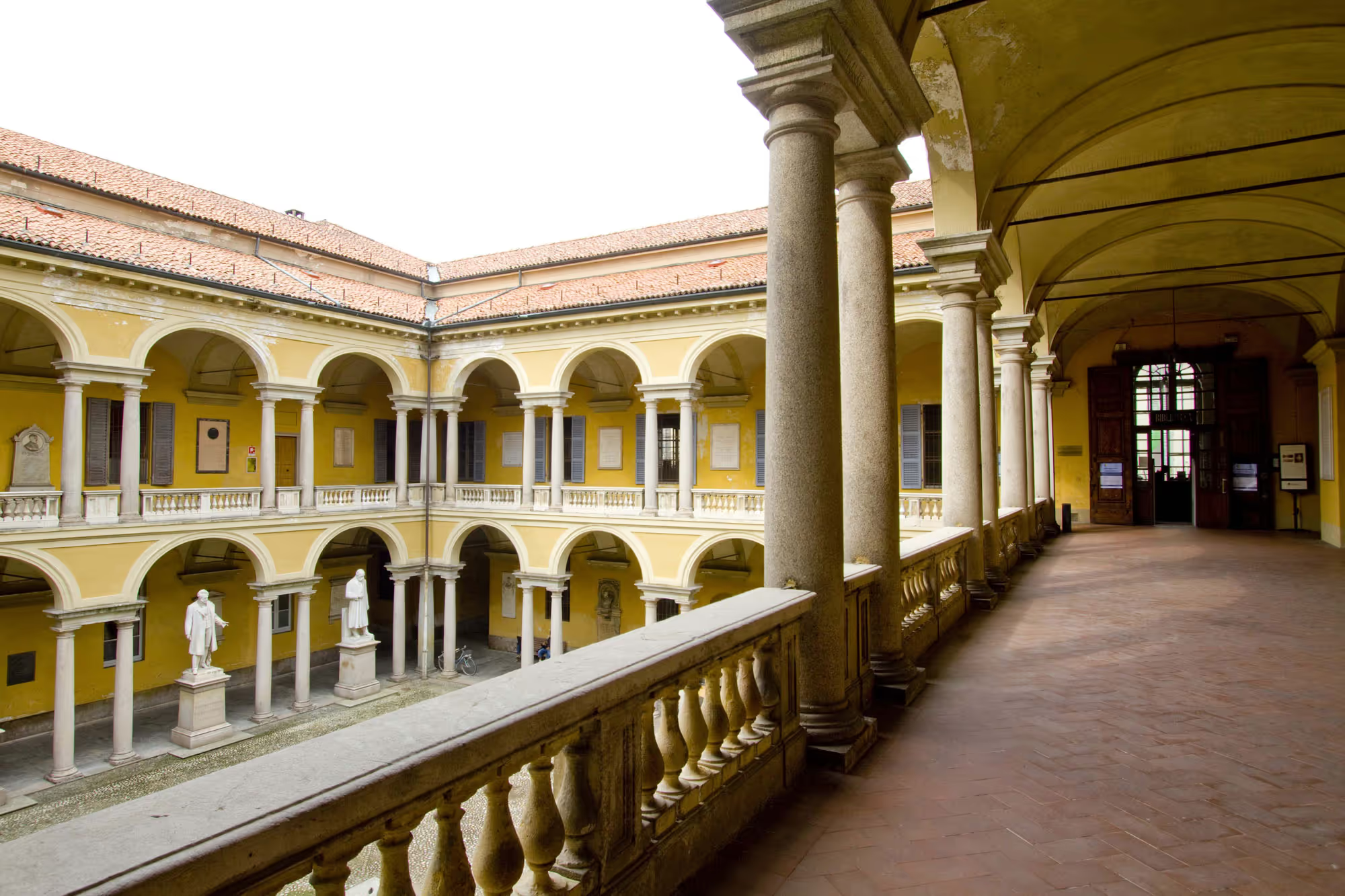
The Master in Neurobiology is a two-year, 120 ECTS degree (class LM-6-R) taught entirely in English at the University of Pavia. It covers the nervous system from molecules and cells to behaviour and brain disorders, ending with a 24 ECTS experimental thesis. Non-EU students pay a flat rate by country or an income-based fee.
Entry requirements
- A bachelor's degree of at least three years in biology, biotechnology or another life science; other graduates need at least 30 credits in specified biology sectors.
- Good knowledge of biochemistry, cell biology, genetics, molecular biology, anatomy, pharmacology, physiology and pathophysiology.
- English at B2 level. A certificate is not required: a declaration that your degree was taught in English or proof of English coursework also counts, and your English is checked at the interview.
- An online admission interview for candidates whose background the committee finds suitable.
- An online application on apply.unipv.eu with your passport, a transcript with exams, marks and credits, and the €35 fee.
About the programme
Neurobiology is a two-year master's degree in the biology class, LM-6-R, offered by the Department of Biology and Biotechnology Lazzaro Spallanzani at the University of Pavia. It is taught entirely in English on campus in Pavia, carries 120 ECTS and has open access, with a limited quota of seats for non-EU applicants who need a visa.
The degree gives a solid grounding in neuroscience: how the nervous system is organised, the cellular and molecular basis of its functions, its systemic roles and the biology behind neurological and psychiatric disease. It puts weight on quantitative data acquisition and analysis, imaging and behavioural methods, and bioinformatics. It is aimed mainly at biology and biotechnology graduates.
What you will study
The first year builds the core of cellular, molecular and systems neuroscience. The second year moves to computation, behaviour and disease, with 9 ECTS of electives and the thesis. Units in the 2026/27 study plan include:
- Cellular and Advanced Systemic Neurophysiology
- Membrane Biophysics and Electrophysiology
- Human Neuroanatomy
- Neurochemistry, Neuropharmacology and Neurogenetics
- Comparative Neurodevelopment and Neural Stem Cells
- Computational Neuroscience
- Neural Basis of Behaviour and Neuropsychology
- Neurobiology of Brain Disorders
- Neuroimmunology and Molecular Neurobiology
How the programme is taught
The final exam is worth 24 ECTS and requires experimental work, in a wet lab or in silico, under the guidance of a University of Pavia teacher. You can do it in a university laboratory, in another laboratory in Italy, or partly or entirely abroad through Erasmus+ traineeships (2 to 12 months), Erasmus+ study periods or overseas exchanges (5 to 6 months). The thesis is written and discussed in English.
There is no compulsory curricular internship, but extra-curricular internships can count towards elective credits. Students with a foreign degree take a 3 ECTS Italian course unless they already know Italian.
Career paths
The university's professional profile for graduates is the neurobiologist. The settings it lists are:
- Universities and public or private research institutes
- Hospitals
- Pharmaceutical and biotechnology companies
- Companies producing biomedical instruments
- Scientific publishing
- Education
Fees and scholarships
Neurobiology falls in the science fee area. For 2026/27 non-EU students can pay a flat rate fixed by citizenship: €390 a year in bracket 1, which includes countries like India, Egypt and Sri Lanka, €1,520 in bracket 2 and €4,550 in bracket 3. Or you can declare family income and assets for an equivalent ISEE: up to €32,000 the all-inclusive fee is zero, which means zero euro tuition for eligible students, while regional tax and €16 stamp duty still apply. That route is required for an EDiSU Pavia scholarship.
How to apply from outside the EU
Your application on apply.unipv.eu needs your passport, a transcript with exams, marks and credits, and proof of English, plus a €35 non-refundable fee per programme. If the committee finds your background suitable, you are invited to an online interview on physiology and pathophysiology, genetics, molecular biology, pharmacology, biochemistry, cell biology and anatomy. For 2026/27 the first call ran from 12 to 20 November 2025, and applicants abroad could use later calls only while non-EU seats lasted; 2027/28 dates were pending in September 2026.
Next come the Universitaly pre-enrolment and a type D study visa, which the consulate decides.
How ApplyAZ helps
If this programme fits your goals, ApplyAZ can include it in a shortlist of 20 to 30 English-taught programmes at Italian public universities. We write your CV and a tailored statement of purpose, submit your applications and Universitaly pre-enrolment, file your DSU scholarship application and prepare your visa file, with a named person on each stage. The university decides admission, the region decides the scholarship and the consulate decides the visa. See how ApplyAZ works or check your eligibility.
Questions and answers
Is the Master in Neurobiology taught in English?
Yes. The degree is delivered entirely in English, and the thesis is written and discussed in English. You need English at B2 level, which the committee also checks during the admission interview.
Do I need an English certificate?
No certificate is required for enrolment. You can show a B2 certificate, a declaration that your bachelor's degree was taught in English, or evidence of English coursework.
What bachelor's background is accepted?
Mainly biology, biotechnology or related life sciences. Other graduates need at least 30 credits in specified biology sectors, and a committee judges whether your degree is suitable.
How does the admission interview work?
Candidates with a suitable background take an online interview on physiology and pathophysiology, genetics and molecular biology, pharmacology and biochemistry, and cell biology and anatomy.
Can I do my thesis abroad?
Yes. The experimental thesis can be carried out partly or entirely in a laboratory abroad, for example through an Erasmus+ traineeship of 2 to 12 months, with a University of Pavia supervisor.
How much are the fees?
For 2026/27, non-EU students pay a flat rate by citizenship, from €390 a year in bracket 1, or an income-based fee that is zero with an equivalent ISEE up to €32,000. EDiSU Pavia runs the regional scholarship.
Similar programmes
More programmes in this city

They began right where you are

