

Master in Molecular Biology and Genetics at University of Pavia
Two-year English-taught biology master at the University of Pavia with two curricula, Molecular Life Sciences and Molecular and Digital Biology, built around a long experimental thesis internship in molecular biology, genetics or omics data.
Master
2 years
Pavia
English
University of Pavia



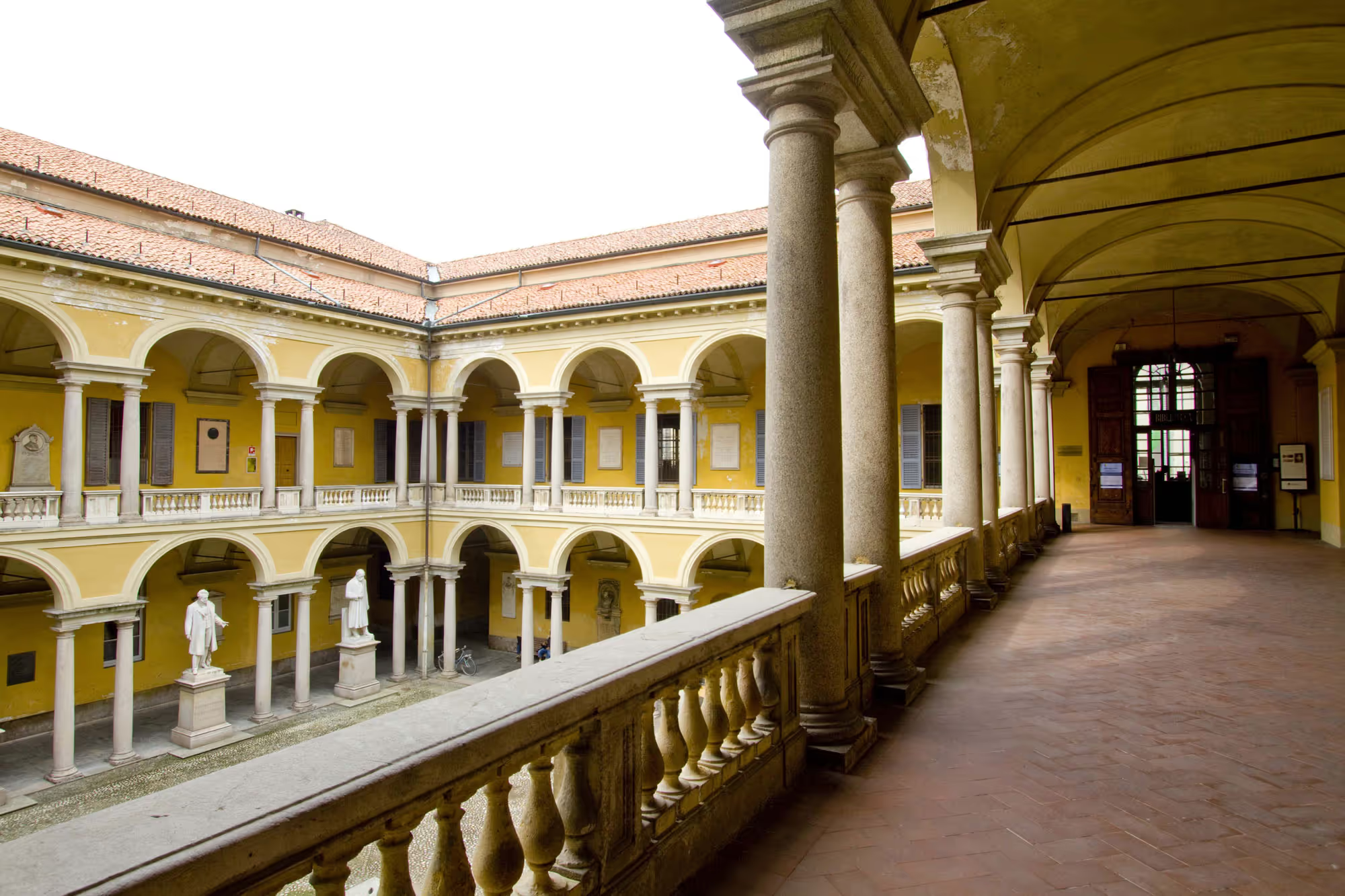
The Master in Molecular Biology and Genetics is a two-year, 120 ECTS degree (class LM-6-R) taught entirely in English at the University of Pavia. Students choose the laboratory-based Molecular Life Sciences curriculum or the data-driven Molecular and Digital Biology curriculum. Non-EU students pay a flat rate by country or an income-based fee.
Entry requirements
- A bachelor's degree of at least three years in biology, biotechnology or a related life science. The university lists degrees such as engineering, medicine, pharmacy and psychology as not suitable.
- Credits in the basics: at least 9 in mathematics, physics or computer science, 12 in biological sciences and 9 in chemistry. The Molecular Life Sciences curriculum asks for more: 12, 15 in chemistry, 18 in biomolecular sciences and 12 in other biology.
- Good knowledge of biochemistry, cell biology, genetics, microbiology and molecular biology, checked in an oral admission exam in English.
- English at B2 level of the CEFR; a certificate is not required to apply.
- An online application on apply.unipv.eu with CV, transcript, a list of relevant exams, two reference letters, a short motivation letter and the €35 fee.
About the programme
Molecular Biology and Genetics is a two-year master's degree in the biology class, LM-6-R, run by the Department of Biology and Biotechnology Lazzaro Spallanzani at the University of Pavia. It is full time, taught entirely in English on campus in Pavia and worth 120 ECTS, with open access and a limited quota of seats for non-EU applicants who need a visa.
The degree gives advanced training in biology at the molecular level, with theory and methods for both basic and applied research. It covers biochemistry, genetics, molecular biology and microbiology, the links between molecular structures and biological functions, and genomics and proteomics. It suits biology and biotechnology graduates who want a research career in the life sciences.
What you will study
Two curricula share core units in advanced molecular biology, bioinformatics and molecular pharmacology. Molecular Life Sciences is laboratory based and studies biological systems through genetic, biomolecular, biochemical and cellular methods. Molecular and Digital Biology focuses on omics data and the analysis of large datasets. Units in the 2026/27 study plan include:
- Advanced Molecular Biology
- Bioinformatics
- Human Molecular Genetics (Molecular Life Sciences)
- Methods in Biochemistry (Molecular Life Sciences)
- Developmental Biology (Molecular Life Sciences)
- Plant Molecular Biology and Biotechnology (Molecular Life Sciences)
- Statistics and Big Data Analysis (Molecular and Digital Biology)
- Genomics and Evolution in Emerging Infectious Diseases (Molecular and Digital Biology)
How the programme is taught
Research work sits at the centre of both curricula. In Molecular Life Sciences the internship for the experimental thesis runs across both years, 14 ECTS in the first and 22 in the second. In Molecular and Digital Biology it is a 30 ECTS second-year project in computational analysis of omics data. Both are supervised by a University of Pavia teacher, and the thesis is written and defended in English.
Visiting and exchange students join the course every year, and Pavia students can spend 3 to 12 months abroad through Erasmus or other exchange schemes. The degree has no double-degree agreements. Students with a foreign degree take a 3 ECTS Italian course unless they already know Italian.
Career paths
The course site names academia, research organisations, biotech companies, healthcare, agribusiness, education and communication as destinations, and points Molecular and Digital Biology graduates towards big data work in many sectors. The university's official list of outlets is:
- Molecular biologist in basic and applied research, in public or private laboratories
- Big data analysis for business and the public sector
- Scientific innovation and technology development in molecular biology
- Teaching and science communication
- Biopharmaceutical and international regulatory work
- PhD programmes and second-level professional masters
Fees and scholarships
For fee purposes this is a science degree. If you do not provide family income documents, the 2026/27 flat rate for non-EU students depends on citizenship: €390 a year in bracket 1, which includes countries like India, Ghana and Vietnam, €1,520 in bracket 2 and €4,550 in bracket 3. With documents, the fee is based on an equivalent ISEE, and up to €32,000 the all-inclusive fee is zero, meaning zero euro tuition for eligible students plus regional tax and €16 stamp duty. The EDiSU Pavia scholarship requires this income-based route.
How to apply from outside the EU
Besides your passport and transcript, this degree asks for a CV, a list of your exams in biology, mathematics, physics, bioinformatics and chemistry, two reference letters sent by referees from institutional email addresses, and a short motivation letter. You apply on apply.unipv.eu with a €35 fee per programme; suitable candidates then sit an oral exam in English. For 2026/27 the first call ran from 12 to 20 November 2025, and the 2027/28 calendar was pending in September 2026.
Admitted non-EU students complete the Universitaly pre-enrolment and request a type D study visa, which the consulate decides and which can take time, so start early.
How ApplyAZ helps
If this programme fits your goals, ApplyAZ can include it in a shortlist of 20 to 30 English-taught programmes at Italian public universities. We write your CV and a tailored statement of purpose, submit your applications and Universitaly pre-enrolment, file your DSU scholarship application and prepare your visa file, with a named person on each stage. The university decides admission, the region decides the scholarship and the consulate decides the visa. See how ApplyAZ works or check your eligibility.
Questions and answers
Is the Master in Molecular Biology and Genetics taught in English?
Yes. The whole degree is taught in English, and exams and the thesis are in English. You need English at B2 level, but a certificate such as IELTS or TOEFL is not required to apply.
What is the difference between the two curricula?
Molecular Life Sciences is laboratory based, with a thesis internship across both years. Molecular and Digital Biology focuses on omics data, bioinformatics and statistics, with a one-semester thesis internship in the second year.
Is there an admission exam?
Yes. Candidates whose background suits the degree sit an oral exam in English on biochemistry, cell biology, genetics, microbiology and molecular biology.
What bachelor's degree do I need?
A degree of at least three years in biology, biotechnology or a related life science, with credits in biology, chemistry and mathematics or physics. The university lists engineering, medicine, pharmacy and psychology degrees as not suitable.
How much are the fees?
For 2026/27, non-EU students pay a flat rate by citizenship, from €390 a year in bracket 1, or an income-based fee that is zero with an equivalent ISEE up to €32,000. EDiSU Pavia runs the regional scholarship.
What careers does the degree lead to?
Research as a molecular biologist in public or private laboratories, big data analysis, technology development, teaching and science communication, biopharmaceutical and regulatory work, or a PhD.
Similar programmes
More programmes in this city

They began right where you are

