

Master in Medical and Pharmaceutical Biotechnologies at University of Pavia
Two-year English-taught biotechnology master at the University of Pavia: a first year on stem cells, genetics and the roots of disease, then a Medical track on cell and gene therapies or a Pharmaceutical track on biotech drug design and production.
Master
2 years
Pavia
English
University of Pavia



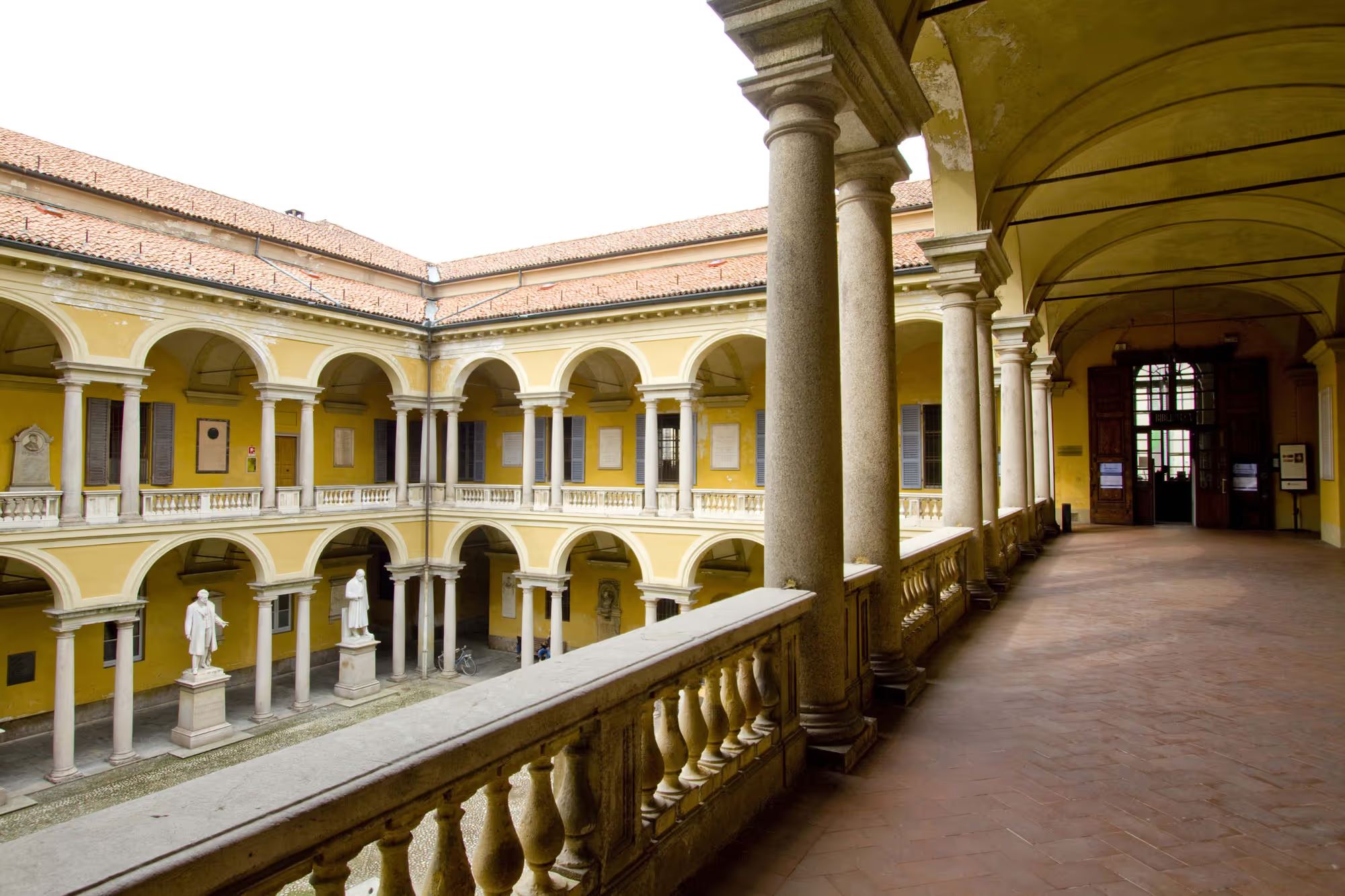
The Master in Medical and Pharmaceutical Biotechnologies is a two-year, 120 ECTS degree (class LM-9-R) taught in English by the University of Pavia's Department of Molecular Medicine. After a shared first year on disease mechanisms, students choose a Medical or a Pharmaceutical track. Non-EU students pay a flat rate by country or an income-based fee.
Entry requirements
- A bachelor's degree of at least three years in biotechnology, biological sciences or pharmacy, or a related degree that the committee judges suitable.
- Foundations across the sciences: the 2026/27 regulations ask for at least 10 credits in mathematics, physics or computer science, 10 in chemistry or biology and 20 in biotechnology subjects.
- For foreign degrees, the regulations refer to a grade average equal to at least 94/110 on the Italian scale.
- English at B2 level with a certificate; you are exempt if your degree was taught in English or you are a native speaker.
- A committee reviews your documents and may call you for an interview.
- An online application on apply.unipv.eu with your passport, a transcript showing exams, marks and credits, your English certificate and the €35 fee.
About the programme
Medical and Pharmaceutical Biotechnologies is a two-year master's degree in class LM-9-R, medical, veterinary and pharmaceutical biotechnology, offered by the Department of Molecular Medicine at the University of Pavia. It is taught in English on campus in Pavia, is worth 120 ECTS and has non-restricted access, with a limited quota of seats for non-EU applicants who need a visa.
The programme prepares graduates to design and run analysis and research in biomedical and pharmaceutical biotechnology: stem cells, the genetic basis of disease, engineered proteins and RNA technology, biochemical diagnostics and biomarkers, and both pharmaceutical and non-pharmaceutical therapies. It suits biotechnology, biology and pharmacy graduates who are aiming at laboratory research or the biopharmaceutical industry.
What you will study
The first year is common to all students. It moves from cell technologies and genetic foundations to the three-part course The Roots of Disease, which covers infectious, metabolic, cancer and degenerative mechanisms. In the second year you choose the Medical track, on disease mechanisms, vaccines, biological drugs and gene and cell therapies, or the Pharmaceutical track, on the design, development and analysis of biotechnological drugs. Units in the 2026/27 study plan include:
- Genetic Foundations
- Chemical and Biochemical Foundations
- The Roots of Disease I to III
- Medicinal Chemistry and Drug Design (Pharmaceutical track)
- Industrial Bioprocesses for Drug Productions (Pharmaceutical track)
- Nanobiotechnology (Pharmaceutical track)
- Non Pharmaceutical Therapies II: Cell Technologies and Cell Therapy (Medical track)
- From Bench to Bedside (Medical track)
Electives range from bioinformatics and protein design to medical devices, molecular haematology and forensic genetics.
How the programme is taught
The dissertation is worth 18 ECTS and is an experimental thesis, written and defended in English. Thesis lab work can take place in University of Pavia laboratories, in external Italian labs such as Policlinico San Matteo, IGM-CNR or Fondazione Mondino, or abroad through Erasmus, always with a Pavia faculty member as main supervisor.
The second year also includes 75 hours of practical activities (3 ECTS) at the university or in a public or private company. Students with a foreign degree and no Italian B1 certificate take the 3 ECTS course Italian Language for Foreign Students instead. The degree does not offer a double degree.
Career paths
According to the course site, graduates can carry out research and production in biotechnology, from engineered proteins, RNA technology and stem cells to diagnostics, biopharmaceutical design and quality control, as well as business, management and marketing of biotechnological products and patents. Typical employers include:
- Universities and public or private research institutes
- Hospital laboratories
- Pharmaceutical companies, in research and development or industrial production
- Biotechnology companies
- Biotechnology service centres
Fees and scholarships
Non-EU students without family financial documents pay a flat rate by citizenship, which for science degrees like this one is €390 a year in bracket 1 (countries like India, Bangladesh and Nigeria), €1,520 in bracket 2 and €4,550 in bracket 3 for 2026/27. Otherwise the fee follows an equivalent ISEE: up to €32,000 the all-inclusive fee is zero, which means zero euro tuition for eligible students, with regional tax and €16 stamp duty still due. Only this route lets you apply to EDiSU Pavia for a scholarship.
How to apply from outside the EU
Demand from non-EU applicants is high here: in June 2026 the university announced that no visa seats were left on this degree for 2026/27, so aim for the first call of the year. You apply on apply.unipv.eu with your passport, a transcript listing exams, marks and credits, and an English certificate, paying €35 per programme. For 2026/27 the first call ran from 12 to 20 November 2025; the 2027/28 calendar was not yet published in September 2026.
If admitted, you file the Universitaly pre-enrolment and apply for a type D study visa, which the consulate decides, then present a legalised, apostilled or CIMEA-verified degree at enrolment.
How ApplyAZ helps
If this programme fits your goals, ApplyAZ can include it in a shortlist of 20 to 30 English-taught programmes at Italian public universities. We write your CV and a tailored statement of purpose, submit your applications and Universitaly pre-enrolment, file your DSU scholarship application and prepare your visa file, with a named person on each stage. The university decides admission, the region decides the scholarship and the consulate decides the visa. See how ApplyAZ works or check your eligibility.
Questions and answers
Is the Master in Medical and Pharmaceutical Biotechnologies taught in English?
Yes. The degree is taught in English and the dissertation is written and defended in English. You need an English B2 certificate, unless your previous degree was taught in English or you are a native speaker.
What is the difference between the two tracks?
Both share the first year. The Medical track then covers disease mechanisms, vaccines, biological drugs and gene and cell therapies, while the Pharmaceutical track covers the design, development, production and analysis of biotechnological drugs.
What bachelor's background is accepted?
Biotechnology, biological sciences or pharmacy, or a related degree the committee finds suitable. The regulations expect credits in mathematics, physics or computer science, in chemistry or biology, and at least 20 credits in biotechnology subjects.
Is there an entrance test?
There is no written test. A committee evaluates your documents and grades and may invite you to an interview.
Are places for non-EU students limited?
Yes. Seats for non-EU applicants who need a visa are limited, and for 2026/27 the university announced in June 2026 that they were full. Applying in the first call of the year is the safest choice.
How much does the degree cost?
For 2026/27, non-EU students pay a flat rate by citizenship, from €390 a year in bracket 1, or an income-based fee that is zero with an equivalent ISEE up to €32,000. EDiSU Pavia runs the regional scholarship.
Similar programmes
More programmes in this city

They began right where you are

