

Master in Industrial Automation Engineering at University of Pavia
Two-year English-taught automation engineering master at the University of Pavia with curricula in robotics and mechatronics or industrial technologies and management, covering control, robotics, power electronics and drives, and a 24 ECTS thesis.
Master
2 years
Pavia
English
University of Pavia



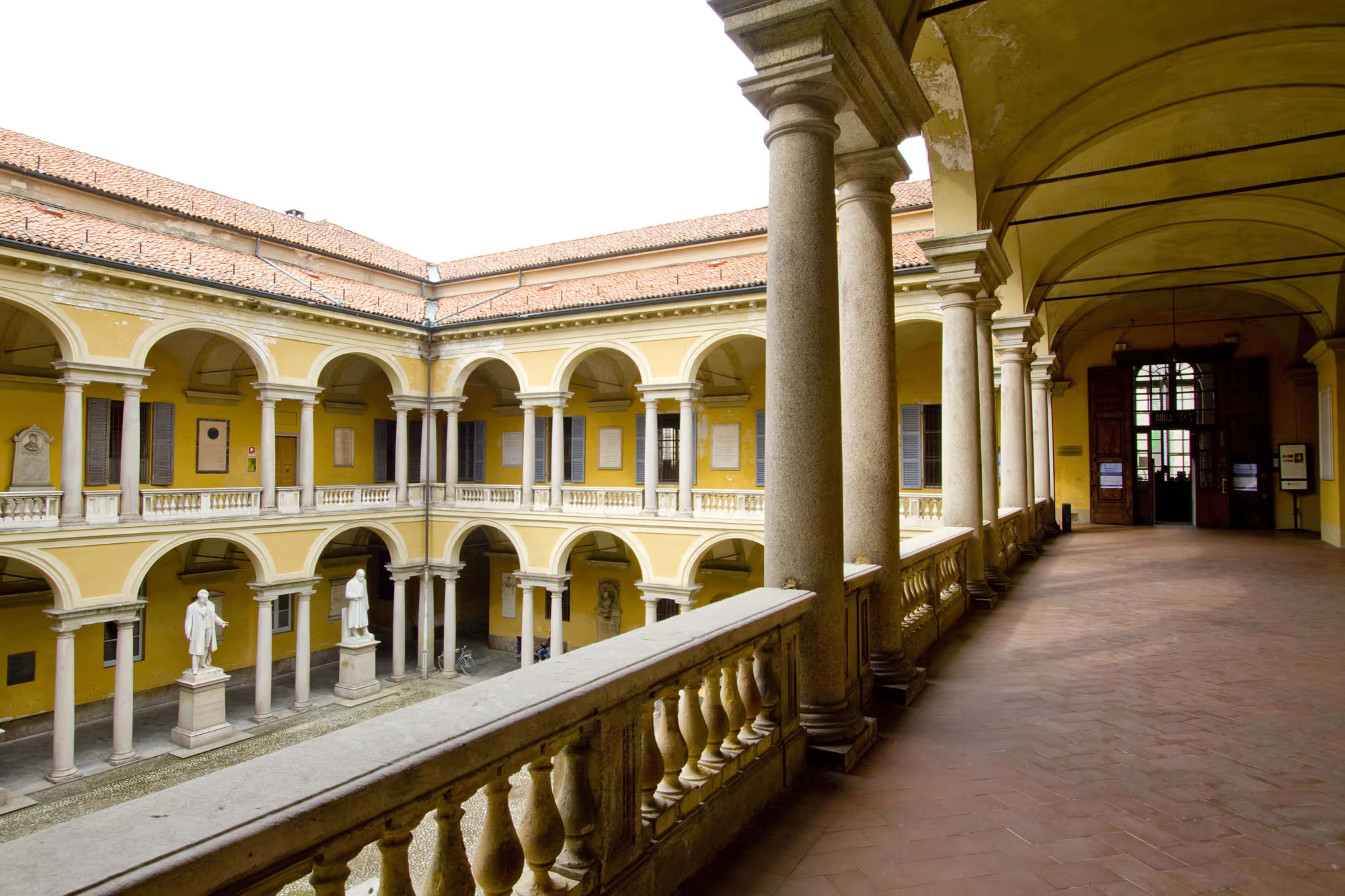
The Master in Industrial Automation Engineering is a two-year, 120 ECTS degree (class LM-25) taught entirely in English at the University of Pavia. Students choose a Robotics and Mechatronics or an Industrial Technologies and Management curriculum. Non-EU students pay a flat rate by country or an income-based fee.
Entry requirements
- A bachelor's degree or equivalent foreign qualification in engineering, with a strong background in basic and engineering subjects.
- At least 36 ECTS in basic subjects such as mathematics and physics and 45 ECTS in engineering subjects set in the regulations.
- English at B2 level of the CEFR, shown by a recognised certificate, a university English exam of at least 3 ECTS or a course taught in English.
- A check of personal preparation: graduates at or above 90/110 on the Italian scale are exempt; others sit a written test and interview.
- An online application on apply.unipv.eu with the €35 fee.
About the programme
Industrial Automation Engineering is a two-year master's degree in class LM-25 (automation engineering), taught entirely in English by the Department of Electrical, Computer and Biomedical Engineering in Pavia. It is worth 120 ECTS and has open access, with a capped number of seats for non-EU students who need a visa.
The degree trains engineers who can design, plan, develop and manage complex automated systems, processes and services, run complex experiments and work across different industrial settings, with an understanding of business organisation and professional ethics. It suits engineering graduates who want to work on robotics, industrial control or the running of production systems.
What you will study
All students share a core of control, robotics, electronics and electric drives, then follow one of two curricula: Robotics and Mechatronics, or Industrial Technologies and Management. The robotics curriculum adds Algorithms and Systems for Robotics, Industrial Control and Human Computer Interaction; the management curriculum adds Logistics Management, Organization Theory and Design, Strategic Management and Business Planning, and Lean Production. Shared units include:
- Process Control and Robotics
- Automated Mechanical System Design
- Electronics for Industrial Measurements
- Power Electronics
- Applied Robotics Technologies
- Electrical Drives for Industrial Applications
- Nonlinear Control and Optimization
How the programme is taught
There are 12 ECTS of electives, and the recommended list includes Artificial Intelligence, Machine Learning, Numerical Methods in Engineering Sciences and Applied Project Management and Agile Methods. The degree ends with a 24 ECTS master thesis: original work defended in public before a degree committee. The regulations do not include internships or double degree programmes, but students can study abroad through Erasmus+ and other university mobility schemes.
Career paths
The university lists these professional areas for graduates:
- Design of automation systems for industry and services
- Design, supervision and control of robotic systems
- Design of automatic machines and mechatronic systems
- Process automation and modelling of complex systems
- Logistics and customer service management
- Operations in the telecommunications and energy sectors
Employers named include the electronics, electromechanical, aerospace and chemical industries, manufacturing and service companies, and public administration.
Fees and scholarships
Engineering falls in the university's science fee area. Non-EU students with a study visa can opt for the 2026/27 flat rate by citizenship, which is €390 a year in bracket 1 (countries like India, Egypt and Vietnam) and €1,520 or €4,550 in brackets 2 and 3. Or they can pay by equivalent ISEE, which drops the all-inclusive fee to zero up to €32,000: zero euro tuition for eligible students, with the regional tax and €16 stamp duty still due. Only the ISEE route gives access to EDiSU Pavia scholarships.
How to apply from outside the EU
Apply on apply.unipv.eu with your passport, bachelor's transcript or degree certificate, English certificate and the €35 fee per programme (up to three programmes). A committee checks your credits in basic and engineering subjects; graduates meeting the grade threshold skip the preparation test, others sit it in September or October or in January or February. For 2026/27 the calls ran from November 2025 to June 2026, with later calls open to non-EU applicants abroad only while seats remained.
Once admitted, you pre-enrol on Universitaly and request a type D study visa, which the consulate decides. The 2027/28 calendar was not published in September 2026.
How ApplyAZ helps
If this programme fits your goals, ApplyAZ can include it in a shortlist of 20 to 30 English-taught programmes at Italian public universities. We write your CV and a tailored statement of purpose, submit your applications and Universitaly pre-enrolment, file your DSU scholarship application and prepare your visa file, with a named person on each stage. The university decides admission, the region decides the scholarship and the consulate decides the visa. See how ApplyAZ works or check your eligibility.
Questions and answers
Is the Master in Industrial Automation Engineering taught in English?
Yes. The whole programme is taught in English. You need English at B2 level, shown by a certificate, a university English exam of at least 3 ECTS or a course taught in English.
Which curricula can I choose?
Two: Robotics and Mechatronics, or Industrial Technologies and Management. Both share control, robotics, power electronics and electric drives; the management curriculum adds logistics, organisation, strategy and lean production.
What bachelor's background do I need?
A bachelor's degree, normally in engineering, with at least 36 ECTS in basic subjects such as mathematics and physics and 45 ECTS in the engineering subjects listed in the regulations.
Is there an entrance test?
Graduates whose final grade is at least 90/110 on the Italian scale are exempt. Others take a written test and interview, held in September or October and in January or February.
How much are the fees?
Non-EU students with a study visa pay a flat rate by citizenship, from €390 a year for 2026/27, or an income-based fee. With an equivalent ISEE up to €32,000 the all-inclusive fee is zero, and EDiSU Pavia offers regional scholarships.
What jobs do graduates do?
The university lists automation system design, robotics, automatic machines and mechatronics, process automation, logistics management and operations in telecommunications and energy, in manufacturing, aerospace, chemical and service companies.
Similar programmes
More programmes in this city

They began right where you are

