

Master in Global Food Law: Sustainability Challenges and Innovation at University of Parma
Two-year English-taught master's in food law at the University of Parma covering EU and global food regulation, trade, safety, sustainability and innovation, with company visits, internships and two elective tracks.
Master
2 years
Parma
English
University of Parma


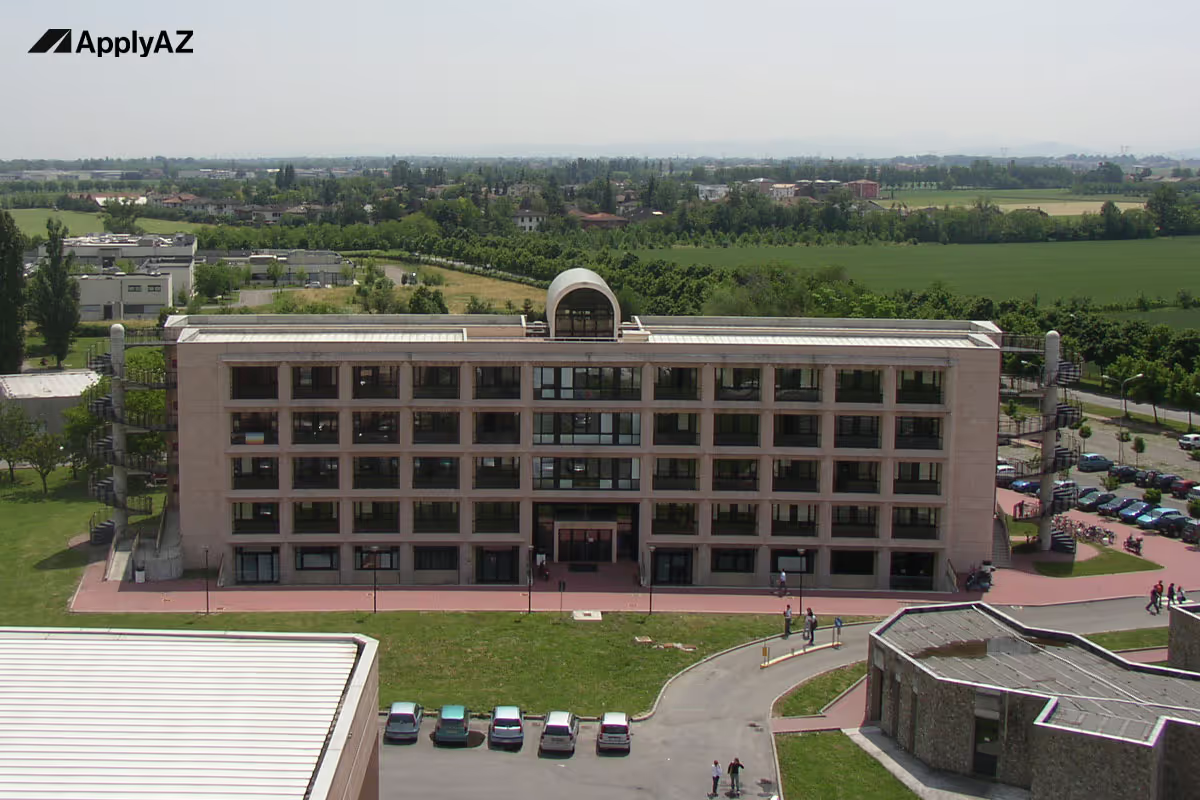
Global Food Law: Sustainability Challenges and Innovation is a two-year, 120 ECTS legal master's (class LM/SC-GIUR) taught in English at the University of Parma, in person in year one and blended in year two. Fees are income-based, so it can be tuition-free for eligible students.
Entry requirements
- A bachelor's degree; applicants from law, political science, economics, social sciences and social work receive preferential access.
- English at B2: IELTS 5.5, TOEFL 69, Cambridge FCE or CAE, or another recognised certificate; native speakers and holders of an English-medium degree letter are exempt.
- No entrance test: applications are assessed on your degree and documents.
- Official transcripts and certificates in English or Italian (or with official translations), passport, CV and motivation letter; no legalisation is needed to apply.
- Original documents and a declaration of value or CIMEA statement at enrolment in Parma.
About the programme
Global Food Law: Sustainability Challenges and Innovation is a two-year laurea magistrale in class LM/SC-GIUR (legal sciences), worth 120 ECTS and taught in English by the Department of Law, Politics and International Studies of the University of Parma. It is part of the department's Food For Future project, for which it was named a Department of Excellence for 2023 to 2027.
The course trains future officials, civil servants and legal advisers who specialise in the food sector, in government, international organisations and private companies. It suits graduates in law, political science, economics or the social sciences who want to work on food regulation, sustainability and innovation.
What you will study
The first year lays the legal foundations; the second adds employment and criminal law and two electives from one of two tracks, Innovation in the Agri-Food Sector or Sustainability and Food Systems. Units in the 2026/27 plan include:
- Italian and comparative constitutional law on food insecurity (12 ECTS)
- Food law and EU agricultural policy (6 ECTS)
- EU law for food safety, sustainability and climate change (6 ECTS)
- Food business operators and private law: liability, contracts, competition (6 ECTS)
- Global trade law and food design, including intellectual property rights (12 ECTS)
- Food employment law (6 ECTS) and food and criminal justice (12 ECTS)
- Electives such as novel food law, risk assessment and the role of EFSA, climate change and taxation, and food advertising and labelling regulation
How the programme is taught
The first year is taught in person and the second year in blended mode; attendance is not compulsory. The course includes visits to and internships at food companies, and an interdisciplinary approach that brings in nutrition, economics and sociology alongside law. International students can take a 3-credit Italian language unit in place of visits and seminars. The degree closes with a 21-credit dissertation, and Erasmus+ traineeships are available in Italy and abroad.
Career paths
The department prepares legal officers and legal advisers in food law, sustainable development and innovation for public administration, for-profit and non-profit organisations, and the liberal professions. Example roles include:
- Management and control specialist in public administration
- Management, development and control specialist in private companies
- Legal expert in food companies
- Legal expert in public bodies
Fees and scholarships
The University of Parma sets the same fee rules for this degree as for its other courses. In 2026/27 students paid €156 at enrolment and a personalised contribution between zero and about €2,000 a year, according to family finances, merit and years enrolled. ER.GO processes fee reductions for students with foreign income and runs the Emilia-Romagna scholarship call, so the course can be tuition-free for eligible students.
How to apply from outside the EU
Graduates in law, political science, economics, social sciences or social work receive preferential access, and you can apply without legalised documents: official transcripts in English or Italian are enough at this stage. Upload them on apply.unipr.it with your passport, CV, motivation letter and English certificate, and pay the €30 one-time fee.
In 2026/27 the non-EU window ran from 15 January to 6 April 2026. Accepted students pre-enrol, complete Universitaly pre-enrolment, get a type D study visa and enrol in Parma with original documents and a declaration of value or CIMEA statement.
How ApplyAZ helps
If this programme fits your goals, ApplyAZ can include it in a shortlist of 20 to 30 English-taught programmes at Italian public universities. We write your CV and a tailored statement of purpose, submit your applications and Universitaly pre-enrolment, file your DSU scholarship application and prepare your visa file, with a named person on each stage. The university decides admission, the region decides the scholarship and the consulate decides the visa. See how ApplyAZ works or check your eligibility.
Questions and answers
Is Global Food Law taught in English?
Yes. The course is taught in English. You need B2 English, for example IELTS 5.5, TOEFL 69, or Cambridge FCE or CAE, unless you are a native speaker or hold an English-medium degree.
Is the course taught in person?
The first year is in person in Parma and the second year is blended. Attendance is not compulsory, but the course includes company visits and internships.
Do I need a law degree?
No, but graduates in law, political science, economics, social sciences and social work receive preferential access.
Is there an entrance test?
No. Applications are assessed on your degree and documents. You can apply with official transcripts in English or Italian, without legalisation.
When can I apply for 2027/28?
The 2027/28 call has not been published. For 2026/27, non-EU applicants applied on apply.unipr.it from 15 January to 6 April 2026, with a €30 one-time fee.
How much does it cost?
In 2026/27 students paid €156 at enrolment plus a contribution from zero to about €2,000 a year based on family finances. Eligible students can apply for an ER.GO regional scholarship.
Similar programmes
More programmes in this city

They began right where you are

