

Master in Environmental Engineering for Risk Mitigation at University of Parma
Two-year English-taught LM-35 master at the University of Parma on environmental risk: landslides, floods, groundwater pollution, climate change adaptation, remote sensing and planning, with labs or a company internship.
Master
2 years
Parma
English
University of Parma


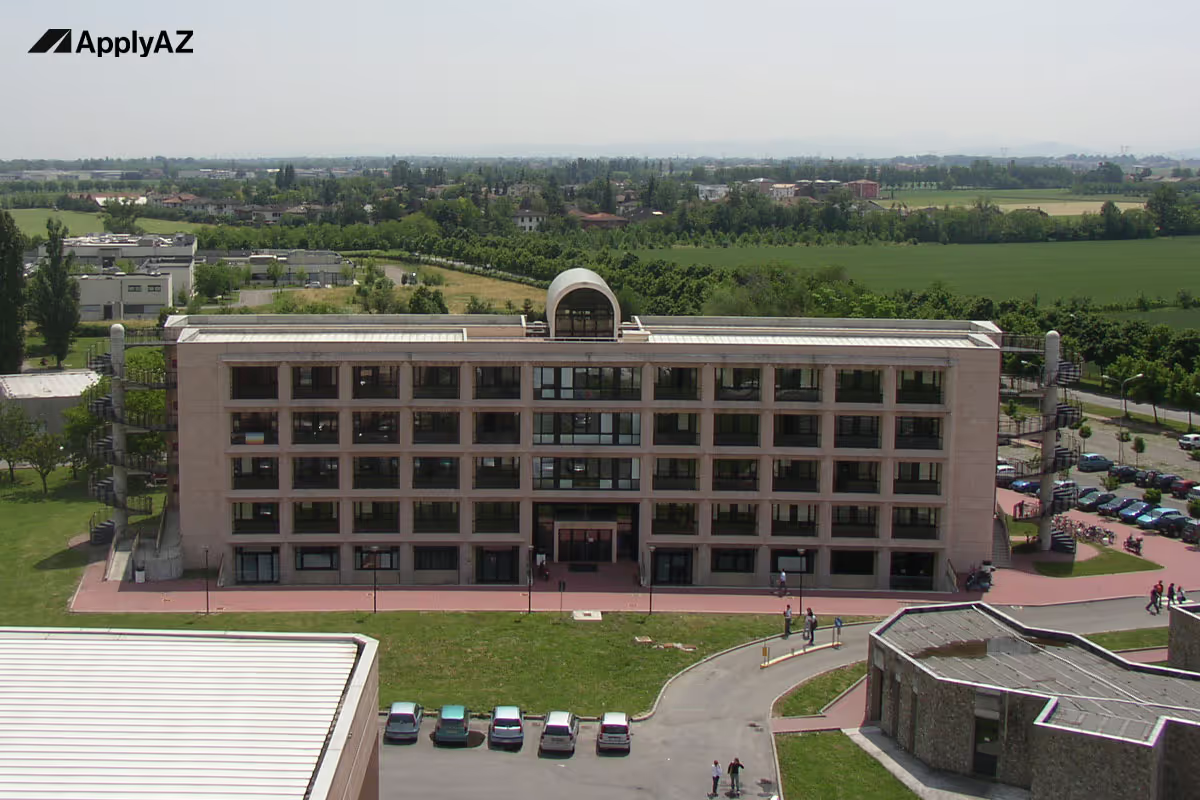
Environmental Engineering for Risk Mitigation is a two-year, 120 ECTS master (LM-35) taught in English at the University of Parma. It focuses on preventing and managing natural and human-induced risks such as landslides, floods and pollution. Fees follow family income, so it can be tuition-free for eligible students.
Entry requirements
- A bachelor's degree in civil, mining or hydraulic engineering meets the requirements directly.
- Other degrees are assessed by a committee against 40 ECTS in basic subjects and 60 ECTS in related subjects; small gaps can lead to conditional admission.
- A final CGPA above 3.2 on a 4-point scale, or equivalent.
- English at B2: TOEFL iBT 72, IELTS 5.5, PTE Academic 59, Cambridge FCE, CAE or CPE, or Trinity ISE II to IV; native speakers and holders of an English-medium degree (with an MOI letter) are exempt.
- No entrance test; references are optional but appreciated.
About the programme
Environmental Engineering for Risk Mitigation is a two-year laurea magistrale in class LM-35, worth 120 ECTS and taught in English at the Department of Engineering and Architecture of the University of Parma. It is a full-time, on-site degree that first ran in 2025/26.
The course trains environmental engineers to prevent, manage and mitigate natural and human-induced risks linked to pollution, climate change and land degradation. It suits civil, hydraulic and environmental engineering graduates who want an interdisciplinary profile that also covers chemistry, geology, biology and environmental law.
What you will study
The first year builds the core in hydrology, slope engineering and treatment technologies. The second year moves to remote sensing, groundwater pollution, planning and flood management. Units in the 2026/27 plan include:
- Environmental Chemistry
- Mitigation of Climate Change and Environmental Impact
- Slope Engineering and Advanced Landslide Risk Analysis and Mitigation
- Groundwater Hydrology and Contaminant Transport and Groundwater Pollution Mitigation
- Water and Waste Treatment Technologies
- Environmental Law and Water Protection
- Photogrammetry and Remote Sensing
- Flood Management in River Basins and Regional and Environmental Planning
How the programme is taught
You take 6 credits in a laboratory of your choice, such as hydrology and hydraulic structures, hydraulic measurements or material testing, or replace it with an internship in a company. Twelve credits are free choice, with suggested electives on climate change, mountain hazards and aquifer remediation. International students take an A1 Italian unit, and the degree ends with a 15-credit thesis, often researched abroad through the department's exchange agreements.
Career paths
The university lists work in both the public and private sectors, including:
- Environmental protection agencies and civil protection
- Design and construction of engineering works
- Environmental and geotechnical monitoring and hydrogeological risk mitigation
- Greenhouse gas assessment and water resource management
- Waste treatment plants and environmental impact assessment
- Engineering and design firms working on land defence and remediation
Fees and scholarships
Parma sets tuition by family finances. In 2026/27 the annual contribution runs from zero to €2,000 at most, on top of a one-time €156 fee at enrolment. If your income is outside Italy, you request the reduced rate through ER.GO, which also manages the regional scholarship and housing call; as a result the programme can be tuition-free for eligible students.
How to apply from outside the EU
The committee checks your engineering credits and your grade average, which must be above 3.2 out of 4 or equivalent; there is no test.
Applicants who need a visa apply on apply.unipr.it and pay €30 once for up to three applications in the same call. For 2026/27 the call ran from 15 January to 6 April 2026. After admission you pre-enrol with Parma, submit Universitaly pre-enrolment and apply for a type D study visa. Bring a declaration of value or CIMEA statement when you enrol.
How ApplyAZ helps
If this programme fits your goals, ApplyAZ can include it in a shortlist of 20 to 30 English-taught programmes at Italian public universities. We write your CV and a tailored statement of purpose, submit your applications and Universitaly pre-enrolment, file your DSU scholarship application and prepare your visa file, with a named person on each stage. The university decides admission, the region decides the scholarship and the consulate decides the visa. See how ApplyAZ works or check your eligibility.
Questions and answers
Is this master taught in English?
Yes. It is a full-time, on-site degree taught in English in Parma, and applicants need English at B2 level or an exemption such as an English-medium degree.
Which bachelor's degrees are accepted?
Civil, mining or hydraulic engineering degrees meet the requirements directly. Other degrees are checked for 40 ECTS in basic and 60 ECTS in related subjects.
Is there a minimum grade?
Yes. Your degree must have a CGPA above 3.2 on a 4-point scale, or equivalent. There is no entrance test.
Can I do an internship?
Yes. The 6-credit laboratory in the second year can be replaced by an internship in a company, and many students research their thesis abroad.
When can I apply?
The 2027/28 dates are not published yet. For 2026/27 visa applicants applied on apply.unipr.it from 15 January to 6 April 2026, with a €30 fee.
What jobs do graduates get?
Graduates work for environmental and civil protection agencies, local authorities, engineering and design firms, monitoring and risk mitigation projects, water management and waste treatment.
Similar programmes
More programmes in this city

They began right where you are

