

Master in Functional and Sustainable Materials at University of Parma
Two-year English-taught master in materials science at the University of Parma, on the design, synthesis and characterisation of functional materials for sustainability, with extended lab work and a 32-credit internship and thesis.
Master
2 years
Parma
English
University of Parma


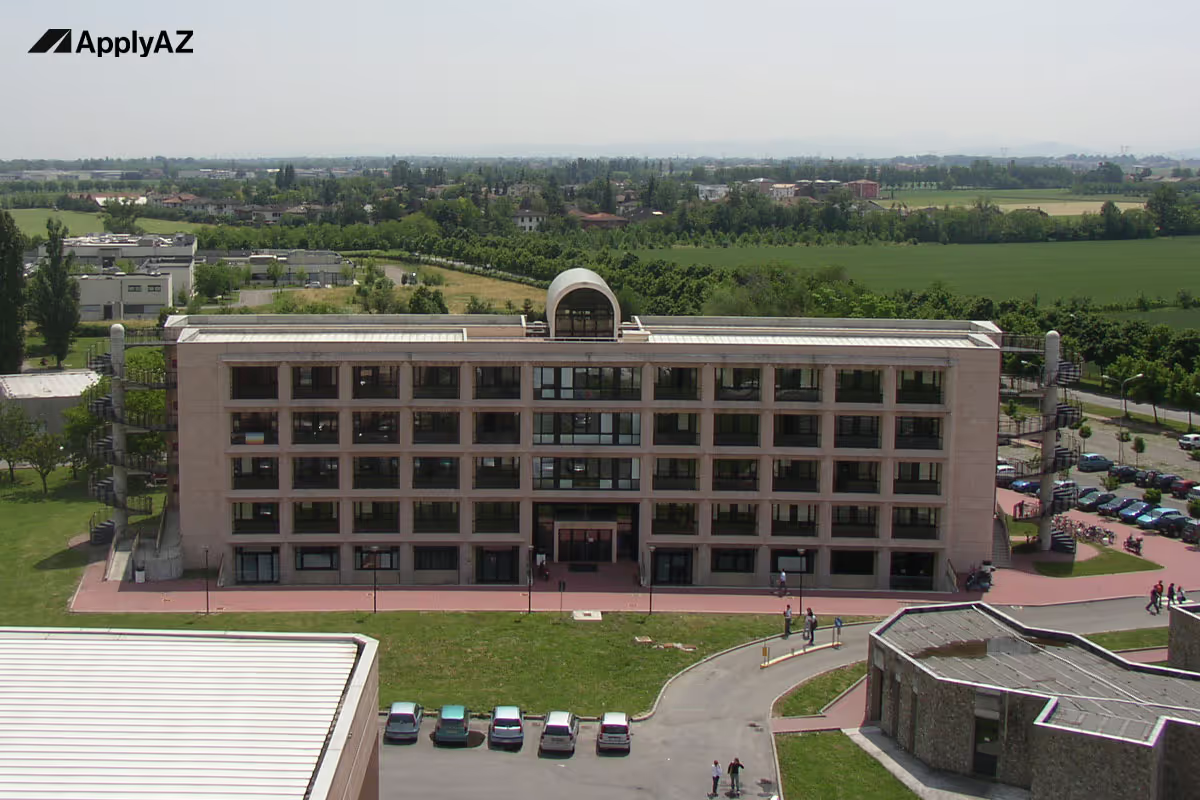
Functional and Sustainable Materials is a two-year, 120 ECTS master in materials science taught in English at the University of Parma. It combines chemistry and physics with lab-heavy training on sustainable materials and additive manufacturing. Fees follow family income, so it can be tuition-free for eligible students.
Entry requirements
- A bachelor's degree in materials science, or a degree from another field with at least 21 ECTS in chemistry, 21 ECTS in physics or 18 ECTS in mathematics and computing.
- For a non-Italian bachelor's degree, a committee judges your scientific background case by case from your transcript.
- English at B2, certified by Cambridge, IELTS, TOEFL, Trinity, Pearson or a similar body; native speakers and graduates of at least one year of English-medium study (with a proficiency letter or MOI) are exempt.
- No entrance test: open access with verification of requirements.
- Passport, CV, transcript, school diploma, bachelor's certificate and English certificate uploaded with the application.
About the programme
Functional and Sustainable Materials is a two-year second-cycle degree in materials science (class LM Sc. Mat.) worth 120 ECTS and taught in English in Parma. It is run by the Department of Chemistry, Life Sciences and Environmental Sustainability together with the Department of Mathematical, Physical and Computer Sciences.
The course grew out of COMP-R, a MUR Department of Excellence project for 2023 to 2027 on complexity and sustainable development, which funds new instruments, new teaching staff and scholarships for the best students. It suits graduates in materials science, chemistry, physics or related sciences who want to design and analyse advanced materials for sustainable uses.
What you will study
Core teaching in chemistry and physics is paired with options in engineering, geology and biology, and a large share of the plan is lab work. You build part of your plan from two elective menus. Units in the 2026/27 plan include:
- Structural Materials, Inorganic Glass and Sustainable Polymeric Materials with lab (12 CFU)
- Condensed Matter Physics (9 CFU)
- Statistics and Chemometrics for Materials Science
- Advanced Synthesis of Sustainable Molecular Materials with lab
- Computational Materials Science with lab
- Physical Characterisation of Energy Materials
- Electives such as Catalytic Technologies for Sustainability, Carbon-based Nanostructures, Materials for Additive Manufacturing and Artificial Intelligence for Materials Science
- Internship and final dissertation (32 CFU)
How the programme is taught
Attendance is not compulsory, except for practical activities, which carry a large part of the training. The second year ends with an internship and dissertation worth 32 credits, and you have up to 12 credits of free choice across the two years.
Career paths
The university expects graduates to work across the whole life cycle of materials, from production to characterisation, analysis and quality control, with attention to sustainability. Typical roles include:
- Research and development of new materials in industry
- Management of production processes
- Advanced design and technical leadership roles
- Scientific and technical consultancy for companies that develop and test advanced materials
Fees and scholarships
Beyond the COMP-R awards for top students, standard Parma fees apply. The 2026/27 enrolment payment is €156; the yearly contribution then ranges from nothing to about €2,000 depending on family finances, merit and years enrolled. ER.GO, the Emilia-Romagna agency, handles fee reductions for students with income abroad and runs the regional scholarship call, so the degree can be tuition-free for eligible students.
How to apply from outside the EU
With a non-Italian bachelor's degree, a committee reviews your transcript case by case, and you need a certified B2 in English unless you are exempt.
Visa applicants apply through Parma's admissions portal, apply.unipr.it, paying a €30 fee that covers up to three applications per call. The 2026/27 call for English-taught master's degrees ran from 15 January to 6 April 2026. Once accepted, you pre-enrol with the university, register on Universitaly and apply for a type D study visa. At enrolment you need a declaration of value or a CIMEA statement for your degree.
How ApplyAZ helps
If this programme fits your goals, ApplyAZ can include it in a shortlist of 20 to 30 English-taught programmes at Italian public universities. We write your CV and a tailored statement of purpose, submit your applications and Universitaly pre-enrolment, file your DSU scholarship application and prepare your visa file, with a named person on each stage. The university decides admission, the region decides the scholarship and the consulate decides the visa. See how ApplyAZ works or check your eligibility.
Questions and answers
Is Functional and Sustainable Materials taught in English?
Yes. It is listed as a course in English, and applicants need a certified B2 level unless they are native speakers or studied at least one year in English.
Which bachelor's degrees can apply?
Materials science graduates meet the requirements directly. Others need at least 21 ECTS in chemistry, 21 in physics or 18 in maths and computing; foreign degrees are assessed case by case.
Is there an entrance test?
No. Access is open, with a check of your academic background and English level by an internal committee.
Is attendance compulsory?
Attendance is not mandatory, except for practical activities. Lab work is a large part of the programme.
Are there scholarships?
The COMP-R Department of Excellence project funds scholarships for the best students. Eligible students can also apply for the ER.GO regional scholarship, which the region awards.
What jobs can graduates get?
Graduates work in research, development, production and quality control of materials, in design roles and as technical consultants to companies developing advanced materials.
Similar programmes
More programmes in this city

They began right where you are

