

Master in Advanced Molecular Sciences for Health Products at University of Parma
Two-year English-taught LM-54 master's at the University of Parma on designing, analysing, formulating and regulating health products such as supplements, functional cosmetics and functional foods, with a 20-credit internship.
Master
2 years
Parma
English
University of Parma


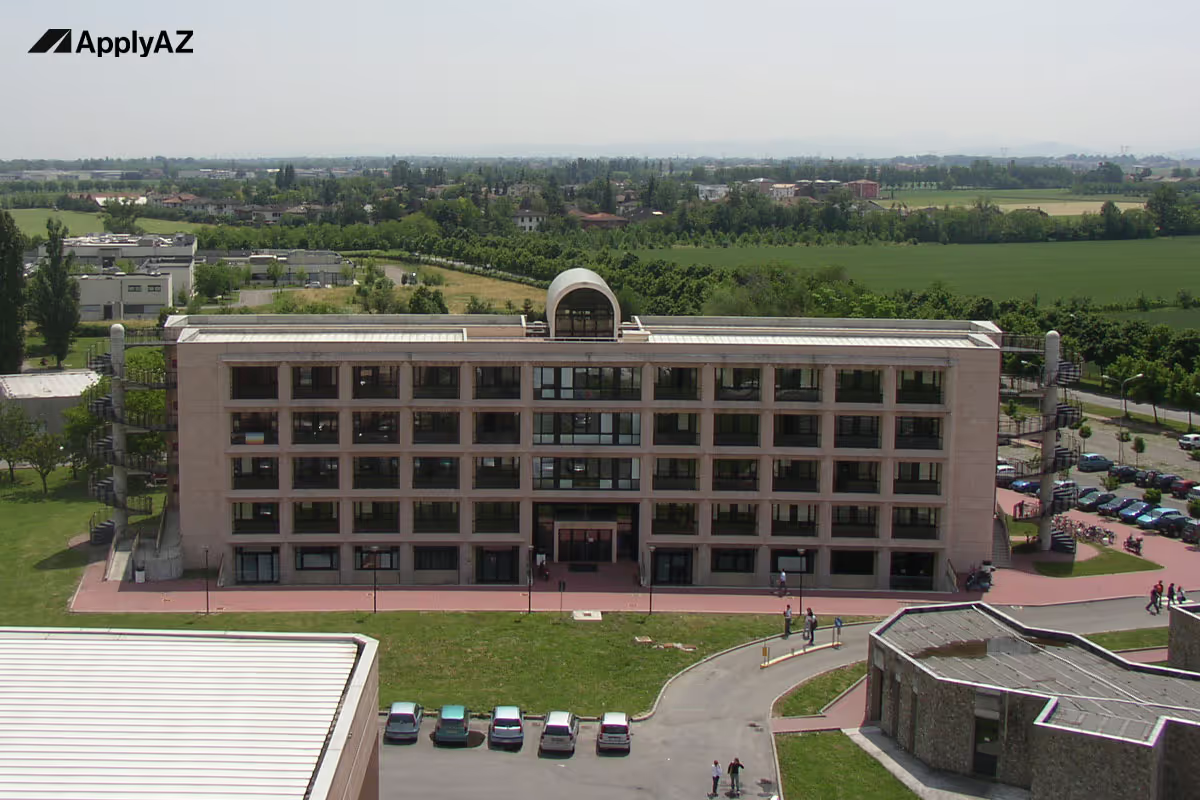
Advanced Molecular Sciences for Health Products is a two-year, 120 ECTS master's (class LM-54) taught in English in blended format by the University of Parma's Department of Food and Drug. Fees depend on family income, up to about €2,000 a year, so it can be tuition-free for eligible students.
Entry requirements
- A bachelor's degree in chemical sciences and technologies (Italian class L-27) or applied pharmaceutical sciences (L-29), a pharmacy or pharmaceutical chemistry degree, or an equivalent foreign qualification.
- Graduates from other fields need at least 6 ECTS in maths, physics, computing or statistics, 12 ECTS in fundamental chemistry and 14 ECTS in specialised chemistry, plus a positive committee review.
- English at B2: IELTS 5.5, TOEFL 69, Cambridge FCE or CAE, or another recognised certificate; native speakers and holders of an English-medium degree letter are exempt.
- No written test: non-EU applicants with foreign qualifications are ranked on merit, and graduates from other fields such as biotechnology are interviewed.
- Passport, transcript, degree certificate, CV and motivation letter with the application, and a declaration of value or CIMEA statement at enrolment.
About the programme
Advanced Molecular Sciences for Health Products is a two-year laurea magistrale in class LM-54 (chemical sciences), worth 120 ECTS and taught entirely in English by the Department of Food and Drug of the University of Parma. It was created under the department's ALIFAR Department of Excellence project (2023 to 2027) and took its first students in 2025/26.
The course trains specialists in the design, preparation, biological evaluation and regulatory assessment of health and wellness products: medicines, medical devices, dietary and botanical supplements, functional cosmetics and functional foods. It suits chemistry and pharmaceutical science graduates who want to work where chemistry meets product development.
What you will study
The first year builds advanced chemistry and analysis for health products; the second year moves to specific product families, regulation and an extended internship. Units in the 2026/27 plan include:
- Sustainability and innovation in functional ingredient preparation (12 ECTS), with chemistry of natural products and biorefineries
- Analytical chemistry (12 ECTS), from advanced characterisation techniques to methods for raw matrices
- Design and synthesis of bioactive molecules (6 ECTS) and chemistry of redox systems (5 ECTS)
- Formulation and analysis of health products (10 ECTS)
- Biochemistry and fermentation chemistry (12 ECTS), including biocatalysis for high-value chemicals
- Preparation, analysis and formulation of functional cosmetics (8 ECTS), and of nutraceuticals with basics of toxicology (8 ECTS)
- Transformation and valorisation of biomasses (9 ECTS)
- Regulatory and quality aspects of health care and wellness products (4 ECTS)
How the programme is taught
Parma registers the course in blended (mixed) teaching mode, and attendance is not compulsory. The second year carries a 20-credit internship, 12 credits of optional units across both years and a 1-credit final dissertation. A steering committee that includes industry representatives promotes training placements in companies and institutions.
As on every English-taught degree at Parma, students also pass an Italian language assessment before graduating.
Career paths
Graduates can take on managerial, administrative and scientific roles in the downstream chemical industry, pharmaceutical chemistry, dietary supplements and functional cosmetics. The department also notes that graduates can register with the Order of Chemists and Physicists. The skills it highlights point to work in:
- Research and development of functional health products
- Analysis and quality control of products and their impurities
- Regulatory affairs, approval dossiers and market analysis
- Formulation and delivery of new health products
- Consulting, services and patenting
Fees and scholarships
For 2026/27, Parma asks every student for €156 at enrolment (regional tax plus stamp duty). On top of that comes a personalised contribution from zero to about €2,000 a year, based on family finances, merit and years enrolled. Students with income abroad request the reduction through ER.GO, the Emilia-Romagna body that also runs the regional scholarship, so this degree can be tuition-free for eligible students.
How to apply from outside the EU
Applicants with a foreign degree are ranked on merit, and those from other fields such as biotechnology have an interview with the admissions committee. You apply on the apply.unipr.it portal with your passport, transcript, degree, CV, motivation letter and English certificate; the €30 fee covers up to three applications in one call.
For 2026/27 the window ran from 15 January to 6 April 2026. Once accepted, you pre-enrol with Parma, complete Universitaly pre-enrolment and request a type D study visa, then enrol in person with a declaration of value or CIMEA statement.
How ApplyAZ helps
If this programme fits your goals, ApplyAZ can include it in a shortlist of 20 to 30 English-taught programmes at Italian public universities. We write your CV and a tailored statement of purpose, submit your applications and Universitaly pre-enrolment, file your DSU scholarship application and prepare your visa file, with a named person on each stage. The university decides admission, the region decides the scholarship and the consulate decides the visa. See how ApplyAZ works or check your eligibility.
Questions and answers
Is Advanced Molecular Sciences for Health Products taught in English?
Yes. The whole course is taught in English in a blended format. You need English at B2, for example IELTS 5.5, TOEFL 69, or Cambridge FCE or CAE; native speakers and graduates of English-medium degrees are exempt.
Which bachelor's degrees are accepted?
Chemical sciences (L-27), applied pharmaceutical sciences (L-29), pharmacy or pharmaceutical chemistry, or foreign equivalents. Other graduates need 6 ECTS in maths, physics, computing or statistics, 12 ECTS in fundamental chemistry and 14 ECTS in specialised chemistry.
Is there an entrance test?
There is no written test. Non-EU applicants with foreign qualifications are ranked on merit, and graduates from other fields such as biotechnology are interviewed by the admissions committee.
Do I need to attend classes in Parma?
Teaching is blended and attendance is not compulsory, but the course is based at the Department of Food and Drug in Parma and the second year includes a 20-credit internship.
When can I apply for 2027/28?
The 2027/28 call is not published yet. For 2026/27, non-EU applicants applied on apply.unipr.it from 15 January to 6 April 2026, paying a one-time €30 fee.
How much does the degree cost?
For 2026/27 you pay €156 at enrolment plus a contribution from zero to about €2,000 a year based on family finances. Eligible students can also apply for an ER.GO regional scholarship.
Similar programmes
More programmes in this city

They began right where you are

