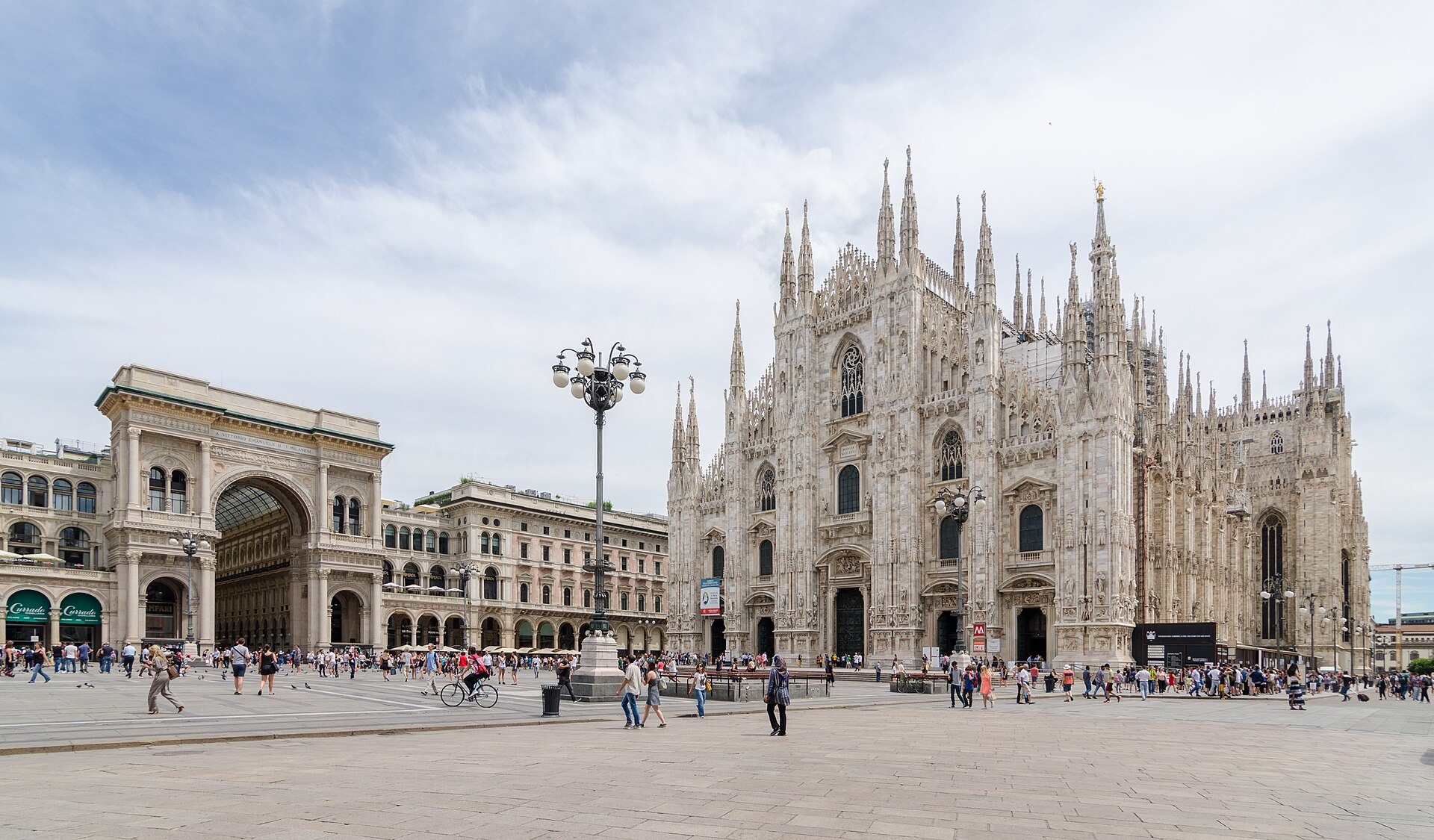
Is Milan a good place to study for international students?
Milan is a strong choice for international students who want a large, international city with three public universities and Italy's widest choice of English-taught degrees. The capital of Lombardy had about 1.4 million residents at the end of 2025 and is Italy's centre for business, finance, fashion and design. It suits ambitious students who want internships and company links, but it is also Italy's most expensive student city, so plan housing and budget first.
Which universities are in Milan, and which are public?
Milan has three public universities, Politecnico di Milano, the University of Milan and the University of Milano-Bicocca, plus several private ones. At the public universities, tuition follows family income (ISEE), or country group at Bicocca for students living abroad. Private universities such as Bocconi and Cattolica charge fixed fees that are much higher and do not follow income. ApplyAZ works only with public universities and takes no commission from any of them.
- Politecnico di Milano: public, founded 1863, Italy's largest technical university
- University of Milan: public, founded 1924, Italy's only member of LERU
- University of Milano-Bicocca: public, founded 1998, one modern campus in north Milan
- Bocconi University: private, fixed fees
- Catholic University of the Sacred Heart (Cattolica): private, fixed fees
- IULM, Humanitas and Vita-Salute San Raffaele: private, fixed fees
What can you study in English in Milan?
In Milan you can study almost any field in English, from engineering and design to medicine, data science and economics. Politecnico di Milano teaches almost all of its master's degrees in English, the University of Milan runs more than 40 English-taught programmes, and Milano-Bicocca teaches 13 degrees fully in English for 2026/27. Most options are at master's level, and the bachelor's choice is narrower. Compare them in our English-taught programmes.
How much does it cost to live in Milan as a student?
Living in Milan as a student costs about €780 to €1,150 a month or more, according to Politecnico di Milano's estimate, and rent is the biggest variable. A single room averaged €704 a month in August 2026, down 3.8% in a year but still the highest in Italy (Immobiliare.it Insights). Sharing a double room cuts rent sharply, to about €492 in a 2024 survey. Transport is cheap for under-27s, and cooking at home keeps food to about €150 to €200 a month.
- Single room: about €704 a month on average (Immobiliare.it Insights, August 2026)
- Shared double room: about €492 a month on average (Polimi student survey, 2024)
- Food and groceries: €150 to €200 a month (Polimi estimate)
- ATM pass: €22 a month or €200 a year for under-27s (January 2026 tariffs)
- Phone €10 to €30 and social life €100 to €200 a month (Polimi estimate)
- Monthly total: about €780 to €1,150 or more (Polimi estimate)
How do you find student housing in Milan?
Finding housing in Milan takes time, so start weeks before you arrive and search remotely from abroad. In a Polimi survey, 43.1% of students found a place within four weeks and 31.2% within eight. Each public university runs residences, with priority for DSU winners, and Bicocca withholds €2,816 from a 2026/27 grant for a residence place. Most students share flats near Città Studi, Bovisa or Bicocca. Read the deposit clauses and photograph the room on day one.
Which scholarship covers students in Milan, and how much is it worth?
In Milan, the Lombardy DSU scholarship is run by each public university's own right-to-study office. For 2026/27 the regional grant for off-site students is €7,172 a year, and Bicocca pays up to €7,419 in its lowest income band, for a family ISEE up to €26,887.93 and ISPE up to €58,452.06. Tuition is set by family income, and a DSU winner also gets a tuition waiver. The University of Milan's 2026/27 call ran from 10 July to 30 September 2026.
How do you get to Milan and get around once you are there?
Milan is easy to reach: Linate airport is 12 minutes from the city centre on the M4 metro, and the Malpensa Express links Malpensa airport with Milano Centrale in about 51 minutes. Milano Centrale is also a major hub for high-speed trains. Inside the city, ATM runs the metro, trams and buses, and under-27s pay €22 a month or €200 a year (January 2026 tariffs). Bicocca's campus faces Milano Greco Pirelli station and has M5 metro stops.
What is student life like in Milan?
Student life in Milan is fast and international, and it is spread across distinct districts: Città Studi around Polimi's Leonardo campus and the University of Milan's science faculties, Bovisa in the north-west, and the Bicocca campus in the north. The University of Milan's central seat is the former Ca' Granda hospital near the Duomo. Evenings often start with aperitivo, and design and fashion weeks fill the calendar. Winters are grey and damp, summers hot.
What should you sort out in your first weeks in Milan?
Your first weeks in Milan are mostly paperwork, and doing it in the right order saves time. Non-EU students must request a permesso di soggiorno within 8 working days of arrival, using the kit from a post office. You also need a codice fiscale, health cover and confirmation of your DSU scholarship or residence place. Many offices work by appointment, so book early and keep copies of every receipt, because landlords and offices will ask for them.
- Request your permesso di soggiorno within 8 working days, using the post office kit
- Get your codice fiscale (Italian tax code) if you do not already have one
- Arrange health cover: SSN registration or private health insurance
- Confirm your DSU scholarship and residence place with your university
- Buy your ATM pass: €22 a month or €200 a year for under-27s
Can you work part-time while studying in Milan?
Yes, non-EU students in Milan can work part-time on a study permit, up to 20 hours a week and 1,040 hours a year. Milan has Italy's deepest student job market, with internships, retail, hospitality and English-speaking roles in international companies. Public universities also offer paid part-time student collaborations, often called 150-hour jobs, through internal calls. Many roles still ask for some Italian, so start learning it early.
How does Milan compare with other Italian student cities?
Milan is Italy's most expensive student city, but it also has the widest English-taught choice and the strongest job market. A single room averaged €704 a month in August 2026, against €615 in Rome, €585 in Bologna and €479 in Turin (Immobiliare.it Insights). Students pick Milan for engineering, design, economics and career links. If budget matters most, compare Turin or smaller cities nearby, where the same scholarship stretches further.
How can ApplyAZ help you study in Milan?
ApplyAZ helps you apply to Milan's three public universities as part of a shortlist of 20 to 30 English-taught programmes. We are independent and take no university commissions. We write your CV and tailored SOPs, submit applications and Universitaly pre-enrolment, file your DSU scholarship and prepare your visa file, with a named person on each stage. Universities decide admission. Organised students can apply alone with our roadmap. Next step: see how ApplyAZ works or check your eligibility.