

Master in Global Politics and Euro-Mediterranean Relations at University of Catania
Two-year English-taught political science master's (LM-62) at the University of Catania on global politics, EU governance and Euro-Mediterranean relations, with compulsory attendance, interactive teaching and double degrees with Liège, UPEC and Flensburg.
Master
2 years
Catania
English
University of Catania


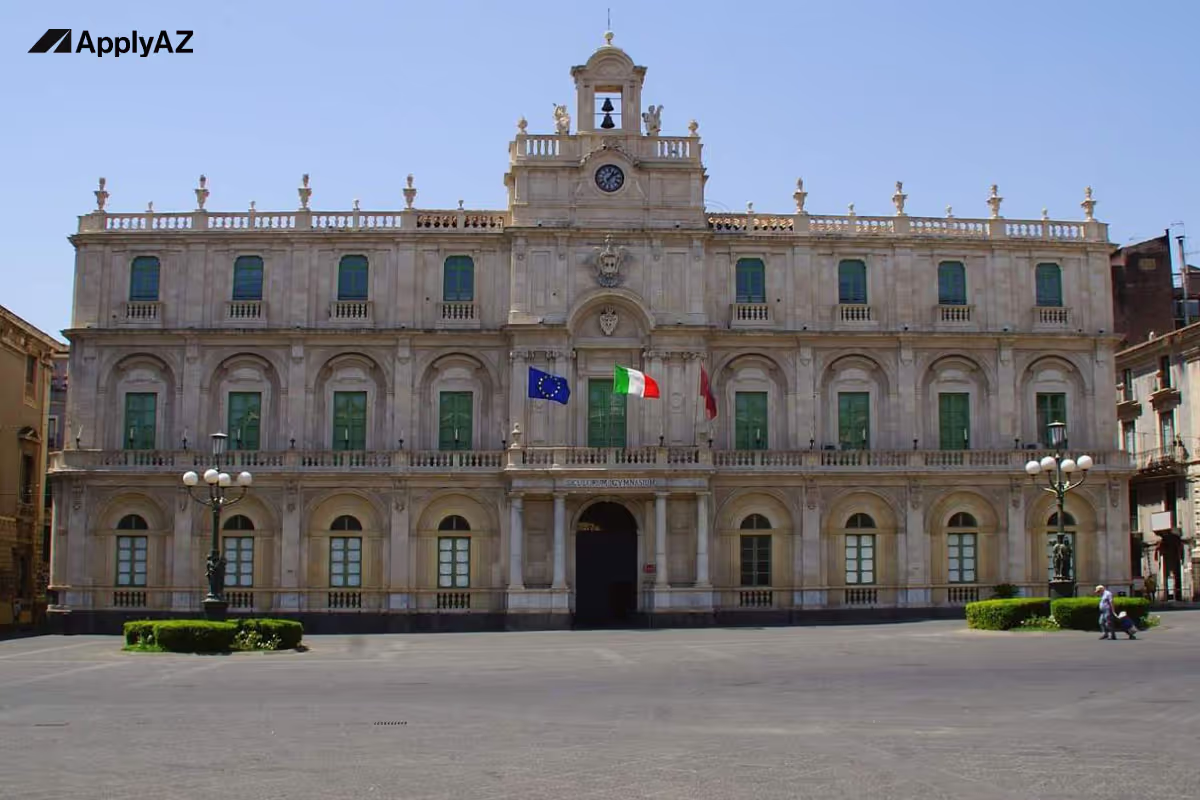
Global Politics and Euro-Mediterranean Relations (GLOPEM) is a two-year, 120 ECTS master's in political science (class LM-62) taught entirely in English at the University of Catania, with double degree options in Liège, Paris and Flensburg. Fees for non-EU students are low, and it can be tuition-free for eligible students.
Entry requirements
- A bachelor's degree or higher, preferably in political science, EU studies, international relations, diplomatic or area studies, development studies, humanities, history, communication, modern languages, or international and EU law or economics.
- Final-year students can apply if they graduate by 31 July of the admission year; staff seconded from international organisations with relevant experience are also considered.
- English at B2 level: IELTS 5.5, TOEFL 72, Cambridge FCE or higher, unless you are a native speaker or hold an English-taught degree.
- Selection on your CV, the relevance of your studies, a reference letter and a statement of purpose; some candidates may be called to an interview in English on motivation and the subject area.
- A Declaration of Value or an ENIC-NARIC Statement of Comparability of your bachelor's degree, delivered after admission.
About the programme
Global Politics and Euro-Mediterranean Relations, known as GLOPEM, is a two-year master's degree in political science (class LM-62) run by the Department of Political and Social Sciences of the University of Catania. It carries 120 ECTS and is taught entirely in English in Catania, Sicily.
The course brings together three fields: the politics of the global system, European governance and relations across the Euro-Mediterranean area. It is full time and attendance is compulsory, because teaching relies on class discussion, papers, case studies, student presentations and simulation exercises. It suits graduates in political science, international relations, European studies, law, economics, history or languages who want an international career.
What you will study
The first year gives you the general and methodological grounding: how political systems, states and international institutions work, and how to design and carry out empirical political research. The second year completes that knowledge and trains you to plan and run independent research projects, ending with a research-based final thesis. First-year units in the 2026/27 plan include:
- World Institutions and Policies
- Mediterranean Politics
- European Security and Defence Policy
- Democracy and Authoritarianism: Global and European Dynamics
- Global Justice and Cities and Globalization
- Methodology of Political Research
- Second-year options such as International Human Rights Law, Migration and International Protection Policy, Global History, Analysis of Political Discourse, and Research Design and Data Analysis in Political Science
How the programme is taught
Alongside interactive classes, the course includes internships and study periods abroad. The department's internship office holds more than 400 agreements with organisations matched to its degree profiles. A double degree programme with the University of Liège, the University Paris-Est Créteil (UPEC) and the University of Flensburg lets you spend the whole second year, or one semester of it, at a partner university.
Career paths
The degree prepares graduates for work in public and private institutions, administrations and organisations, including consultancy and media firms and research and study centres, often in international and multicultural settings. The department lists these professional profiles:
- Specialists in public relations and similar professions
- Specialists in political science
- Researchers and postdoctoral graduates in political and social sciences
Fees and scholarships
For 2026/27, non-EU students living abroad paid a flat €306 for the year: a €150 university contribution, the €140 regional tax and €16 stamp duty. The five best-ranked candidates in the GLOPEM ranking were offered €2,000 a year for two years. ERSU Catania, the Sicilian regional body, awards scholarships on merit and family income, so the programme can be tuition-free for eligible students.
How to apply from outside the EU
Catania admits non-EU applicants living abroad through one call for its English-taught master's. You register on the Smartedu portal, pay a €10 fee and upload your degree and transcript, course syllabus, European-format CV, reference letter, statement of purpose and English certificate. The board marks your file out of 100 and needs 50 to rank you. For 2026/27 the window ran from 10 February to 17 March 2026, with results by 6 May.
Admitted students confirm their place with a €75 payment, pre-enrol on Universitaly and apply for a type D study visa.
How ApplyAZ helps
If this programme fits your goals, ApplyAZ can include it in a shortlist of 20 to 30 English-taught programmes at Italian public universities. We write your CV and a tailored statement of purpose, submit your applications and Universitaly pre-enrolment, file your DSU scholarship application and prepare your visa file, with a named person on each stage. The university decides admission, the region decides the scholarship and the consulate decides the visa. See how ApplyAZ works or check your eligibility.
Questions and answers
Is GLOPEM taught in English?
Yes. The department states that the course is taught entirely in English, and no Italian certificate is needed. Applicants show English at B2 level, for example IELTS 5.5, TOEFL 72 or Cambridge FCE.
Which bachelor's degrees are accepted?
Preferred backgrounds include political science, international relations, EU and area studies, development studies, humanities, history, communication, modern languages, and international or EU law or economics. Final-year students can apply if they graduate by 31 July.
Is there an entrance test?
No written test. The board scores your CV, the relevance of your studies, a reference letter and a statement of purpose. Some candidates may be called to an interview in English on motivation and the course topics.
Can I study part of the degree abroad?
Yes. A double degree with the University of Liège, UPEC in Paris and the University of Flensburg lets you spend the full second year, or one semester of it, at a partner university.
When can I apply for 2027/28?
The 2027/28 call is not published yet. As a guide, non-EU applicants living abroad applied for 2026/27 between 10 February and 17 March 2026 on the Smartedu portal, with a €10 fee.
How much does it cost?
For 2026/27, non-EU students living abroad paid €306 for the year. The top five in the ranking were offered €2,000 a year, and ERSU Catania runs regional scholarships for eligible students.
Similar programmes
More programmes in this city

They began right where you are

