

Master in Clinical and Experimental Biology at University of Foggia
Two-year English-taught LM-6 biology master's at the University of Foggia on the molecular and cellular basis of disease, with two curricula and a 30 ECTS lab traineeship. Entry needs a biology or biotechnology degree or set science credits, plus English at B2.
Master
2 years
Foggia
English
University of Foggia


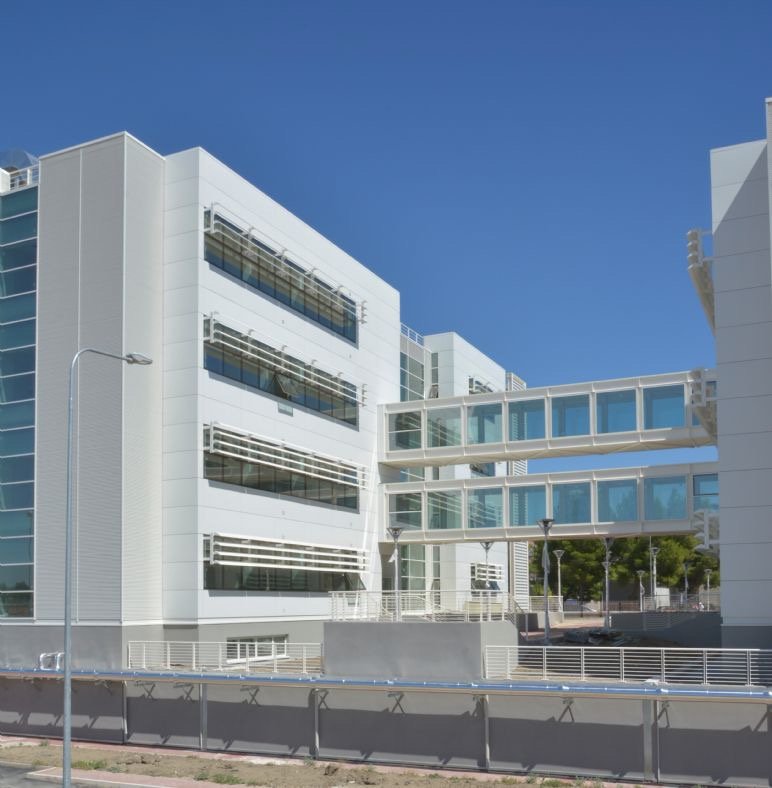
Clinical and Experimental Biology is a two-year, 120 ECTS master's degree (class LM-6) taught in English at the University of Foggia. Entry needs a bachelor's in biology or biotechnology, or another degree with at least 12 credits in maths, physics or computing, 12 in chemistry and 40 in biology, plus English at B2. Fees follow family income, so it can be tuition-free for eligible students.
Entry requirements
Detailed entry requirements
Foggia's Clinical and Experimental Biology master asks for a bachelor's in biology (L-13) or biotechnology (L-2), or another recognised first-level degree with set science and biology credits, English at B2, and a check of your preparation through a written test and possibly an interview. These rules come from the 2022/23 teaching regulations, which apply until a new regulation is issued. Reviewed 8 October 2026. [1]
Degree and credit requirements
You need one of the following. [1]
- A bachelor's in biological sciences (L-13) or biotechnology (L-2), or the equivalent class under the older Italian system.
- Another first-level degree from Italy or abroad, recognised as suitable, that includes all three credit blocks below.
- At least 12 CFU in maths, physics or computing: sectors MAT/01 to 09, FIS/01 to 08 and INF/01.
- At least 12 CFU in chemistry: sectors CHIM/01 to CHIM/12.
- At least 40 CFU in biological or biomedical subjects: sectors BIO/01, 02, 04, 05, 09, 10, 11, 13, 14, 16, 17, 18 and 19, and MED/03, 04, 07 and 42.
The regulations do not set a minimum degree grade. Each student is paired with a faculty tutor who suggests study to fill gaps in specific subjects. [1]
What this means for your transcript
Italian CFU and the credits on a foreign transcript are not the same unit: one CFU stands for 25 hours of student work, and the committee looks at your subjects, not just your total. As a guide, based on the rule above:
- Usually a fit: a B.Sc. or B.Tech in Biotechnology, or a B.Sc. in Microbiology, Biochemistry or Life Sciences, when it includes chemistry and some maths, physics or computing.
- Check carefully: a B.Sc. in Zoology, Botany and Chemistry usually covers biology and chemistry but can fall short on the 12 credits in maths, physics or computing. A B.Pharm covers chemistry and pharmacology, but the committee checks how much of it falls in the listed biology sectors.
- Often short: degrees outside the life sciences, such as a B.Tech in Computer Science, a BCA, B.Com or BBA, rarely reach 40 biology credits or 12 chemistry credits.
English
English at CEFR level B2, gained in your previous studies or shown by a suitable certificate. [1] UniFG's 2026/27 page for international students also asks for proof of B2 English for courses taught in English. Neither source lists specific test scores. [2]
Checking your preparation
Admission follows a check of your curricular requirements and basic preparation, in two parts: an evaluation of your first-degree study programme, then a written test and possibly an interview. [1]
The course can run a separate session for international students, with its own committee, timed to fit the regional scholarship call, which the 2022/23 regulations place around May. International students who pass this session are exempt from the later check for all other applicants. [1]
UniFG's master's enrolment page asks applicants to this programme to fill in a programme form and register for the admission interview procedure (LM Interview) on Esse3, attaching proof of the form. You must be judged eligible before you can enrol. [3]
Deadlines
The 2022/23 regulations do not give application dates: the number of places and any selection details are published each year in a call, and the next call sets the new dates. [1]
For 2026/27, type D visa applications must reach the Italian consulate by 30 November 2026. For 2027/28, the national visa deadline is 31 October 2027, and universities can set earlier dates for each course. [2][4]
Documents and non-EU steps
Non-EU applicants living abroad who need a visa pre-enrol on Universitaly, with: [2]
- A passport photo and a valid passport.
- Your degree certificate in the original language, with an official Italian translation.
- Legalisation of the certificate, or an apostille if your country signed the Hague Convention.
- A declaration of value from the Italian embassy or consulate, or a CIMEA statement of comparability. For Lisbon Convention countries, a certificate of conformity from CIMEA's ARDI platform with a CIMEA verification certificate replaces the comparability statement.
Pre-enrolment does not secure a visa appointment, and the visa decision rests with the consulate. [2]
Sources and verification
Checked by the ApplyAZ admissions team against the university's official documents listed below. Entry rules can change with each new call, and we re-check them before every application.
- University of Foggia, Department of Clinical and Experimental Medicine. Teaching regulations of the Master's degree programme in Clinical and Experimental Biology (class LM-6), from academic year 2022/23. Reviewed 8 October 2026.
- University of Foggia. Enrolment of international students: procedures, documents and fees, academic year 2026/27. Reviewed 8 October 2026.
- University of Foggia. Enrolment in master's degree programmes: admission interview procedure, undated. Reviewed 8 October 2026.
- Italian Ministry of University and Research and Ministry of Foreign Affairs. Procedures for the entry, stay and enrolment of international students and recognition of qualifications, academic years 2026/27 and 2027/28. Reviewed 8 October 2026.
About the programme
Clinical and Experimental Biology is a two-year master's degree (laurea magistrale, class LM-6, Biology) worth 120 ECTS and taught in English at the University of Foggia.
It is run by the Department of Clinical and Experimental Medicine and is taught only in English. Under the 2022/23 teaching regulations it has open access, with no fixed number of places, although the department can set a cap each year. Attendance is not compulsory. [1]
The course studies the molecular, cellular, tissue and systemic mechanisms behind healthy and disease processes, with the aim of developing new diagnostic and therapeutic approaches.
It suits graduates in biology or biotechnology who want advanced laboratory and data skills for work in biomedical research, diagnostics or health.
What you will study
A shared core covers advanced molecular methods, human biology and data analysis. You then follow one of two curricula, Molecular and Cell Biology or Health Biology. Units in the study plan of the 2022/23 regulations include: [1]
- Advanced Methods in Molecular Biology and Biochemistry of Human Organs and Tissues
- Human Anatomy, Molecular Pathology and Pharmacology
- Medical Microbiology and Bioinformatics
- Molecular and Cell Biology curriculum: Computational Biology, Experimental Models in Biomedical Research, and Molecular and Cell Neurobiology
- Health Biology curriculum: Clinical Pathology, Laboratory Diagnostics, Healthcare Management, and Organization and Management of Clinical Biochemistry Laboratory
- Scientific English, free-choice credits, a traineeship (30 ECTS) and a thesis
How the programme is taught
Practical training carries real weight: the curricular traineeship is worth 30 ECTS, about 750 hours, and the regulations give it a key training role, since most advanced lab and data-analysis work happens there. [1]
It runs alongside an experimental thesis project, where you help plan the work, run the protocols and analyse results with statistical software. Only experimental theses are allowed, and you can do your thesis traineeship abroad in the second year under the university's bilateral agreements. [1]
Traineeships run under agreements between the university and host labs, companies or institutions, each with a training plan agreed with a faculty tutor.
After graduation, the university also promotes extracurricular traineeships for its graduates within 12 months of their degree, and its placement office publishes offers from host organisations.
Career paths
Graduates can sit the Italian state exam to register as a biologist (Ordine Nazionale dei Biologi, section A). The university lists these settings for the degree:
- Public and private clinical chemistry, biology, microbiology and genetics laboratories
- Clinical research centres, universities and public or private research bodies
- Pharmaceutical, biotechnology and diagnostics companies, including R&D roles
- Toxicology laboratories and quality certification bodies
- Science communication, biomedical publishing and consultancy
For research leadership roles, the university points to a PhD as the next step.
Fees and scholarships
For 2026/27, the University of Foggia set a flat €960 a year for non-EU students living abroad: €160 at enrolment (A.Di.S.U. regional tax and stamp duty) plus an €800 all-inclusive fee in three instalments. [2]
Students with income and assets abroad who submit an equivalent ISEE (ISEE parificato) can get a partial or full exemption from the €800 part, and ADISU Puglia runs the regional scholarship, so this programme can be tuition-free for eligible students.
How to apply from outside the EU
This degree has its own first step: we fill in the programme's admission form and register you for the admission interview procedure (LM Interview) on Esse3, attaching proof of the form. The admission committee then checks your credits and preparation against the entry requirements. [1][3]
We then submit a pre-enrolment application on Universitaly with your passport, degree certificate with an official Italian translation, legalisation or apostille, and a declaration of value or CIMEA statement of comparability. [2]
For 2026/27, type D visa applications must reach the consulate by 30 November 2026. For 2027/28, the national deadline is 31 October 2027, and universities can set earlier dates for each course. [4]
How ApplyAZ helps
ApplyAZ is an Italy-based consultancy that works only with public universities. We can include this programme in a shortlist of 20 to 30 English-taught programmes that fit your profile, so your plan never rests on a single application.
For eligible students who start with us, a named person owns each stage, from A to Z:
- We check your transcript against Foggia's entry rules for this programme.
- We write your CV and a tailored statement of purpose.
- We prepare and submit your programme admission form, Esse3 interview registration and Universitaly pre-enrolment.
- We help you declare your family income for reduced fees and file your ADISU Puglia scholarship application at the right time and in the right format.
- We prepare your visa file.
With operations in all 20 Italian regions, we follow each region's scholarship rules and deadlines as they change. The university decides admission, the region decides the scholarship and the consulate decides the visa, so no one can promise an outcome. You pay in milestones, and every service you pay for is either delivered or its fee is refunded (terms apply).
Programmes at Italian public universities can be tuition-free for eligible students. Check if you are eligible and book a one-to-one consultation session with one of our Italy experts, or see how ApplyAZ works.
Questions and answers
What bachelor's degree do I need for Foggia's Clinical and Experimental Biology master?
A bachelor's in biological sciences (L-13) or biotechnology (L-2), or another recognised first-level degree with at least 12 credits in maths, physics or computing, 12 in chemistry and 40 in biological or biomedical subjects. The 2022/23 regulations set no minimum grade. [1]
Is there an entrance test?
Yes. Under the 2022/23 regulations, the committee evaluates your first-degree study programme, then checks your knowledge with a written test and possibly an interview. International students can get a dedicated session, and passing it exempts them from the later general check. [1]
What English level is required? Do I need IELTS?
English at CEFR B2, from your previous studies or a suitable certificate. The regulations and UniFG's 2026/27 international page ask for the level and do not list specific test scores, so we check which proof of B2 your file can use. [1][2]
When is the deadline for non-EU students?
For 2026/27, type D visa applications must reach the consulate by 30 November 2026, and the 2027/28 national visa deadline is 31 October 2027. The programme's own admission dates are set in each year's call, and the 2027/28 dates are not yet published. [1][4]
I have a B.Sc. in Zoology, Botany and Chemistry. Can I apply?
Possibly. These degrees usually cover the 40 biology credits and the 12 chemistry credits, but many fall short on the 12 credits in maths, physics or computing. The committee reviews your study programme, and a faculty tutor helps with gaps once you are in. [1]
What are the two curricula?
Molecular and Cell Biology adds computational biology, experimental models in biomedical research and molecular and cell neurobiology. Health Biology adds clinical pathology, laboratory diagnostics, healthcare management and clinical biochemistry laboratory management. Both share a first year of core units. [1]
How is the second year organised?
You choose your curriculum, take your remaining units and complete a 30 ECTS curricular traineeship that leads to a 5 ECTS experimental thesis. You can do the thesis traineeship abroad under the university's bilateral agreements. [1]
How much does it cost?
For 2026/27, non-EU students living abroad paid €960 a year: €160 at enrolment plus an €800 all-inclusive fee. An equivalent ISEE can cut or remove the €800, and ADISU Puglia runs the regional scholarship. [2]
Can someone handle my whole application to Clinical and Experimental Biology at Foggia?
Yes. ApplyAZ, an Italy-based consultancy that works only with public universities, checks your transcript against Foggia's rules for this programme, handles the application and Universitaly pre-enrolment, helps you file the ADISU Puglia scholarship application at the right time and in the right format, and prepares your visa file, for eligible students. Start by checking your eligibility.
I'm applying from India. What is the route into Clinical and Experimental Biology?
A recognised Indian bachelor's in a life science, such as a B.Sc. in Biotechnology, Microbiology or Zoology, can be considered if it includes at least 12 credits in maths, physics or computing, 12 in chemistry and 40 in biology, plus English at B2. The steps are the programme admission form, the admission interview registration and Universitaly pre-enrolment. [1] Indian students apply for the type D study visa at the Italian embassy or consulate that covers their state, such as New Delhi, Mumbai or Bengaluru.
Is the route different from Pakistan, Bangladesh or Sri Lanka?
No. The academic rules for Clinical and Experimental Biology are the same whatever your nationality. Applicants from Pakistan, Bangladesh and Sri Lanka follow the same steps as India: programme admission form, admission interview registration and Universitaly pre-enrolment, then a type D study visa from the Italian mission for their country of residence. Read our guide for students in Dhaka.
I live in the UAE, Saudi Arabia, Qatar, Kuwait, Oman or Bahrain. Where do I apply for the visa?
At the Italian embassy or consulate responsible for the country where you legally live, after Universitaly pre-enrolment. The academic rules for Clinical and Experimental Biology are the same whatever your nationality, and Gulf residents follow the same steps: programme admission form, admission interview registration and Universitaly pre-enrolment. Read our guides for Dubai, Riyadh and Doha.
I'm applying from the UK, US, Canada, Singapore or Malaysia. Is anything different?
The academic rules are identical. Non-EU applicants who live abroad, including citizens of these countries, follow the same route: programme admission form, admission interview registration and Universitaly pre-enrolment, then a type D study visa. Read our guides for London, New York, Singapore and Kuala Lumpur.
More English-taught programmes at this university
Other public universities in this city

They began right where you are

