

Master in Sociology and Social Research at University of Trento
Two-year English-taught LM-88 master's at the University of Trento that trains social researchers in qualitative, quantitative and historical methods. Entry needs a bachelor's with a 90/110 or equivalent mark, 40 ECTS in sociology and core social sciences, and English at B2.
Master
2 years
Trento
English
University of Trento


Sociology and Social Research is a two-year, 120 ECTS master's degree (class LM-88) taught in English at the University of Trento. Entry needs a bachelor's with a final mark of 90 out of 110 or equivalent and at least 40 ECTS in sociology and core social sciences, plus English at B2. Fees for non-EU students follow the admission score, so it can be tuition-free for eligible students.
Entry requirements
Detailed entry requirements
Trento's Sociology and Social Research master asks for a bachelor's degree with a final mark of at least 90 out of 110 or an international equivalent, at least 40 ECTS in sociology and core social science subjects, English at B2, and a merit score of at least 50 out of 100. Reviewed 8 October 2026. [1]
Degree, final mark and the 40-credit rule
You need a bachelor's or higher degree from Italy, or a foreign qualification recognised as equivalent. The final mark must be at least 90 out of 110 for Italian degrees, or an equivalent mark for international degrees. [1] The admission page gives 3 out of 4 as an example. [2]
At least 40 ECTS of your previous studies must be in sociology and core disciplines, with at least 12 in each group: [1]
- Sociology, at least 12 ECTS: general sociology, sociology of culture and communication, economic and labour sociology, sociology of environment and territory, political sociology, and sociology of law and deviance (sectors SPS/07 to SPS/12).
- Core disciplines, at least 12 ECTS: anthropology, demography, social statistics, political economy, economic policy, finance, business organisation, economic and political geography, labour law, public law, EU law, political philosophy, history of political thought, history of political institutions, political science and contemporary history.
A background in methodology and social research counts in your favour. [1] The admission page describes the rule more broadly, as 40 ECTS across at least two areas that also include psychology, social psychology and pedagogics, and says applicants who fall short may be assessed on other activities, asked for more documents or invited to an interview. [2]
What this means for your transcript
Italian ECTS and the credits on a foreign transcript are not always the same unit, and the committee looks at your subjects, not only your total. As a guide, based on the rule above:
- Usually a fit: a BA in Sociology, or a BA where sociology papers sit alongside political science, economics, history or anthropology, with a strong final mark.
- Check carefully: a BA in Political Science, Economics or History, or a B.Com or BBA with economics papers. These often cover the core block but may have fewer than 12 credits in sociology. A BA in Psychology also needs a close look, because psychology is not among the subjects listed in the call.
- Often short: a B.Tech, B.E., BCA or B.Sc. in a natural science, which rarely include sociology or the listed social science subjects.
English
English at CEFR B2 or higher, shown in one of these ways: [1]
- a certificate from an internationally recognised body on UniTrento's list;
- citizenship of an English-speaking country, declared in the application;
- a bachelor's or master's degree officially taught in English, declared in the application;
- an English test at B1 or higher passed during your bachelor's, declared in the application.
The call does not list specific test scores. Without an English certificate, the committee may interview you or assess further documents. [1]
Selection and ranking
There is no written test. A committee of three teachers scores your file out of 100: [1]
- Academic background and reference letter, up to 45 points: final mark, weighted average, other curricular activities, publications, work experience, internships, voluntary work, English level and reference letters.
- Statement of purpose, up to 20 points: clarity, strength of motivation, relevance to the course, English and originality.
- Relevance of previous studies and experience, up to 35 points: how your degree and activities such as placements, summer schools and jobs fit the course, including any background in methodology and social research.
You need at least 50 out of 100 to be considered suitable. An interview, in person or online, is held only if the committee needs more information, and ties go to the youngest candidate. For 2026/27 the call offered 6 places for non-EU citizens living abroad. [1]
2026/27 deadlines
For 2026/27, applications ran from 17 December 2025 to 4 March 2026 at noon Italian time. The ranking list was due by 30 April 2026. [1] Admitted students confirmed their place within 7 days of the admission notice and pre-enrolled on Universitaly within two weeks of confirming. [2] Applicants still finishing a degree outside Italy had to graduate by 30 June 2026. [1][2] The 2027/28 call is not yet published and will set the new dates.
Documents and non-EU steps
The online application needs: [1]
- passport pages with your personal details;
- your bachelor's certificate, or a certificate showing the expected graduation date;
- a transcript listing all courses and marks, with the weighted average, the mark range and your GPA as a percentage, plus an official translation if it is not in Italian or English;
- transcripts of any earlier master's degree;
- at least one reference letter, preferably from a university lecturer;
- a European-format CV in English;
- your English certificate;
- a statement of purpose in English of up to 4,000 characters including spaces.
The admission page suggests a statement of 2,000 to 4,000 characters. [2] UniTrento may ask for a statement of verification or comparability for a foreign qualification. Admitted students confirm their place, and non-EU students must complete pre-enrolment, which is compulsory for the study visa. [1]
Sources and verification
Checked by the ApplyAZ admissions team against the university's official documents listed below. Entry rules can change with each new call, and we re-check them before every application.
- University of Trento, Department of Sociology and Social Research. Public selection for admission to the Master's degree in Sociology and Social Research, academic year 2026/2027, English translation (the Italian version is binding). Reviewed 8 October 2026.
- University of Trento, Master's degree in Sociology and Social Research. Admission and enrolment page for non-EU applicants, academic year 2026/2027. Reviewed 8 October 2026.
- University of Trento, Sociology and Social Research programme page (language, duration, credits, department and location). Reviewed 8 October 2026.
About the programme
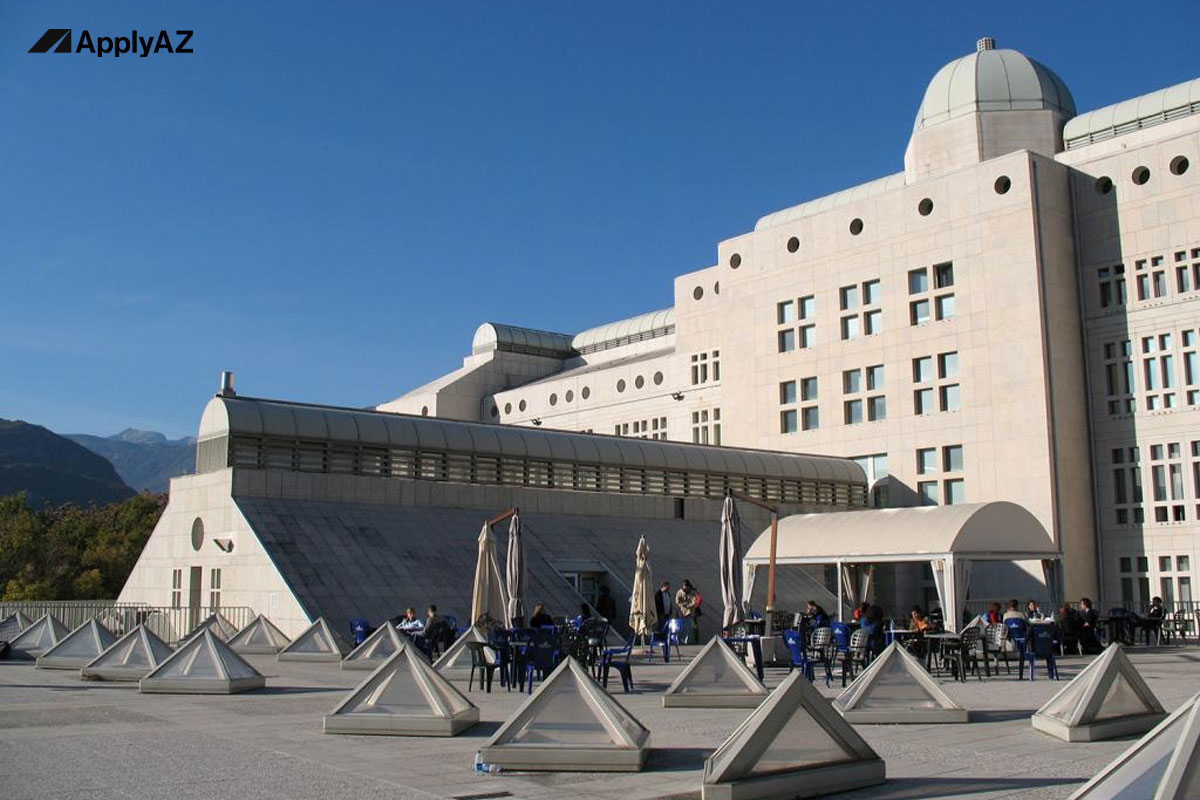
The Master's degree in Sociology and Social Research is a two-year laurea magistrale in class LM-88, worth 120 ECTS and taught completely in English by the Department of Sociology and Social Research of the University of Trento. Classes take place in the Sociology Building on Via Giuseppe Verdi in Trento city centre. [3]
The degree prepares professional social science researchers who can analyse society and social problems, design and carry out research, and give well-founded advice in public debates. It suits graduates in sociology, economics, political science, social policy, history or psychology who want strong methods training.
What you will study
Year one is shared by all students and focuses on theory and methods, including historical and political research methods, with lab sessions in small groups. In year two you choose your sociological specialisation through electives, an internship, thesis seminars and the final dissertation. Units include:
- Qualitative Methods and Quantitative Methods, each with its own lab
- Research Design with a research design lab
- Research Methods in History and Research Methods in Political Science
- Culture and Society or Economy and Society; Cultural Analytics or Public Opinion Research
- Mobility and Social Transformation (year two)
- Electives such as Advanced Social Network Analysis, Digital Social Data, Social Demography, Social Stratification and Mobility, Economic and Labour Sociology and Sociology of Collective Action
- An internship worth 9 ECTS and a thesis worth 18 ECTS, with a thesis seminar
How the programme is taught
Teaching mixes lectures on social issues with labs and seminars where you practise ethnography, focus groups and statistical analysis. Lessons are in person only. Students can apply for double degrees with Tilburg University, Universitat Pompeu Fabra in Barcelona, the University of Bamberg and the University of Graz, and the department reports that over 40% of its students spend a period abroad.
Career paths
Graduates work in the private sector in market research, human resource management, banking and insurance, communication, project management, data science and journalism. In the public sector they work in social research, policy advice and social reporting, for central and local government and statistics offices, and for international agencies, NGOs, charities and third sector bodies. The degree is also a route into PhD programmes.
Fees and scholarships
Under the 2026/27 call, the first-year fee for non-EU students living abroad depends on the admission score: 90 points or more brings a full waiver, and lower scores mean a reduced fee. In year two, earning at least 42 credits by 10 August 2027 brings a full waiver, while fewer credits mean a partial fee. [1] Non-EU applicants scoring 90 or more may receive a UniTrento scholarship that waives fees. It is paid after arrival in Italy and cannot be combined with MAECI, Unicolor or Invest your Talent in Italy scholarships. [1] Opera Universitaria di Trento offers income-based grants, so this degree can be tuition-free for eligible students.
How to apply from outside the EU
For 2026/27 the degree had 6 places for non-EU citizens living abroad. The committee scored academic background and references (45 points), the statement of purpose (20) and the relevance of previous studies and experience (35), with 50 out of 100 needed to be ranked. [1]
The 2026/27 window ran from 17 December 2025 to 4 March 2026 at noon Italian time on the UniTrento portal, and the ranking list was due by 30 April 2026. [1] Admitted students confirmed their place within 7 days of the admission notice, pre-enrolled on Universitaly within two weeks of confirming and then obtained a study visa before enrolment. [2] UniTrento may ask for a statement of verification or comparability for a foreign degree. [1] The 2027/28 call is not yet published and will set the new dates.
Compare related master's programmes
If you are exploring data and social research, compare the curriculum and entry requirements on these programme pages before choosing your shortlist.
- Master in Quantitative Methods for Economics and Finance at University of Messina
- Master in Statistics and Data Science at University of Palermo
How ApplyAZ helps
ApplyAZ is an Italy-based consultancy that works only with public universities. We can include this programme in a shortlist of 20 to 30 English-taught programmes that fit your profile, so your plan never rests on a single application.
For eligible students who start with us, a named person owns each stage, from A to Z:
- We check your transcript against Trento's entry rules for this programme.
- We write your CV and a tailored statement of purpose.
- We prepare and submit your online application with CV, statement of purpose and reference letter, place confirmation and Universitaly pre-enrolment.
- We help you declare your family income for reduced fees and file your regional DSU scholarship application at the right time and in the right format.
- We prepare your visa file.
With operations in all 20 Italian regions, we follow each region's scholarship rules and deadlines as they change. The university decides admission, the region decides the scholarship and the consulate decides the visa, so no one can promise an outcome. You pay in milestones, and every service you pay for is either delivered or its fee is refunded (terms apply).
Programmes at Italian public universities can be tuition-free for eligible students. Check if you are eligible and book a one-to-one consultation session with one of our Italy experts, or see how ApplyAZ works.
Questions and answers
What bachelor's degree do I need for Trento's Sociology and Social Research master?
A bachelor's or higher degree with a final mark of at least 90 out of 110 or an international equivalent, and at least 40 ECTS in sociology and core social science subjects, with at least 12 in each group. [1]
Is there an entrance exam?
No written test. The committee scores your file out of 100: academic background and reference letter (45), statement of purpose (20) and relevance of your studies and experience (35). You need 50 to be ranked, and an interview is held only if needed. [1]
What English level is required? Do I need IELTS?
English at B2. A recognised certificate works, but so does a degree officially taught in English, citizenship of an English-speaking country or an English exam at B1 or higher passed during your bachelor's. The call does not list test scores. [1]
When is the deadline for non-EU students?
For 2026/27, non-EU applicants living abroad could apply from 17 December 2025 to 4 March 2026 at noon Italian time, with rankings due by 30 April 2026. The 2027/28 call is not yet published. [1]
Can I apply before I graduate?
Yes, if you graduate in time. For 2026/27, applicants could apply with a certificate of their expected graduation date, as long as they finished their bachelor's by 30 June 2026. [1]
I have a BA in Political Science or Psychology. Can I apply?
Possibly. Political science, economics and history count towards the core block, but you also need 12 ECTS in sociology. Psychology is not among the subjects listed in the call, so we check your sociology and social science papers against the 40-credit rule. [1]
How many places are there for non-EU students?
The 2026/27 call offered 6 places for non-EU citizens living abroad. Places are filled in ranking order, so a strong academic record and a clear statement of purpose matter. [1]
How do fees work?
For 2026/27, non-EU students paid nothing in year one with a score of 90 or more, otherwise a reduced fee set by score. Year two depends on credits earned by 10 August. [1]
Can someone handle my whole application to Sociology and Social Research at Trento?
Yes. ApplyAZ, an Italy-based consultancy that works only with public universities, checks your transcript against Trento's rules for this programme, handles the application and Universitaly pre-enrolment, helps you file the regional DSU scholarship application at the right time and in the right format, and prepares your visa file, for eligible students. Start by checking your eligibility.
I'm applying from India. What is the route into Sociology and Social Research?
A recognised Indian bachelor's, such as a BA in Sociology or a BA combining sociology with political science, economics or history, can meet the rule if it shows 40 credits with at least 12 in sociology and 12 in core social sciences, plus a strong final mark. You also need English at B2. The steps are the online application, place confirmation and Universitaly pre-enrolment. [1] Indian students apply for the type D study visa at the Italian embassy or consulate that covers their state, such as New Delhi, Mumbai or Bengaluru.
Is the route different from Pakistan, Bangladesh or Sri Lanka?
No. The academic rules for Sociology and Social Research are the same whatever your nationality. Applicants from Pakistan, Bangladesh and Sri Lanka follow the same steps as India: online application, merit ranking, place confirmation and Universitaly pre-enrolment, then a type D study visa from the Italian mission for their country of residence. Read our guide for students in Dhaka.
I live in the UAE, Saudi Arabia, Qatar, Kuwait, Oman or Bahrain. Where do I apply for the visa?
At the Italian embassy or consulate responsible for the country where you legally live, after Universitaly pre-enrolment. The academic rules for Sociology and Social Research are the same whatever your nationality, and Gulf residents follow the same steps: online application, merit ranking, place confirmation and Universitaly pre-enrolment. Read our guides for Dubai, Riyadh and Doha.
I studied or live in London, New York, Toronto, Vancouver, Singapore or Kuala Lumpur. What is the route?
The academic rules for Sociology and Social Research are the same whatever your nationality, and your degree is assessed like any other foreign qualification. Non-EU applicants who live abroad follow the same route: online application, merit ranking, place confirmation and Universitaly pre-enrolment, then a type D study visa from the Italian mission for where they live. Read our guides for students in London, New York, Toronto, Vancouver, Singapore and Kuala Lumpur.
More English-taught programmes at this university
Other public universities in this city

They began right where you are

