Is Rome a good place to study for international students?
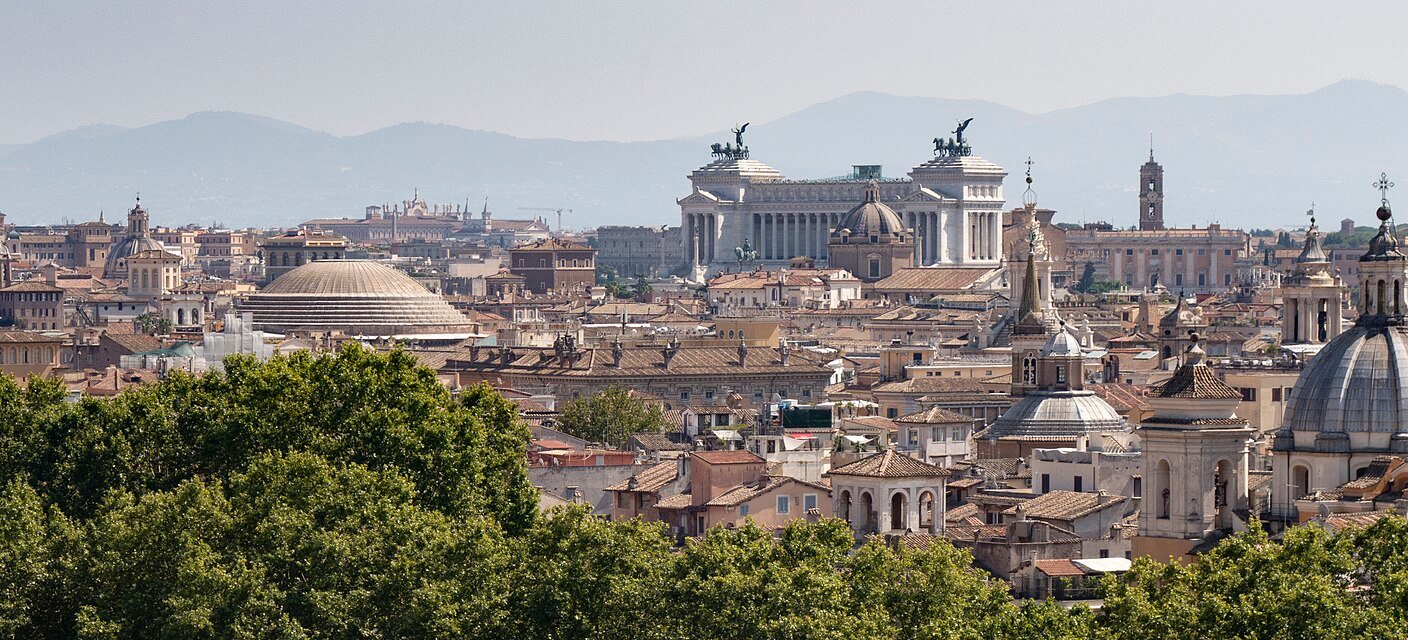
Rome is a strong choice for international students who want a capital city, four public universities and one of Italy's widest English-taught offers. The Lazio capital has about 2.7 million residents (2026), and Sapienza alone teaches more than 100,000 students. Life is big, historic and busy, and rents are among Italy's highest, so Rome suits independent students with a realistic budget. Sapienza, Tor Vergata, Roma Tre and Foro Italico are public; seven other universities in the city are private.
Which universities are in Rome, and which are public?
Rome has four public universities, Sapienza, Tor Vergata, Roma Tre and Foro Italico, plus seven private universities with fixed fees. At the public ones, tuition is set by family income (ISEE): students from lower-income families can pay little or nothing beyond the regional tax, and DiSCo Lazio scholarship winners also get a tuition waiver. Sapienza is the largest and highest ranked, joint 111th in QS 2027. Private universities such as Luiss charge fixed fees, and ApplyAZ does not work with them.
- Sapienza University of Rome: public, founded 1303, more than 100,000 students
- University of Rome Tor Vergata: public, founded 1982, a single campus of about 600 hectares
- Roma Tre University: public, founded 1992, 37,051 students in July 2025
- University of Rome Foro Italico: public, founded 1998, sport and movement sciences
- Luiss Guido Carli University: private, fixed fees
- LUMSA University: private, fixed fees
- UNINT, University of International Studies of Rome: private, fixed fees
- Link Campus University: private, fixed fees
- European University of Rome: private, fixed fees
- Campus Bio-Medico University of Rome: private, fixed fees
- UniCamillus, Saint Camillus International University of Health Sciences: private, fixed fees
What can you study in English in Rome?
Rome has one of Italy's largest English-taught offers at public universities. Sapienza teaches 8 bachelor's and 45 master's degrees in English, plus Medicine and Surgery through the IMAT, and Tor Vergata lists 4 bachelor's, 17 master's and 2 single-cycle degrees, including Medicine and Pharmacy. Roma Tre adds four English-taught master's for 2026/27. Fields run from engineering, AI and physics to economics, international relations and archaeology. Browse our English-taught programmes.
How much does it cost to live in Rome as a student?
Rome is one of Italy's more expensive student cities: plan on about €1,000 to €1,200 a month. Immobiliare.it Insights put the average single room at €615 in August 2026, up 7% in a year and behind only Milan and Florence. HousingAnywhere's September 2026 estimate is €650 for a room and €1,002 a month in total, including €297 for groceries. Rooms near Sapienza or in the centre cost more, while DiSCo Lazio residences are far cheaper but go first to scholarship winners.
- Single room in a shared flat: €615 a month on average (Immobiliare.it Insights, August 2026)
- Groceries: about €297 a month (HousingAnywhere, September 2026)
- Public transport: about €35 for an ATAC monthly pass (2026)
- Phone and health insurance: about €10 a month each (HousingAnywhere, 2026)
- Monthly total: about €1,000 to €1,200, depending mostly on your room
How do you find student housing in Rome?
In Rome, most international students rent a room in a shared flat, because DiSCo Lazio residence places are limited and go first to scholarship winners. You apply for a residence in the same DiSCo call as the scholarship: for 2026/27 it closed at noon on 22 July. For private rooms, San Lorenzo suits Sapienza, the Via Ostiense area suits Roma Tre, and homes near Metro A or C suit Tor Vergata's shuttles. Deposits are capped by law at three months' rent. Start in spring, and see a room before you pay.
Which scholarship covers students in Rome, and how much is it worth?
In Rome, the regional DSU scholarship is run by DiSCo Lazio for students at all four public universities. For 2026/27, the family ISEE had to be under €28,339.88 and the ISPE under €61,608.48, and the call closed at noon on 22 July 2026. The national minimum grant for off-site students is €7,171.11 a year, and the same call covers residence places and canteens. Tuition is set by family income (ISEE), and a DSU scholarship winner also gets a tuition waiver at Rome's public universities.
How do you get to Rome and get around once you are there?
Rome is easy to reach: Fiumicino, its main airport, is 32 minutes from Termini station on the Leonardo Express, which runs about every 15 minutes, and Ciampino is the city's second airport. High-speed trains link Termini with Milan, Florence and Naples. In the city, ATAC runs Metro lines A, B and C, buses and trams, and a monthly pass costs about €35 (2026). Distances are long, so live near a metro line that serves your campus, such as Metro B for Roma Tre or Metro A and C for Tor Vergata.
What is student life like in Rome?
Student life in Rome is spread across neighbourhoods rather than one campus. San Lorenzo, next to Sapienza, is the classic student district, with cheap bars, bookshops and late nights, while Pigneto and Trastevere fill up at weekends. Ruins, churches and museums are part of the daily walk, and the historic centre is best explored on foot. Summers are hot, with a July daily mean of 26°C, and winters are mild, at about 8°C in January. The city is huge, so friendships often start in your faculty.
What should you sort out in your first weeks in Rome?
Your first weeks in Rome are mostly paperwork, and it moves faster if you start on day one. Non-EU students must request the permesso di soggiorno within 8 working days of arrival, using the post office kit. Then get your codice fiscale, sort out health cover, confirm your enrolment and any DiSCo Lazio residence place, and buy an ATAC pass. Keep copies of every document, receipt and appointment letter, because Rome's offices are busy and you may be asked for them more than once.
- Request your permesso di soggiorno with the post office kit within 8 working days (non-EU students)
- Get your codice fiscale (tax code) from the Agenzia delle Entrate if you do not have one yet
- Arrange health cover: register with the SSN or keep private insurance valid in Italy
- Confirm your enrolment, your ISEE filing and any DiSCo Lazio residence place
- Buy an ATAC monthly pass, about €35 in 2026
Can you work part-time while studying in Rome?
Yes, you can work part-time while studying in Rome: a non-EU study permit allows up to 20 hours a week and 1,040 hours a year. Universities offer part-time student jobs, often called 150-hour collaborations (collaborazioni 150 ore), in libraries and offices. Rome's tourism, hospitality and retail sectors hire students, but most jobs need spoken Italian, and English-only roles are rare. Treat work as a top-up rather than a way to pay the rent, and never let it put your exam credits at risk.
How does Rome compare with other Italian student cities?
Rome is cheaper than Milan but dearer than most Italian university cities. In August 2026, Immobiliare.it Insights put the average single room at €704 in Milan, €627 in Florence, €615 in Rome and €585 in Bologna, against a national average of €575. Rome offers four public universities, a wide English-taught choice and a capital's culture and jobs. It suits students who want scale and history; if you prefer a compact student town at lower cost, Bologna, Pavia or Ferrara may fit better.
How can ApplyAZ help you study in Rome?
ApplyAZ helps you study in Rome by building Sapienza, Tor Vergata, Roma Tre or Foro Italico into a shortlist of 20 to 30 English-taught programmes at Italian public universities. We take no commissions from any university. We write your CV and tailored SOPs, submit applications and Universitaly, file DiSCo Lazio and prepare your visa file, and a named person owns each stage. Strong, organised students can use our roadmap alone. Next step: see how ApplyAZ works or check your eligibility.