What is the Scuola Superiore Meridionale, and is it a public institution?
The Scuola Superiore Meridionale (SSM) is a public Scuola Superiore in Naples, a special-status university institute for advanced and doctoral education. It became independent on 2 April 2022 under a Ministry of University decree, after starting as a strategic project incubated by the University of Naples Federico II. It runs two interdisciplinary areas, humanities and law, and science and technology, and offers honours courses (corsi ordinari) alongside university study, plus fully funded PhDs.
Can international students study at the Scuola Superiore Meridionale in English?
Yes, at doctoral level: the Scuola Superiore Meridionale publishes its PhD call in English and admits candidates of any citizenship and age. Its 10 doctoral programmes include Cosmology, Space Science and Space Technology, Genomic and Experimental Medicine, Clinical and Translational Oncology, Global History and Governance, and Law and Organisational Studies. Honours students must follow a Federico II degree, often in Italian, and need Italian and English good enough to take part in teaching.
How competitive is admission to the Scuola Superiore Meridionale?
Admission to the Scuola Superiore Meridionale is by public competitive exam and is highly selective. For 2026/27 it offered 40 honours places in science and humanities courses and 50 PhD scholarships across 10 programmes. Honours applicants for the first year need a school diploma of at least 85/100 or equivalent and must be born after 31 December 2005. PhD applicants need a master's degree, or must obtain one by enrolment, and are assessed on documents and an interview.
How do you apply to the Scuola Superiore Meridionale, step by step?
You apply to the Scuola Superiore Meridionale online through the PICA platform, in answer to a yearly call. For 2026/27 the PhD call closed on 27 August 2026 and the honours call on 4 September 2026, after an extension. Honours candidates sit written tests in Naples, then an oral exam if shortlisted, and some tests can be taken in English on request. Successful honours students also enrol in a matching degree at Federico II. PhD courses start on 2 November 2026.
- Read the yearly call for the PhD or the honours course.
- Apply on PICA with your documents before the deadline.
- Sit the written tests or the document review and interview.
- If admitted, enrol at SSM (and at Federico II for honours students).
- Arrange your visa early if you are a non-EU citizen.
How much does the Scuola Superiore Meridionale cost to attend?
The Scuola Superiore Meridionale charges no fees for its PhD programmes: doctoral students pay only the regional right-to-study tax. Honours students are exempt from Federico II university contributions, paying only the regional tax and stamp duty according to their income band. This is very different from the usual ISEE-based tuition at Italian universities. The real cost is the competition: you must win one of a small number of places, and then keep them.
What funding does the Scuola Superiore Meridionale give its students?
The Scuola Superiore Meridionale funds its students generously. For 2026/27 each PhD scholarship is worth €19,000 a year for four years, paid monthly, rising by up to 50% for approved research abroad for up to 12 months, plus a research budget of 10% of the grant in year one and 20% in later years. Honours students get free board and lodging in a double room in an SSM residence and a €1,500 net yearly grant, which they can combine with an ADISURC scholarship.
What do you have to do to keep your place at the Scuola Superiore Meridionale?
Honours students at the Scuola Superiore Meridionale must follow both the SSM courses and their Federico II degree, and live in the SSM residence when assigned, except during breaks. They must keep an average of at least 27 out of 30 each year, with no exam below 24. They also improve their English, or Italian if it is not their first language. PhD scholarships are renewed each year only if the Board admits you to the next year of the programme.
How good is the Scuola Superiore Meridionale in the rankings?
The Scuola Superiore Meridionale has no place in the Censis 2026/27 tables, and we found none in QS 2027, THE 2026 or ARWU 2026. That reflects its size and age, not its quality: it became independent only in 2022 and admits small cohorts, while global rankings measure large universities. For a Scuola Superiore, judge the supervisors, the research groups, the funding and where graduates go next. Its host, Federico II, is in the 201 to 300 band of ARWU 2026.
- QS World University Rankings 2027: not ranked
- Times Higher Education World University Rankings 2026: not ranked
- ShanghaiRanking ARWU 2026: not ranked
- Censis 2026/27: not included in the university tables
What is student life like in Naples for Scuola Superiore Meridionale students?
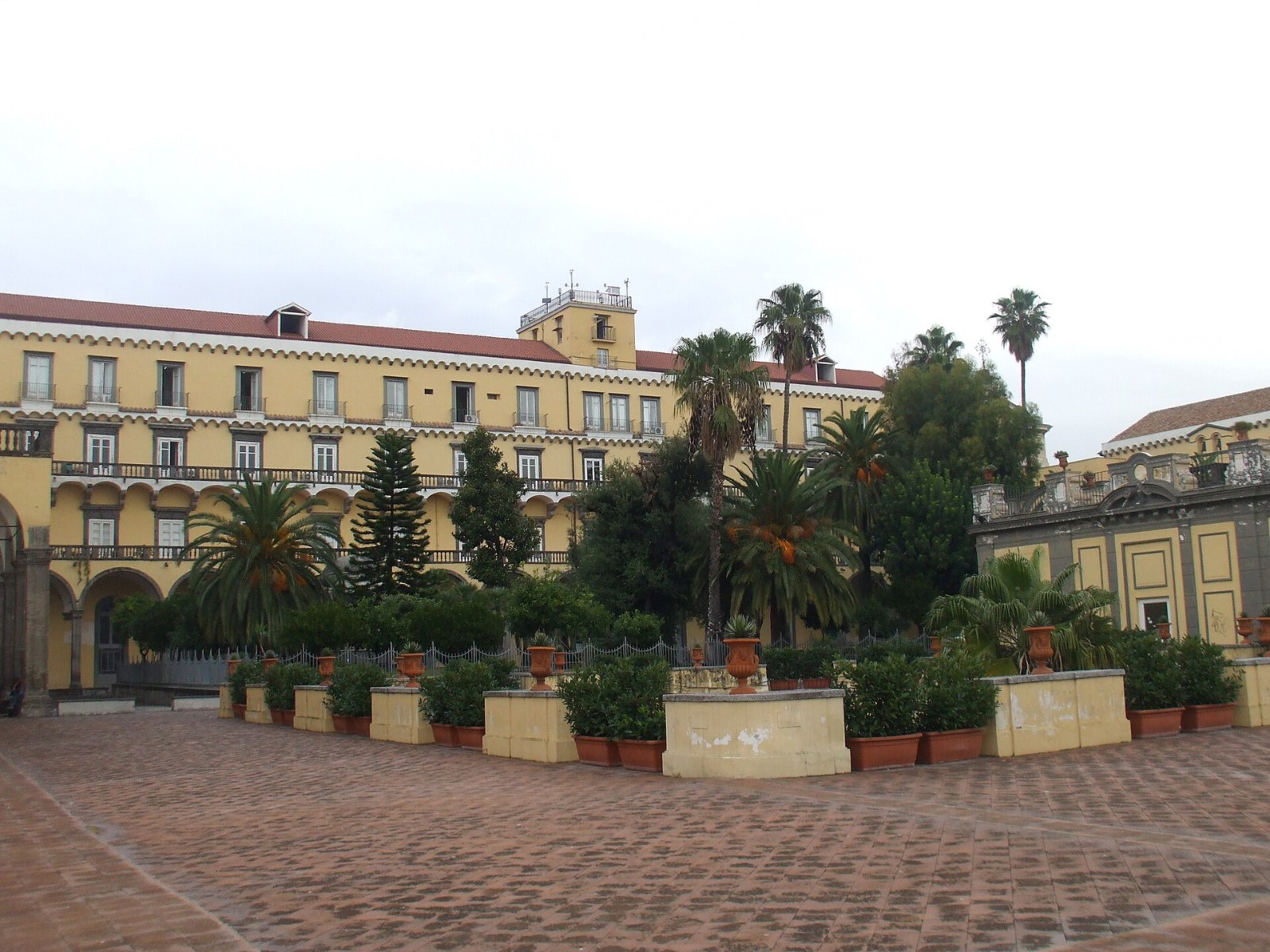
Student life at the Scuola Superiore Meridionale is built around a small community in central Naples, with its seat on Via Mezzocannone in the university quarter. Honours students must live in the school's residences, so housing and meals are covered during term. Naples is a large, lively southern city on its bay, known for its food and history, with Pompeii and the Amalfi Coast nearby. PhD students live on their €19,000 yearly scholarship, so ask the school about housing options early.
How does the Scuola Superiore Meridionale compare with other options?
The Scuola Superiore Meridionale is one of Italy's special-status Scuole Superiori, like the Scuola Normale and Sant'Anna in Pisa, created partly to spread these schools more evenly across Italy. Compared with a regular university, it adds competitive entry, extra teaching and full funding. Compared with Federico II, where honours students take their degree, it is tiny and research-led. If you want a standard English-taught master's, a regular public university is the better route.
Is the Scuola Superiore Meridionale a good choice for you?
The Scuola Superiore Meridionale suits you if you are a top student who wants a funded PhD in fields like space science, genomic medicine, oncology, history or law, or an honours path alongside a Federico II degree. It suits you less if you want a standard taught master's, need a safe, predictable place, or cannot meet a 27 out of 30 average. For PhDs, contact the programme coordinator before applying to check fit with the research groups.
How can ApplyAZ help with the Scuola Superiore Meridionale, or go alone?
ApplyAZ is built for English-taught bachelor's and master's applications at public universities, so for the Scuola Superiore Meridionale we are honest: a PhD or honours competition is usually best prepared directly with the school, its call and its coordinators. We can help you decide whether SSM or a regular public university fits you better, and build a shortlist of 20 to 30 taught programmes, with a named person owning each stage. Next step: see how ApplyAZ works or check your eligibility.