

How to Choose a Study in Italy Consultant: 10 Questions to Ask
Ten questions to put to any study in Italy consultant before you pay, the answers that should worry you and ApplyAZ's own replies.

Free check
Less than 2 minutes
Limited intake, 1:1 support
international students trusted us
tuition for eligible students
English-taught programmes
Italian regions covered
The right study in Italy consultant is one whose answers you can check. Before you pay anyone, ask the ten questions below. Listen for who funds the advice, where the facts come from and what is being promised. The same questions apply to us, so we answer each one for ApplyAZ as well.
In short
- Ask first who pays the consultant: the universities, or only you.
- Treat any promise of admission, a scholarship or a visa as a red flag.
- Expect official sources, a named person for each stage and your approval before any application is submitted.
- Ask how fees are paid and how refunds are set before you commit.
- ApplyAZ is paid only by students, works only with Italian public universities and never promises outcomes.
Before comparing consultants, find out whether you qualify at all. Check your eligibility.
What should I ask a study in Italy consultant before paying?
Ask who pays them, which universities they suggest, where their facts come from, who handles your file and what they promise. Then ask whether you approve every application and what happens if you are not admitted. Finally, ask how fees and refunds work, whether they know your region's scholarship rules and whether you can hear from students they helped.
| Question to ask | Red flag answer | ApplyAZ's answer |
|---|---|---|
| 1. Are you paid by universities? | “Yes, but it costs you nothing.” | No. We take no commission from any university and are paid only by the student. |
| 2. Do you only suggest private universities? | Every option on the list is private. | We work only with Italian public universities. |
| 3. Can you show official sources? | “Trust us, we have done this for years.” | Every fact comes with its official source and the date we checked it. |
| 4. Who handles my file? | “Our team”, with no names. | A named person handles each stage. |
| 5. Will you promise admission or a visa? | “Yes, we promise it.” | Never. The university decides admission, the region decides the scholarship and the consulate decides the visa. |
| 6. Will I see and approve my applications? | “We handle all of that for you.” | Yes. You approve every application before it is submitted. |
| 7. What happens if I'm not admitted? | A vague answer, or a new fee. | We plan for it with a shortlist of about 20 to 30 programmes. Refunds are matched to work delivered. |
| 8. How are fees and refunds set? | Full payment upfront, with unclear refund terms. | Milestones tied to delivered work. Refunds are matched to work delivered. |
| 9. Do you know my region's DSU rules? | “DSU is the same everywhere.” | We work across every Italian region, because each region sets its own rules and deadlines. |
| 10. Can I speak to students you helped? | No examples, or only anonymous praise. | Our students' stories are on our success stories page. |
Source: ApplyAZ's own policies, as set out in the ApplyAZ Code of Practice. Verified on 25 September 2026.
What do the ten questions tell you about a consultant?
Each question tests one thing: whose interests the advice serves, whether the facts can be checked or whether you stay in control. A good consultant answers all ten directly and in writing. Vague answers, pressure to pay quickly or promises about outcomes are reasons to slow down, whoever you are speaking to.
1. Are you paid by universities?
Most study abroad agents are paid by private universities for each student they send. That payment can shape which universities they recommend. How ApplyAZ answers: we take no commission from any university and are paid only by the student. Our advice is not tied to where you enrol.
2. Do you only suggest private universities?
A list made up only of private universities can be a sign of commission-driven advice. Ask to see public options, and ask why each university is on the list. How ApplyAZ answers: we work only with Italian public universities, and your shortlist covers about 20 to 30 English-taught programmes at them.
3. Can you show official sources?
Deadlines, entry requirements and scholarship rules each have an official source. A consultant who cannot show you that source is asking you to trust their memory. How ApplyAZ answers: every fact we give you comes from an official source, and we tell you the date we checked it.
4. Who handles my file?
A file can pass between several people, and details can get lost when nobody owns them. Ask for the name of the person responsible at each stage. How ApplyAZ answers: a named person handles each stage, from your shortlist and statement of purpose to your scholarship application and visa file.
5. Will you promise admission or a visa?
If the answer is yes, treat it as a red flag. No consultant controls these decisions: the university decides admission, the region decides the scholarship and the consulate decides the visa. How ApplyAZ answers: we never promise any of them. We promise careful, accurate work on the parts we control.
6. Will I see and approve my applications?
Your applications carry your name, your grades and your statement of purpose. You should see each one before anyone submits it. How ApplyAZ answers: yes. You see and approve every application before it is submitted, including Universitaly pre-enrolment and your DSU scholarship application.
7. What happens if I'm not admitted?
Ask this before you pay, not after a rejection. A good answer covers both the plan and the money. How ApplyAZ answers: we plan for it from the start with a shortlist of about 20 to 30 programmes, rather than one or two. Refunds are matched to the work actually delivered.
8. How are fees and refunds set?
You should know what you are paying for, when you pay and what happens to your money if you stop. How ApplyAZ answers: fees are paid in milestones tied to work delivered, and refunds are matched to the work actually delivered. The consultation price depends on your country and is shown before you book. Our page on how ApplyAZ gets paid explains the details.
9. Do you know my region's DSU rules?
The DSU scholarship is decided region by region, and each region sets its own rules and deadlines. A consultant who treats DSU as one national scheme may miss what your region requires. How ApplyAZ answers: we operate across every Italian region for exactly this reason. See our guide to scholarships in Italy.
10. Can I speak to students you helped?
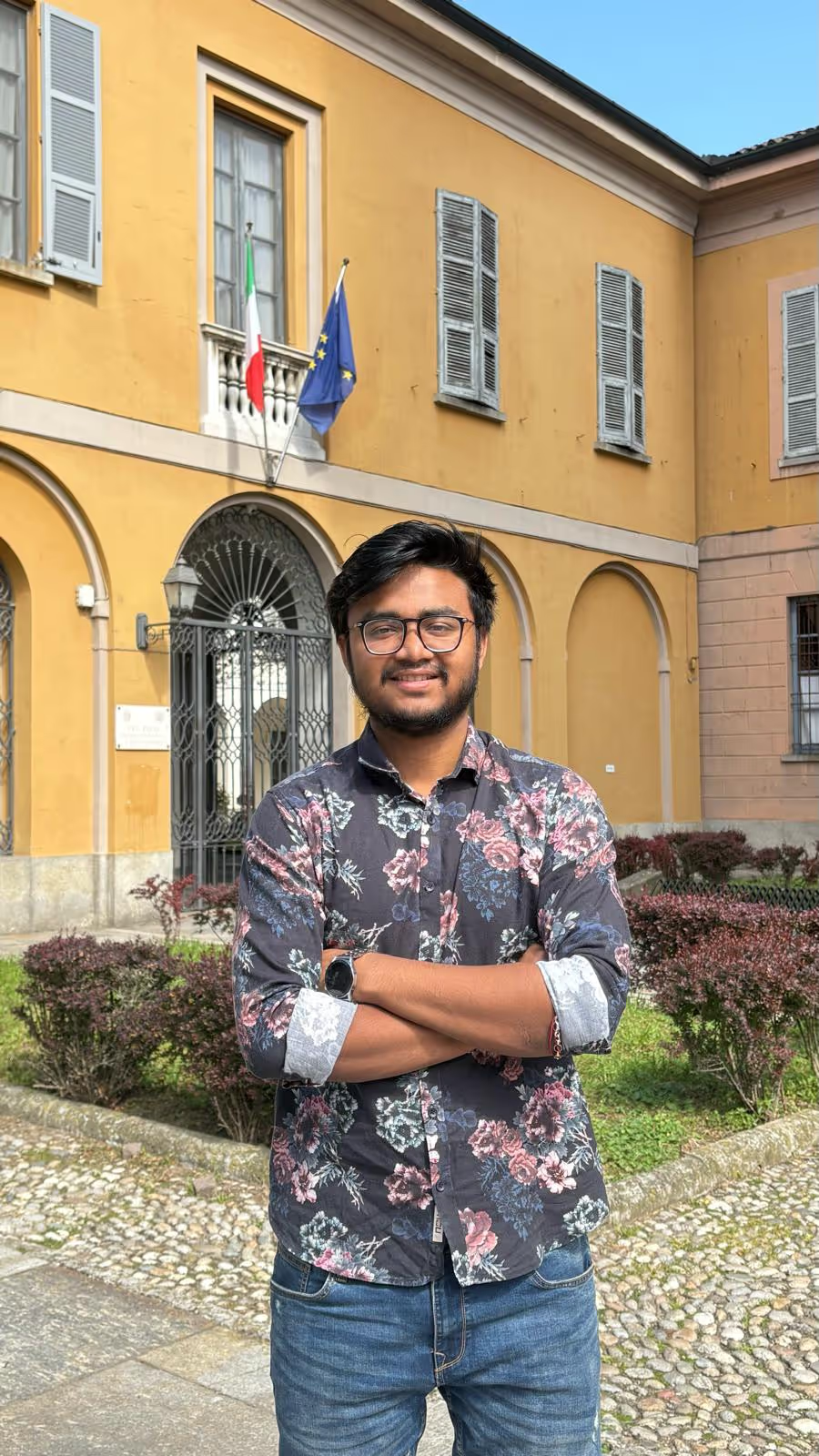
Real stories with real names and universities tell you more than a headline success rate. If a consultant quotes a rate, ask what it counts. How ApplyAZ answers: our students' stories are on our success stories page. They include Harshit (MBBS at Marche Polytechnic University) and Ismit (a DSU scholarship for a second master's at Pavia).
Asking the questions is easier when you know your own starting point. Check your eligibility first, then put these questions to anyone you are considering.
What are the red flags when choosing a study in Italy consultant?
The clearest red flags are promises about outcomes, answers you cannot check and pressure to decide quickly. A consultant who promises admission, a scholarship or a visa is promising something they do not control. So is anyone who will not say who pays them or who will handle your file.
- A promise of admission, a scholarship or a visa
- No clear answer on whether universities pay them a commission
- A shortlist made up only of private universities
- Facts with no official source or date
- Pressure to pay in full before any work is delivered
- Applications submitted without your approval
- No named person for your file
- No real students' stories, or a success rate with no explanation
How do the different consultant models compare?
There are three broad ways to apply: through a commission-funded agent, through a student-paid adviser or on your own. They differ in who pays, whose interests the advice serves and how much work falls on you. None is right for everyone, and applying alone can be the better choice for a simple case.
| Model | Who pays | What to check |
|---|---|---|
| Commission-funded agent | Private universities, for each student sent | Whether the shortlist leans towards universities that pay a commission |
| Student-paid adviser | The student only | Whether fees are tied to delivered work and refunds are clear |
| Applying alone | Nobody | Whether you have time to follow each official source and regional deadline |
ApplyAZ is a student-paid adviser. Read the ApplyAZ Code of Practice for the ten commitments behind our answers, and our about us page to see who we are.
The first question is whether you qualify. Check your eligibility before you speak to any consultant, including us.
Frequently asked questions
How do I know if a study in Italy consultant is genuine?
Ask who pays them, which universities they suggest and whether they can show official sources for their facts. A genuine consultant answers directly, names the person handling each stage and never promises admission, a scholarship or a visa. If the answers are vague or the pressure to pay is high, take more time before you decide.
Is it a red flag if a consultant promises admission?
Yes. No consultant controls admission: the university decides admission, the region decides the scholarship and the consulate decides the visa. A consultant who promises any of these is misunderstanding the process or telling you what you want to hear. ApplyAZ never promises outcomes, only careful work on the parts it controls.
Why does it matter whether universities pay a consultant?
A consultant paid by universities for each student they send has a reason to recommend the universities that pay. Most study abroad agents are paid this way by private universities. A consultant paid only by the student has no such reason, so the advice can follow your profile. ApplyAZ is paid only by students.
Should I use a consultant at all to study in Italy?
Not always. Applying alone can be the better choice for a simple case: one or two programmes, clear documents and regional scholarship rules you already know. A good consultant will tell you so. Their fee earns its keep on complex files, where a missed rule or deadline can set you back.
Can I speak to students a consultant has helped?
Ask for real stories with names, universities and outcomes, and be careful with any headline success rate that is not explained. ApplyAZ publishes its students' stories on its success stories page. They include Harshit, MBBS at Marche Polytechnic University, and Ismit, who received a DSU scholarship for a second master's at Pavia.
How should a consultant charge for Italian university applications?
Look for fees that are tied to delivered work, and refund terms you understand before you pay. Paying everything upfront, with unclear refunds, leaves you with little leverage if the work stalls. ApplyAZ fees are paid in milestones tied to work delivered, and refunds are matched to the work actually delivered.
What should a consultant know about DSU scholarships?
A good consultant knows that the DSU scholarship is decided region by region, and that each region sets its own rules and deadlines. Ask which region your shortlisted universities are in and what that region requires. ApplyAZ operates across every Italian region for this reason, and prepares your DSU scholarship application as part of the full service.
Does ApplyAZ only suggest public universities?
Yes. ApplyAZ works only with Italian public universities and takes no commission from any university. If you proceed after your consultation, you receive a shortlist of about 20 to 30 English-taught programmes at public universities. Zero euro tuition for eligible students depends on family income and each region's rules.
Where they're studying now
Students who started exactly where you are
English-taught programmes, zero euro tuition for eligible students, and the DSU grant landing in their account every year. The funding mechanics are identical at every Italian public university: the same ISEE Parificato, the same regional bando, the same ranking. Only the authority and the dates change.






They began right where you are

