Is Trieste a good place to study for international students?
Yes, Trieste is a good place to study if you want a safe, affordable port city built around science. The capital of Friuli Venezia Giulia has about 199,000 residents (2025) and sits on the Adriatic, about 8 km from Slovenia. It has two public institutions, the University of Trieste and SISSA, alongside research centres such as ICTP and the Elettra synchrotron. It suits students of physics, data science, engineering and the life sciences who like a calm pace.
Which universities are in Trieste, and which are public?
Trieste has two public universities with very different roles. The University of Trieste (UniTS), founded in 1924, is the full university, with about 16,000 students and bachelor's, master's and PhD programmes. SISSA, the International School for Advanced Studies, founded in 1978, is a graduate school with about 300 PhD students in physics, mathematics and neuroscience. For a bachelor's or master's, UniTS is the place; SISSA is for research careers.
What can you study in English in Trieste?
In Trieste you can study science and technology in English, mostly at master's and PhD level. The University of Trieste offers bachelor's and master's degrees taught fully or partly in English, including Data Science and Scientific Computing, run with SISSA and ICTP, Physics and Functional Genomics, plus programmes in engineering and economics. SISSA runs 11 PhD courses. Check the current list in our English-taught programmes.
How much does it cost to live in Trieste as a student?
Trieste is one of the more affordable university cities in northern Italy. Single rooms averaged €369 a month in August 2026 (Immobiliare.it Insights), though up 16.7% in a year, and SISSA puts a room in a shared flat at €300 to €450. Food runs about €200 to €250 a month, and a city bus pass costs €32 a month or €320 a year in 2026, with 20% to 30% off for university students through ARDiS. Most students need about €600 to €850 a month.
- Single room: €300 to €450 a month in a shared flat (SISSA); €369 average, Aug 2026
- ARDiS residence: €200 to €320 a month, taken from the grant (2026/27)
- Food: about €200 to €250 a month (MIB Trieste)
- Bus pass: €32 a month or €320 a year, 20% to 30% less with ARDiS (2026)
- Monthly total: about €600 to €850, including bills (ApplyAZ estimate)
How do you find student housing in Trieste?
In Trieste, ARDiS residences are the cheapest option, assigned through its yearly call to students who meet the income and merit rules. Most students rent a room privately, and SISSA's housing guide says students normally find a place within a few weeks. Landlords often ask for two months' rent as a deposit, and non-EU students need a registered contract for the permesso di soggiorno. Avoid arriving in the two weeks before the Barcolana regatta in October, when demand peaks.
Which scholarship covers students in Trieste, and how much is it worth?
ARDiS, Friuli Venezia Giulia's right-to-study agency, runs the scholarship for University of Trieste students; SISSA's PhD students are funded through their fellowships instead. For 2026/27 an off-site student with an ISEE up to €14,169.94 receives €8,246.78, or €7,171.11 up to €18,893.25, falling to €3,585.56 near the ISEE limit of €28,339.88. Tuition is set by family income (ISEE), and ARDiS winners also get a tuition waiver.
How do you get to Trieste and get around once you are there?
Trieste Airport sits on the Venice to Trieste railway, and trains from its station reach Trieste Centrale in about half an hour; Venice Marco Polo, with more flights, is linked by train and coach. In the city, Trieste Trasporti buses cost €1.50 a ride or €32 a month in 2026, and ARDiS takes 30% off annual passes and 20% off monthly ones for university students. The centre is walkable, but the hills are steep and the bora wind can gust up to 140 km/h.
What is student life like in Trieste?
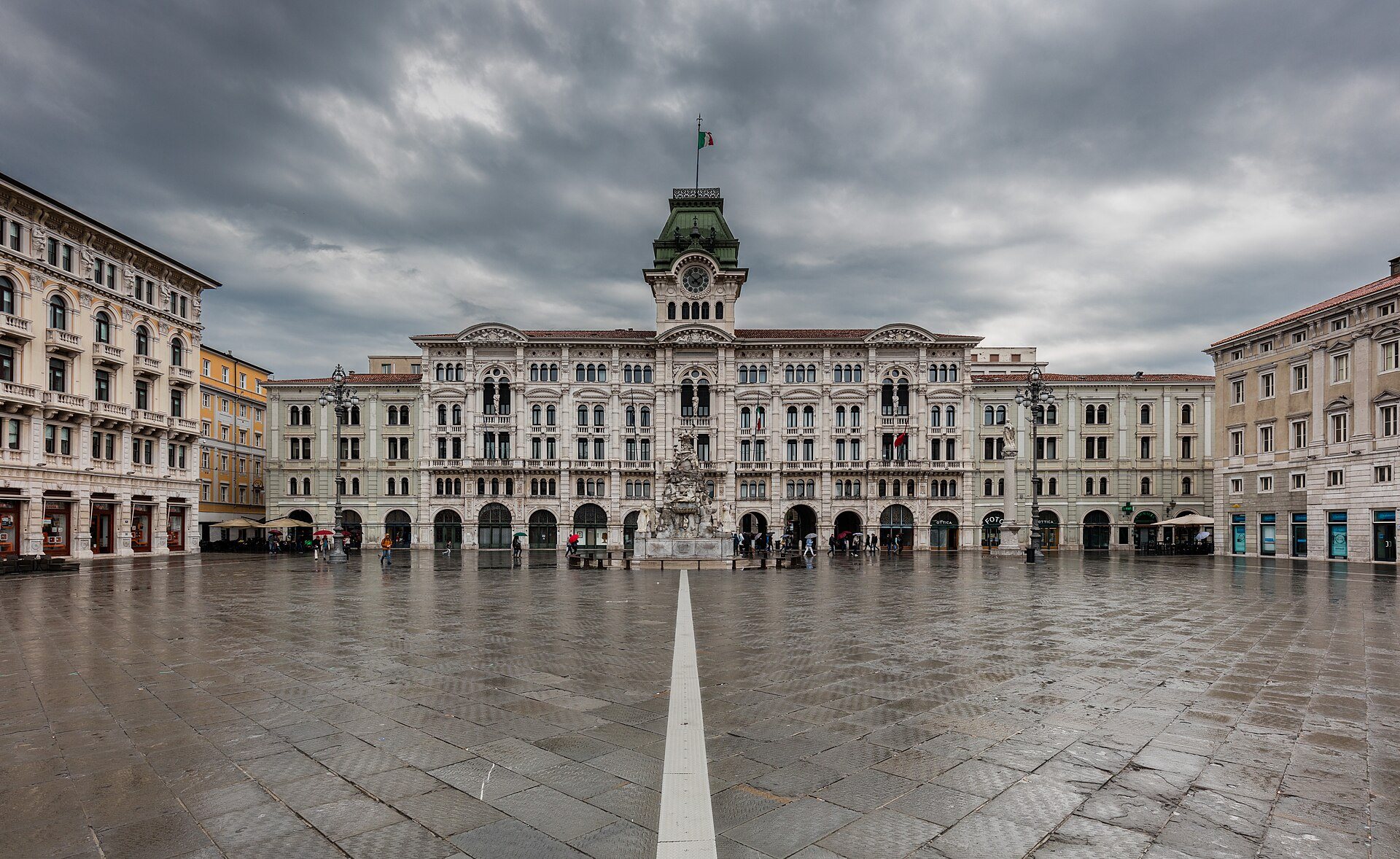
Student life in Trieste is relaxed, outdoorsy and international, shaped by the sea and a large research community. Students swim and sunbathe along the Barcola seafront in summer, meet in historic cafés such as Caffè San Marco, and gather in Piazza Unità d'Italia, which opens onto the sea. The Barcolana sailing regatta fills the gulf every October. Slovenia is about 8 km away and Croatia about 30 km, so cross-border weekends are easy.
What should you sort out in your first weeks in Trieste?
Your first weeks in Trieste start with documents, because your permit and contract unlock everything else. Non-EU students must request a permesso di soggiorno within 8 days of arrival, using the post office kit, and SISSA notes that a registered rent or hospitality contract is needed for it. Get your codice fiscale and health cover, confirm your ARDiS housing or scholarship status, then buy a bus pass with the ARDiS discount on the TPL FVG website.
- Request your permesso di soggiorno at a post office within 8 days (non-EU students).
- Register your rental contract: it is needed for the residence permit.
- Get your codice fiscale and arrange health cover (private insurance or SSN).
- Confirm your ARDiS scholarship or residence place and meet its deadlines.
- Buy a bus pass with the ARDiS student discount on the TPL FVG website.
Can you work part-time while studying in Trieste?
Yes, you can work part-time while studying in Trieste: a non-EU study permit allows up to 20 hours a week and 1,040 hours a year. The University of Trieste offers paid part-time student jobs, the collaborazioni often called 150-hour jobs, and the city's research institutes, port and science park create openings for technical internships. Hospitality and retail jobs usually need Italian, so language study pays off. Keep work compatible with your exams.
How does Trieste compare with other Italian student cities?
Trieste is much cheaper than Italy's big student hubs: single rooms averaged €369 a month in August 2026, against €704 in Milan, €585 in Bologna and €456 in Venice (Immobiliare.it Insights), though prices rose 16.7% in a year. It is smaller and quieter than Bologna or Padua, with a strong international research community. Students pick Trieste for physics, data science and the life sciences, the sea and a lower cost of living.
How can ApplyAZ help you study in Trieste?
ApplyAZ helps you study in Trieste by building the University of Trieste into a shortlist of 20 to 30 English-taught programmes at Italian public universities. We take no commissions. We write your CV and SOPs, submit applications and Universitaly pre-enrolment, file your ARDiS scholarship and prepare your visa file, with a named person on each stage. For a SISSA PhD, apply directly to the school and contact supervisors yourself. Next step: see how ApplyAZ works or check your eligibility.